


Throughout history, several nations have relocated their capital cities for a variety of reasons, ranging from political and economic strategy to reducing congestion or fostering development in underdeveloped regions.
While moving a capital is a massive undertaking fraught with challenges, a few countries have managed this transition successfully. This article highlights some of the most notable examples of nations that have moved their capitals and emerged stronger for it.
Brazil, From Rio de Janeiro to Brasilia

One of the most famous and often-cited examples is Brazil. The capital was moved from Rio de Janeiro to Brasília in 1960.
The decision to relocate the capital was made as early as the late 19th century, but it wasn’t until President Juscelino Kubitschek’s administration in the 1950s that the vision came to life.
The motivation behind the move was to promote economic growth in the interior of the country and reduce the coastal concentration of political and economic power.
Brasília was designed by the architect Oscar Niemeyer and the urban planner Lúcio Costa. The city’s layout, with its futuristic architecture and organized zoning, reflected modernist ideals.
Although the move faced criticism for its cost and remoteness, over time Brasília became a symbol of national progress.
Today, it is a fully functioning capital, home to the government’s executive, legislative, and judicial branches, and a UNESCO World Heritage Site for its unique architecture and urban planning.
Kazakhstan, From Almaty to Astana
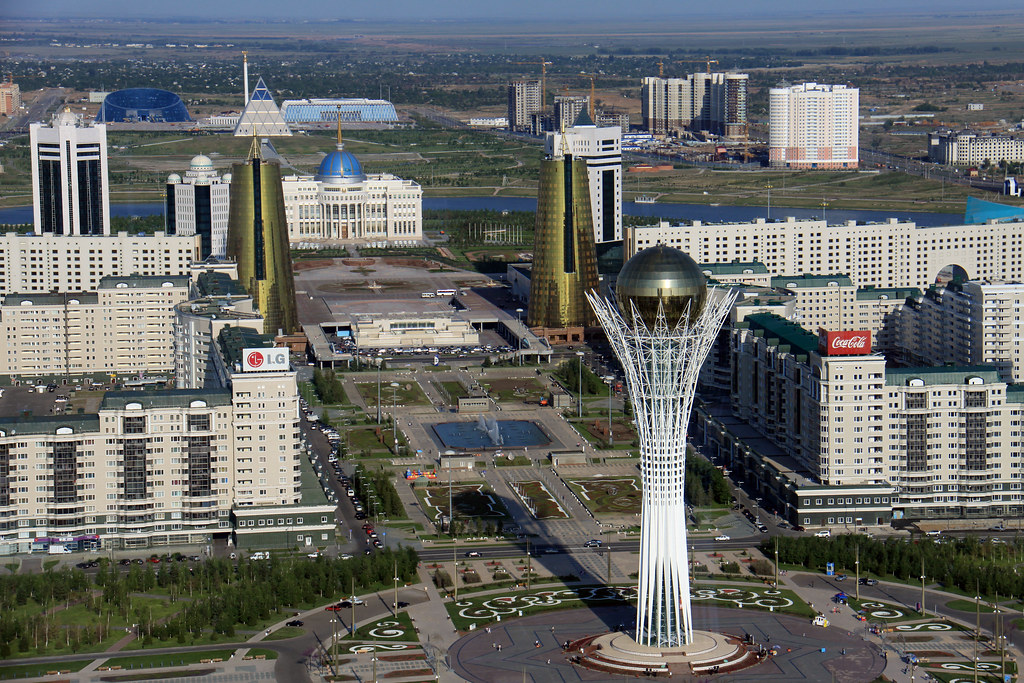
Kazakhstan moved its capital from Almaty to a northern city called Akmolinsk in 1997, later renamed Astana and then briefly Nur-Sultan, before reverting back to Astana.
The decision was primarily strategic. Almaty, while still the cultural and economic hub, was located in a seismically active area with limited space for expansion.
Furthermore, its southern location was seen as less central for a country aiming to better integrate and develop its vast northern regions.
Astana was rapidly transformed from a modest provincial town into a futuristic city with the help of global architects, including Japan’s Kisho Kurokawa.
The government invested heavily in infrastructure, making Astana a modern political and administrative center.
Although some question the social and economic costs, the relocation has undeniably brought attention and development to a previously overlooked part of the country.
Nigeria, From Lagos to Abuja

In 1991, Nigeria officially moved its capital from the overcrowded coastal city of Lagos to the centrally located Abuja. The move was part of a broader plan to establish a neutral and more accessible capital in a country deeply divided by ethnic and religious lines.
Abuja was chosen for its central location, availability of land, and low population density, making it easier to plan and develop.
The government envisioned Abuja as a symbol of unity and planned it from scratch, incorporating wide boulevards, modern infrastructure, and strict zoning laws. Although development was slow at first, Abuja has grown rapidly in recent decades.
It now hosts all major federal institutions, foreign embassies, and continues to grow as a political and administrative capital, while Lagos remains Nigeria’s commercial powerhouse.
Myanmar, From Yangon to Naypyidaw

Myanmar surprised the world in 2005 when it abruptly moved its capital from Yangon to the newly constructed city of Naypyidaw.
The reasons behind this decision remain partly speculative, but official explanations include the desire for a more centrally located administrative hub and the need to ease congestion in Yangon.
Naypyidaw was developed in secret and unveiled suddenly, with government ministries moved almost overnight. It features massive, often empty highways and government buildings spread across vast distances.
While it has faced criticism for lacking character and citizen engagement, Naypyidaw serves its intended function as the administrative center of Myanmar. Despite its eerie quietness, it hosts government operations, parliamentary sessions, and diplomatic missions.
Tanzania, From Dar es Salaam to Dodoma

Tanzania initiated the relocation of its capital from Dar es Salaam to Dodoma in 1973, though the move was gradual and only formally completed decades later.
The government cited the central location of Dodoma as ideal for unifying the country’s diverse population and facilitating equal development across all regions.
Dodoma was a small town at the time, and progress was initially slow due to logistical and financial constraints. However, over time, government ministries and offices were transferred, and by the late 2010s, Dodoma had effectively become the capital.
Though Dar es Salaam remains the economic and commercial center, Dodoma now serves as the seat of government and a symbol of Tanzania’s long-term vision for balanced national development.


