


In 1977, NASA launched the Voyager 1 and Voyager 2 spacecraft on missions that would eventually carry them beyond the solar system. Alongside their scientific instruments, each carried the Golden Record, a 12-inch gold-plated copper disc intended as a symbolic time capsule and greeting to extraterrestrial civilizations. The project was led by a committee chaired by astronomer Carl Sagan, who saw it as both a scientific statement and a profoundly hopeful act. He described the launch as “the launching of this bottle into the cosmic ocean,” adding that while the chances of it being found were slim, it “says something very hopeful about life on this planet.”
Earth’s Portrait in Sound and Image
The Golden Record was engineered to survive for billions of years in the harsh conditions of space. To protect it, NASA encased the disc in an aluminum cover electroplated with uranium-238, a radioactive isotope whose half-life could allow future finders to estimate its age. Etched on the cover are pictorial instructions describing how to play the record, as well as a pulsar map pointing out Earth’s location in the galaxy. Inside, the disc contains 115 images and dozens of audio samples. These range from photographs of landscapes, animals, and human life to natural sounds like thunder and bird calls, paired with human noises such as laughter, footsteps, and a kiss. Ann Druyan, one of the project’s curators, even contributed her brainwave activity while reflecting on love and the future of humanity.
From Gamelan to Rock and Roll
Perhaps the most celebrated feature of the Golden Record is its musical anthology, which spans 27 tracks representing cultures across the world. Western classical pieces by Bach and Beethoven stand alongside traditional works such as Azerbaijani mugham, Peruvian panpipes, and Senegalese drumming. Popular music was represented by Chuck Berry’s Johnny B. Goode, a choice that symbolized the vitality of modern culture. As Ann Druyan later reflected, “Rock and roll was the music of motion, of moving, getting to someplace you’ve never been before, and the odds are against you, but you want to go. That was Voyager.”
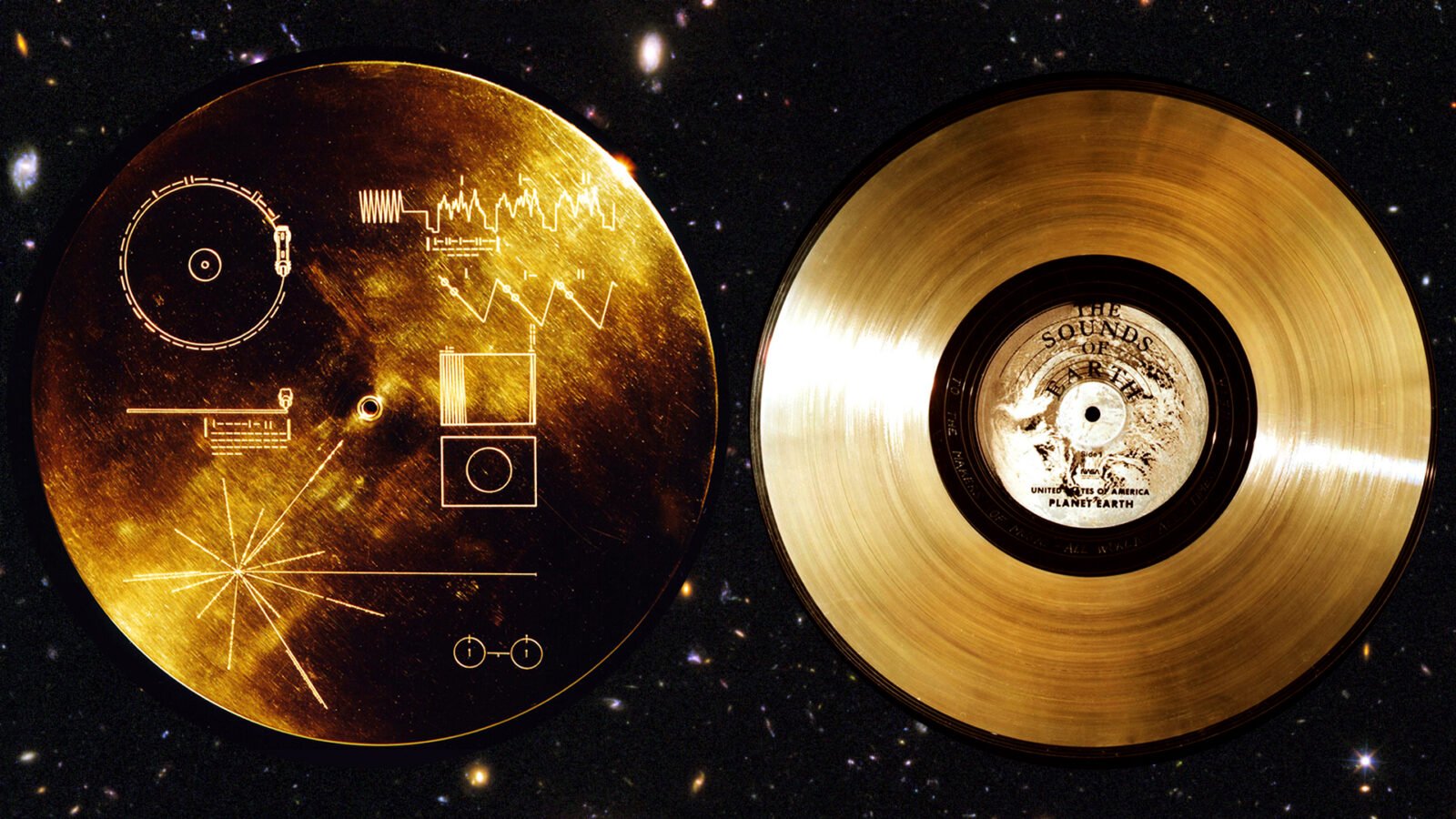
Southeast Asia played a key role in this interstellar playlist. The Golden Record included “Ketawang: Puspawarna,” a Javanese gamelan piece from Indonesia’s Surakarta court. Known for its shimmering metallic tones and cyclical rhythms, gamelan music provides a striking contrast to Western harmony and highlights the depth of Southeast Asia’s artistic traditions. Its inclusion ensured that the region’s culture became part of humanity’s message to the stars, a decision praised by music scholars as a powerful symbol of global diversity.
Voices of Peace Across Cultures
Beyond music, the Golden Record featured spoken greetings in 55 languages, including several from Southeast Asia such as Indonesian, Thai, Burmese, and Vietnamese. These short messages of peace and welcome reflected humanity’s linguistic diversity and reinforced the idea that the record was not meant to represent one culture or nation, but the collective voice of Earth. By ensuring Southeast Asian languages were included, the project highlighted the region’s important place in the planetary chorus.
Humanity’s Signal in Deep Space
Nearly five decades later, Voyager 1 continues its journey in deep space, far beyond the Sun’s protective heliosphere. It is now more than 25 billion kilometers from Earth—about 15.6 billion miles—with radio signals taking over 23 hours to travel one way between the spacecraft and mission control. Though some instruments have been shut down to conserve power, the probe still sends engineering data as it drifts further into the cosmic unknown. Voyager 1 is expected to pass within 1.8 light-years of the star Gliese 445 in roughly 40,000 years, still carrying its Golden Record.
While the odds of discovery remain slim, the Golden Record endures as one of humanity’s most optimistic gestures. It combines scientific diagrams, the sounds of Earth, greetings in dozens of languages, and music that spans from gamelan to rock and roll. More than a time capsule, it is a declaration of curiosity and imagination. As Carl Sagan hoped, it remains a message cast into the cosmic ocean—a reminder that in the vastness of the universe, humanity once dared to speak, and to dream of connection.


