


For learners of East Asian languages, the first challenge is often the writing system. Unlike alphabet-based languages such as English or Spanish, Chinese, Japanese, and Korean use entirely different scripts rooted in logographic or syllabic traditions.
However, among the three, Korean stands out as significantly more accessible to beginners, largely due to its writing system, Hangul.
In contrast, Chinese and Japanese require memorizing thousands of characters, making literacy a much longer and more complex journey.
The Sheer Simplicity of Hangul

One of the main reasons Korean is easier to learn is that its writing system, Hangul, is not only logical but also incredibly compact.
Hangul was invented in the 15th century by King Sejong and his scholars with the specific goal of being easy to learn and use, even by commoners who had no formal education.
Hangul consists of 24 basic letters: 14 consonants and 10 vowels. These characters are combined into blocks that represent syllables.
For example, the word for Korea in Korean, 한국 (Han-guk), is made up of two syllable blocks: 한 (Han) and 국 (Guk), which are composed of three letters each.
Once a learner understands how these letters are formed and combined, reading and writing Korean becomes remarkably intuitive.
Importantly, Hangul is phonetic, meaning that it is written the way it sounds. Learners can pronounce new words accurately just by seeing them written down, a luxury not typically afforded by Chinese or Japanese.
The Challenges of Hanzi
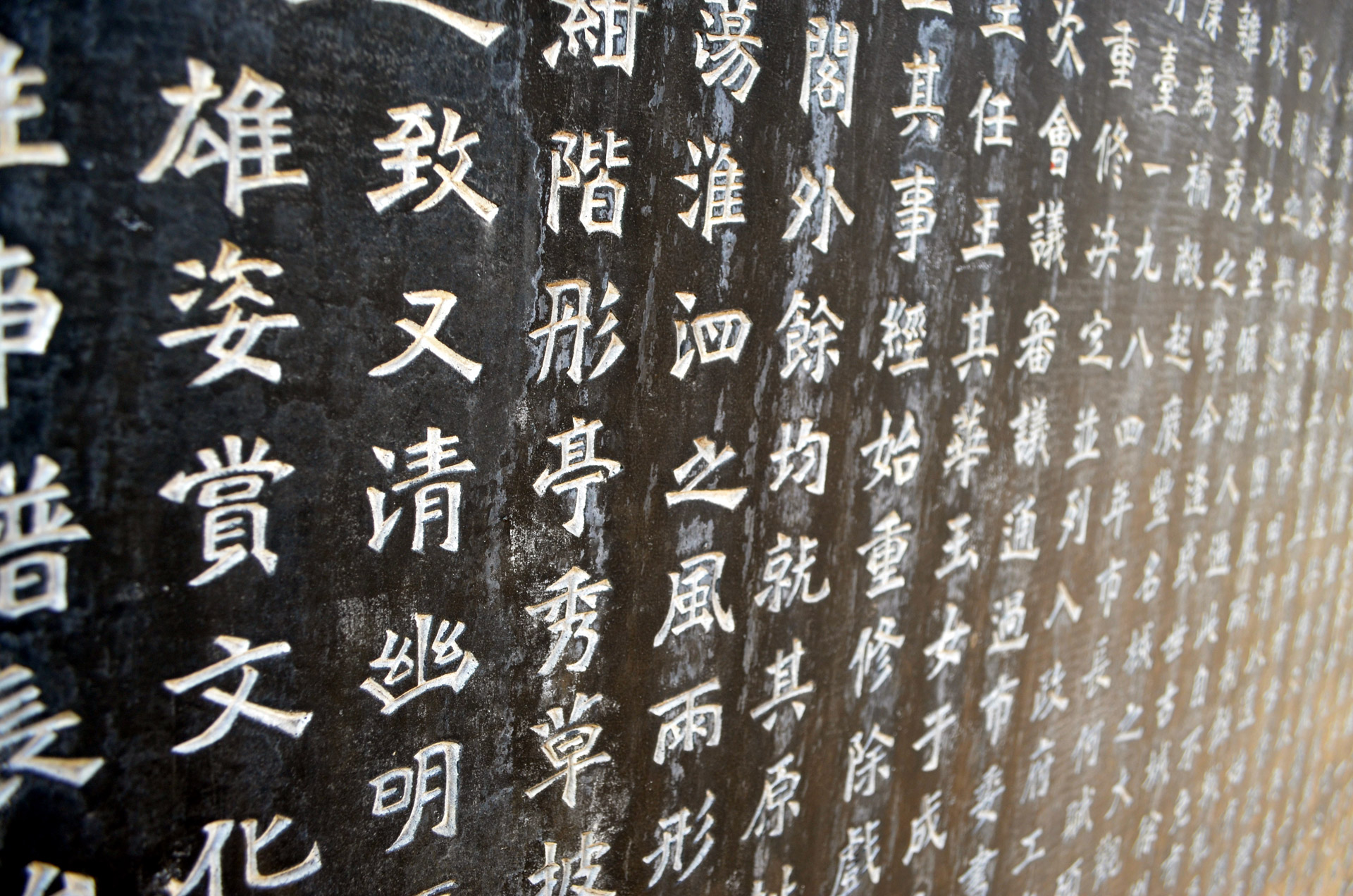
In contrast, Chinese uses Hanzi, which are logograms, each character represents a meaning or word, and there is no alphabet. While Hangul can be mastered in a few days, Chinese requires memorizing over 2,000 characters just to reach basic literacy.
To read a newspaper, one might need knowledge of around 3,000 to 4,000 characters, and a well-educated native speaker may know over 8,000.
Each character must be memorized individually because Chinese is not phonetic. The pronunciation, tone, and meaning of a character must be learned separately, and two characters that look similar can sound entirely different.
This makes Chinese a language where rote memorization is unavoidable. Even learners who grasp the grammar quickly find the writing system to be a major hurdle.
The Three Sets of Scripts in Japanese

Japanese presents its own unique challenge by combining three different scripts: Kanji, Hiragana, and Katakana. Kanji, derived from Chinese characters, share many of the same difficulties: thousands of characters, each with multiple readings and meanings.
Japanese schoolchildren spend years learning Kanji, and adults are expected to know at least 2,000 to function in society.
In addition to Kanji, Japanese uses Hiragana and Katakana, both of which are phonetic syllabaries with 46 basic characters each.
While Hiragana is used for native words and grammatical particles, Katakana is used for foreign words and onomatopoeia. This means that learners must master three different scripts just to be able to read everyday Japanese texts.
Grammar vs Writing System

It’s worth noting that in terms of grammar, Korean and Japanese are fairly similar. Both use subject-object-verb (SOV) order, use particles, and have honorific speech levels.
Chinese grammar, by contrast, is often described as simpler: it has no verb conjugations, no plural nouns, and no tenses in the traditional sense.
But while grammar can be learned through exposure and practice, the writing system presents a more immediate and daunting barrier.
Korean’s Hangul gives learners a massive head start, allowing them to begin reading, writing, and speaking in a matter of days or weeks. This is rarely the case with Chinese or Japanese.
Korean is Perfect for Self-Learners

In today’s world of language apps and online learning, Korean is increasingly attractive to self-learners. Hangul can be taught in an afternoon, and learners can begin building vocabulary and sentences almost immediately.
Chinese and Japanese, however, require months or years of character study before similar progress can be made. This difference in early accessibility often determines whether learners stick with the language or give up out of frustration.
Hangul as a Linguistic Innovation

Ultimately, the main reason Korean is easier to learn than Chinese and Japanese comes down to the writing system. With just 24 letters, Hangul makes reading and writing straightforward and logical.
In comparison, both Chinese and Japanese demand memorization of thousands of characters, each with unique pronunciations and meanings. While each language has its own beauty and depth, Korean’s alphabetic simplicity gives it a unique advantage for new learners.
So, if you’re choosing an East Asian language to study and want to make fast progress in reading and writing, Korean may be your best bet.


