Among the many iconic creatures of Southeast Asia, the Siamese crocodile is one of the least seen, and most endangered. This freshwater crocodile once ruled the rivers and wetlands across the Mekong Basin, serving as a top predator vital to the ecosystem’s balance.
Today, its survival hangs by a thread. According to WWF, the Siamese crocodile is listed as Critically Endangered on the IUCN Red List and included in CITES Appendix I, meaning international trade of this species is strictly prohibited except for conservation purposes.
Meet the Siamese Crocodile
Scientifically known as Crocodylus siamensis, this species can grow up to three meters long and weigh several hundred kilograms. Despite its formidable appearance, the Siamese crocodile is generally shy and prefers slow-moving rivers, swamps, and wetlands.
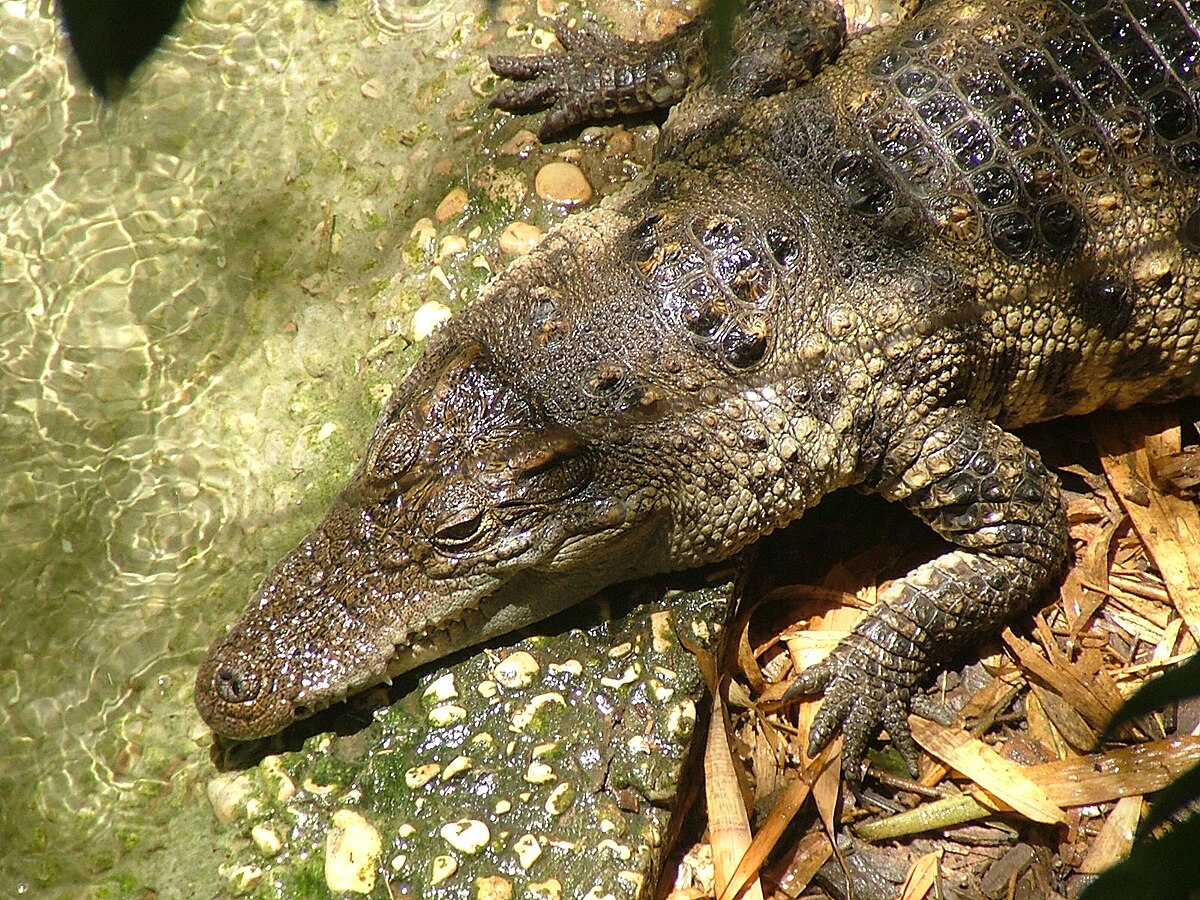
WWF identifies it as one of the rarest reptiles in the world, with an estimated 100 to 300 adults remaining in the wild, primarily in Cambodia.
Historically, these crocodiles were found throughout Thailand, Laos, Viet Nam, and Cambodia, but wild populations have declined sharply due to hunting, habitat loss, and the rise of crocodile farms.
Shrinking Habitats in the Heart of the Mekong
The Mekong Basin, once a thriving habitat for the Siamese crocodile, has been steadily shrinking under the pressure of human development. Expanding agriculture, dam construction, and human encroachment have fragmented the wetlands that this species once called home.
In Thailand and Viet Nam, wild populations are now nearly extinct. In Cambodia, surviving groups remain scattered in the Cardamom Mountains and along parts of the Mekong River north of Kratie, areas where WWF researchers continue to conduct surveys to monitor population health and breeding sites.
Community-Led Conservation in Laos and Cambodia
Laos has emerged as another important stronghold for the Siamese crocodile. Small populations have been recorded in the provinces of Savannakhet, Salavan, and Attapeu. A 2005 Wildlife Conservation Society (WCS) survey confirmed that wetlands in Savannakhet are among the country’s most critical nesting sites for the species.
Following that, the WWF Community Fisheries Project (ComFish) and local authorities organized a crocodile conservation workshop in 2006, bringing together representatives from 14 nearby villages. During field visits, researchers even found crocodile dung, confirming the presence of adult individuals in the wild.
What makes these efforts unique is the role of local beliefs and traditions. In several villages, sacred wetlands are protected under community-based management rooted in merit-making and animist belief systems.
These cultural practices, while spiritual in nature, have become a vital form of environmental protection, showing that indigenous wisdom can work hand in hand with modern conservation science.
Guardians of the River’s Future
The Siamese crocodile is more than a relic of the past, it’s a living guardian of Southeast Asia’s freshwater ecosystems. As an apex predator, it helps regulate prey populations and maintain the health of wetland food chains.
Yet the species continues to face threats from economic expansion, climate change, and limited public awareness. Conservation organizations like WWF and WCS, however, are proving that community involvement can make a real difference.
In areas once thought to have lost their crocodiles, sightings and nest discoveries are slowly increasing, a small but meaningful sign of recovery.
Saving a Symbol of Resilience
The story of the Siamese crocodile is one of endurance and fragile hope. Its journey reminds us that even the most ancient creatures still depend on human understanding and action to survive.
The Siamese crocodile may have vanished from many rivers, but its story isn’t over yet. With awareness, protection, and community collaboration, Southeast Asia still has a chance to save one of its oldest living treasures.