


In Thai history, Queen Suriyothai is remembered for her extraordinary bravery in doing something highly unusual for a queen of her time: entering the battlefield herself. She even disguised herself as a male soldier and rode a war elephant to protect her husband, King Maha Chakkraphat, when Burmese forces invaded the Kingdom of Ayutthaya in the 16th century.
Sacrifice on the Battlefield
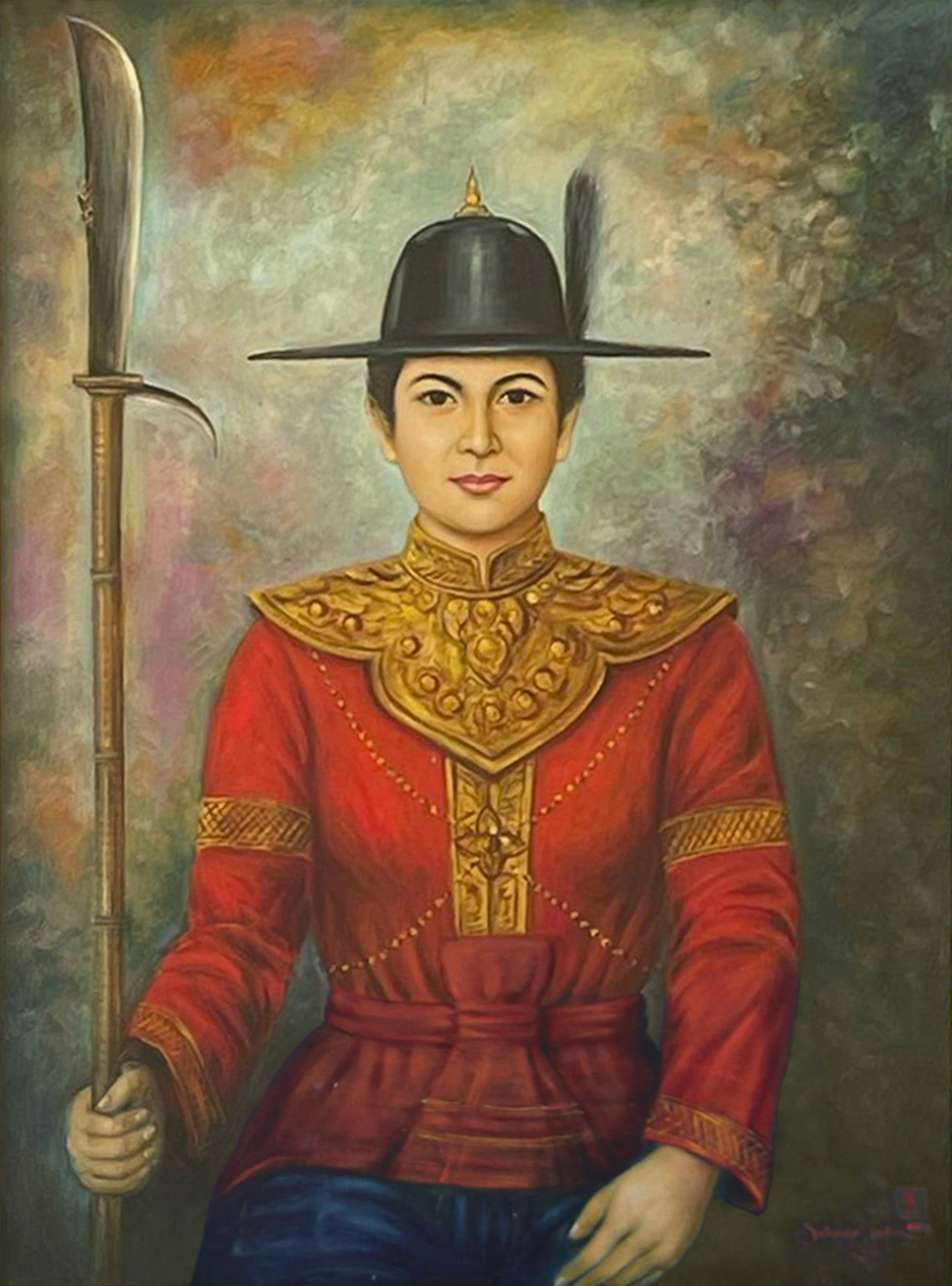
Suriyothai was the consort of King Maha Chakkraphat of the Ayutthaya Kingdom. Historical records about her life are limited, but it is known that the royal couple had at least five children: Phra Ramesuan, Phra Mahin (who later became King Mahinthrathirat), Phra Sawatdirat, Phra Boromdilok, and Phra Thepkassatri.
The event that made her name widely known occurred about six months after Maha Chakkraphat ascended the throne. King Tabinshwehti of Burma launched an invasion to conquer Ayutthaya. Siamese forces then gathered west of the capital to confront the attack.
During the battle, Suriyothai entered the battlefield wearing armor and disguised as a male warrior. She rode a war elephant together with her daughter, Boromdilok, while the king led the army from the main elephant. Their two eldest sons also joined the battle.
When King Maha Chakkraphat faced the Viceroy of Prome from the Burmese side, the elephant he was riding suddenly panicked and retreated, placing him in great danger. Suriyothai immediately drove her elephant forward and positioned herself between the king and the enemy.
The Viceroy of Prome then struck her with a spear that pierced from her shoulder to her heart, an attack that also fatally wounded her daughter. Only when her helmet fell off and her long hair became visible did others realize that the warrior who had blocked the enemy was in fact the queen.
From War Story to National Symbol
Suriyothai’s sacrifice later became an important part of Thailand’s historical memory. Her story continued to be remembered and popularized by royal historians, including Prince Damrong Rajanubhab.
In the 20th century, the story of Suriyothai was also used to strengthen nationalist sentiment. Military leader Phibun Songkhram promoted historical figures as symbols of patriotism.
Alongside Suriyothai, other female figures such as Thao Suranari (Ya Mo), Thao Thepsatri, Thao Sriunthorn, and Princess Suphankalaya were also elevated as symbols of sacrifice for the nation. In 1943, Phibun’s wife even established the Women's Cultural Club, with Suriyothai serving as the organization’s national symbol.
Historical Legacy
The tribute to Suriyothai is embodied in a monument built on the plains of Makham Yong, north of Ayutthaya near the Chao Phraya River. The site is believed to be the location of the battle where the queen fell.
The monument was constructed after Queen Sirikit proposed its establishment during the tenure of Prime Minister Prem Tinsulanonda. The statue was created by sculptor Khaimuk Chuto, a student of Silpa Bhirasri, and was inaugurated in 1995. The main sculpture depicts Suriyothai charging into battle on the back of an elephant, surrounded by Siamese soldiers and figures of ordinary people reacting to her sacrifice.
Although her story is widely known, some historians note that there are differences in the details found in royal chronicles. Some interpretations even suggest that the famous elephant duel may have involved a 16-year-old princess named Phra Boromdhilok. Nevertheless, despite these debates, Suriyothai remains regarded as a symbol of courage in Thai history.
Her story was also brought to the big screen in the epic film The Legend of Suriyothai in 2001, produced by MC Chatrichalerm Yukol with financial support from Queen Sirikit. At the time, the film became the most expensive production in the history of Thai cinema and recorded the highest ticket sales.


