


As the global order undergoes major shifts, the role of developing countries in shaping international cooperation is once again in the spotlight. Indonesia, as one of the region’s middle powers, is taking an increasingly active position within the framework of South-South Cooperation (SSC), a collaborative platform that brings together countries across the Global South.
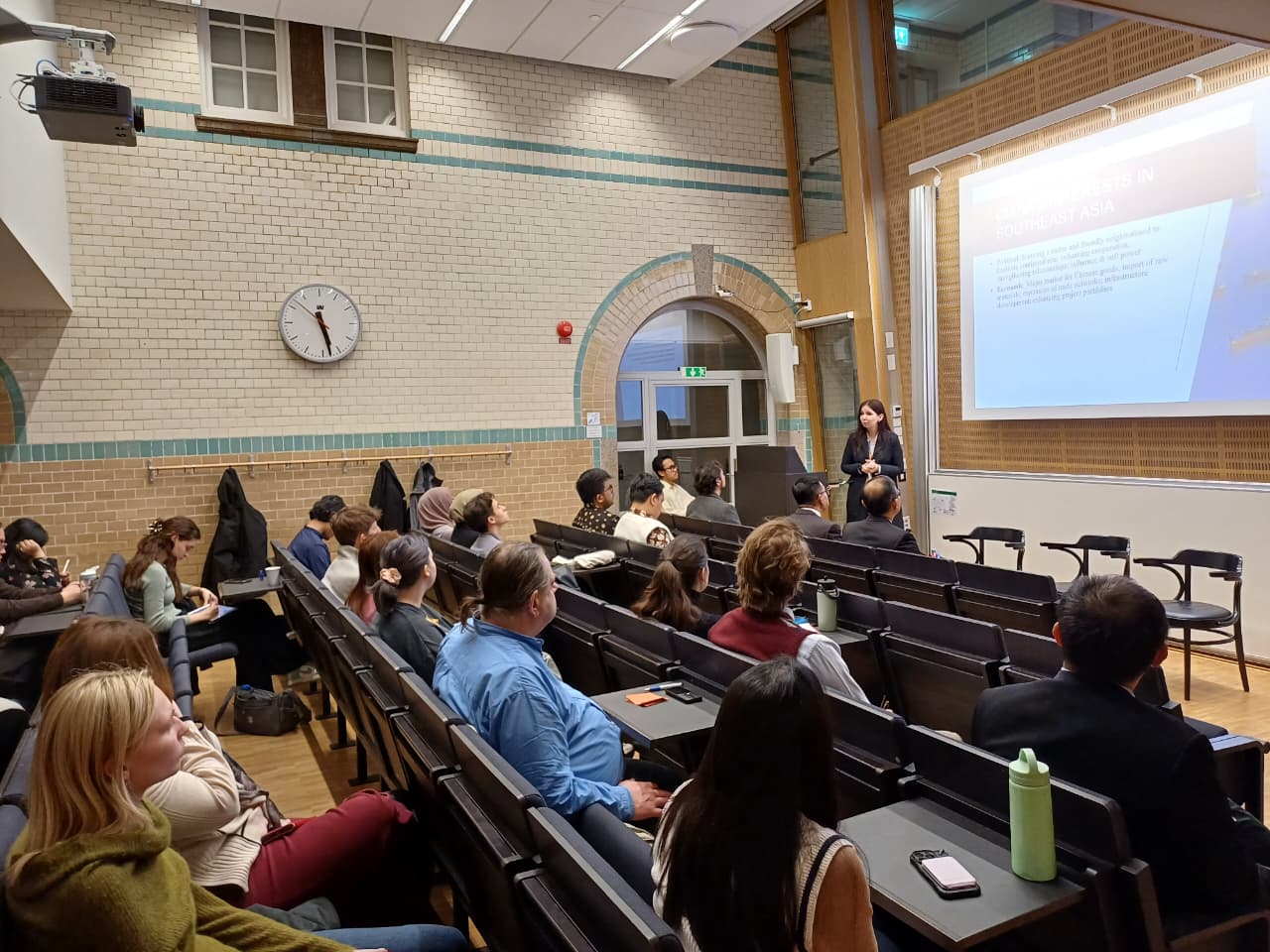
This issue was highlighted in a discussion titled “Indonesia and South-South Cooperation: Its Role in Shaping a New International Order,” held at Lund University on March 26, 2026.
The event was initiated by PPI Scania in collaboration with the Association of Foreign Affairs (UPF) Lund and the Centre for East and South-East Asian Studies. It brought together international students, academics, and members of the Indonesian diaspora.
Building Leadership in Global South Cooperation
Ambassador H.E. Dr. Yayan Ganda Hayat Mulyana emphasized that Indonesia’s involvement in SSC has evolved beyond the technical level. The country has transitioned from once being a recipient of international aid to becoming an active provider of technical assistance to other nations.
He stressed that Indonesia possesses not only the potential but also the credentials, a proven track record, to help lead SSC through the challenging years ahead.
According to him, cooperation has long been at the core of Indonesia’s foreign policy. Through collective efforts, global challenges described as “black swans,” “grey rhinos,” and “unknown unknowns” can be addressed more effectively.
Dr. Tabitha Rosendal, a researcher at the Centre for East and South-East Asian Studies, Lund University, noted that SSC is now at its highest level of relevance in the past 50 years.
She explained that shifts in United States foreign policy under Donald Trump’s second administration have encouraged smaller and middle-power countries to build alternative coalitions and diversify their dependencies.
In this context, Indonesia and Southeast Asian countries have greater space to engage more meaningfully in the international system. She also observed that China is strengthening its commitment to the SSC framework.
Increasing Recognition as Middle Power
In European academic discussions, Indonesia has long been viewed primarily through the lens of its cultural richness and religious diversity. Dr. Tabitha pointed out that such discussions have often overlooked Indonesia’s agency as an active actor in international relations.
However, this trend is beginning to change. More scholars are paying serious attention to Indonesia’s maritime strategy, its role in bridging ASEAN member states, and its diplomatic maneuvering as a middle power.
Dr. Tabitha also predicted that academic influence in shaping discussions about Indonesia and its strategic space will continue to grow in the future.
“This is a country worth paying attention to,” she emphasized, adding that academic engagement with Indonesia is expected to increase further in the years ahead.


