


A study published in the journal Scientific Reports has revealed an intriguing fact about ancient Egyptian mummification practices, some of the key ingredients used in embalming more than 3,500 years ago actually originated from outside Egypt, possibly including Southeast Asia.
This finding not only offers new insight into ancient preservation techniques, but also highlights the extensive global trade networks of the time. Researchers even managed to reconstruct the scent of the balm, now referred to as “the scent of eternity.”
A Discovery from Senetnay’s Tomb
The study focuses on Senetnay, a noblewoman who lived around 1450 BCE and is known as the nurse of Amenhotep II. Her high status is reflected in her burial location in the Valley of the Kings, an exclusive area reserved for royal elites.
However, Senetnay’s body has never been found. What remains are canopic jars that were once used to store her vital organs.
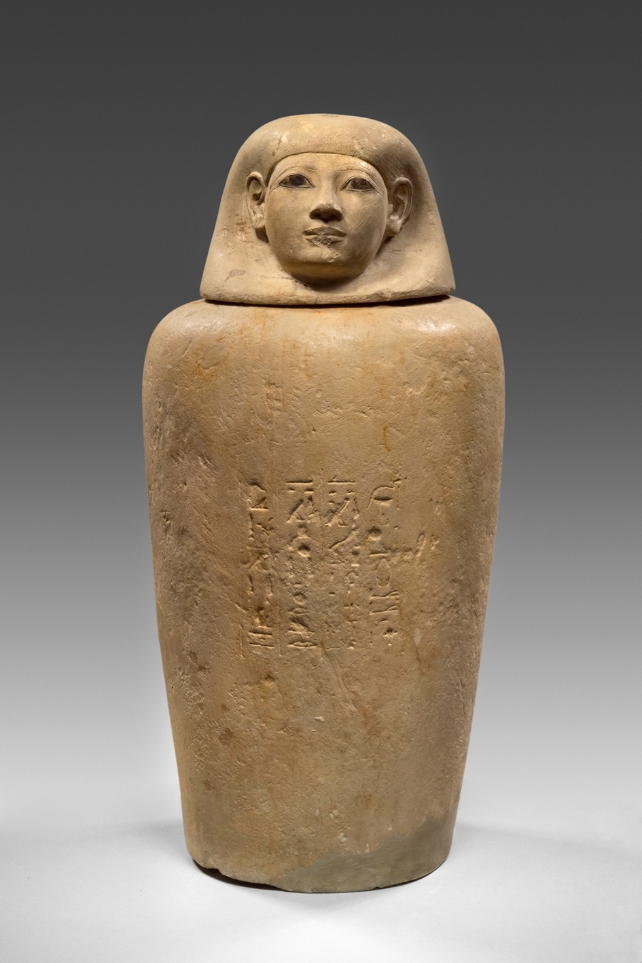
These jars were discovered in 1900 by British archaeologist Howard Carter, who later became widely known for uncovering the tomb of Tutankhamun in 1922. The artifacts also have a remarkable history, having survived the destruction of World War II after being stored in a salt mine in Germany.
From the two jars containing the lungs and liver, researchers collected residue samples absorbed into the limestone.
Although only microscopic traces remained, the analysis revealed that the balm consisted of a complex mixture, including beeswax, plant oils, animal fats, bitumen, resins, and aromatic compounds such as coumarin and benzoic acid.
Decoding Ancient Egyptian Balms
One of the main challenges in studying mummification is the lack of detailed written records from ancient Egypt describing the exact ingredients used. This is why the study is particularly significant, as it relies on modern scientific approaches.
The research team employed techniques such as gas chromatography and mass spectrometry to identify the chemical composition of the balm residue. These methods allowed them to detect specific substances even after thousands of years of degradation, when only minute traces remained.
The results show that the balm used for Senetnay was among the most complex of its time. There were even differences in composition between the jars for the lungs and the liver, suggesting that different formulas may have been used for each organ.
Trade Networks Reaching Southeast Asia
The most striking finding of this study lies in the origin of the materials used. Some resins were traced to regions as far as the northern Mediterranean and Central Europe, such as larch tree resin.
However, another ingredient points to an even more distant source: dammar, a type of resin found only in the tropical forests of South and Southeast Asia, or alternatively resin derived from trees of the Pistacia genus.
If the presence of dammar is confirmed, the implications are significant. It would suggest that ancient Egypt was connected to vast intercontinental trade networks spanning thousands of kilometers. Researchers believe these exchanges likely occurred through multi-layered trade routes rather than direct long-distance journeys.
Furthermore, this discovery indicates that access to materials from Southeast Asia may have existed nearly 1,000 years earlier than previously thought. This strengthens the idea that early forms of globalization were already taking place long before the modern era.
A Scent Connecting the Past and Present
After identifying the ingredients, the research team collaborated with perfume experts to reconstruct the balm’s original scent. The process took several months before producing a fragrance considered close to the original.
The scent is described as warm, resinous, and balsamic—a blend that reflects the combination of tree resins, oils, and other natural substances.
For ancient Egyptian society, this aroma was not merely a fragrance. It carried deep spiritual meaning, closely associated with beliefs about the afterlife.


