


On the morning of December 26, 2004, a 9.1-magnitude earthquake struck Aceh, Indonesia and triggered a tsunami that hit the coastline with waves reaching up to 30 meters. In less than an hour, coastal areas were devastated.
Around 170,000 people lost their lives, 500,000 were left homeless, and the total damage was estimated at US$4.5 billion. The scale of destruction made this tragedy one of the deadliest disasters in modern history—and, unexpectedly, a turning point in a conflict that had lasted for 30 years.
When Disaster Halted War
Before the tsunami, Aceh had been a conflict zone between the Indonesian government and the Free Aceh Movement (GAM) since 1976. Efforts toward peace had actually begun long before the disaster.
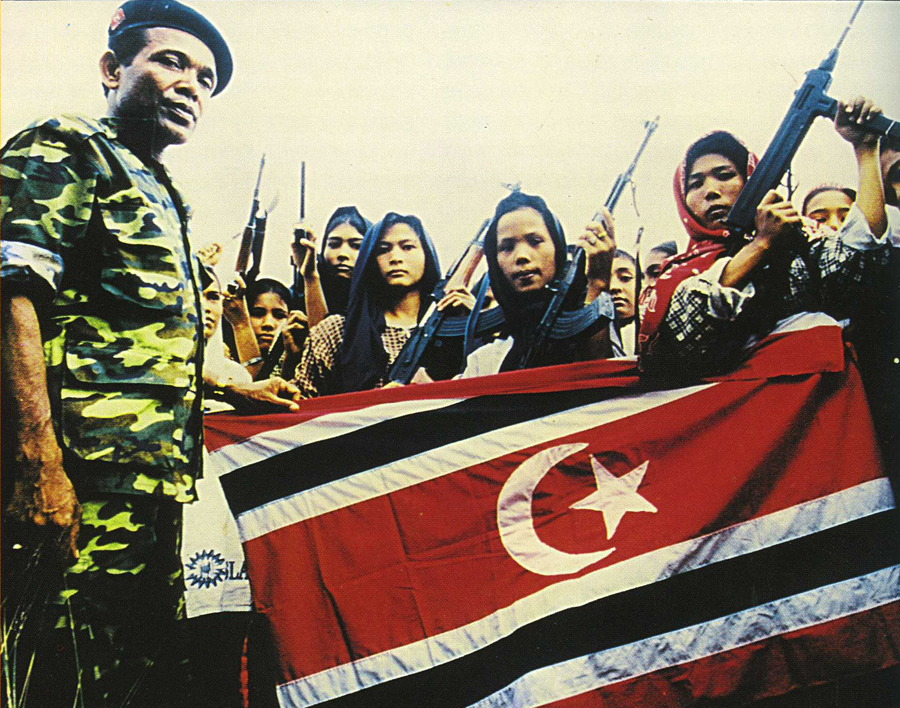
Since 1999, various dialogue initiatives had been facilitated by international actors, resulting in a humanitarian pause in 2000 and a ceasefire agreement in 2002, although both ultimately failed to hold.
The situation deteriorated again in 2003 when the government imposed martial law and launched large-scale military operations. During the conflict period, around 200,000 people were displaced between 1999 and 2001, and another 125,000 were forced to flee within just one year after the military operations expanded.
However, the tsunami dramatically changed the dynamics. The disaster not only brought violence to a de facto halt but also opened up Aceh, previously closed off, to the international community.
Amid the influx of global aid on an unprecedented scale, involving more than 900 international donors and totaling US$6.9 billion, the ongoing conflict became a major obstacle.
The Indonesian government realized that reconstruction would be impossible without stability, while the people of Aceh themselves had long grown weary of prolonged war.
A Turning Point to Peace
Although the tsunami acted as a catalyst, peace did not come instantly. Its foundations had been laid through political reforms after 1998, when the administration of B.J. Habibie opened the path for regional autonomy, later continued by Abdurrahman “Gus Dur” Wahid, who created space for international mediation.
Peace negotiations reached a critical point in early 2005 in Finland, mediated by Martti Ahtisaari. The process was also driven by the role of Jusuf Kalla, who bridged the interests of the government and the military with GAM.
Many of the representatives at the negotiating table had themselves been affected by the tsunami, adding a sense of urgency to end the conflict.
As a result, on August 15, 2005, the Helsinki Memorandum of Understanding (MoU) was signed, bringing an end to three decades of conflict. The agreement included the disarmament of around 3,000 GAM combatants, the surrender of hundreds of weapons, the withdrawal of government troops, and the granting of amnesty.
Aceh was also granted special autonomy, including the right to form local political parties, use regional symbols, and receive up to 70% of revenues from natural resources within the region. In addition, mechanisms such as a human rights court and a reconciliation commission were established to address past violations.
A New Chapter for Aceh
Following the agreement, the implementation of peace was monitored by a joint international mission involving the European Union and ASEAN countries.
The disarmament process and troop withdrawal were carried out in stages, while reconstruction was managed through the Rehabilitation and Reconstruction Agency (BRR), established by then-President Susilo Bambang Yudhoyono to coordinate national projects and global assistance.
Aceh has since transformed into a region with special autonomy and a unique local political system within Indonesia. Although occasional tensions still arise, peaceful approaches have remained the primary path forward.


