


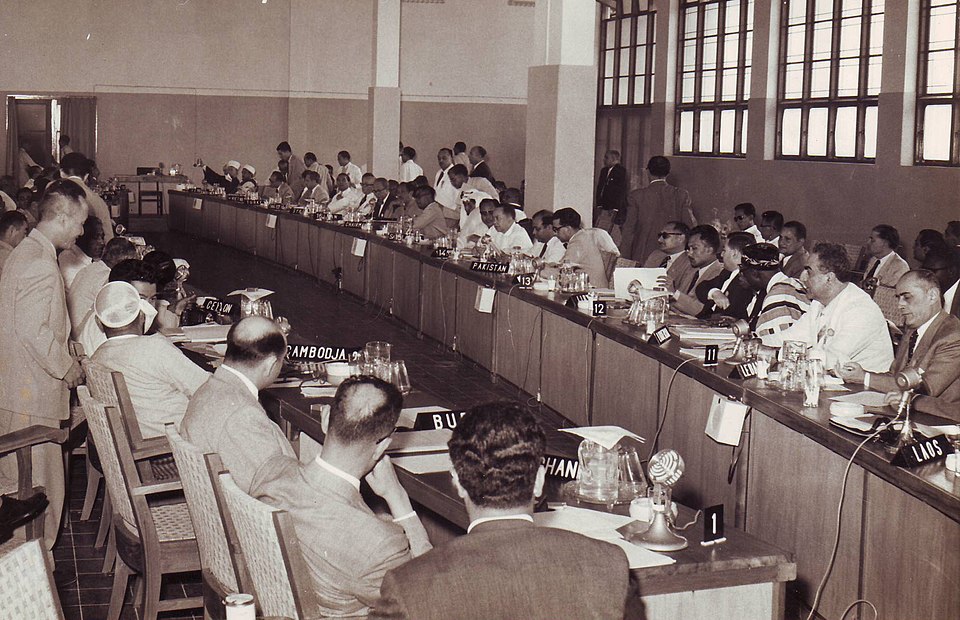
From April 18 to 24, 1955, twenty-nine Asian and African countries gathered in Bandung, Indonesia, in an unprecedented moment in the history of modern diplomacy. Bandung Conference was sponsored by five countries: Burma, Ceylon, India, Indonesia, and Pakistan, alongside 24 other participating nations from the two continents. Together, they represented around 1.4 billion people, more than two-thirds of the world's population at the time.
For the first time, leaders of nations that had lived for centuries under colonial rule sat at the same table to discuss their own futures, without a single colonial power in the room. Among those present were Prime Minister Chou En-Lai of China, Jawaharlal Nehru of India, U Nu of Burma, and President Gamal Abdel Nasser of Egypt, alongside Sukarno as host and President of Indonesia.
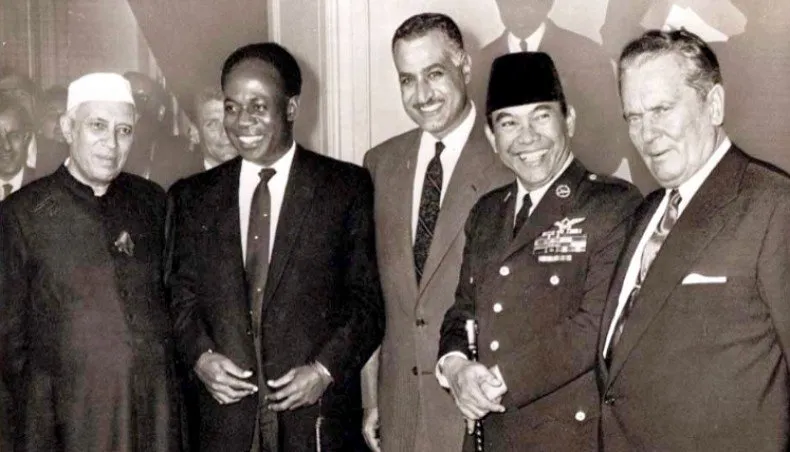
In his opening speech, President Sukarno called it "the first intercontinental conference in world history."
Sukarno kicked off the conference with a bold statement: the gathering must "give guidance to mankind" and "show the way to safety and peace." He also reminded the delegates of the historical burden they shared together.
"For many generations our peoples have been the voiceless ones in the world. We have been the unregarded, the peoples for whom decisions were made by others whose interests were paramount."
Born from the Wounds of Colonialism
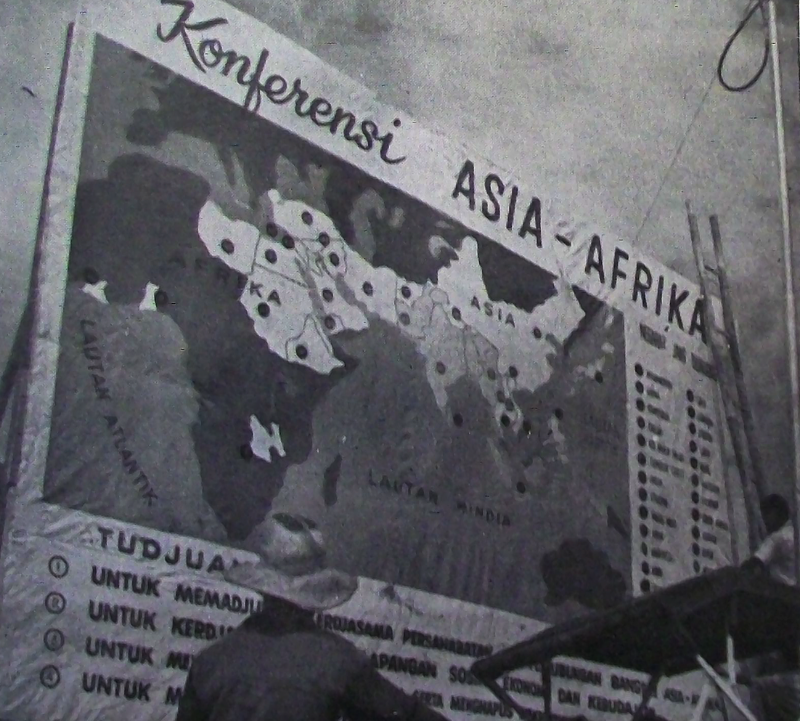
The conference was not merely an ordinary diplomatic event. The end of World War II in 1945 did not bring lasting peace to Asia and Africa.
Many regions remained under colonial rule or were still fighting for independence, including Algeria, Tunisia, and the Congo. Even newly independent states continued to face conflicts rooted in colonial legacies, among them Palestine, Kashmir, and West Irian.
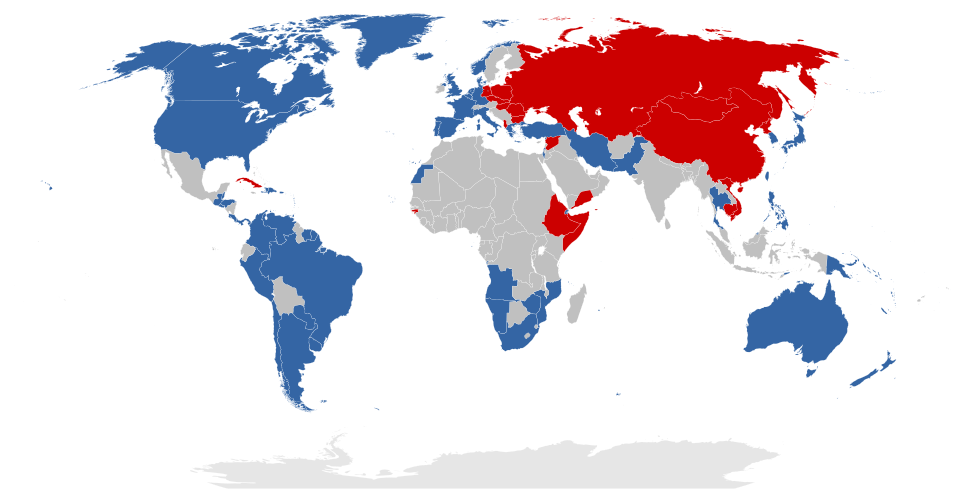
Meanwhile, the Cold War rivalry between Western and Eastern blocs had turned Asia and Africa into arenas of competing influence, pressuring newly independent nations to align with one side through economic aid, military alliances, and political cooperation. This pattern created new forms of dependency, widely seen as a continuation of colonialism.
The idea of moving beyond this dynamic had already emerged at the Colombo Conference in 1954, where five Asian nations recognized that colonialism and conflict also affected Africa. This was reinforced at the Bogor Meeting later that year, where the plan to expand into an Asia-Africa forum was approved and Indonesia was appointed as host.
The geopolitical stakes were high. The United States had only recently used atomic bombs on Japan in 1945, bombed Korea's infrastructure to the ground, and openly threatened China with nuclear weapons if it violated the Korean armistice.
Britain was still conducting military operations in the Malayan Peninsula, while France was fighting in Indochina. The bloodshed across Asia had barely dried when those leaders arrived in Bandung.
As Richard Wright, the African American writer who attended Bandung in person, wrote, the conference introduced something new, “something beyond Left and Right,” with a dimension he described as “extra political, extra social, and almost extra human.”
Ten Principles That Remain Relevant
The most important outcome of the conference was the ten principles known as the Dasasila Bandung, or the Bandung Principles. These principles included respect for sovereignty, non intervention in the domestic affairs of other states, rejection of defense pacts serving the interests of major powers, and the peaceful settlement of international disputes.
The Dasasila expanded upon the Panchsheel, the five principles of peaceful coexistence previously formulated jointly by China and India in 1954, by gaining the collective endorsement of all twenty nine participating countries at the conference.
The conference also directly encouraged the creation of various multilateral institutions. In 1961, the Non Aligned Movement (NAM) was officially established. Three years later, the Group of 77 (G77) emerged as a platform for developing countries in international economic forums.
UNCTAD was founded in 1964, and during its 60th anniversary commemoration, UNCTAD Deputy Secretary General Pedro Manuel Moreno stated that the institution was born “with the same spirit as the Bandung Conference.”
A Living Legacy, a Spirit Yet to Return
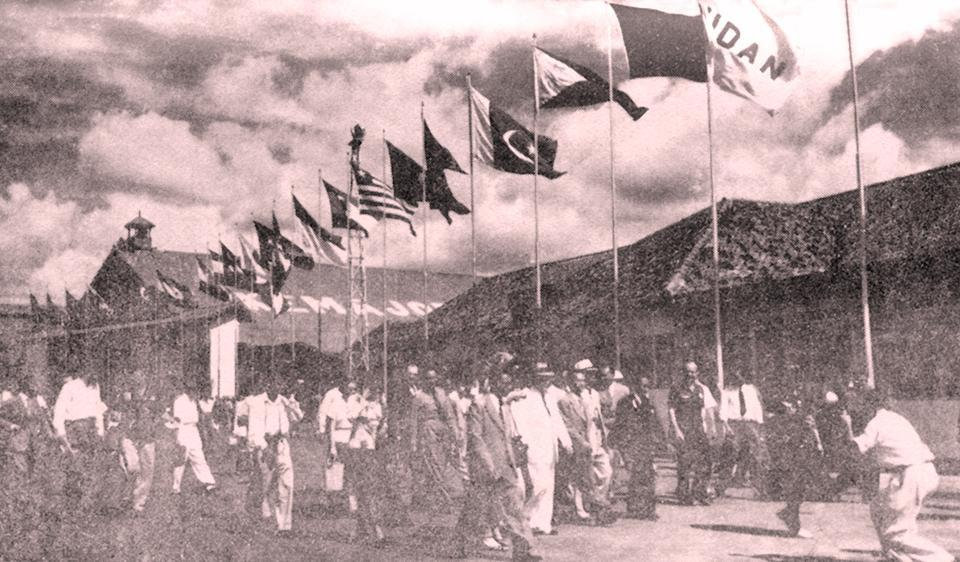
Seventy years after Bandung, the conference’s concrete impact can still be felt through institutions such as the NAM, G77, UNCTAD, and the emergence of BRICS, which now includes thirteen partner countries. In 2025, during the 70th anniversary of the conference, Indonesia officially joined BRICS as a full member.
Its symbolic legacy remains equally powerful. During the 50th anniversary commemoration in 2005, 106 out of 177 countries returned to Bandung.
Heads of state walked along Jalan Asia Afrika, a street named to commemorate the original conference, toward the very same venue visited by their predecessors half a century earlier.
Yet the original spirit of Bandung, born from the mass movements of millions of colonized people, has not fully returned.
The economic structures inherited from colonialism, the Third World debt crisis, and a series of coups that overthrew pro Bandung leaders in Congo, Ghana, Brazil, and even Indonesia itself, gradually eroded that collective foundation. What remains today is often more nostalgia than a living political movement.
Bandung 1955 nevertheless remains a historic milestone, proof that nations once considered “voiceless” were capable of sitting at the same table, formulating their own principles, and reshaping the course of global diplomacy.