There's a particular kind of discomfort that comes with watching something good being taken away.
In Malaysia, for the better part of four years, a quietly extraordinary thing happened.
The government threw open the doors; full import duty exemptions, no excise tax, a floor price low enough that brands were lining up to ship in fully built electric vehicles from China, Europe, wherever. Showrooms bloomed. Price tags that would've been unthinkable for an EV just a decade ago started appearing on windscreens. A BYD for under RM100,000?
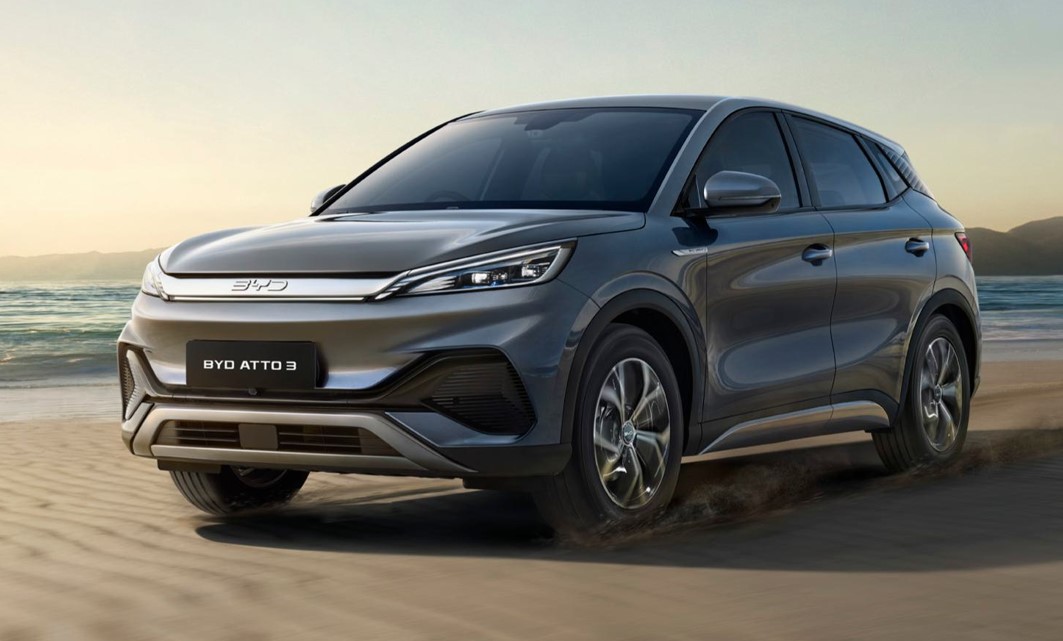
For a brief, golden window, that was the kind of sentence you could say out loud without people looking at you sideways.
That window closed on December 31, 2025.
And now MITI has made it official. Starting July 1, 2026, all fully assembled overseas imports must meet a minimum Cost, Insurance and Freight value of RM200,000, with a minimum power output of 180kW. The on-the-road floor price, meanwhile, has been formally set at RM250,000 for CBU electric vehicles.
The reaction online was predictable. Social media filled with the usual despair — so now only the rich get EVs — and, honestly? That frustration isn't entirely wrong. There's a real cost to this.
Some industry observers had warned prices could rise by at least 20 to 30 percent minimum, with others suggesting as much as a 100 percent increase. The era of the RM80,000 Chinese EV sitting in a gleaming dealership is, for now, over.
But here's the thing about living in Southeast Asia long enough, writing about it long enough, watching government policy shift and settle and shift again - sometimes the uncomfortable move is the correct one. Not the popular one. Not the one that wins headlines. The correct one.
A little context, because context is everything
Malaysia didn't arrive at this policy by accident or arrogance. It started in Budget 2022, when the government announced full exemption of import and excise duties for all CBU EVs, kicking in January 1, 2022.
A minimum price of RM100,000 was set to prevent a deluge of cheap imports from China. The window was supposed to close end-2023, but the Madani government extended it to end-2024, then again to end-2025.
Four years. That's a long runway. Brands that paid attention used it well. Several automakers already have CKD operations for their EVs in Malaysia — Volvo, Mercedes-Benz, Chery, TQ Wuling. In 2026, the list grows further with BYD, Leapmotor, MG, and XPeng. Zeekr and Volkswagen have also committed to CKD operations.
That's not a list of companies sulking. That's a list of companies planting flags.
The scenario nobody puts in a press release
Picture this: a 34-year-old engineer in Shah Alam. He's not wealthy. He drives a Perodua Bezza, saves carefully, tracks his spending in a notes app on his phone.
In 2024, he nearly bought a BYD Atto 3. He went to the showroom twice. He read the spec sheets. He talked himself out of it because he wasn't sure about servicing, wasn't sure about resale, wasn't sure if the brand would still be here in five years.
His hesitation wasn't irrational. It was the hesitation of someone who has lived long enough in this country to know that cheap doesn't always mean stable, and that a car especially an EV - is a long-term relationship, not a transaction.
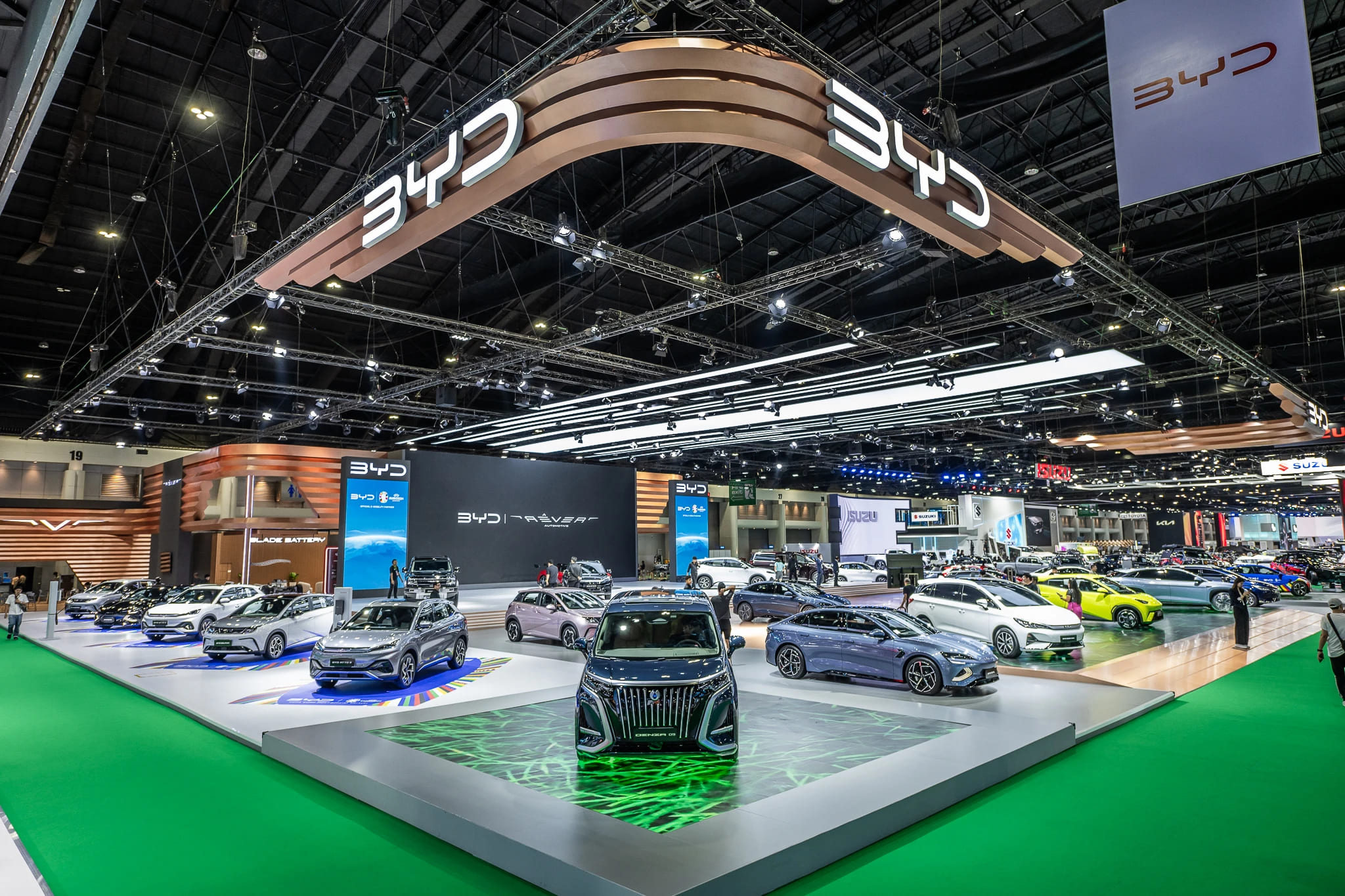
Now imagine, a few years down the line, BYD has an actual assembly plant in Tanjung Malim. BYD's new EV assembly plant in Tanjung Malim is currently under construction.
There are trained technicians. There are spare parts in the supply chain, not shipped from Shenzhen on a six-week lead time. There are Malaysian engineers who built the line, who understand the product, who can service it.
That engineer in Shah Alam? His next conversation at the showroom is different. The car might cost more than it did in 2024. But the ecosystem around it; the confidence, the infrastructure, the long-term ownership reality - is incomparably better.
That's the trade-off being made here. And it's worth naming it clearly.
Why this matters beyond Malaysia's borders
ASEAN is in the middle of something genuinely historic. The old automotive order - built on Japanese and European legacy brands, on ICE dominance, on assumptions about who builds cars and who merely buys them - is fracturing in real time.
Thailand moved early on assembly. Indonesia bet on nickel and battery raw materials. Vietnam has VinFast, which, whatever you think of it, represents a country deciding it wants to make things, not just sell them.
By setting these high entry barriers for imports, the Malaysian government aims to protect national economic interests and encourage manufacturers to invest in local CKD assembly operations for more affordable EV models.
Malaysia's positioning is different from its neighbours, and arguably more interesting. It isn't trying to be the cheapest. It's trying to be the most capable.
The semiconductor play, the software and engineering talent base from decades of multinational presence in Penang and Selangor, the Proton-Geely relationship that brought unexpected sophistication into the national car story — all of it feeds into a vision of Malaysia as a high-value node in the regional EV supply chain, not just a consumption market.
Malaysia will be the first country outside of China to assemble Zeekr vehicles, as part of a global expansion plan — the first model being the 7X SUV. That's not a footnote. That's a signal.
And for the region, Malaysia staying genuinely competitive matters in ways that go beyond national pride.
A Southeast Asia that has multiple serious EV manufacturing presences — not just one or two dominant hubs — is a Southeast Asia with more negotiating power, more resilience in supply chains, more ability to absorb the shocks of global trade disruption. We've had enough lessons in what happens when the region is simply dependent.
The honest caveat
This article would be dishonest if it didn't acknowledge the tension.
The excise duty and sales tax exemptions for CKD EVs will only last until the end of 2027, which has been seen by some automakers as too short a period to be fully beneficial to them.
The window being offered to CKD manufacturers is real, but not infinitely patient and the Malaysian Automotive Association's point - that CBU incentives are critical in creating consumer awareness, market confidence, and demand readiness, all of which are necessary for the eventual success of CKD EVs — isn't wrong.
You need a market to want EVs before it makes sense to build them locally at scale.
The balance is delicate. It always is.
But the direction? The direction feels right to me. Not as a cheerleader for any particular government or policy. But as someone who has watched this region move — haltingly, messily, sometimes brilliantly — toward something more self-determined.
Malaysia has always been good at building relationships, at threading between giants, at finding its lane. The question has never really been whether Malaysia could play a serious role in the future of mobility.
The question is whether it would be bold enough and patient enough — to actually claim it.
The price wall is uncomfortable. It was supposed to be.
The writer covers regional development and cultural shifts across Southeast Asia. She has spilled coffee on more policy documents than she'd like to admit.