


World War II, which lasted from 1939 to 1945, was the largest and deadliest global military conflict in human history. The war involved more than thirty countries divided into two major opposing military alliances: the Allied Powers (led by the United States, the Soviet Union, the United Kingdom, and China) against the Axis Powers (led by Nazi Germany, the Empire of Japan, and the Kingdom of Italy).
The conflict erupted across different parts of the world, from the deserts of North Africa and the major cities of Europe to vast stretches of the oceans.
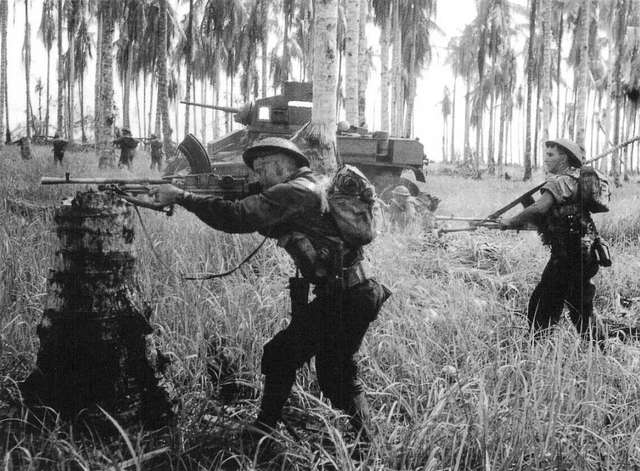
In the Eastern Hemisphere, the conflict took the form of the Pacific War, often referred to as the Greater East Asia War. This theater of war centered on the military expansion ambitions of the Empire of Japan to gain control over natural resources across Asia, including the Indonesian archipelago, which was still under Dutch colonial rule at the time.
The Pacific War had characteristics that were very different from those of the war in Europe. Rather than tank battles on open plains, the Pacific War was a brutal logistical war fought across vast oceans, remote islands, and unforgiving tropical jungles.
The Pacific battlefield during World War II is known as one of the most brutal theaters in human history. Beneath the dense canopy of tropical forests, soldiers risked their lives not only against enemy bullets. They also had to survive malaria, extreme dehydration, and severe infections caused by gunshot wounds.
A Medical Innovation from the Coconut Tree
Amid this life-or-death emergency that determined the fate of thousands of troops, a medical miracle emerged from the tree most commonly found along the coasts of the Indonesian archipelago.
Young coconut water suddenly took on a new role as an emergency intravenous fluid. In medicine, intravenous administration is a method of delivering fluids or medication directly into a vein through an infusion needle. This route is the fastest way to save lives because the fluid enters the body's circulatory system directly without going through the time-consuming digestive process.
In the midst of battle, such emergency intravenous treatment became the line between life and death. When a soldier lost a large amount of blood due to a gunshot wound, blood pressure could drop drastically and trigger the failure of vital organs.
Injecting coconut water directly into the veins of soldiers was a radical innovation that succeeded in saving the lives of thousands of frontline troops.
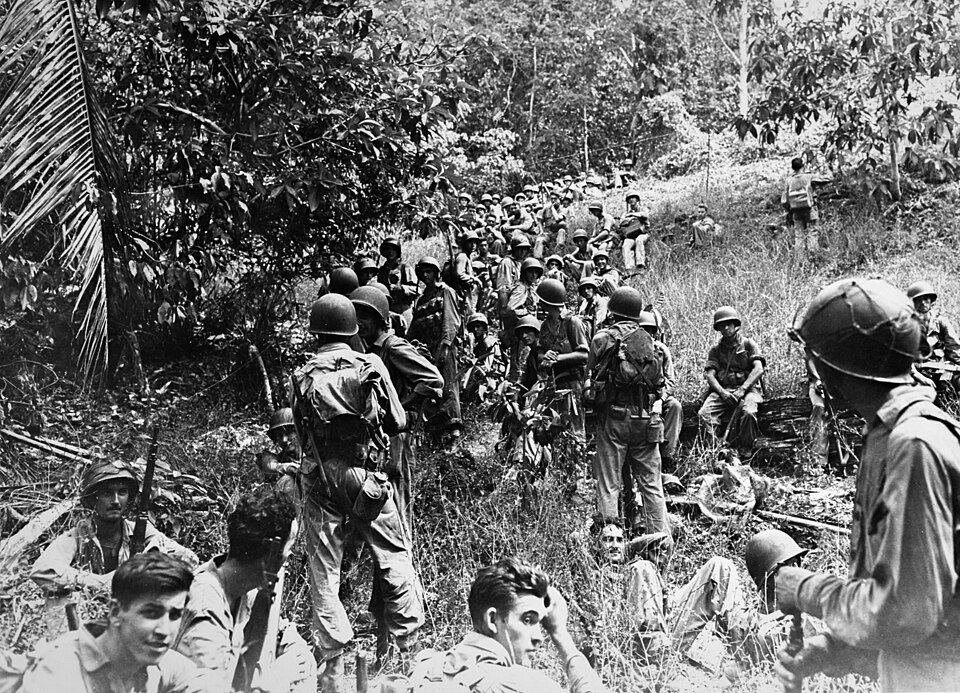
This unique story began when medical supplies for both the Allies and Japan were frequently cut off completely due to strict naval blockades. On front lines such as Papua, Maluku, and the interior of Kalimantan, supplies of artificial blood plasma often ran out entirely. Yet severely wounded soldiers who had lost large amounts of blood required immediate treatment to prevent deadly hypovolemic shock.
Under these critical and seemingly hopeless conditions, military doctors in the field began to look at the abundant coconuts growing around their camps. They undertook a daring measure that would later be recorded as a major breakthrough in the history of military medicine.
A Biochemical Miracle Inside the Shell
The decision by military doctors to inject coconut water directly into patients' blood vessels was not mere speculation. Modern science later demonstrated that young coconut water, while still sealed inside its shell, possesses highly unique properties.
The liquid remains completely sterile because it is protected by the thick husk and shell of the coconut. This natural sterility was especially crucial on Pacific battlefields, where germs and tissue-decaying bacteria were widespread.
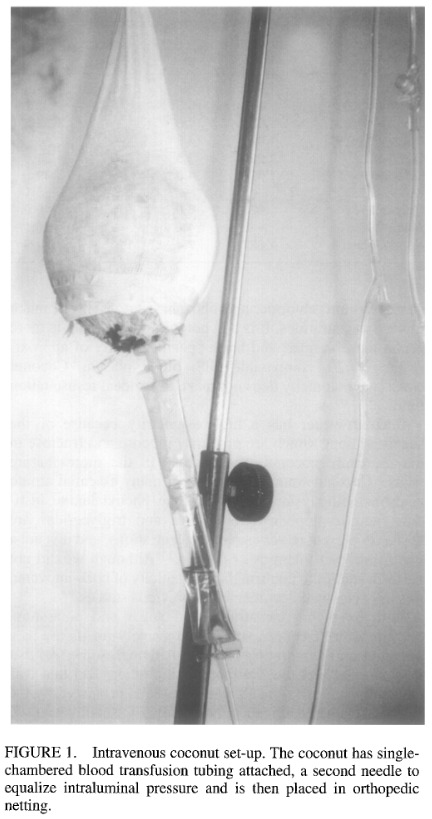
Biochemically, coconut water has an osmolality very similar to that of human blood plasma. Its electrolyte content, rich in potassium, calcium, and magnesium, allows the fluid to be accepted by the body without causing dangerous rejection reactions.
When conventional IV bags ran out, doctors would harvest young coconuts directly from the trees. They would puncture the shell with a sterile needle and channel the liquid directly into the veins of soldiers on the brink of death. This tropical fluid worked immediately to replace lost blood volume and stabilize the patient's circulatory pressure.
The Coconut Tree as a Lifesaver on the Front Line
The use of coconut water as a substitute for blood plasma was practiced by both sides of the conflict. Medical reports from various Pacific battlefields documented the effectiveness of this method, both among Allied forces under the command of General Douglas MacArthur and within the Imperial Japanese Army.
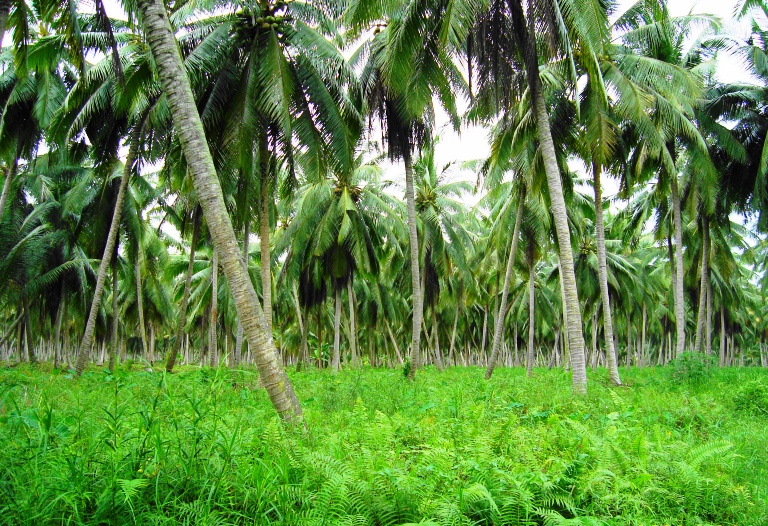
On the remote islands of the Indonesian archipelago, coconut trees were no longer merely sources of shade or food supplies. They became sources of natural intravenous fluid that met the most urgent medical needs during wartime.
The success of this emergency innovation demonstrated that adaptation to local ecology was one of the most important keys to survival on the battlefield. Many young soldiers from the United States, Australia, and Japan managed to return home because of the fluid from this tropical tree.
They survived not because of modern medical supplies from advanced laboratories in New York or Tokyo, but because the natural environment of the Indonesian archipelago unexpectedly became part of their struggle for survival.
References:
- Campbell-Falck, D., Thomas, T., Falck, T.M., Tutuo, N., & Clem, K. (2000).The intravenous use of coconut water. American Journal of Emergency Medicine, 18(1), 108-111. DOI: 10.1016/s0735-6757(00)90062-7
- Siniorakis, E., et al. (2014).Evolution of fluid therapy. Best Practice & Research Clinical Anaesthesiology (ScienceDirect)


