

The relationship between Indonesia and Thailand started long before both countries became modern independent nations. Even though official diplomatic ties were established in 1950, people-to-people relations began centuries earlier.
One of the clearest signs of this history is Makkasan, a neighborhood in the Ratchathewi District of Bangkok. The name is actually tied to Makassar, the capital of South Sulawesi, Indonesia. It reflects a deeply connected past between the two regions.
The Royal Escape from South Sulawesi
The story of Makkasan dates back to 1669. At the time, the Dutch East India Company was expanding its influence over Indonesia. After losing a brutal war, Sultan Hasanuddin of the Gowa Kingdom was forced to sign the Bongaya Treaty, a one-sided deal that benefited the Dutch.
However, his son, Prince Daeng Mangalle, refused to live under foreign control. Disappointed by the treaty, he gathered over 200 loyal followers and sailed north toward Siam (the old name for Thailand).
Upon their arrival, King Narai of Siam welcomed the group, granted them political asylum, and gave them a piece of land near the capital city of Ayutthaya to settle down. The local Thai people called these new Muslim neighbors Khaek Makkasan, a term used back then for guests coming from outside of Europe. The Makassar community lived there peacefully.
A Failed Rebellion
According to a study by Nuhung and Arie Azhari in the journal Talenta Conference Series: Local Wisdom, Social, and Arts, King Narai’s throne was highly unstable at the time due to constant rumors of coups and rebellions.
The Makassar settlers lived right next to a Malay community that had arrived before them. Soon, people from this Malay group, alongside the Champa community, started plotting a rebellion to overthrow King Narai. Daeng Mangalle actually knew about the plot, but he wanted absolutely no part in it.
The uprising ended up falling apart because many of the Malay conspirators backed out. Even though there was zero proof connecting the Makassar people to the plot, the paranoid King demanded that all three groups, the Malays, the Champa, and the Makassar settlers, come forward and confess.
The Malay and Champa groups hesitated at first but eventually gave in, surrendering to the King and telling him everything. Some were pardoned, while others were punished.
However, the Makassar Prince refused to show up. Since he never intended to rebel in the first place, he had nothing to apologize for.
This defiance sparked an all-out war. The King’s army quickly surrounded the Makkasan area. The Makassar warriors were completely outgunned, lacking any of the advanced weaponry their enemies had. Instead, they went into battle with nothing but traditional badik (daggers) and spears.
Outnumbered and outgunned, the Makassar fighters were finally defeated by the much larger army. Many lost their lives in the brutal fighting, including Daeng Mangalle.
Moreover, the incredible bravery of Daeng Mangalle and his people surprised everyone, including the King of Siam. Moved by their courage, the King forgave Daeng Mangalle’s two sons, Daeng Tulolo and Daeng Ruru. Instead of punishing them, he sent them to France to study at a top military school under King Louis XIV.
Makkasan Today
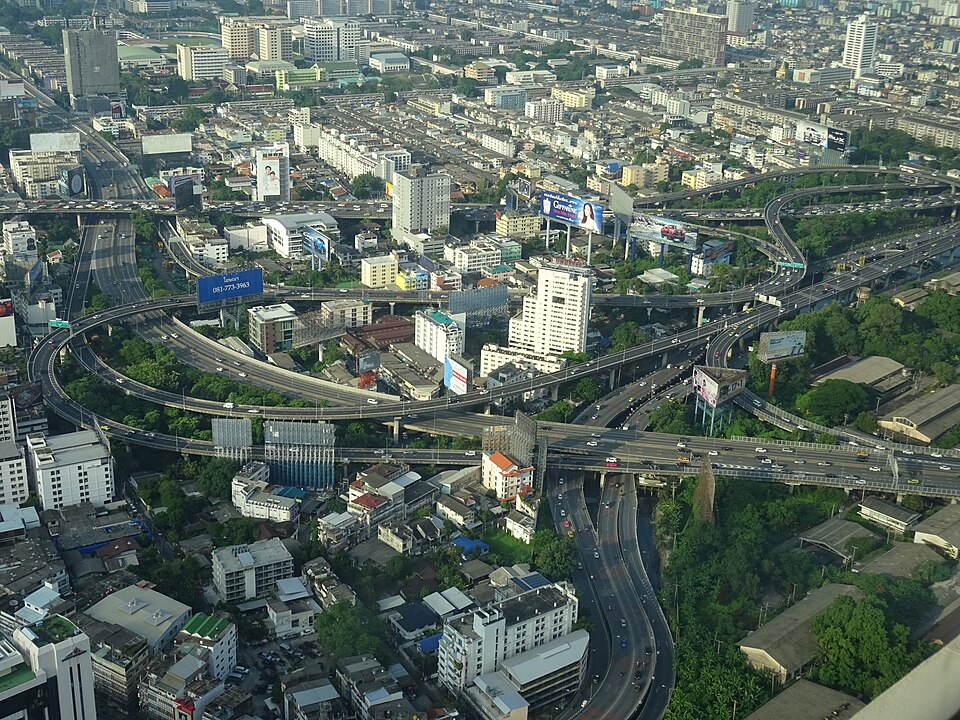
Today, Makkasan is undergoing a massive transformation. The Thai government is turning the area into a futuristic "smart city" and a major economic hub.
The area is being filled with all kinds of useful facilities, including offices, shopping malls, housing, parks, schools, and hospitals.
Even with all these modern changes, the name "Makkasan" remains a lasting reminder of the Makassar people who once lived in Siam. The name is still used today for local landmarks like Makkasan Station, Bueng Makkasan (Makkasan Lake), and the Makkasan Interchange.



