In the early 1960s, the Indonesian Air Force operated one of the largest and most advanced Soviet supplied air fleets outside the Warsaw Pact.
Becoming the first air force in Southeast Asia to field strategic bombers and among the few in the Southern Hemisphere equipped with Mach 2 supersonic fighters
Much of this transformation was made possible through extensive military cooperation with the Soviet Union under President Soekarno.
As Cold War rivalries intensified, Indonesia emerged as one of Moscow’s largest arms recipients outside the communist bloc. Rapidly building an air force that rivaled those of far wealthier nations.
MiG-17: The Backbone of Indonesia's Fighter Jets
In the golden era of Indonesia’s military expansion, the MiG-17 formed the backbone of Indonesia's fighter force.
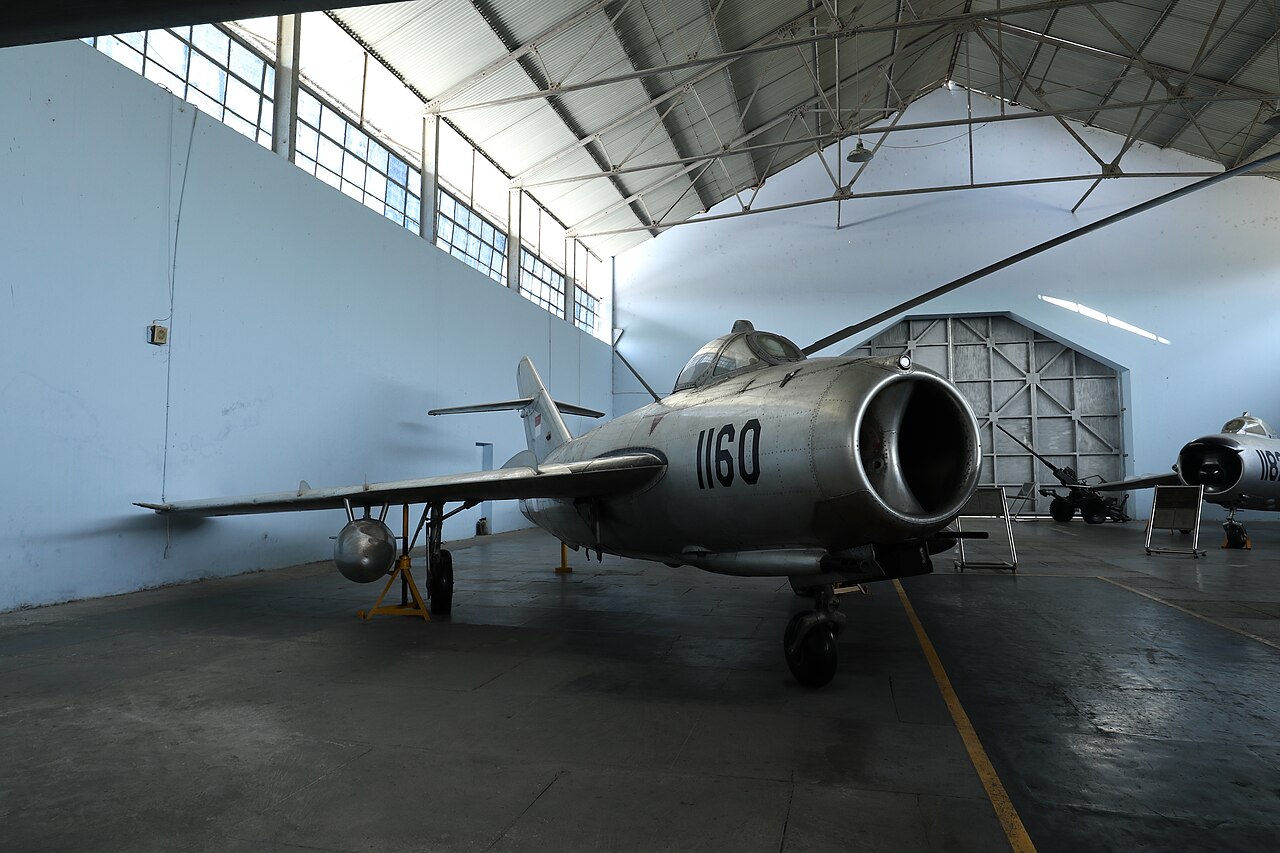
Indonesia began ordering Soviet combat aircraft following the January 1961 arms agreement between Jakarta and Moscow. MiG-17 deliveries arriving primarily throughout 1961 and 1962 as part of the military buildup for Operation Trikora.
Approximately 40-49 MiG-17F/PF entered Indonesian service, making them the most numerous combat aircraft in the country's inventory.
Known for its exceptional maneuverability, the MiG-17 later gained worldwide recognition during the Vietnam War for its ability to challenge more technologically advanced American fighters in close range combat.
Powered by a single Klimov VK-1 turbojet engine, the MiG-17 could reach speeds of approximately 1,145 km/h and was armed with one 37 mm cannon and two 23 mm cannons, making it highly effective in close range dogfights.
Within the Indonesian Air Force, the MiG-17 served primarily as an air defence fighter and ground attack aircraft during Operation Trikora (1961-1962).
Remained operational during the early years of the Indonesia-Malaysia Confrontation.
MiG-19: The First Supersonic Fighter
The transition into supersonic flight marked a definitive turning point in Indonesia’s rapid military modernization.
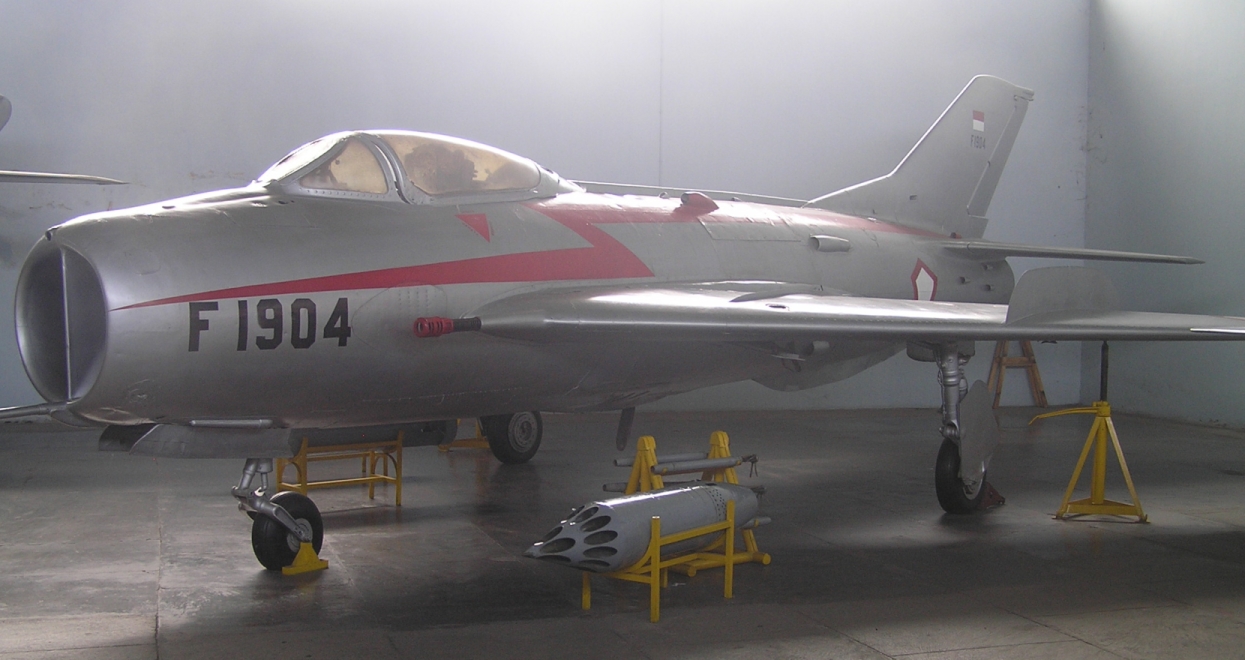
Indonesia received 35 MiG-19S fighters from the Soviet Union, ordered under the same Soviet procurement programme in 1961.
The MiG-19S began arriving in Indonesia around 1962 alongside the country's broader transition to supersonic aviation.
Equipped with twin Tumansky RD-9 engines, the MiG-19 could exceed Mach 1.3 (around 1,450 km/h) while carrying three 30 mm cannons, giving it significantly greater speed and firepower than the MiG-17.
Although its operational career in Indonesia was relatively brief, the MiG-19 strengthened the country's air defence posture during Operation Trikora.
MiG-21: Indonesia's Leap into the Supersonic Era
One of the most significant additions to Indonesia's arsenal was the MiG-21F-13, the Soviet Union's iconic supersonic fighter.
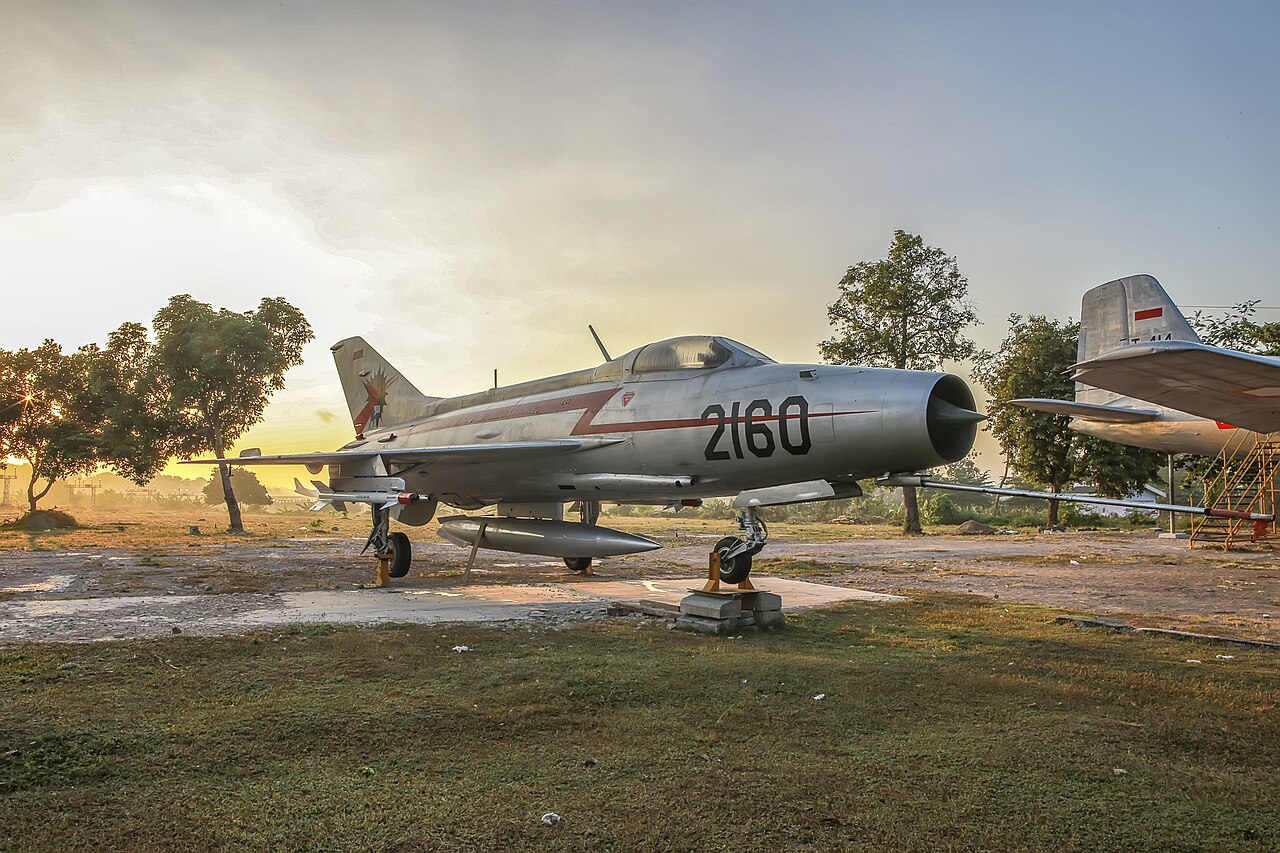
Indonesia placed its MiG-21 order in 1961, received around 20 MiG-21F-13 fighters and 2 MiG-21U two seat trainers, totaling 22 aircraft, making it one of the few MiG-21 operators in the Southern Hemisphere during the early 1960s.
Powered by a Tumansky R-11 turbojet, the aircraft exceeded Mach 2, featured a combat radius of roughly 370 km, and represented one of the most advanced interceptor designs of its era.
The MiG-21 primarily served as Indonesia's frontline air superiority fighter, tasked with defending strategic airspace during Operation Trikora.
Tu-16: Strategic Bomber
Perhaps the most remarkable aircraft in Indonesia's Cold War arsenal was the Tupolev Tu-16 Badger.
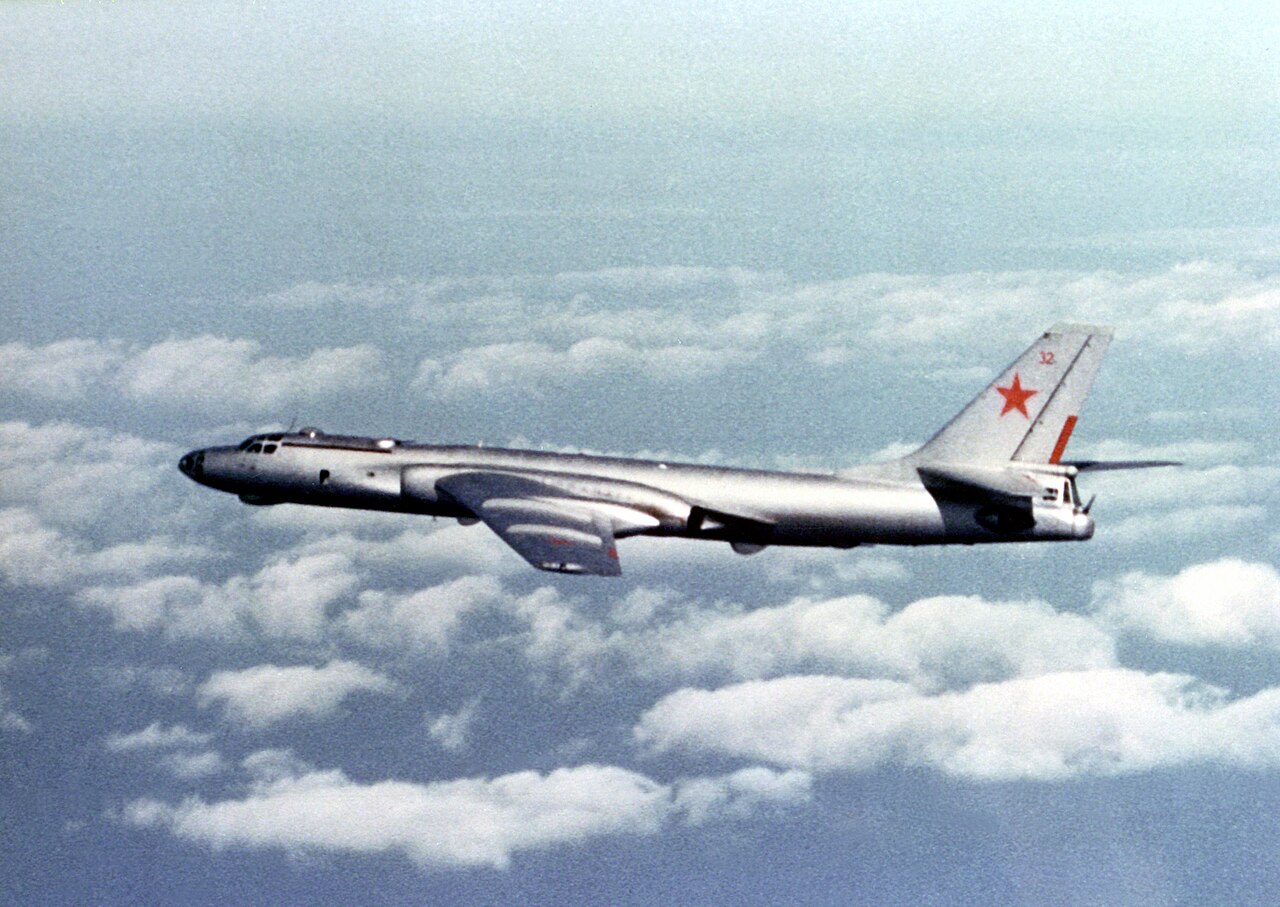
Indonesia ordered the Tu-16 in 1961, operated approximately 26 Tu-16 bombers, including missile armed variants capable of carrying Soviet KS-1 anti-ship missiles.
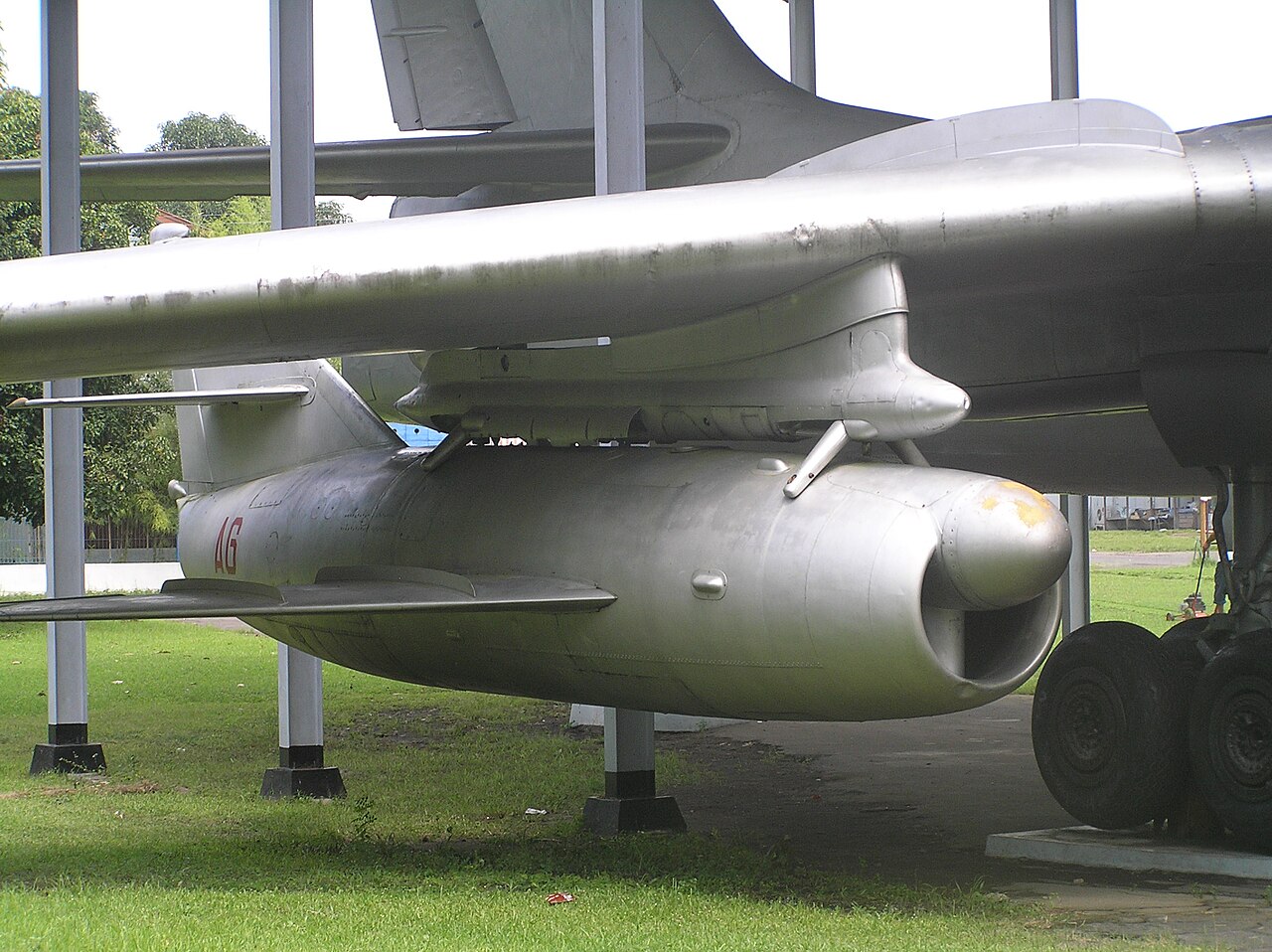
The Tu-16 significantly extended Indonesia's operational reach across the vast Indonesian archipelago and surrounding seas. With a combat radius exceeding 3,000 km, a maximum speed of around 1,050 km/h, the Tu-16 gave Indonesia an unprecedented long range strike capability.
On 7 December 1963, an Indonesian Air Force Tu-16 reportedly flew over Tawau, in present day Sabah, and carried out two bombing runs over the town.
Il-28: Tactical Bomber
Complementing the Tu-16 was the Ilyushin Il-28, a twin engine jet bomber designed for tactical strike missions.
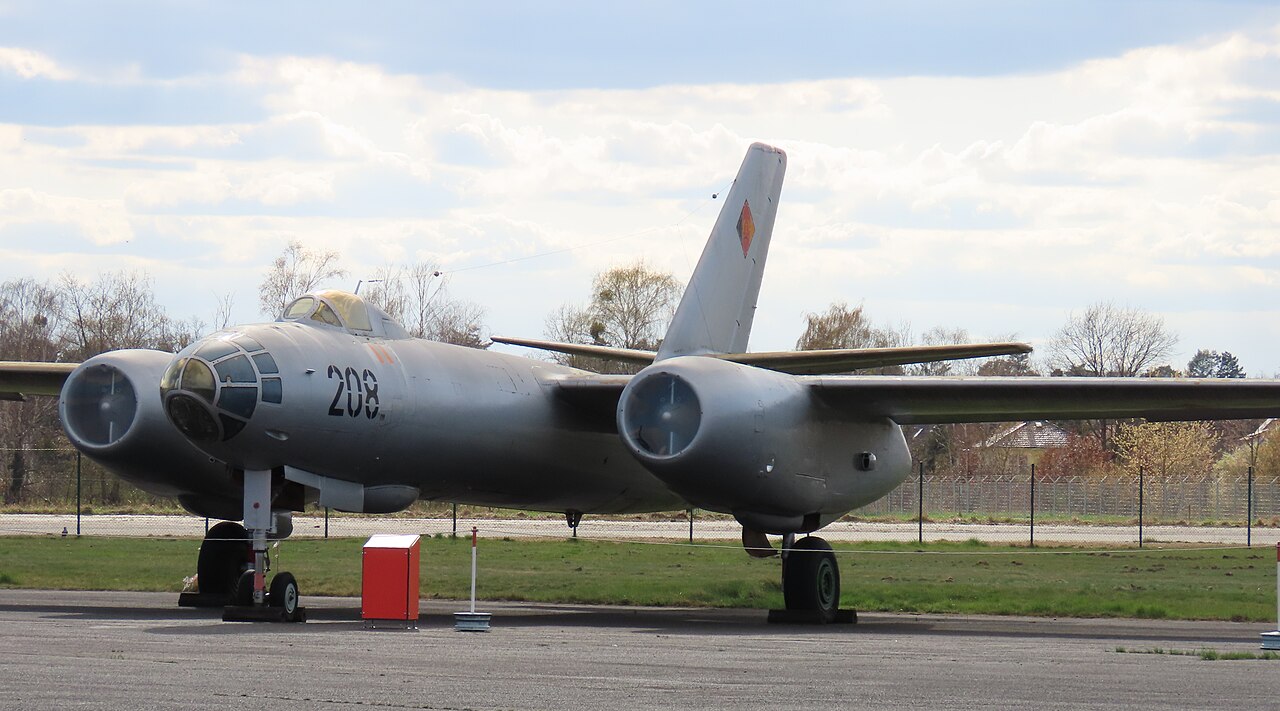
Initial orders for the Il-28 were placed through Czechoslovakia in the late 1950s before additional Soviet deliveries expanded the fleet in the early 1960s.
The Indonesian Air Force received around 12 Il-28 medium bombers, while the Indonesian Navy separately received additional Il-28T torpedo bomber and trainer variants.
Capable of flying at approximately 900 km/h with a combat radius exceeding 1,000 km, the Il-28 could carry up to 3,000 kg of bombs for tactical strike missions.
Indonesian Il-28s supported Operation Trikora by providing medium range strike capability, while naval variants operated by the Indonesian Navy specialised in maritime attack missions
Mil Mi-6: One of the World's Largest Helicopters
Indonesia received nine Mi-6 heavy transport helicopters during the early 1960s, also became one of the early operators of the Mil Mi-6.
Which was the world's largest helicopter when it entered service.
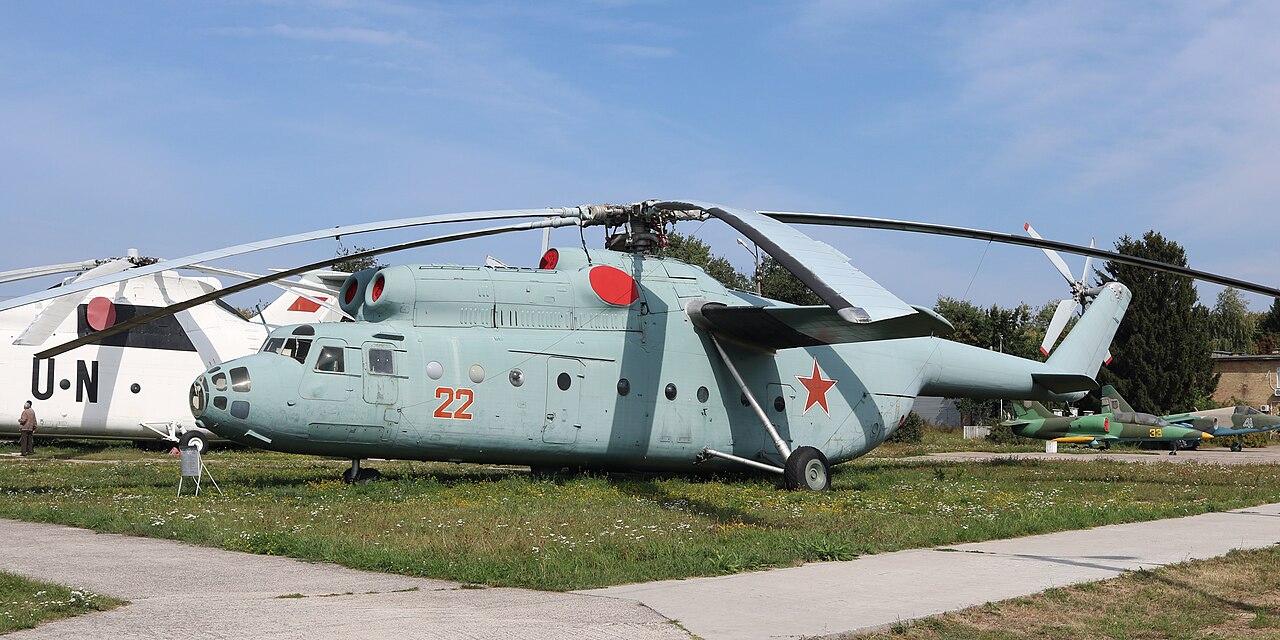
Powered by two Soloviev D-25V turboshaft engines, the Mi-6 could lift up to 12 tonnes of cargo or transport more than 90 fully equipped troops, capabilities unmatched by almost any helicopter of its time.
The Mi-6 was particularly valuable for transporting troops, artillery, engineering equipment, and logistics between Indonesia's remote islands, while also supporting military deployments during Operation Trikora.
A Fleet That Faded Quickly
Indonesia's extraordinary buildup proved to be relatively short lived.
Following the political transition after 1965 and the rise of President Suharto, Indonesia shifted its foreign policy toward Western countries. As relations with the Soviet Union cooled, obtaining spare parts, maintenance support, and technical assistance became increasingly difficult.
Many Soviet built aircraft were gradually grounded, retired, or replaced with Western platforms during the following decade, bringing an end to one of the most ambitious military aviation programs in Southeast Asian history.