Based on the Global Food Security Index (GSFI) 2022 report, Singapore ranks 28th globally in food security. Their score reached 73.1 point which make the country most food-resilient among the Southeast Asia countries.
The achieved score reflects a weighted average across four core pillars, which are affordability, availability, quality, and sustainability. Within this matrix, the index operates on a strict 0-to-100 baseline to track how effectively a state insulates its population from supply shocks.
| Global Rank | Southeast Asian Country | Food Security Score (0-100) |
|---|---|---|
| 28 | Singapore | 73.1 |
| 41 | Malaysia | 69.9 |
| 46 | Vietnam | 67.9 |
| 63 | Indonesia | 60.2 |
| 64 | Thailand | 60.1 |
| 67 | Philippines | 59.3 |
| 72 | Myanmar | 57.6 |
| 78 | Cambodia | 55.7 |
| 81 | Laos | 53.1 |
Singapore’s leverage in the affordability pillar relies entirely on the inequality-adjusted income index. The GFSI report evaluates real purchasing power relative to internal wealth distribution.
The baseline income allows food to consume only a fractional share of household budgets. It makes the population remains inherently resilient to market fluctuations.
The state’s fiscal capacity to absorb market volatility fortifies the baseline income. When global commodity prices spike, Singapore allocates substantial funds to subsidize supply chains upstream.
Such intervention artificially flattens retail prices and insulates local consumers before global inflation can hit the domestic market.
The availability pillar shifts the focus entirely from agricultural yields to supply-chain infrastructure efficiency. Under the GFSI framework, a nation's trade dependence is evaluated alongside its operational capacity to handle incoming cargo that heavily relies on indicators from the World Bank’s Logistics Performance Index.
Singapore secures its ranking through automated maritime terminals and integrated customs clearance networks. By running its port infrastructure as a rapid-transit network, the system minimizes cargo turnaround times.
Their operational velocity lowers the country's risk profile for supply disruptions to ensure imported food commodities enter domestic distribution channels before logistical bottlenecks can trigger supply gaps or product spoilage.
Agricultural Technology Adoption
Singapore has redefined traditional agriculture by moving farming activities into indoor concrete buildings.
The updated global food index methodology places significant weight on agricultural inputs and digital financial access rather than physical farm sizes. Singapore wins this indicator through its food technology ecosystem and venture capital flows.
The government redirects conventional fertilizer subsidies directly into vertical farming corporations and customized agribusiness insurance schemes.
The GFSI report rates Singapore highly on the commitment to innovative technologies metric. The country possesses an adaptive policy framework designed to facilitate technological adoption, driving total factor productivity within tight land constraints.
This ambition culminates in a national blueprint known as "30 by 30". Under this strategy, the Singapore government aims to meet 30 percent of domestic nutritional needs through local production by 2030.
The alternative protein sector is being developed through the commercial authorization of lab-grown cultured meat to bolster the availability pillar without sacrificing the city's limited horizontal space.
Resource Dependence and Utility Supply Risks
Despite the agricultural technology advance, Singapore still depends on raw water from the Johor River through the 1962 Water Agreement. They draw up to 250 million gallons per day (mgd) until the contract expires in 2061.
The fourth pillar of the report highlights a global rise in agricultural water risk due to climate change impacts.
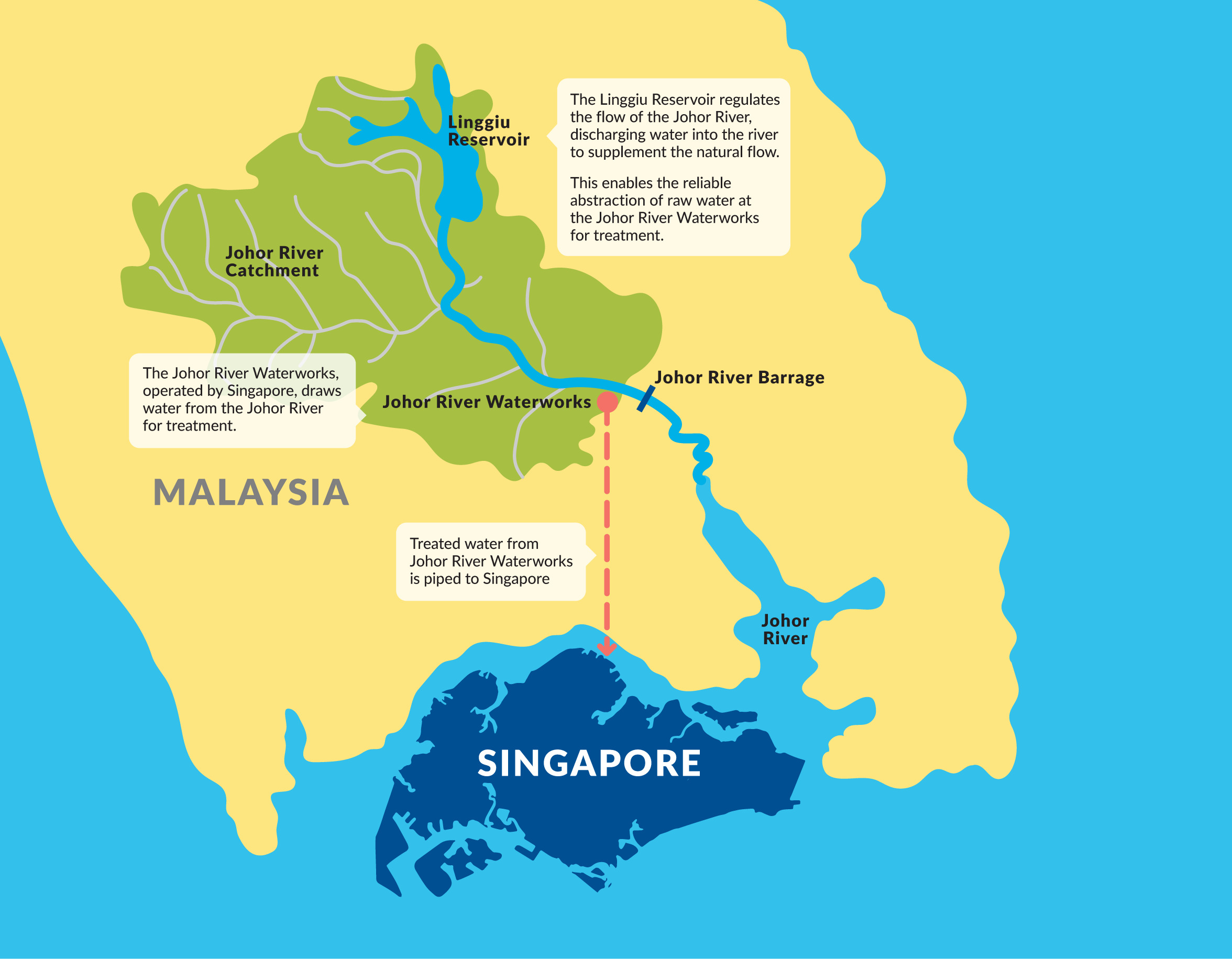
If the Johor River region experiences severe seasonal drought or water quality degradation from pollution, Singapore's indoor farms face immediate disruptions. Financial capability cannot replace a sudden loss of natural water input.
A second vulnerability lies in the intensive electricity demand of vertical farming. LED lighting and climate control systems must run 24 hours a day to replace the role of nature. The report also confirms that global food security is under heavy strain from global energy crises.
When geopolitical conflicts trigger international spikes in fuel and gas prices, the electricity cost to run Singapore's artificial farms surges, inflation directly threatens the price stability of local food products.
Still, Singapore's primary strategy is to spread supply risks across more than 180 trading partner countries. They import commodities from various parts of the world to anticipate disruptions in any single region.