


Three decades after one of the darkest chapters in modern history, Rwanda continues to present a different narrative to the world—one defined by resilience, reconciliation, and renewal. That message resonated in Jakarta as the Embassy of Rwanda in Indonesia commemorated Kwibohora 32 (Rwanda Liberation Day) under the theme "Rwanda's Journey Continues," bringing together diplomats, government representatives, members of the Rwandan diaspora, business leaders, academics, and friends of Rwanda at the St. Regis Hotel on 17 July 2026.
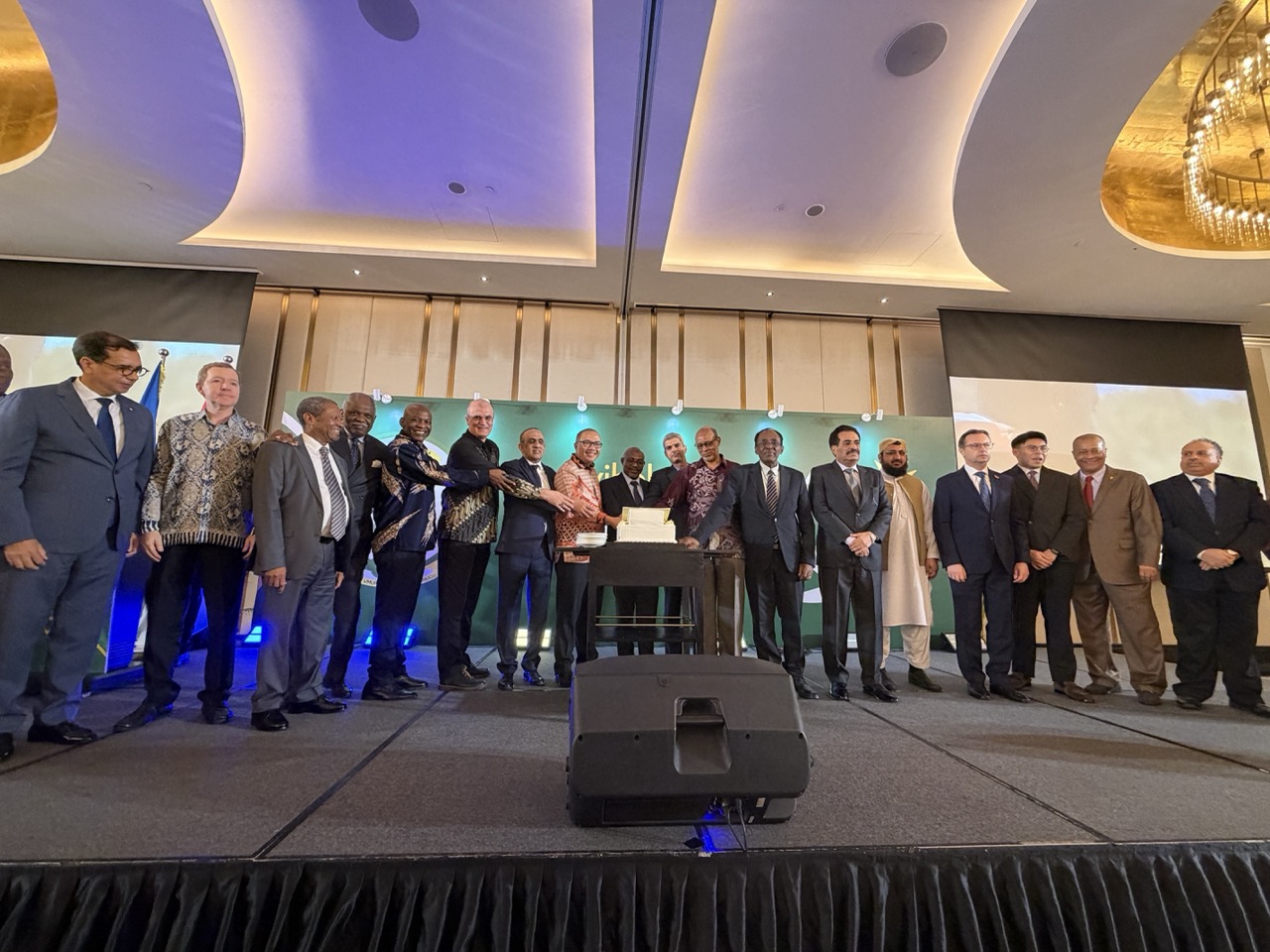
The celebration combined remembrance with optimism, while highlighting the growing partnership between Rwanda and Indonesia through diplomacy, culture, and sustainable development. The event was organized around the official theme "Rwanda's Journey Continues," with a reception, diplomatic remarks, cultural performances, media engagements, and networking sessions.
Remembering Liberation, Celebrating Progress
Kwibohora, meaning "to liberate" in Kinyarwanda, marks the day on 4 July 1994 when the Rwanda Patriotic Front (RPF) ended the 100-day Genocide against the Tutsi and restored peace to the country. While Rwanda annually remembers the more than one million lives lost during the genocide, Liberation Day also celebrates the country's determination to rebuild itself through unity, reconciliation, and inclusive development.
Opening the reception, Ambassador of Rwanda to Indonesia Sheikh Abdul Karim Harelimana welcomed guests while expressing appreciation for Indonesia's enduring friendship and cooperation with Rwanda. He emphasized that Kwibohora is not merely a historical anniversary but a reminder that liberation is an ongoing responsibility shared by every generation. The ambassador also reaffirmed Rwanda's commitment to strengthening bilateral cooperation with Indonesia in trade, tourism, education, innovation, investment, and South-South cooperation.
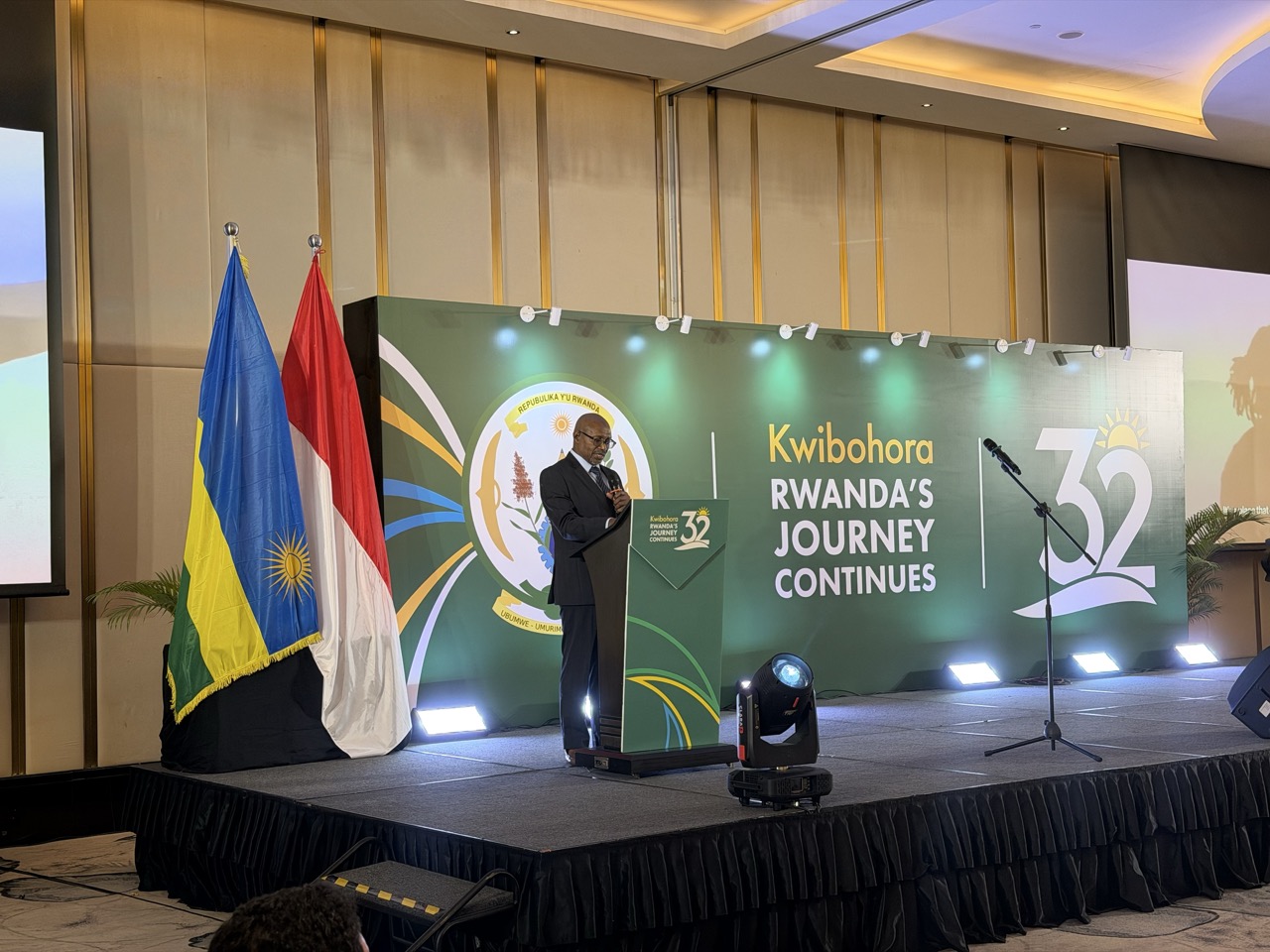
Quoting President Paul Kagame, Ambassador Harelimana reminded participants:
"Our journey continues."
He explained that the phrase reflects Rwanda's continued commitment to safeguarding national unity, protecting sovereignty, strengthening institutions, and creating opportunities for future generations.
From Tragedy to One of Africa's Fastest-Rising Nations
Few countries have experienced a transformation as remarkable as Rwanda's.
Following the devastation of 1994, Rwanda embarked on an ambitious reconstruction agenda built upon reconciliation, accountable governance, institutional reform, gender equality, environmental stewardship, healthcare expansion, and digital innovation. Today, Kigali is frequently described as one of Africa's cleanest, safest, and most efficiently governed cities, while Rwanda has earned comparisons with Singapore for its ease of doing business and forward-looking public administration.
The country has become a regional technology hub through initiatives such as Kigali Innovation City and continues investing in digital governance, fintech, artificial intelligence, and satellite technology. These developments complement Rwanda's broader vision of becoming a knowledge-based economy while maintaining strong environmental commitments.
As Ambassador Harelimana noted during his remarks, Rwanda's achievements were made possible through visionary leadership, resilient citizens, and a collective determination that the country's future would be defined not by its past, but by the choices it makes today.
Healing Through Unity
Rwanda's post-genocide recovery has drawn international attention for its emphasis on reconciliation rather than division.
The country abolished ethnic identification on national identity cards and promoted a shared national identity under the principle "Turi Abanyarwanda"—"We are all Rwandan." Community-based Gacaca courts helped thousands of communities confront the legacy of violence, while annual Kwibuka commemorations continue educating younger generations about the importance of preventing hatred and genocide.
The Kigali Genocide Memorial remains both a place of remembrance and a global center for education on genocide prevention, serving as the final resting place for more than 250,000 victims.
Protecting Nature While Building Prosperity
During his media interview, H.E. Sheikh Abdul Karim Harelimana, Ambassador of Rwanda to Indonesia, highlighted environmental conservation as one of Rwanda's most remarkable national achievements. He noted that Rwanda has become internationally recognized for pioneering environmental policies, including Africa's first nationwide ban on plastic bags in 2008, which has since expanded to cover most single-use plastics. He also pointed to Umuganda—the nationwide community service held on the last Saturday of every month—as a reflection of Rwanda's culture of collective responsibility, bringing citizens together to clean neighborhoods, plant trees, and improve public infrastructure.
The ambassador also emphasized Rwanda's globally acclaimed mountain gorilla conservation efforts, particularly in the lead-up to International Gorilla Day, observed annually on 24 September. He explained that before Rwanda's darkest years, including the 1994 Genocide against the Tutsi, the mountain gorilla population had declined to fewer than 250 individuals, placing the species at serious risk of extinction. Through decades of rigorous conservation, anti-poaching measures, habitat protection, scientific research, and strong community participation, the population has since rebounded to more than 1,000 mountain gorillas across the Virunga Massif, making it one of the world's greatest wildlife conservation success stories.
He added that Rwanda's conservation model ensures local communities directly benefit from tourism revenue, with proceeds supporting schools, healthcare facilities, roads, and other public services. The ambassador also highlighted Kwita Izina, Rwanda's annual gorilla naming ceremony, as a global platform celebrating conservation achievements while bringing together scientists, policymakers, conservationists, and environmental advocates from around the world. Through these initiatives, he said, Rwanda has demonstrated that protecting biodiversity and promoting sustainable development can go hand in hand.
Indonesia and Rwanda: Growing South-South Partnership
The Jakarta celebration also reflected the strengthening relationship between Rwanda and Indonesia.
Built upon the principles of the 1955 Bandung Conference and South-South cooperation, both countries continue expanding collaboration across diplomacy, trade, education, tourism, digital innovation, and sustainable development.
Indonesia has supported Rwandan human resource development through scholarship programs, while Rwanda offers visa-on-arrival or visa-free access for Indonesian travelers, encouraging greater people-to-people exchanges.
During the reception, Ambassador Sheikh Abdul Karim Harelimana also warmly welcomed members of the Rwandan Community Abroad (RCA) living in Indonesia, inviting them to join fellow diplomats, Indonesian partners, and friends of Rwanda in commemorating Kwibohora 32. He recognized the diaspora as an important bridge between Rwanda and Indonesia, noting that their professional achievements, cultural engagement, and community involvement help strengthen Rwanda's image abroad while fostering deeper people-to-people ties. The gathering served not only as a celebration of Rwanda's liberation but also as an opportunity for Rwandans living overseas to reconnect with their national identity and reaffirm the shared values of unity, resilience, and national development that have guided the country's remarkable transformation over the past three decades.
During the media interview following the reception, Ambassador Harelimana highlighted Indonesia as one of Rwanda's important partners in Asia, expressing optimism that bilateral cooperation would continue expanding in investment, technology, tourism, and education while contributing to broader Africa–ASEAN engagement.
Music as a Bridge Between Nations
Beyond diplomacy, culture took center stage during the evening.
Guests enjoyed performances by renowned Rwandan traditional musician Ruti Joel, accompanied by DJ Ricky Fay, introducing Indonesian audiences to Rwanda's rich musical heritage through traditional rhythms, storytelling, and contemporary interpretations.
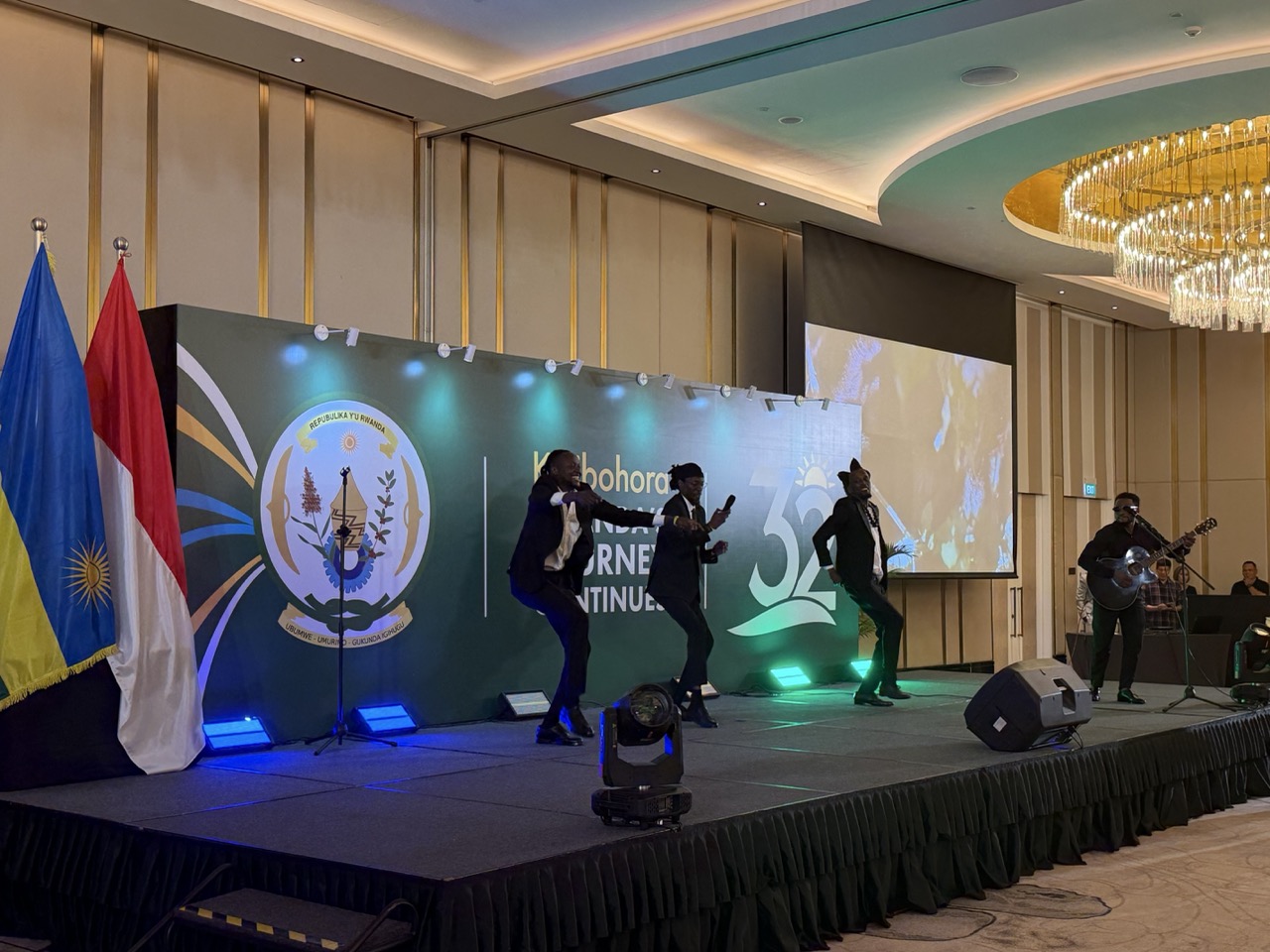
Traditional Rwandan music has long served as a living archive of the nation's history. Instruments such as the Inanga (traditional zither), Ikembe (thumb piano), and Ingoma (royal drums) accompany songs and dances that celebrate courage, community, and identity. Performances of Intore, historically known as the Dance of Heroes, and the graceful Umushayayo continue preserving centuries-old traditions while inspiring younger generations.
During his interview with the media, H.E. Sheikh Abdul Karim Harelimana, Ambassador of Rwanda to Indonesia, highlighted the growing cultural collaboration and people-to-people exchanges between Rwanda and Indonesia. He noted that initiatives in the arts, music, education, and cultural diplomacy continue to strengthen mutual understanding and friendship, bringing the two nations and their peoples closer together.
A Reception Looking Toward the Future
The evening concluded with networking among diplomats, government representatives, members of the Rwandan community in Indonesia, and invited guests, reflecting the spirit of friendship that continues to characterize relations between Rwanda and Indonesia. The official program combined diplomatic remarks with cultural performances, media interviews, and opportunities for dialogue under the overarching theme "Rwanda's Journey Continues."
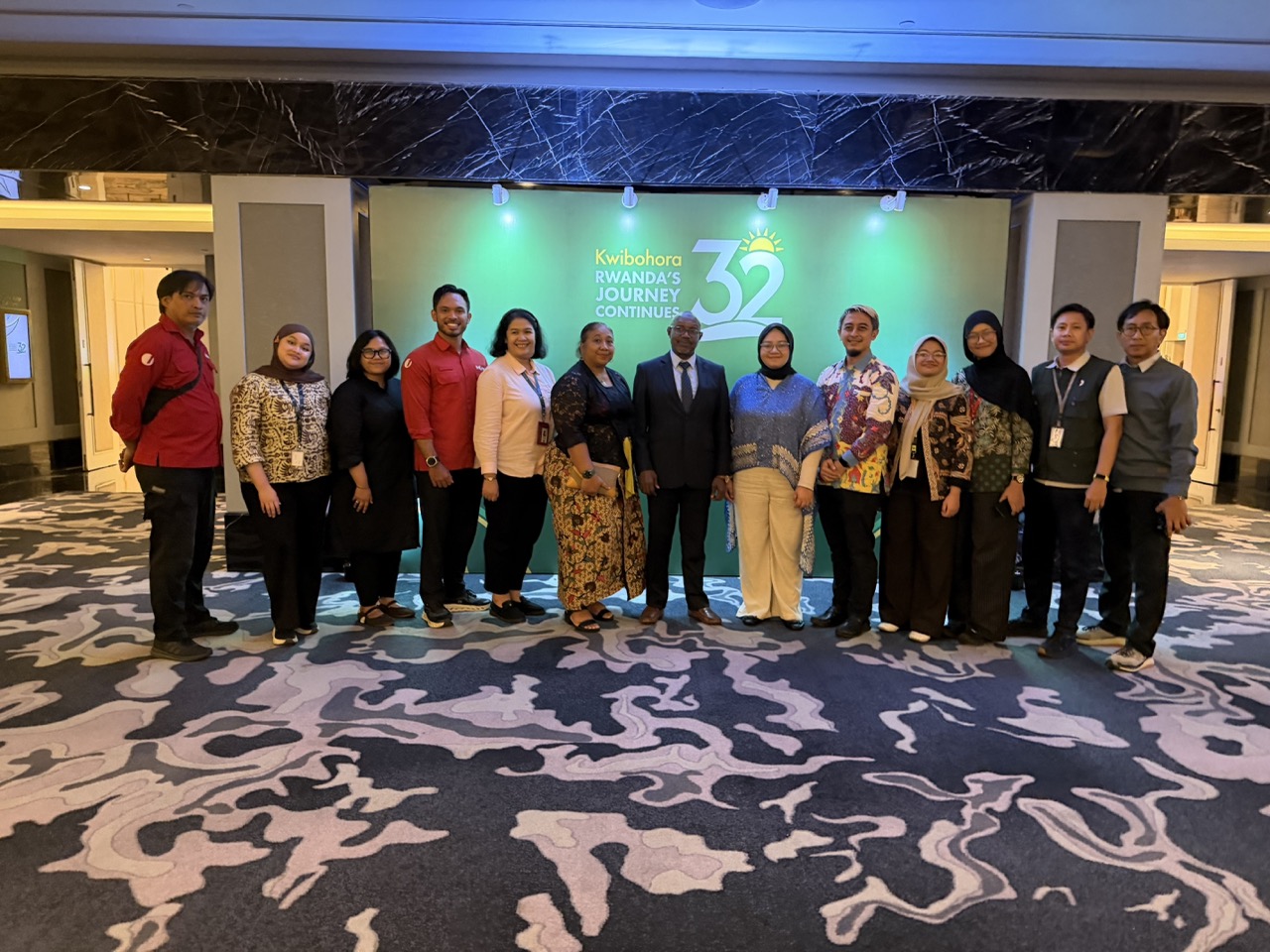
As Rwanda marks 32 years since liberation, its story continues to evolve—not simply as a nation that overcame unimaginable tragedy, but as a country demonstrating how reconciliation, visionary leadership, environmental stewardship, innovation, and cultural diplomacy can shape a more hopeful future. The celebration in Jakarta served as a reminder that the journey of liberation is not confined to history; it lives on through partnerships, shared values, and the collective determination to build more peaceful, resilient, and prosperous societies.


