


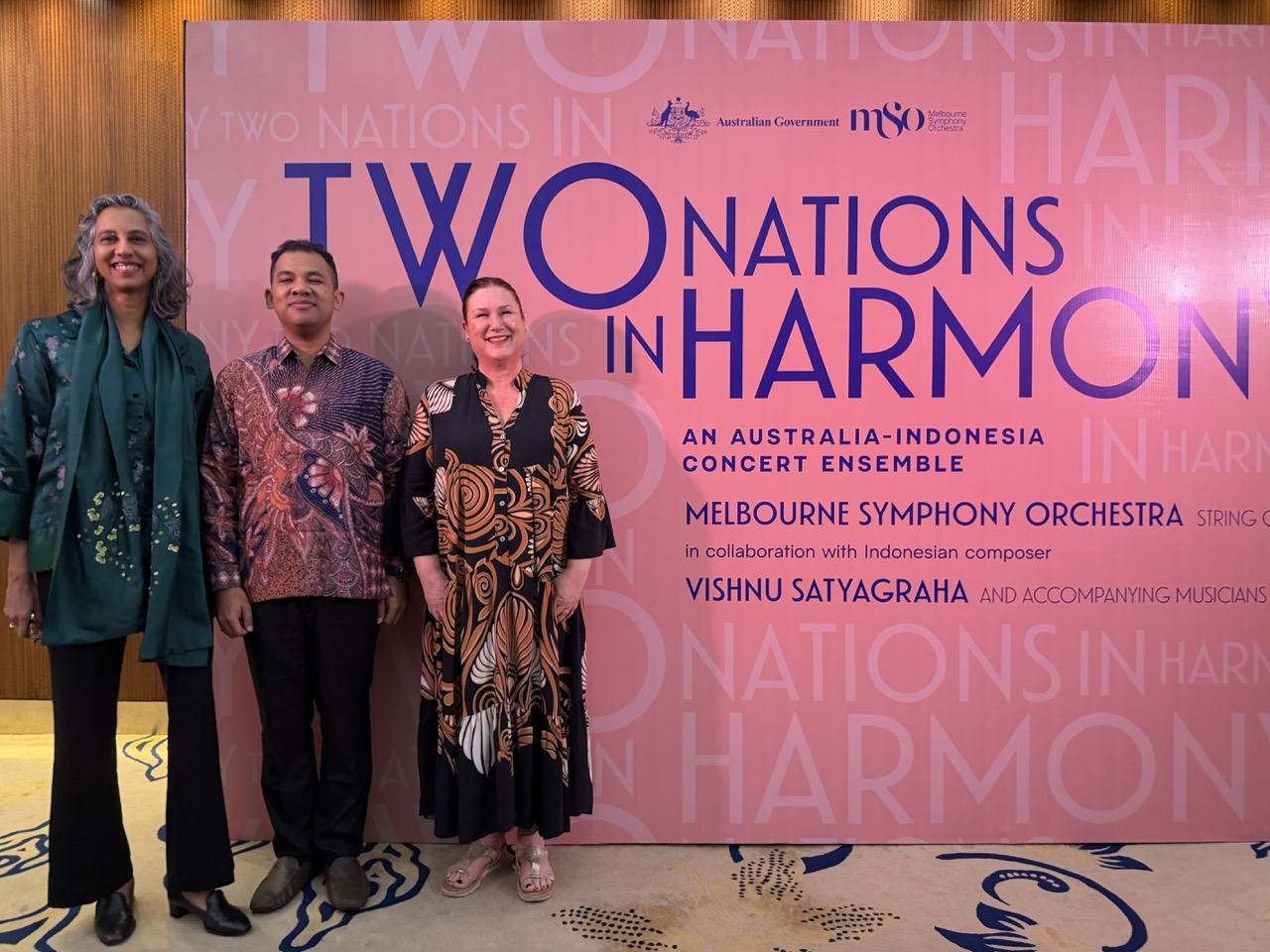
Music has long been one of the strongest bridges between Australia and Indonesia. Beyond diplomacy and trade, the two countries have spent decades strengthening ties through artistic collaboration, educational exchange, film, literature, dance, and cultural heritage. That enduring friendship was celebrated once again in Jakarta through “Two Nations in Harmony: An Australia–Indonesia Concert Ensemble,” where the internationally acclaimed Melbourne Symphony Orchestra String Quartet performed alongside Indonesian composer Vishnu Satyagraha, showcasing how culture continues to unite two neighboring nations.
When Classical Strings Meet Indonesian Tradition
Presented by the Australian Embassy in Indonesia on 9 July 2026 at Soehanna Hall, the concert brought together Western classical music and Indonesian musical heritage in a unique artistic dialogue.
The performance featured original compositions by Vishnu Satyagraha, a University of Melbourne alumnus, including Yarra Code and Aluna Digdaya, both inspired by communities and landscapes in Australia and Indonesia. Rather than simply combining two musical styles, the works explored how different traditions can complement one another while preserving their distinct identities.
Australian Chargé d’Affaires Gita Kamath described the concert as a reflection of the close relationship between the two countries:
“Music has the power to bring people together across cultures, and this concert highlights the strength of our partnership through shared creativity and collaboration.”
Gejog Lesung: The Rhythm of Community
One of the evening’s highlights was the inclusion of Gejog Lesung, a traditional Javanese musical performance created using wooden rice mortars historically used for pounding rice.
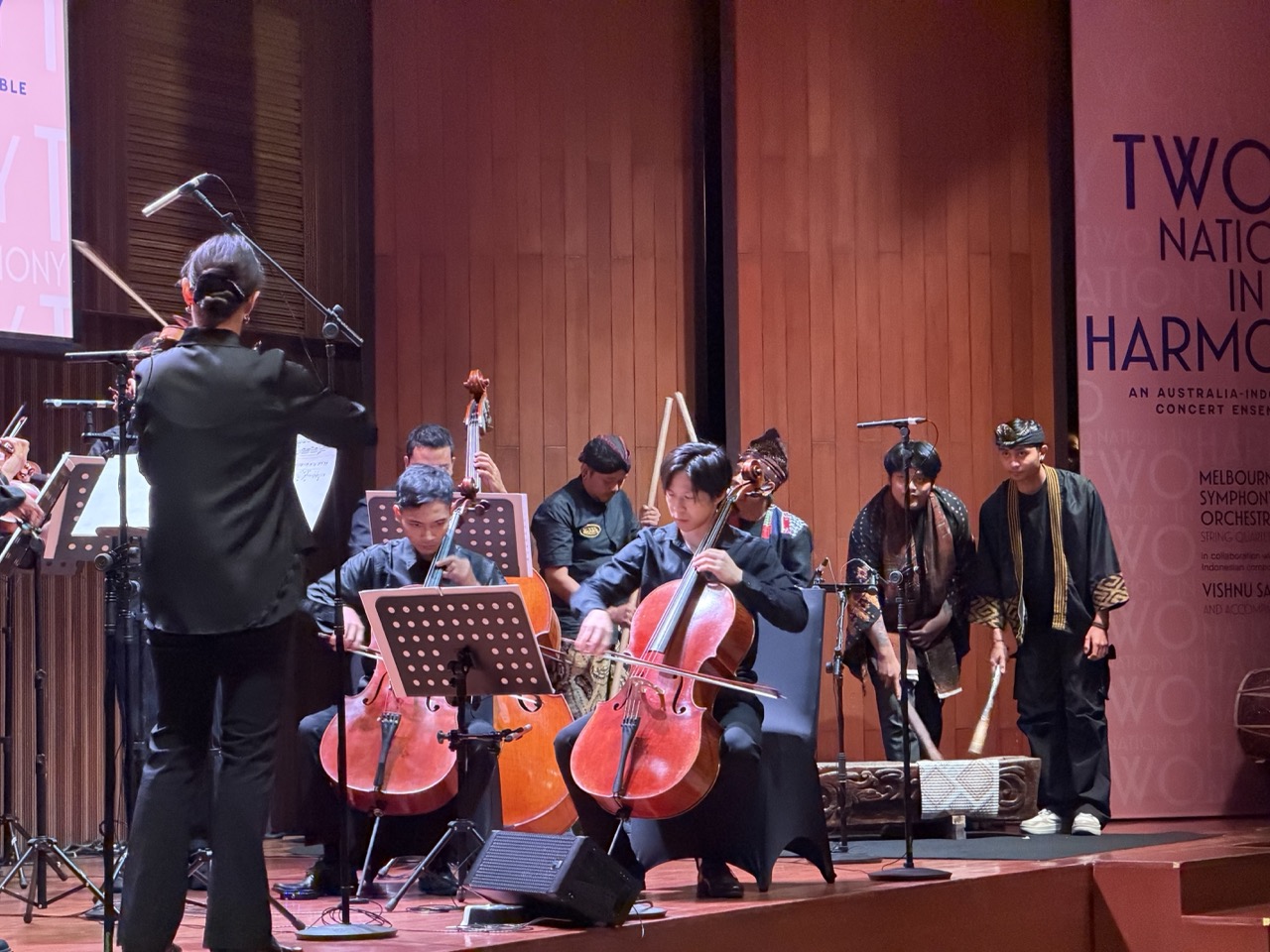
More than a musical instrument, Gejog Lesung represents the Indonesian values of community, cooperation, and shared labor, or gotong royong. Its rhythmic wooden percussion blended with the refined sound of the MSO String Quartet, producing a performance that felt both contemporary and deeply rooted in tradition.
Explaining his artistic vision, Vishnu Satyagraha said:
“We believe that Gejog Lesung embodies the spirit of gotong royong, and we believe this cultural heritage should be expressed in a very beautiful way.”
The collaboration demonstrated that traditional Indonesian culture can stand confidently alongside one of the world’s great classical music traditions.
A Decade of Creative Collaboration
The concert also celebrated more than ten years of collaboration between the Melbourne Symphony Orchestra and Indonesian cultural institutions.
Over the past decade, MSO has established long-term partnerships through memoranda of understanding with the Yogyakarta Special Region Cultural Department and the Yogyakarta Royal Orchestra, encouraging artistic exchanges, professional training, and collaborative performances.
During its 2026 visit, MSO also conducted a Leadership in Arts session before continuing its cultural program in Yogyakarta. The visit was supported by the Australia–Indonesia Institute and the Victorian Government, reflecting a sustained commitment to cultural exchange and knowledge sharing.
Beyond Music: A Growing Cultural Partnership
The Australia–Indonesia relationship extends well beyond orchestral performance.
The two countries cooperate across music, dance, theatre, film, literature, visual arts, museums, higher education, and the creative industries. Joint festivals, artist residencies, university partnerships, cultural exhibitions, and collaborative productions continue to strengthen people-to-people connections.
Education remains another important pillar, with thousands of Indonesian students studying in Australia each year, while Australian artists, academics, and cultural practitioners regularly collaborate with Indonesian partners.
These exchanges complement the broader Australia–Indonesia Comprehensive Strategic Partnership, recognizing culture as an essential foundation for long-term bilateral relations.
Harmony Beyond the Concert Hall
The success of Two Nations in Harmony demonstrated that diplomacy can be especially meaningful when expressed through creativity. By bringing together the elegant sound of a world-class string quartet with the communal rhythms of Gejog Lesung, the concert celebrated diversity while emphasizing shared values.
As the final notes faded inside Soehanna Hall, the performance offered a powerful reminder that the Australia–Indonesia partnership is built not only through policy and dialogue, but also through music, culture, and the enduring friendships that continue to grow between the peoples of both nations.


