


Every year on 18 July, people around the world celebrate Nelson Mandela International Day, honoring one of history's greatest champions of freedom, reconciliation, and human dignity. Established by the United Nations in 2009, the annual observance commemorates Mandela's birthday while encouraging individuals to dedicate 67 minutes of service to their communities—a tribute to the 67 years he devoted to advancing justice, equality, and human rights.
While Nelson Mandela is best remembered for leading South Africa's transition from apartheid to democracy, his legacy extends far beyond the African continent. Across Southeast Asia, Mandela's story remains closely intertwined with the region's own post-colonial journey, the spirit of Afro-Asian solidarity, and decades of friendship between South Africa and ASEAN member states. His influence continues to resonate through diplomacy, education, cultural exchange, and a shared commitment to a more just and inclusive world.
The Bandung Spirit That Inspired a Generation
The relationship between South Africa's liberation movement and Southeast Asia predates Mandela's presidency. One of its most enduring foundations was the historic Asian-African Conference held in Bandung, Indonesia, in 1955.
Bringing together 29 newly independent Asian and African nations, the conference rejected colonialism, racial discrimination, and foreign domination while promoting peaceful coexistence and cooperation among developing countries. Although Nelson Mandela remained underground in South Africa at the time and could not attend, representatives of the African National Congress (ANC) participated in the gathering.
The "Bandung Spirit" became an important source of international legitimacy for anti-colonial and anti-apartheid movements. It also strengthened diplomatic pressure against South Africa's apartheid regime at a time when many newly independent nations were shaping a new international order based on equality and sovereignty.
Indonesia's first President, Sukarno, captured the conference's enduring vision when he declared:
"Let a new Asia and a new Africa be born."
That message of solidarity would later find expression in Mandela's lifelong struggle for freedom.
Indonesia and Mandela: A Friendship Woven in Batik
Among Southeast Asian countries, Indonesia shared one of Mandela's most recognizable cultural connections.
During his visits to Jakarta after becoming South Africa's first democratically elected president in 1994, Mandela developed a deep appreciation for Indonesian batik. Rather than reserving the traditional fabric for ceremonial occasions, he adopted batik shirts as part of his everyday public wardrobe, wearing them at international summits, official meetings, and public appearances around the world.
His choice helped introduce Indonesian batik to a global audience years before UNESCO recognized it as an Intangible Cultural Heritage of Humanity in 2009.
The friendship extended beyond culture. Indonesia had consistently supported the ANC during the anti-apartheid struggle through diplomatic engagement and international advocacy. Today, bilateral relations continue to grow through cooperation in trade, education, mining, defense, and South-South collaboration within forums such as the G20 and the United Nations.
Malaysia's Unwavering Support for the Anti-Apartheid Struggle
Malaysia also emerged as one of apartheid's strongest international critics.
Under Prime Minister Tun Dr. Mahathir Mohamad, Malaysia imposed sanctions against apartheid-era South Africa, prohibited South African sporting and official contacts, and consistently advocated for international pressure to end racial segregation.
Following his release from prison in 1990, Mandela chose Malaysia as one of his earliest overseas destinations to express gratitude for the country's steadfast political and moral support throughout the liberation struggle.
Reflecting on Malaysia's role, Mandela remarked:
"The people of Malaysia stood by us when many others remained silent."
That relationship laid the foundation for enduring cooperation in education, Islamic finance, tourism, and trade between the two nations after South Africa's democratic transition.
Singapore and Building a New South Africa
By the late 1990s, Mandela's engagement with Southeast Asia increasingly focused on nation-building.
During his visit to Singapore in 1997, Mandela met Senior Minister Lee Kuan Yew to discuss economic development, governance, and public administration. Singapore's rapid modernization offered practical lessons for a newly democratic South Africa seeking to strengthen its institutions and diversify its economy.
The visit paved the way for technical cooperation programs, leadership exchanges, and training opportunities for South African civil servants and policymakers. The relationship has since expanded into investment, finance, urban planning, education, and innovation.
Growing South Africa–ASEAN Relations
Today, Mandela's vision of international solidarity continues to shape relations between South Africa and Southeast Asia.
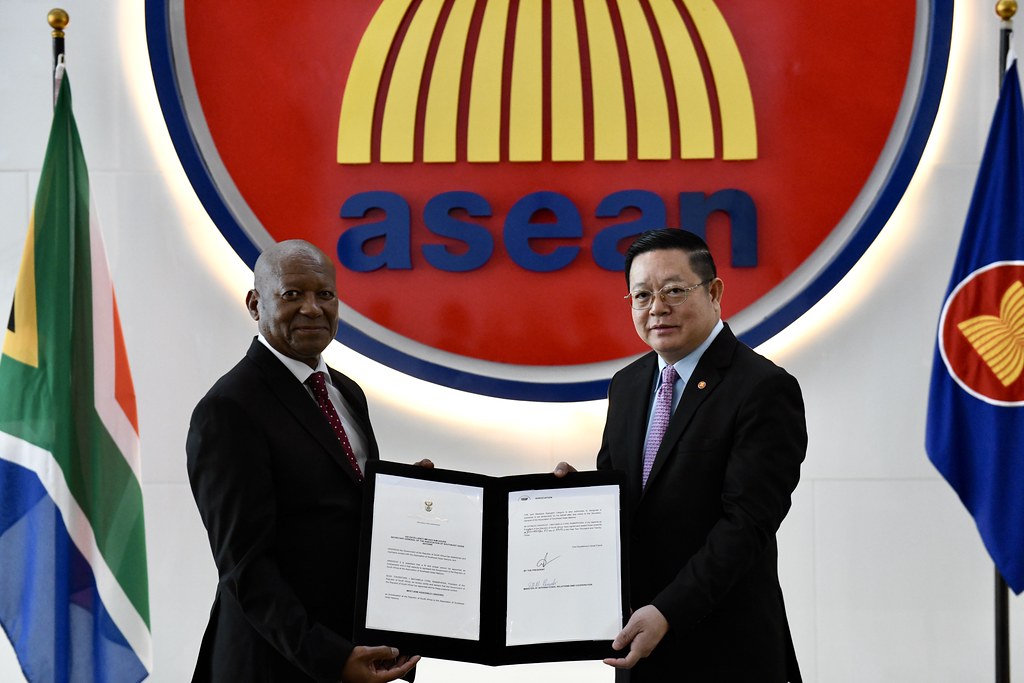
South Africa became ASEAN's first Dialogue Partner from Africa in 2023, creating a structured platform for cooperation across trade, investment, food security, digital transformation, education, climate action, and sustainable development. Trade between South Africa and ASEAN has expanded steadily, with Singapore serving as South Africa's largest trading partner in the region, while Indonesia, Malaysia, Thailand, and Vietnam continue strengthening commercial and diplomatic ties.
The regions also cooperate through multilateral platforms such as the United Nations, G20, BRICS, and the Non-Aligned Movement, where they often advocate for stronger representation of developing nations, international law, sustainable development, and reform of global governance institutions.
These partnerships reflect the same principles that defined Mandela's international outlook: dialogue over confrontation, partnership over division, and mutual respect among nations regardless of size or geography.
Mandela Day: A Living Legacy of Service
Unlike many international commemorations, Nelson Mandela International Day is designed to inspire action rather than remembrance alone.
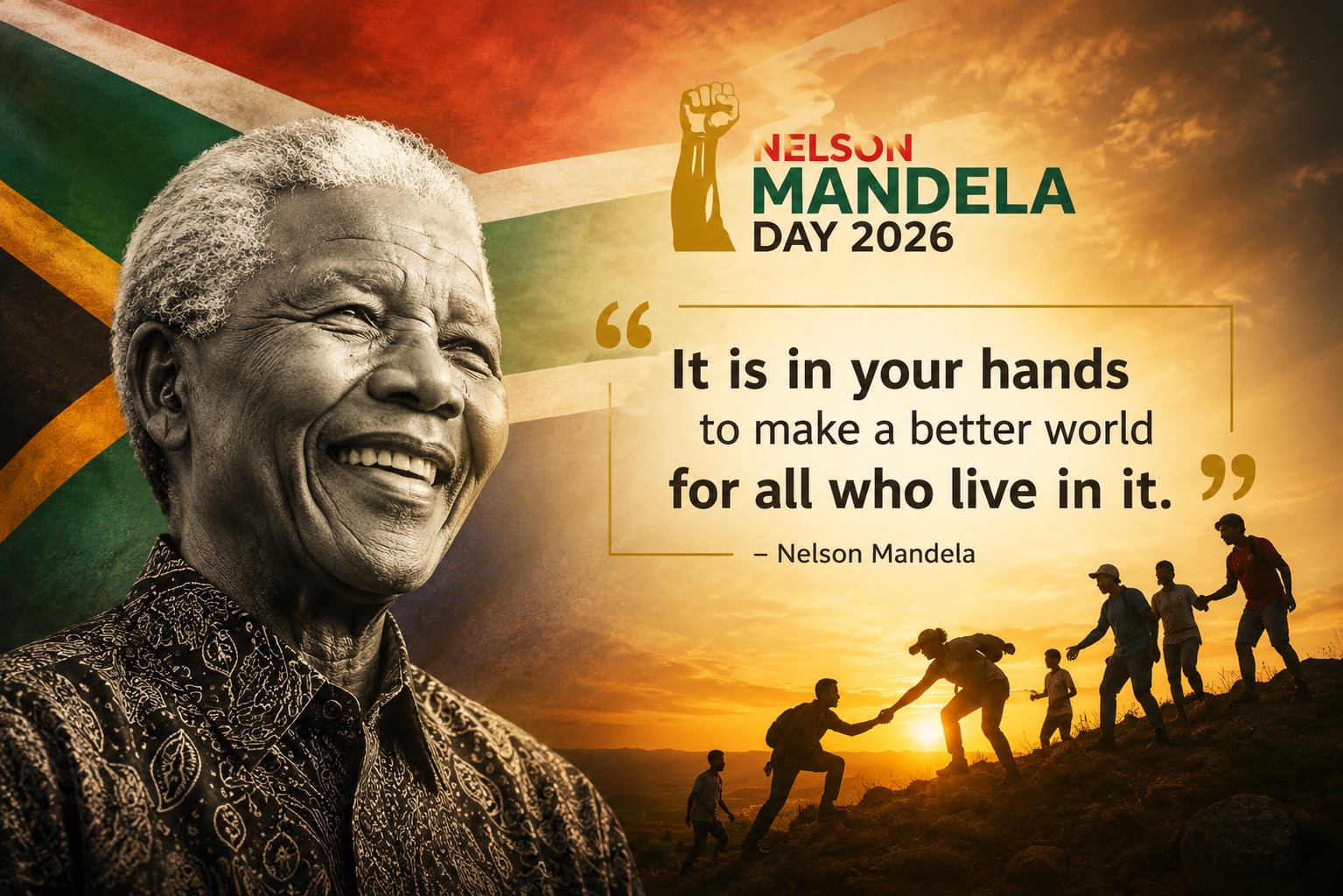
The initiative encourages every individual to spend 67 minutes helping others through volunteering, environmental conservation, mentoring young people, supporting vulnerable communities, donating food, or participating in local development projects. The idea reflects Mandela's belief that meaningful change begins with ordinary citizens making extraordinary contributions within their own communities.
As Mandela famously said:
"It is in your hands to make a better world for all who live in it."
Across Southeast Asia, universities, civil society organizations, embassies, youth groups, and South African diplomatic missions continue organizing Mandela Day activities each July, reinforcing the values of service, inclusion, and global citizenship.
A Shared Future Rooted in Solidarity
More than three decades after the end of apartheid, Nelson Mandela's legacy continues to transcend continents. His story resonates deeply in Southeast Asia because it mirrors the region's own experiences of overcoming colonialism, pursuing independence, and building peaceful societies through cooperation rather than conflict.
From the Bandung Conference to batik diplomacy, from Malaysia's unwavering support for the anti-apartheid movement to Singapore's role in South Africa's institutional development, Mandela's connections with Southeast Asia demonstrate how international solidarity can shape history.
As communities around the world mark Nelson Mandela International Day each 18 July, the occasion serves not only as a tribute to an extraordinary leader but also as a reminder that compassion, dialogue, and service remain among the most powerful forces for building a more peaceful, inclusive, and sustainable future.


