Try this next time you're at the airport, ask three people from three different Southeast Asian countries what their wall socket looks like. You'll probably get three different answers, even though their phones charge on almost identical voltage.
That's the strange part. The electricity itself has quietly converged across the region. The plug never did.
For a region that's spent decades linking up highways, railways, and power grids across borders, Southeast Asia still can't agree on something as basic as where you stick the charger. The reason isn't engineering. It's history that never got renovated.
A Legacy of Different Colonial Powers
Europe eventually smoothed its plug standards into something mostly uniform. Southeast Asia never got that memo, mostly because its electrical grids were built under different rulers at different times, with no reason to talk to each other.
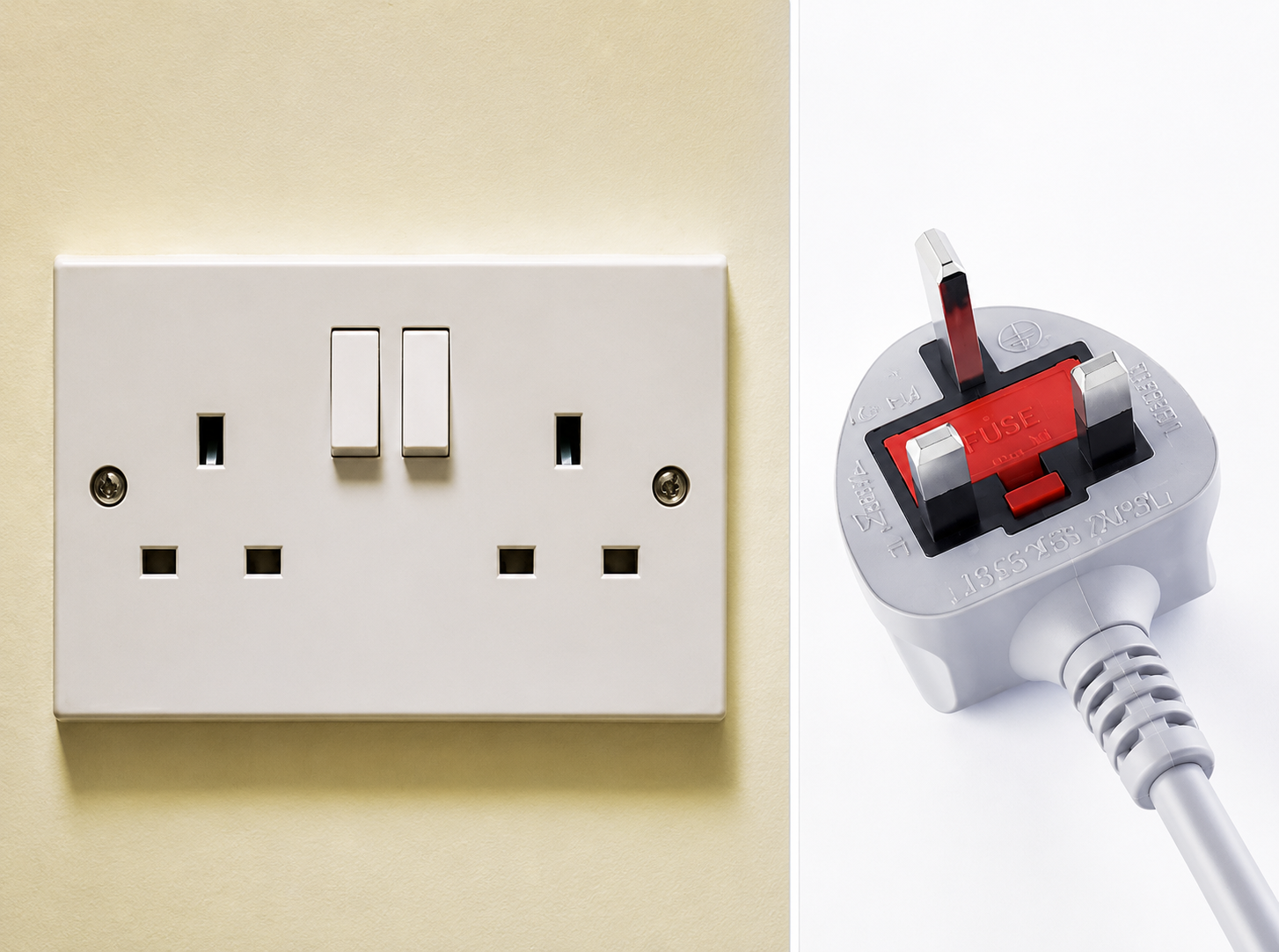
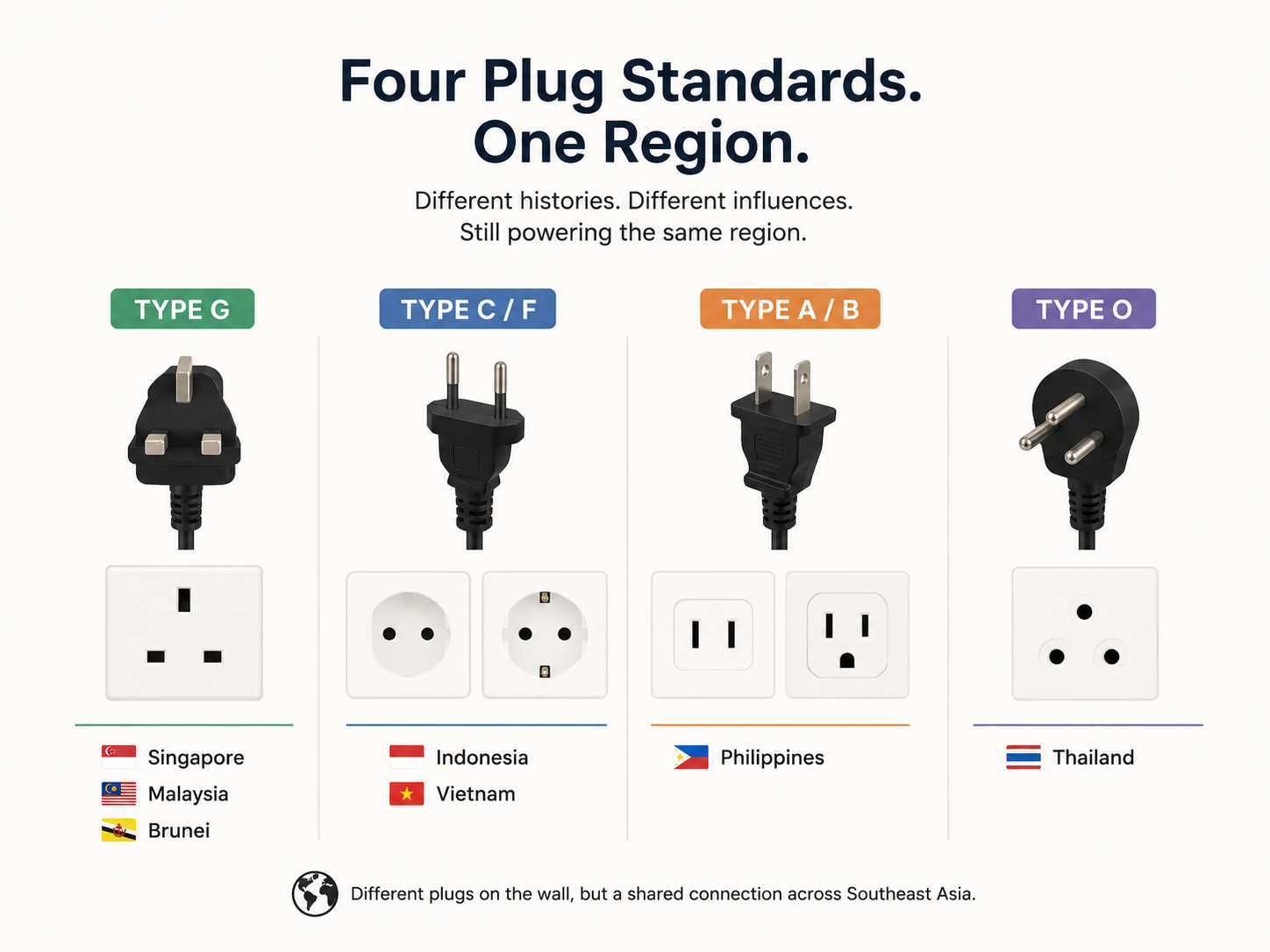
Singapore, Malaysia, and Brunei, all former British territories settled on the Type G plug under British Standard BS 1363, and it's still the standard today.
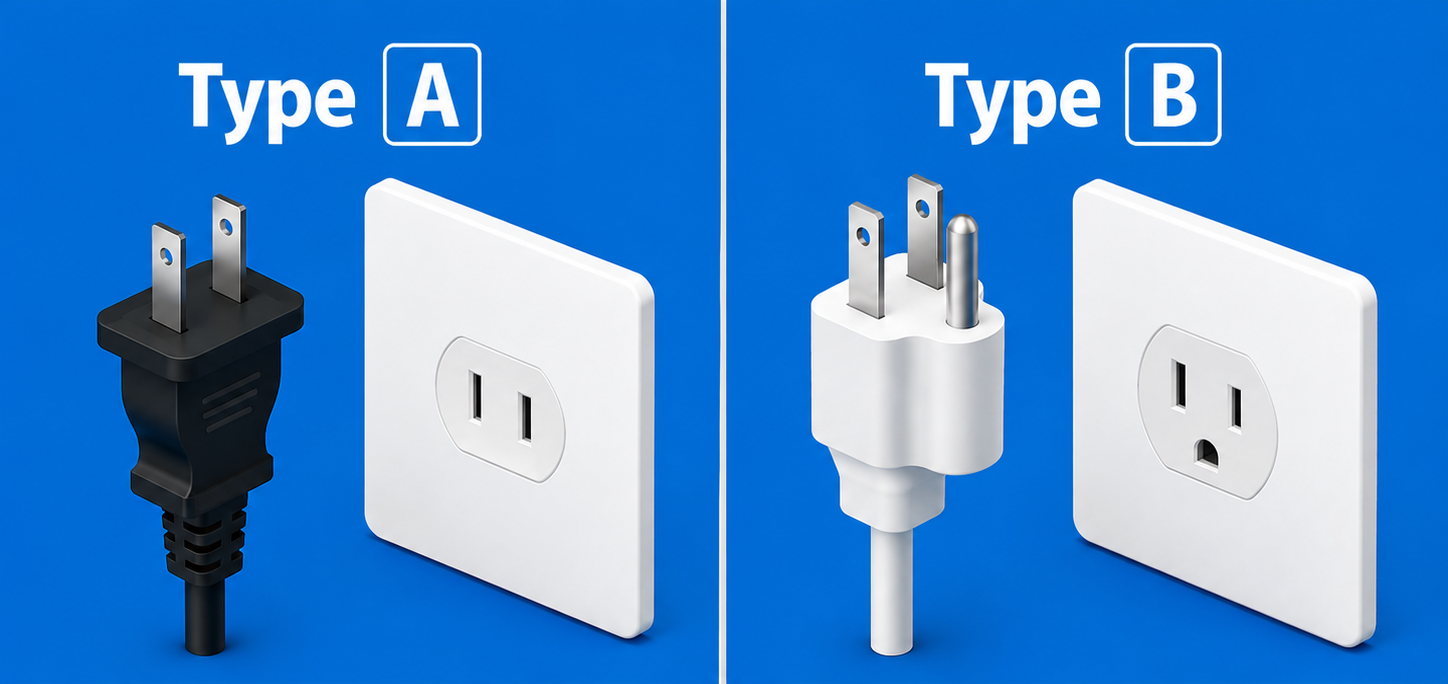
The Philippines, under American administration for nearly fifty years, ended up with Type A and Type B, the same plugs found in the US.
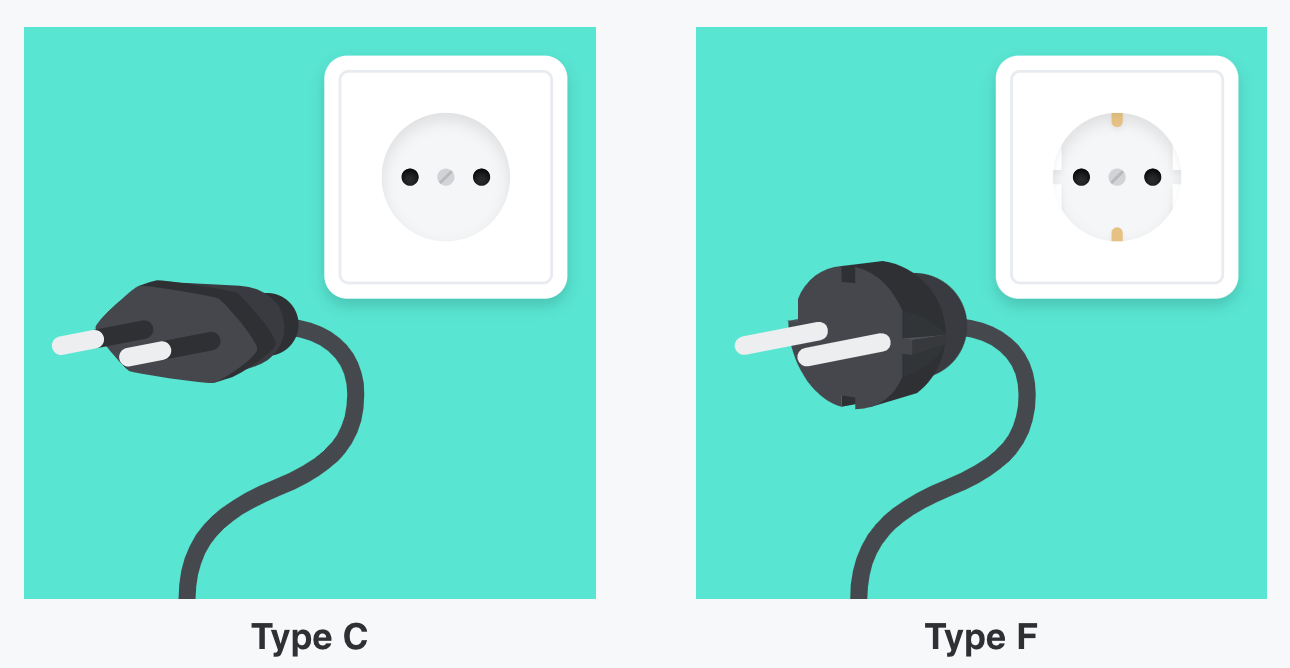
Indonesia leans European, courtesy of Dutch rule, with Type C as the default and Type F widely used alongside it.
Vietnam is messier. French colonization pulled it toward European style plugs early on, but decades of importing equipment from different allies, Soviet, French, later American and Japanese, left it with a genuine patchwork.
Type A, C, and F all show up depending on the building, the neighborhood, even the decade something was wired. There's no single dominant standard the way there is in Indonesia or Singapore.
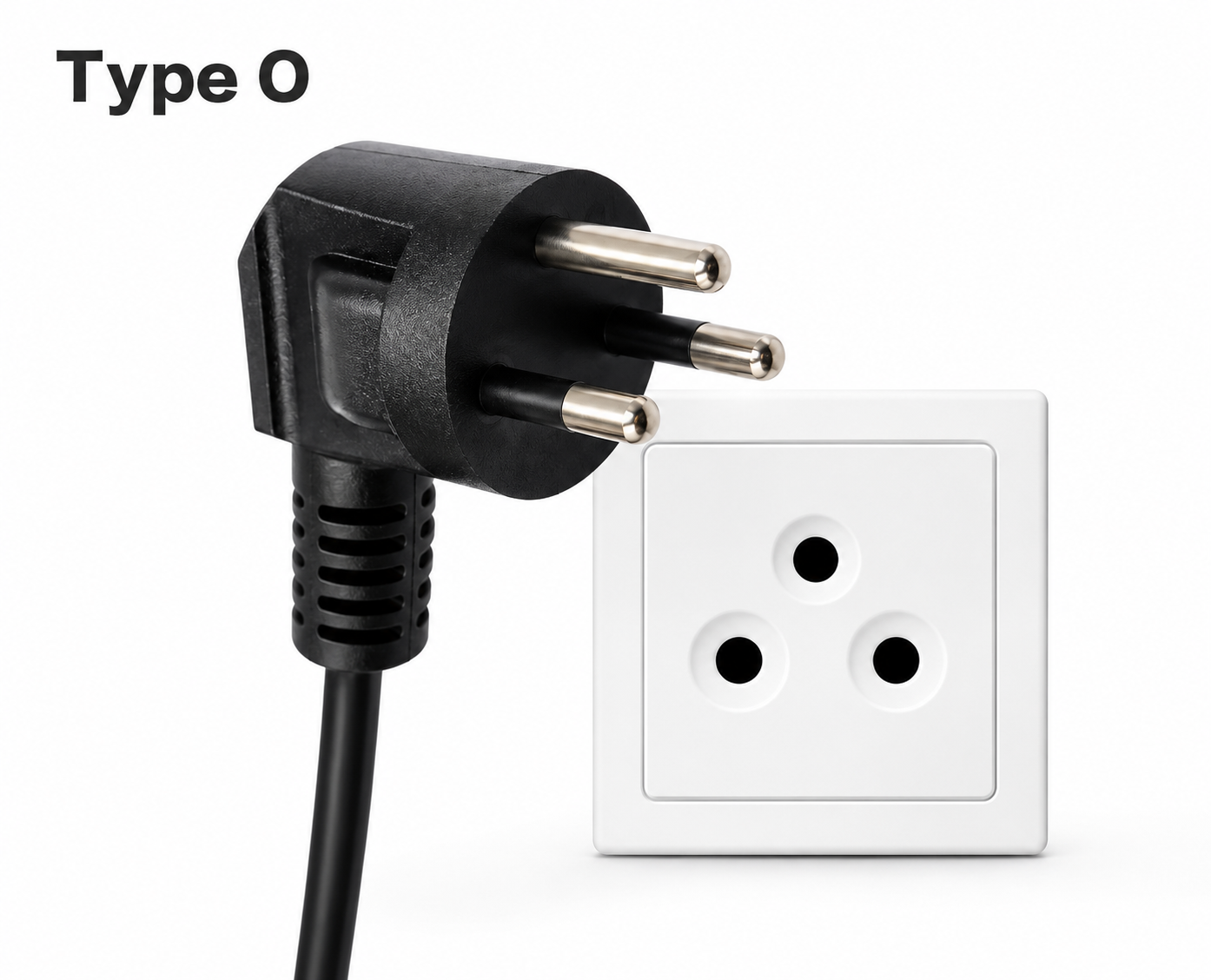
Thailand went a different direction entirely, building outlets flexible enough to take Type A, B, C, and its own Type O, developed as a national standard rather than borrowed from anyone.
The Voltage Is Becoming Similar
Before talking about the numbers, here's what they actually mean.
Voltage (measured in volts) is the amount of electrical power supplied through a socket, while frequency (measured in hertz) refers to how many times the alternating current changes direction each second. For most people, these numbers determine whether an appliance can safely operate without a converter.
Most of the region now sits close to the international benchmark of 230 volts at 50 hertz, per IEC guidelines.
Singapore, Indonesia, and Brunei run 230V/50Hz. Malaysia officially made the switch from 240V to 230V back in 2008. Thailand has been drifting from 220V toward 230V. Vietnam hovers around 220-230V depending on the grid.
The Philippines is the outlier, and not for its voltage, it's one of the few countries in the region still running on 60 hertz instead of 50, a holdover from its American influenced grid. It rarely causes problems for modern electronics, but it's why old clocks and certain motorized appliances brought over from elsewhere in the region sometimes run at the wrong speed.
So if you're traveling around Southeast Asia, your electric devicer will probably work almost anywhere.
The electricity is rarely the problem. It's the plug that won't fit the wall.
Why Not Just Standardize Everything?
Because "just standardize it" ignores what's already built. Every home, hospital, factory, and hotel would need new wall sockets. Every appliance still in use would need a new plug or a permanent adapter. The bill would run into the billions for a problem a $3 adapter already solves.
So governments have mostly left it alone. Keep what works, hand tourists an adapter, move on.
Grids across the region are getting more connected, the ASEAN Power Grid is proof of that. But the wall socket hasn't caught up, and probably never will. It's still a small, physical record of who built what, and when, and under whose rule.
So next time you're packing a travel adapter for a trip around the region, you're not just prepping for a different plug, you're packing around a piece of history.