Malaysia enforces a different internal immigration policy within its own territory. Access from Peninsular Malaysia into Sarawak or Sabah requires passing through domestic border checks. Consequently, West Malaysians need to present a valid passport or identity document upon arrival.
Domestic arrivals from Peninsular Malaysia clear dedicated immigration checks right upon entering either state.
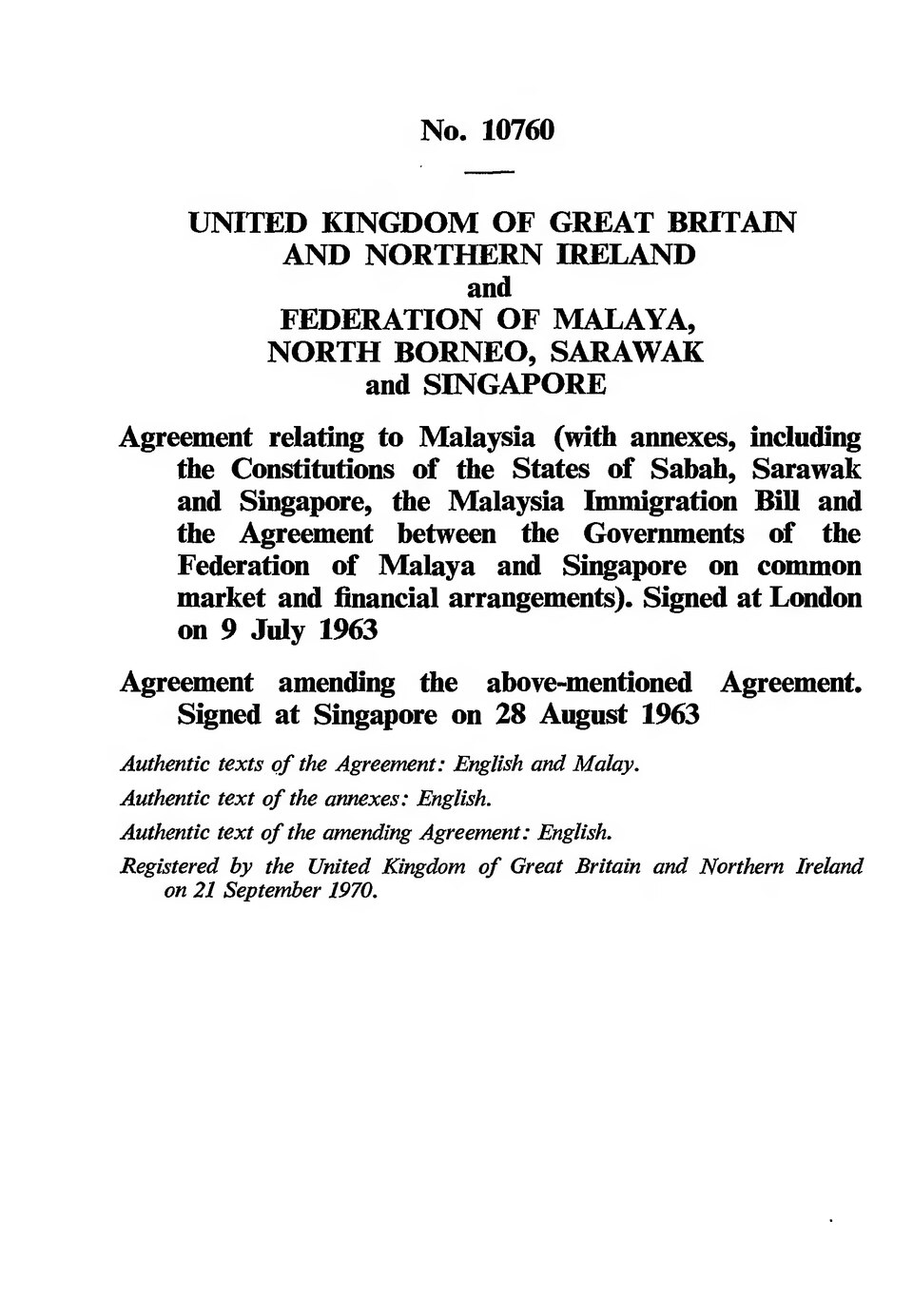
The internal immigration is based on the Malaysia Agreement 1963 (MA63). The agreement was signed on July 9, 1963, between the British Crown, Malaya, Singapore, Sarawak, and North Borneo (present-day Sabah). It officially came into force on September 16, 1963, which established the federation of Malaysia.
The MA63 agreement guarantees that both Sarawak and Sabah states hold full authority over entry access to their territories.
Federation Safeguards under the 1963 Agreement
The Immigration Act 1959/63 formalizes the autonomous powers granted to Sarawak and Sabah under the MA63 framework. Provisions within federal law give state immigration directors full jurisdiction over entry approvals across air and land borders.
Both Sarawak and Sabah state retain the legal right to manage entry access independently from the federal government in Kuala Lumpur. Border enforcement applies at major land crossings and commercial airport terminals across East Malaysia.
Entry clearances granted at arrival terminals apply strictly to social visits. Long-term residence, employment, or educational pursuits in either state require separate approvals issued directly by state immigration departments.
Immigration autonomy operates independently between the two states. An entry clearance granted for Sarawak does not automatically allow entry into Sabah. It requires separate checks when moving between the two states.
However, Special exemptions apply to eligible individuals, such as government officials and long-term residents. Section 66 of the Immigration Act 1959/63 allows for an Exemption Endorsement. The stamp is placed directly onto travel documents.
State immigration departments in Sarawak or Sabah hold sole authority to issue the endorsement. It exempts holders from standard visit permits. Without the endorsement, an expired visit pass requires an Exit Check Memo before departure clearance is granted.
Conventional Passport Verification Steps
Immigration officers in Sarawak and Sabah inspect national passports upon arrival. The passport document must maintain a remaining validity of at least six months.
An official entry stamp goes directly onto an open passport page. The physical stamp serves as a social visit pass valid for up to 90 days.
Border control relies on the physical ink record as the primary verification method upon departure. Stays beyond three months or for employment purposes require separate permits from state immigration authorities.
Extending a stay beyond 90 days requires applying directly to the Immigration Department in either state. Approval depends entirely on local discretion.
Alternative Entry Using MyKad
Without a passport, West Malaysians can still pass Sarawak or Sabah. They need to use Malaysian identity cards (MyKad) as an alternative entry document. Arrival counters in either state scan the Mykad to verify identity during entry processing.
The identity verification generates Form IMM.114. It grants temporary social entry into Sarawak or Sabah for up to 90 days.
The physical form acts as the primary pass during the stay. Leaving Sarawak or Sabah state back to Peninsular Malaysia requires surrendering the IMM.114. The step allows the entry record to be closed in the immigration system.
If the IMM.114 slip is lost during the stay, a replacement report must be processed at a state immigration branch before departure. Flight clearance cannot be given without the verification.