


At Erasmus Huis in Jakarta on 6 August 2026, six Indonesian short films opened the tenth edition of the 100% Manusia Film Festival. Stories drawn from Jakarta, Kupang, Magetan, Medan, Sidoarjo and Tangerang explored love, grief, courage, acceptance and hope—setting an intimate tone for a festival built around a simple conviction: every person, before any social label, is fully human.
Running from 6 to 15 August under the theme “A Decade of Love Language,” the 2026 festival presents 86 films—24 features and 62 shorts—from 21 countries. All screenings and accompanying programmes are free across 11 venues in Jakarta, Bali and Yogyakarta.
From a Volunteer Movement to Its Tenth Edition
100% Manusia began as a volunteer-led social movement and held its inaugural festival from 22 September to 1 October 2017. Its mission was to use film and other creative platforms to address human rights, gender, diversity and minority experiences while challenging stereotypes, prejudice and stigma. The festival's official history describes this shared humanity as the common ground beneath individual identities.
That principle has guided the festival through ten editions, including its move online in 2020. Its expansion beyond Jakarta into Bali and Yogyakarta demonstrates how a grassroots initiative can grow without abandoning accessibility or community participation.
The 2026 programme reflects that journey. The opening presentation, 100% Love Language, brought together six Indonesian short films: Waktu Luang, Folding Sadness, Malam Sepanjang Nafas, BAGUS: Dancing Like a Lady, Parade si Rambo and Selamat Tidur, Adil!.
“The short films selected for 100% Love Language reflect how love exists within our diverse society, through different forms, stories, and emotions,” said Meninaputri Wismurti, the festival’s Director of Film Programme. “Understanding another person’s experience, including through cinema, is the first step towards understanding our shared humanity.”
When Watching Becomes Listening
100% Manusia approaches film as the beginning of a conversation rather than its conclusion. Feature films, documentaries and shorts introduce audiences to lives they may rarely encounter, while post-screening discussions connect filmmakers with viewers, activists and specialists.
For actress, activist and 2026 Festival Ambassador Hannah Al Rashid, cinema can reveal how apparently separate struggles remain connected. “Through the 100% Manusia Film Festival, we’re reminded that none of us truly faces life’s struggles alone,” she said. “For the past ten years, this festival has provided a safe space for everyone to learn, understand, and see the world from different perspectives.”
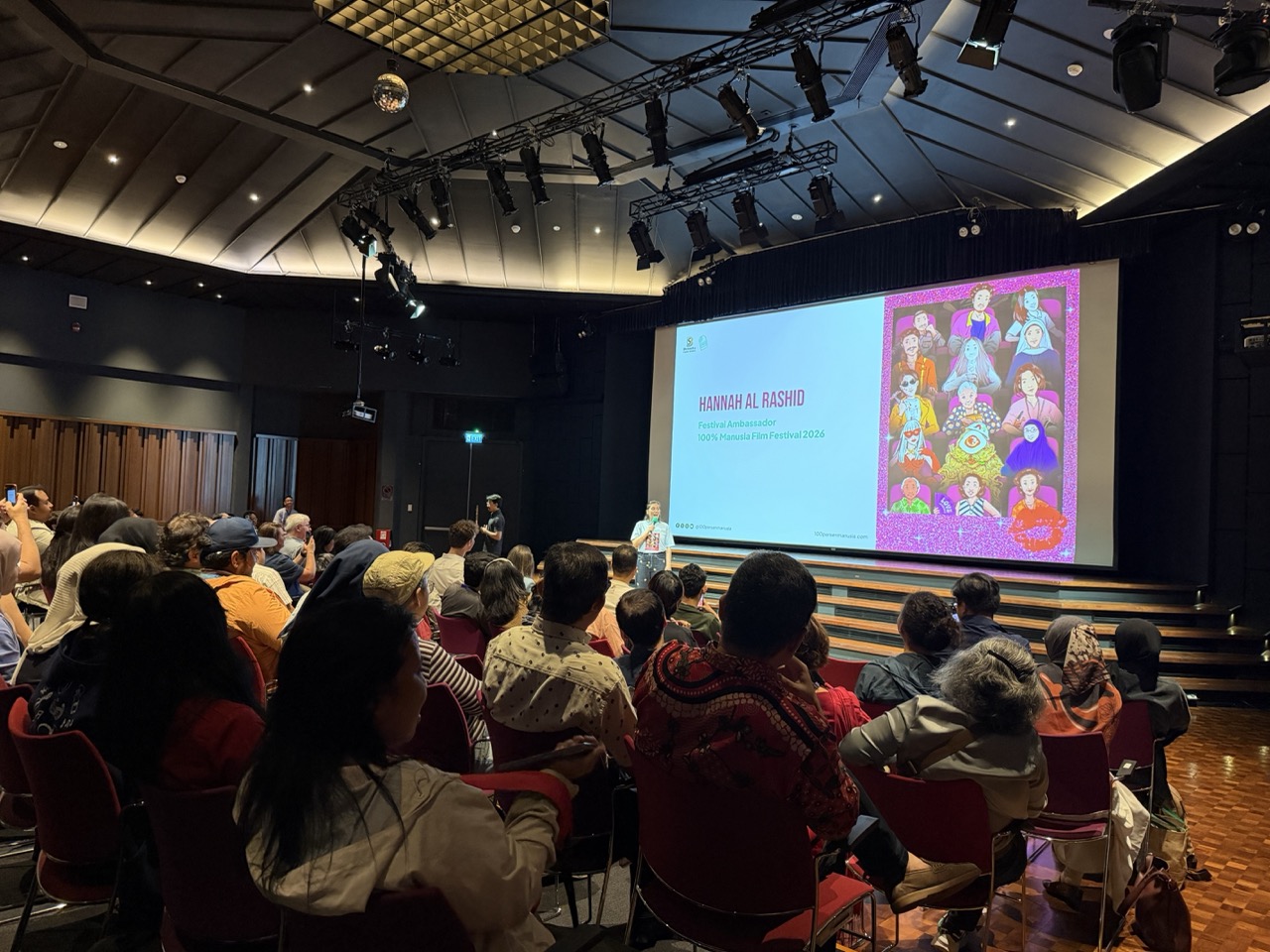
The festival’s network of cultural venues reinforces that spirit of exchange. Erasmus Huis, Institut Français d’Indonésie, the Austrian Embassy, Alliance Française Bali, IFI Yogyakarta and independent community spaces bring films into settings where audiences can encounter perspectives from Indonesia and abroad. These partnerships make the festival a form of cultural diplomacy grounded in human stories rather than formal speeches.
Inclusion Moves Beyond the Screen
The festival’s tenth edition extends accessibility beyond conventional screenings. At IFI Thamrin, Quickie Express was presented through 100% Cinergi with Bisik Buddy volunteers providing live audio description for blind and visually impaired viewers. The programme demonstrated that inclusion depends not only on whose stories appear on screen, but also on who can participate in the viewing experience.
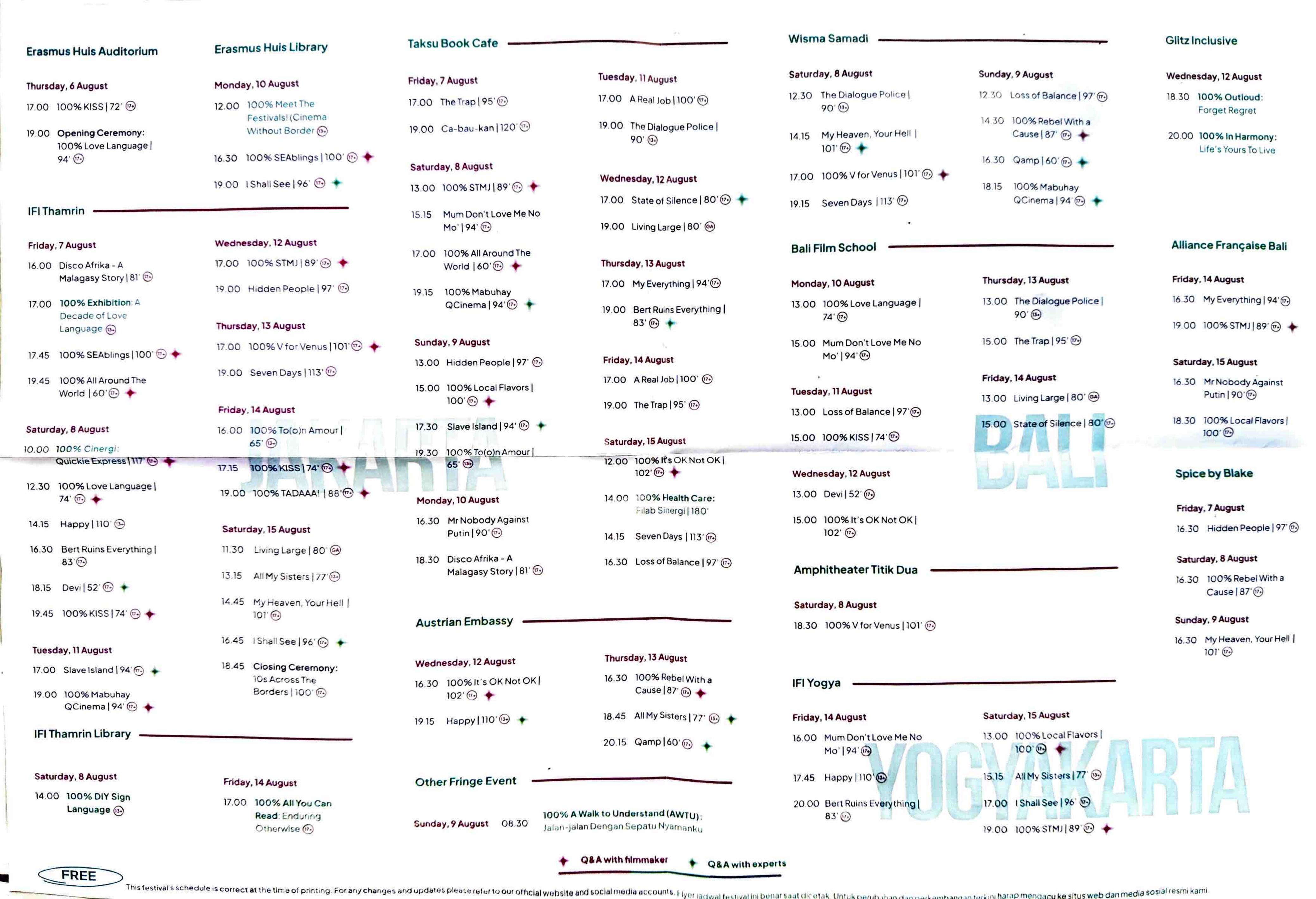
A separate introductory workshop developed with PUSBISINDO introduced participants to Indonesian Sign Language, or BISINDO, and Deaf culture. Meanwhile, the 100% Exhibition: A Decade of Love Language displayed official posters created with Indonesian artists throughout the festival’s history, tracing how its visual identity has interpreted humanity, emotion and social change.
“For us, inclusivity is built not only through films but also through shared experiences,” said Rain Cuaca, the festival’s Director of Events. The exhibition, accessible screening and sign-language workshop were designed to help people “meet, connect, learn from one another, and engage in meaningful dialogue.”
A Wider Stage for Independent Stories
For Indonesian filmmakers, particularly those addressing subjects often overlooked by commercial cinema, 100% Manusia provides an audience and a space for honest discussion. The opening selection showed that stories of humanity need not come from one cultural centre: they can emerge from large cities, smaller communities and different regions of the archipelago.
Its free-admission model is equally important. By removing ticket costs and distributing programmes across cultural institutes, cafés, schools and community venues, the festival makes independent and international cinema available to audiences who may otherwise remain outside formal festival circuits.
Academic research has described 100% Manusia as a form of cultural activism and “strategic cinephilia”—using the collective experience of watching films to build awareness, community and space for underrepresented voices. Research published in 2024 confirms the festival’s role as an inclusive platform within Indonesia’s film culture.
The Next Decade Begins with Empathy
After ten editions, 100% Manusia remains more than a showcase of films. It is a meeting point where cinema, art and lived experience help audiences approach difficult subjects with curiosity instead of judgement.
In an increasingly divided public landscape, its message feels especially current. A film may not resolve every disagreement, but it can make another person’s life harder to dismiss. By keeping its screens open, its programmes accessible and its conversations human, 100% Manusia enters its second decade with empathy as both its language and its direction.


