As saltwater reaches deeper into the Mekong Delta, scientists are developing rice varieties that can continue growing under increasingly saline conditions.
For decades, the Mekong Delta has been one of the world's most productive rice growing regions, contributing more than half of Viet nam's rice output. Yet saltwater is moving farther inland, affecting freshwater supplies and farmland.
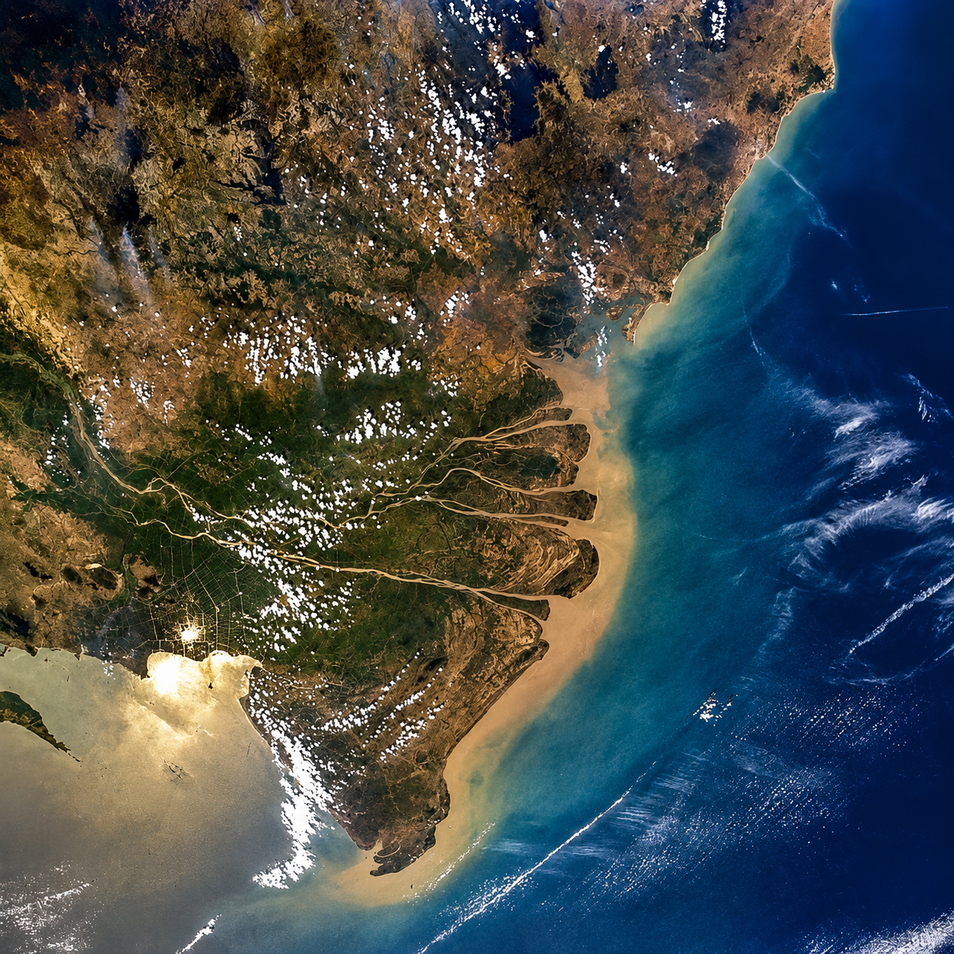
The FAO attributes rising saline intrusion here to climate change, sea level rise, and shifting river flows, compounded by reduced dry season discharge, groundwater extraction, and declining sediment supply.
Saltwater is changing how rice is grown
Rice is naturally sensitive to salt.
Saline water limits root water absorption, disrupts nutrient uptake, and reduces grain production. A 2025 review in Current Opinion in Environmental Sustainability found salinization here stems from multiple interacting factors, climate change, hydropower dams, sand mining, and groundwater extraction pressures expected to continue.
A study of 758 farming households found high salinity exposure can cut average farm profits by more than 75 percent, many farmers began considering alternative crops once expected rice profits fell below roughly 20 million dong per hectare.
Breeding rice that can tolerate salt
Researchers from the Cuu Long Delta Rice Research Institute, the Vietnam Academy of Agricultural Sciences, and IRRI have spent years crossbreeding naturally salt tolerant plants with high-yielding varieties to combine productivity with resilience.
Genetic analysis has sped this up, the best known salt-tolerance gene region, Saltol, is widely used across Asia. But it isn't the only answer, a study of 97 traditional Mekong Delta varieties found several tolerated salt without carrying Saltol at all, suggesting native rice holds other useful genes yet untapped.
Scientists are also tracking where saltwater is moving. In 2025, researchers in Trà Vinh Province used Electrical Resistivity Tomography to detect saline groundwater beneath fields without digging, informing irrigation and variety decisions.
A separate 2025 study in Communications Earth & Environment combined satellite imagery with environmental data and found prolonged drought and saltwater intrusion together have contributed to paddy field losses across the delta.
A Slow, Uneven Road
Breeding a resilient plant is one thing, getting it to farmers is another. Developing a variety genuinely adapted to local conditions can take decades, which is why institutes like Can Tho University's Mekong Delta Development Research Institute now test candidate lines on farmers' fields across several seasons, not in labs alone.
Once ready, adoption can scale fast under the right conditions, saline tolerant rice grew from a few thousand hectares in the early 2000s to roughly 160,000 hectares within less than a decade, with official backing. But that pace depends on factors that don't always align.
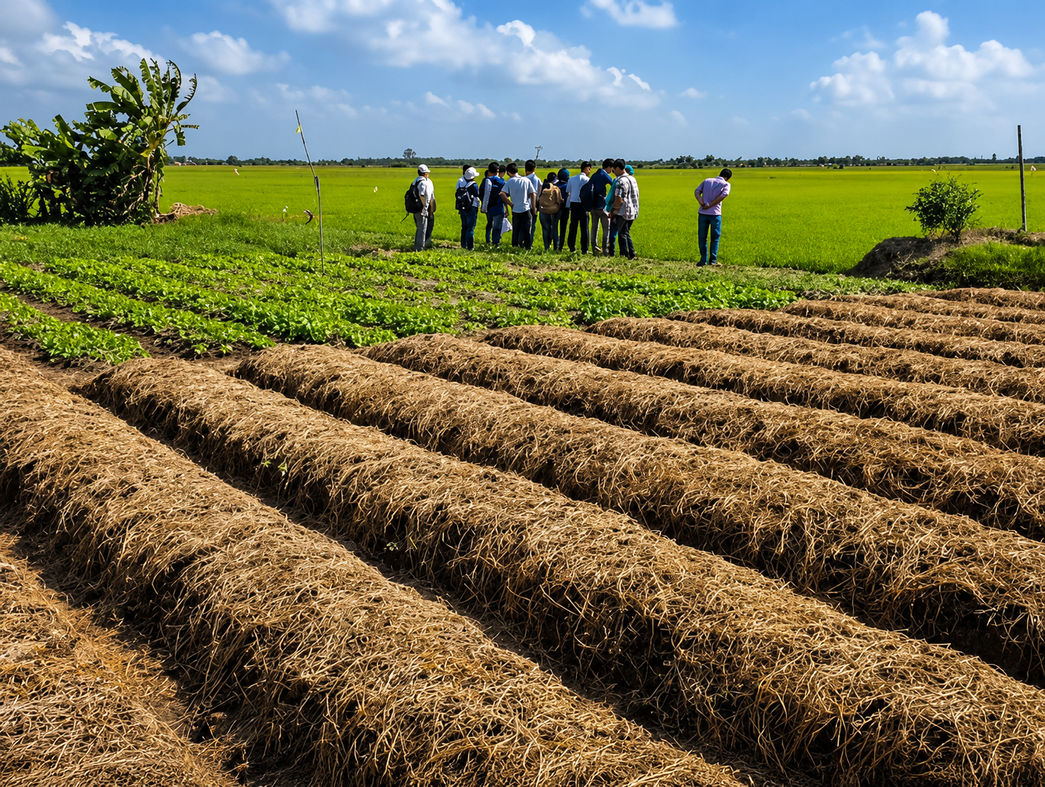
According to a review published in the Vietnamese Mekong Delta Journal, farmers face several barriers to adopting salt-tolerant rice. Short warning windows before saltwater arrives, limited seed availability, and uneven access to information disproportionately affect women and ethnic minority farmers.
Many salt-tolerant varieties also still lag behind conventional rice in yield or grain quality, meaning farmers may accept lower prices in exchange for greater resilience. Low rice prices, high input costs, and limited access to credit add further challenges, while newer approaches such as using soil microbes still lack long-term evidence, much of which is currently available only in Vietnamese.
As a result, adoption has concentrated in the highest-risk areas without protective salinity gates, where researchers describe these varieties less as a profit booster than as insurance stabilizing income in a bad year, without necessarily outperforming conventional rice in a good one.
A race against time
Saltwater intrusion will remain one of the biggest challenges for Mekong Delta agriculture, and breeding programs that take years to deliver a variety are racing a rate of salinization that keeps accelerating. Investment in irrigation, reservoirs, and monitoring continues alongside the breeding work.
But protecting farmers' livelihoods will depend as much on faster seed distribution, fairer prices, and stronger support for exposed smallholders as on what happens in the lab.