Timor Leste shares the island of Timor with Indonesia and is surrounded by countries where Portuguese is not widely spoken. But when the country restored its independence on 20 May 2002, it declared Tetum and Portuguese as its official languages.
The decision appears unusual in Southeast Asia, but it reflects centuries of history that predate the country's independence.
A Portuguese Colony for More Than Four Centuries
Portugal established its presence on Timor in the early 16th century, initially attracted by the island's valuable sandalwood trade. Over the following centuries, the eastern half of the island became Portuguese Timor, while the western half came under Dutch administration.
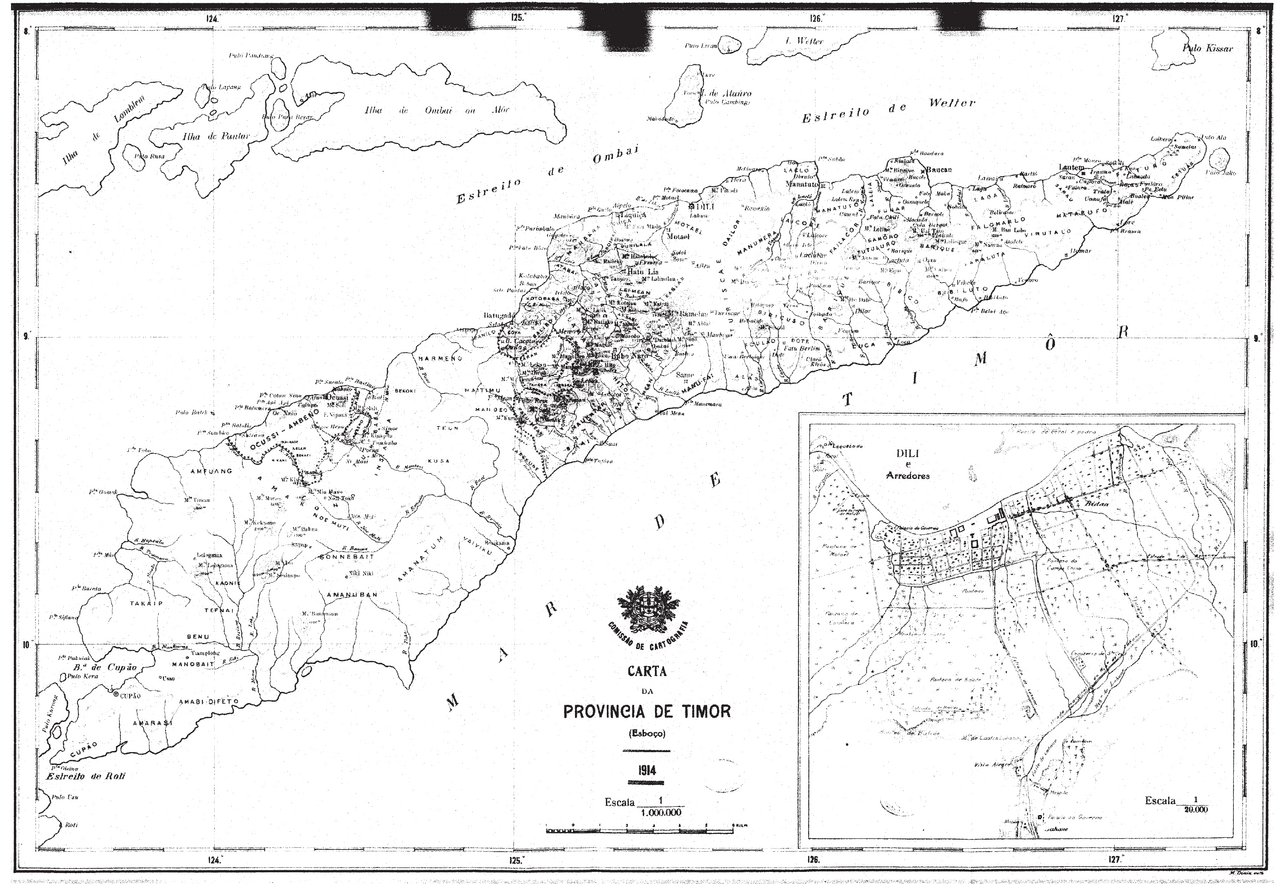
Portuguese gradually became the language of colonial administration, legislation, the Catholic Church, and formal education. According to the Government of Timor Leste, Portuguese administration lasted until 1975, when Portugal withdrew during its decolonization process after more than four centuries of colonial rule.
Indonesian Became the Main Administrative Language
Indonesia entered East Timor in December 1975, and the territory was later administered as Indonesia's 27th province.
During the following 24 years, Bahasa Indonesia became the principal language of government, public administration, and formal education. Many Timorese who attended school during this period became fluent in Indonesian, while Tetum continued to function as the country's most widely spoken lingua franca.
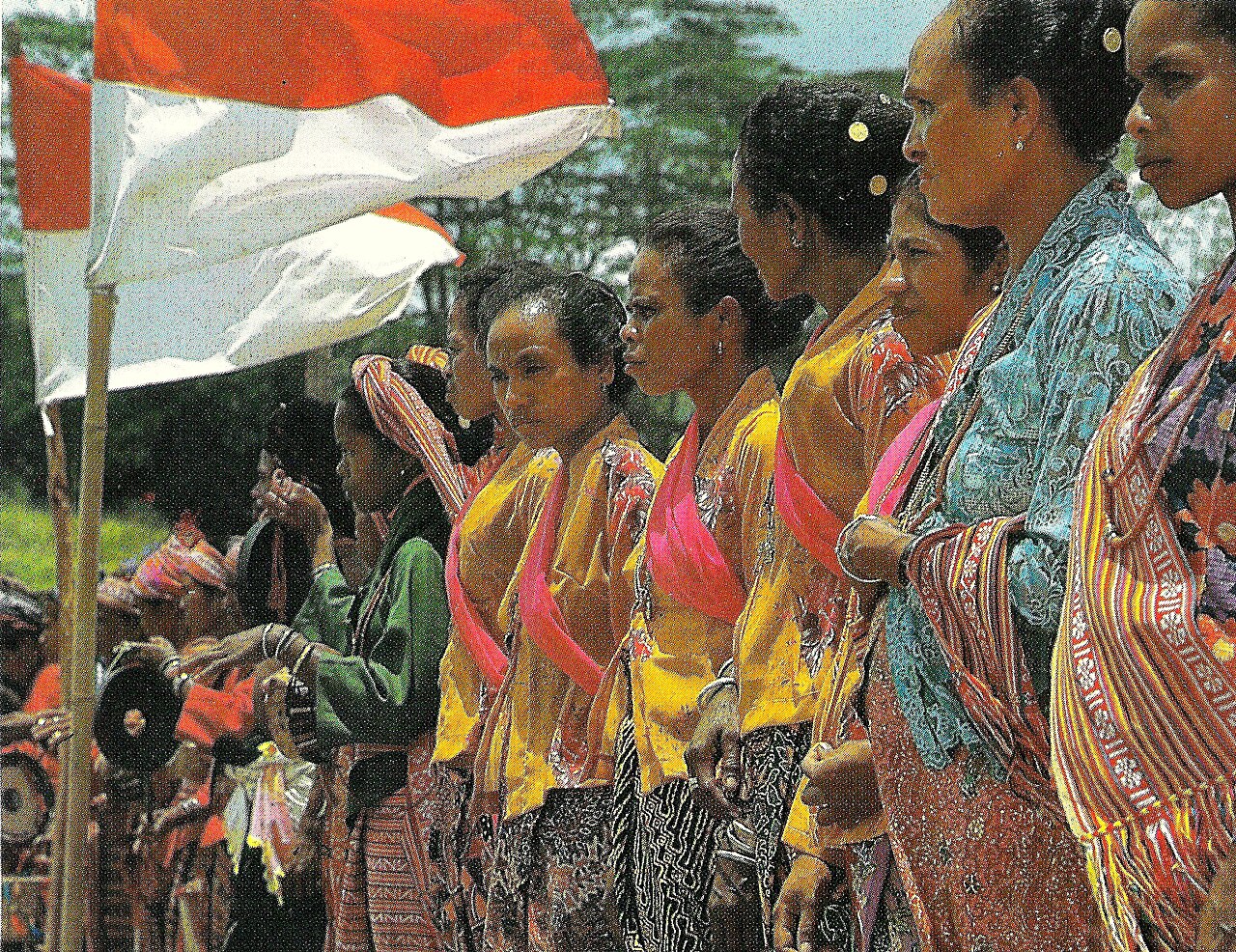
Following the UN sponsored referendum in 1999, East Timor entered a transitional administration under the United Nations. Full independence was restored on 20 May 2002.
The Constitution Chose Two Official Languages
When Timor Leste adopted its Constitution in 2002, it established two official languages instead of one.
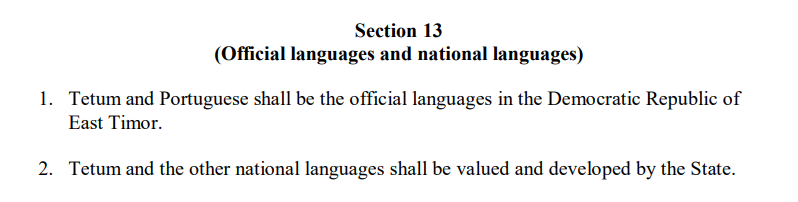
According to Article 13 of the Constitution, Tetum and Portuguese are the official languages of the Democratic Republic of Timor Leste. The same article also requires the State to value and develop Tetum and the country's other national languages.
The Constitution assigns a different status to English and Indonesian, recognizing both as working languages for use in public administration whenever necessary. That constitutional distinction remains unchanged more than two decades after independence.
Portuguese Returned Alongside Tetum
After independence, Portuguese returned to government institutions together with Tetum.
According to Timor Leste's Ministry of Justice, government institutions are required to prioritize Tetum and Portuguese in legislation, official publications, public signage, and state communication. Indonesian and English continue to be used as working languages in areas where they remain necessary for administration and international cooperation.
Although both are official languages, they serve different functions. Tetum is the country's principal lingua franca and is widely used in everyday communication, while Portuguese is commonly used in legislation, government administration, diplomacy, higher education, and the judiciary.
A Multilingual Nation
Official languages represent only part of Timor Leste's linguistic landscape.
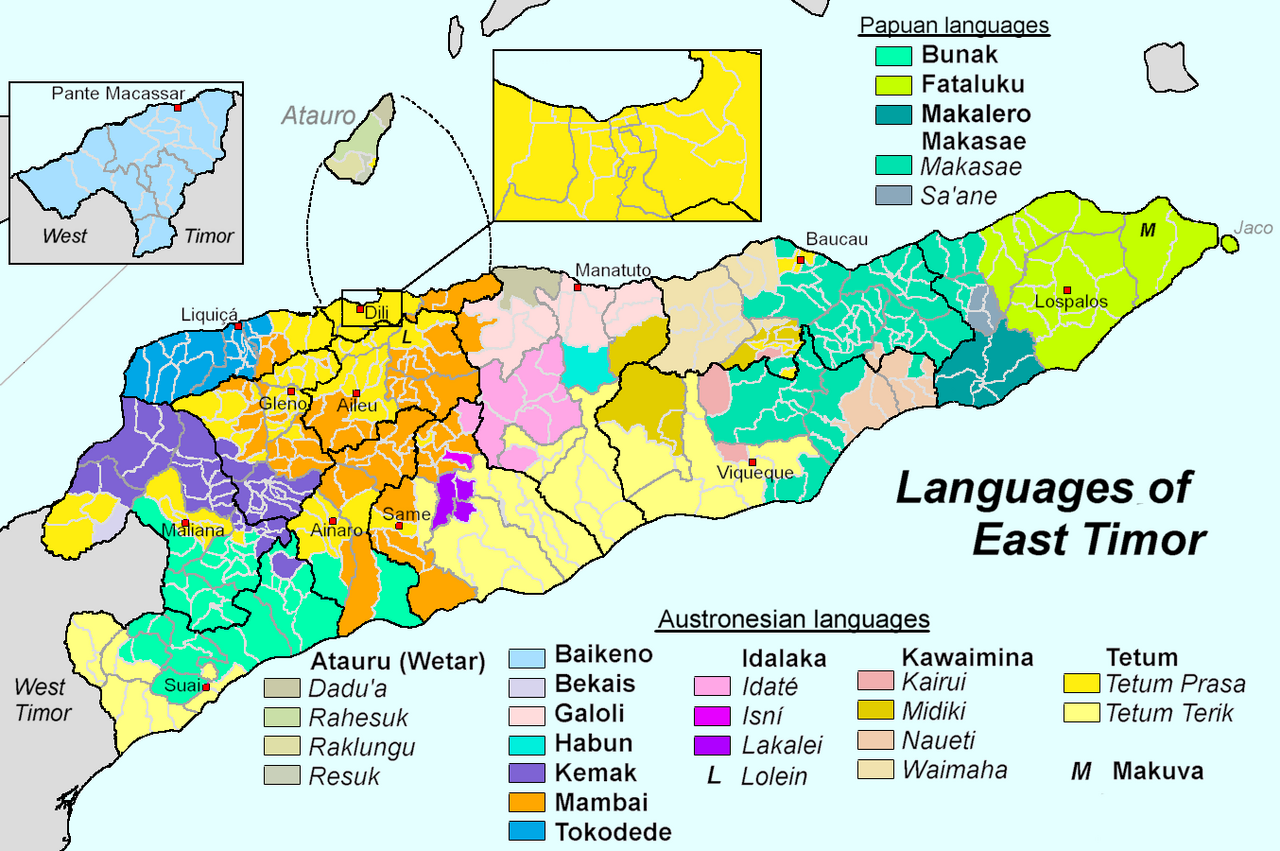
The 2022 Population and Housing Census recorded dozens of indigenous languages spoken across the country, reflecting its long cultural and linguistic history. Tetum Prasa remains the country's most widely spoken mother tongue, alongside languages such as Mambai, Makasae, Baikeno, Bunak, Fataluku, Kemak, Tokodede, and many others.
The same census also shows that Portuguese is increasingly used in literacy and education. According to a thematic report based on the 2022 Census, 59.1% of literate people aged 5–24 could read and write in Portuguese. Tetum recorded the highest literacy rate at 99.7%, followed by Indonesian at 30.3% and English at 18.8%.
A Distinct Linguistic Landscape in Southeast Asia
Timor Leste's language policy differs from that of its Southeast Asian neighbors.
Indonesia uses Bahasa Indonesia as its official language, Malaysia uses Malay, the Philippines recognizes Filipino and English, while Timor Leste officially recognizes both Tetum, an Austronesian language spoken throughout the country, and Portuguese, a European language introduced during the Portuguese colonial period.
More than two decades after independence, that framework remains unchanged. According to Timor-Leste's Constitution, Tetum and Portuguese continue to serve as the country's official languages, while Indonesian and English retain their constitutional status as working languages in public administration.