Formula 1 races were held during the day for decades.
That changed on 28 September 2008, when the Singapore Grand Prix became the first race in Formula 1 history to start after sunset. More than a visual spectacle, the event introduced a new concept to the championship, one that combined engineering, broadcasting strategy, and urban planning.
The decision was not accidental, and Singapore was not chosen simply because it could light up a race track.
A Night Race Made Business Sense
When Singapore secured the rights to host Formula 1 in 2007, organizers proposed something no Grand Prix had attempted before, racing under artificial lights.
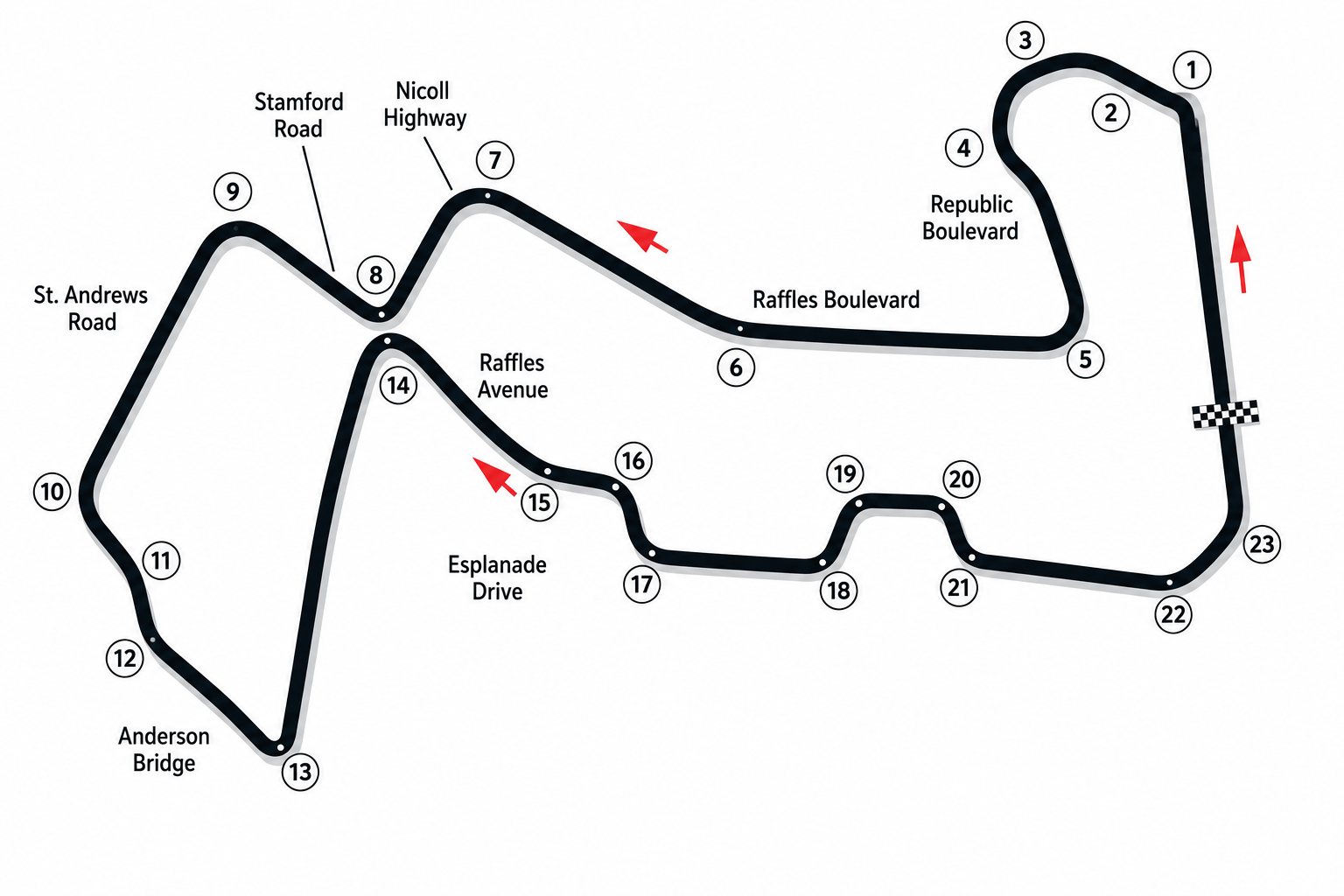
According to Singapore's Ministry of Trade and Industry, holding the race at night would allow it to be broadcast during prime viewing hours across Europe while remaining convenient for audiences in Asia. Formula One Management supported the idea because European television audiences represented one of the sport's largest markets, and a daytime race in Singapore would have aired early in the afternoon in Europe.
The ministry also estimated that the event could generate around S$100 million in additional tourism receipts each year, benefiting hotels, restaurants, airlines, retailers, and other tourism related businesses.
Singapore's proposal, however, came with one condition. The race would only proceed if the FIA, Formula One Administration, and the competing teams were satisfied that every operational and safety requirement could be met.
Turning Night Into Day
Designing a night race required far more than placing floodlights around the circuit.
To make it possible, the Marina Bay Street Circuit was fitted with nearly 1,500 specially designed floodlights mounted on around 230 steel pylons. According to Singapore GP, the lighting system produced an average illumination of approximately 3,000 lux, bright enough to meet Formula 1 safety standards while also delivering consistent images for high definition television broadcasts.
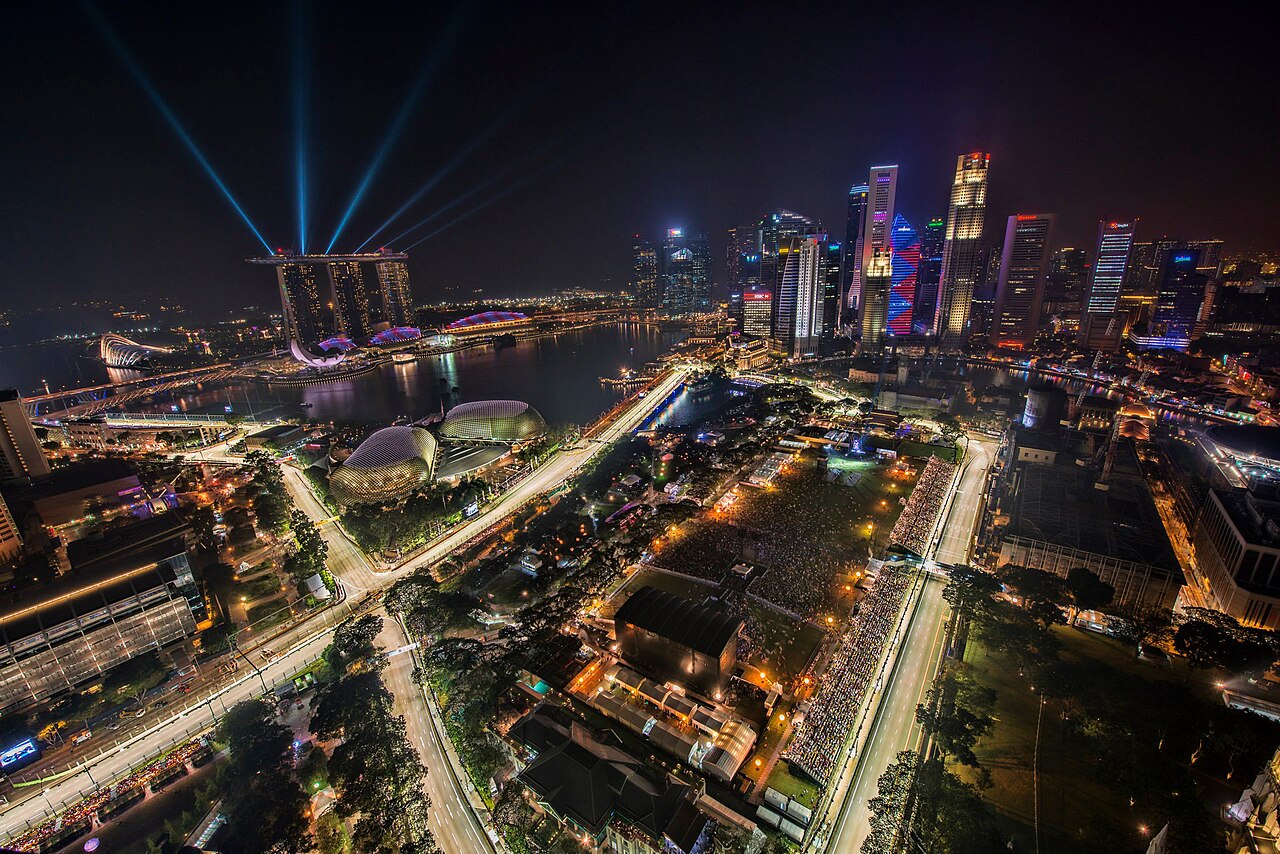
Reliability was just as important as brightness. The lighting network was supported by 12 twin generator systems, meaning every section of the circuit had backup power available in case one generator failed. At speeds exceeding 300 km/h, even a brief blackout could have posed a serious safety risk, so redundancy was built into the system from the beginning.
The circuit also introduced electronic flag displays alongside traditional marshal posts, ensuring drivers could receive race signals instantly anywhere around the track.
Why Singapore Instead of Monaco?
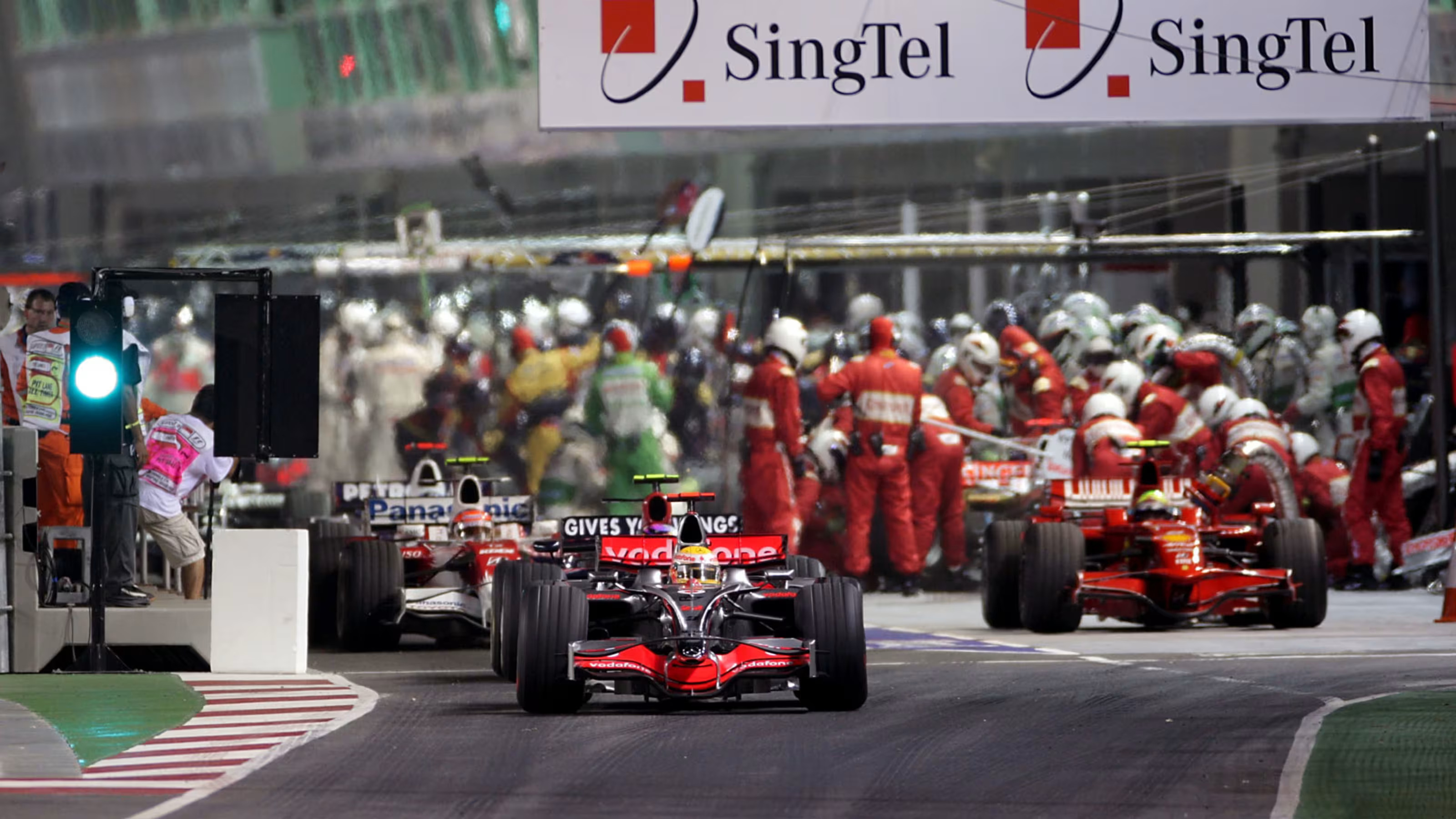
Monaco may be Formula 1's most famous street circuit, but it was never considered for the championship's first night race.
Singapore offered something Monaco could not, an opportunity to create an entirely new event without changing one of Formula 1's oldest traditions. The Marina Bay circuit was being built from scratch, allowing engineers to integrate lighting, power systems, television infrastructure, and safety features into the circuit's design before the first race was ever held.
Singapore's location also made the timing commercially attractive. A race beginning after sunset in Singapore could still be watched live during the evening in Europe, preserving one of Formula 1's most valuable television windows.
A Formula 1 First
The inaugural Singapore Grand Prix took place between 26 and 28 September 2008, with the race held on Sunday evening.
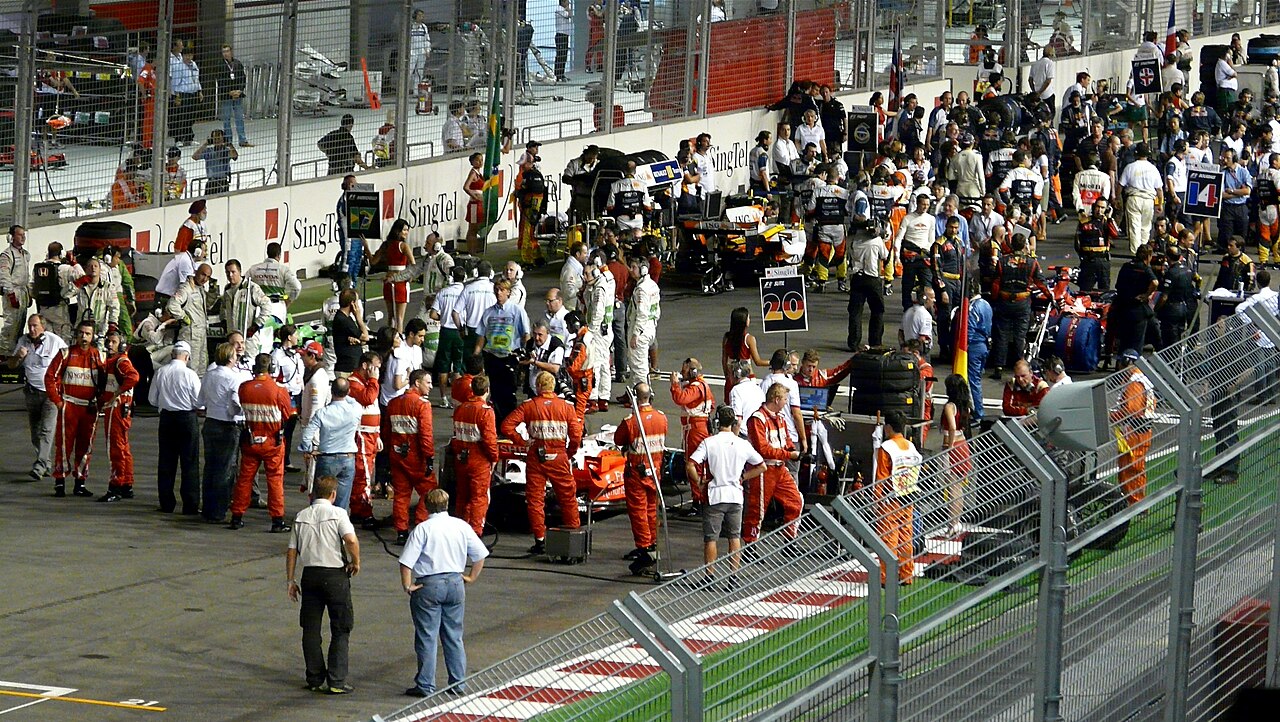
According to Singapore's National Library Board, the event marked two milestones at once. Formula 1's first ever night race and Asia's first Formula 1 street circuit. It also brought top level international motor racing back to Singapore for the first time in 35 years.
The event demonstrated that a Formula 1 race could be staged safely after dark without compromising sporting or broadcast standards. In the years that followed, other night races were added to the Formula 1 calendar, including Bahrain, Abu Dhabi, Jeddah, Las Vegas, and Qatar.
More than 15 years later, the Singapore Grand Prix remains the race that proved the concept could work. What began as an unconventional proposal in 2007 became one of Formula 1's most recognizable events, showing that a Grand Prix did not have to be held under daylight to reach a global audience.