The two towers look identical today. During construction, they were competitors.
When work began on the PETRONAS Twin Towers in 1994, Malaysia split the project between two international consortia instead of hiring a single main contractor. Tower 1 was assigned to a Japanese-led team headed by Hazama Corporation, while Tower 2 went to a South Korean-led consortium led by Samsung Engineering & Construction, now part of Samsung C&T.
According to the Council on Tall Buildings and Urban Habitat (CTBUH), the arrangement allowed both towers to rise at the same time, shortening the construction schedule from an estimated eight years to about six.
Two Towers, Two Contractors
Both consortia worked independently on separate towers, each with its own engineers, construction crews, and timetable.
To keep the project moving, the developer introduced an incentive. The team that reached the top first would build the Skybridge linking the two towers. Rather than waiting for one tower to be completed before starting the other, both structures climbed floor by floor in parallel.
The race ended with the South Korean consortium finishing first. Samsung was awarded the contract to construct the 58.4 meter Skybridge connecting the towers on the 41st and 42nd floors.
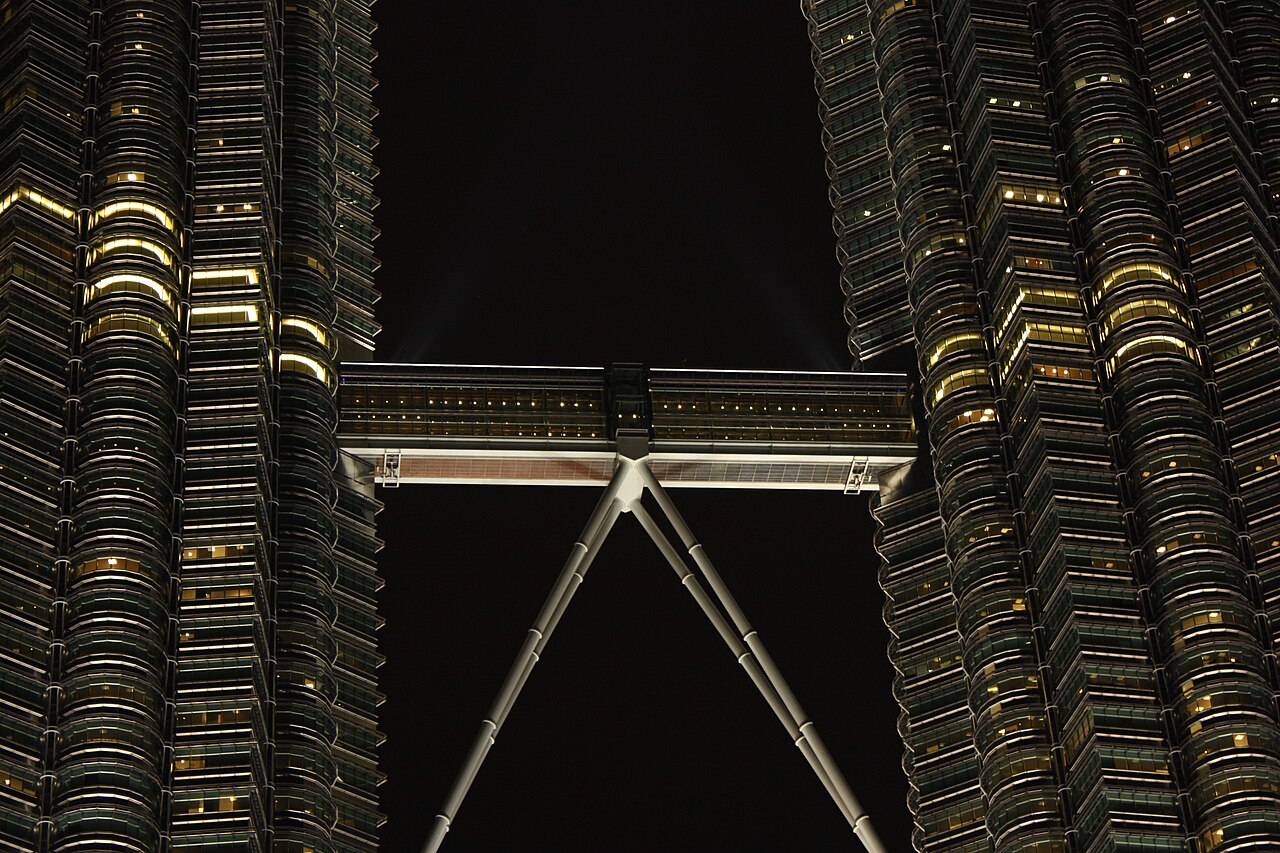
The bridge was not built on site. It was fabricated in South Korea, shipped to Malaysia in sections, reassembled, and lifted into place more than 170 meters above the ground using hydraulic jacking systems. Samsung later described the installation as one of the project's most technically demanding stages.
More Concrete Than Steel
The towers were also unusual because they relied on reinforced concrete instead of structural steel, which was the more common choice for supertall buildings at the time.
According to engineering papers presented through CTBUH, high strength concrete was selected because it was more economical in Malaysia and provided greater stiffness for a building standing 452 meters tall. Engineers developed concrete with strengths of up to 80 MPa and created pumping systems capable of delivering it to heights approaching 380 meters.
Those decisions helped make the PETRONAS Twin Towers one of the earliest skyscrapers to demonstrate that reinforced concrete could be used for buildings exceeding 400 meters.
A Costly Delay
The project briefly came to a halt after routine quality tests found that one batch of concrete failed to meet the required specifications.
Investigations showed that only one completed floor had been affected. It was demolished and rebuilt before construction resumed. Every subsequent concrete delivery underwent stricter testing, while three separate batching plants were established to reduce the risk of another shutdown. Contemporary reports estimated the delay cost roughly US$700,000 per day.
Legacy of a Twin Experiment
The PETRONAS Twin Towers officially opened in 1999 after becoming the world's tallest buildings the previous year. Although Taipei 101 surpassed them in overall height in 2004, the PETRONAS Twin Towers remain the tallest twin towers ever built.
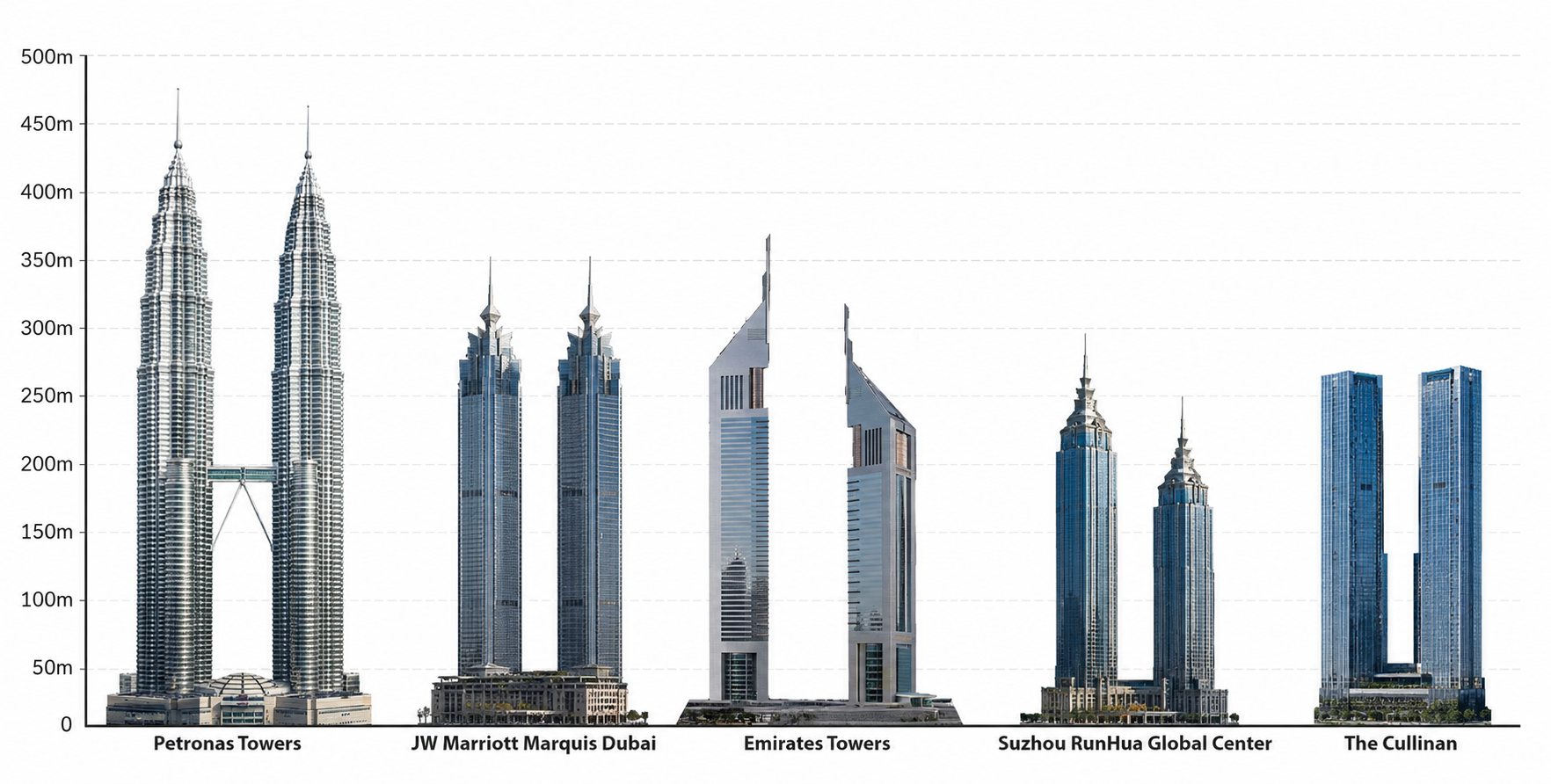
The record may have changed, but the construction method remains unusual. Instead of relying on a single contractor, Malaysia divided the project between two international consortia that worked on separate towers at the same time.
The approach helped shorten the construction schedule and became one of the defining stories behind one of Southeast Asia's most recognizable landmarks.