Southeast Asia is home to more than 700 million people, and over the past few decades its economies have been growing at a pretty impressive pace. Still, when you look at the G20, Indonesia is the only one country from the region appears on the list.
But why?
Singapore is a global financial hub punching far above its size, Vietnam has become a manufacturing powerhouse, Thailand remains a major player in tourism and automotive production, and Malaysia has built a fairly strong industrial base.
Yet none of them are part of the G20. Indonesia is, and it has been there since the group was first formed.
Indonesia Joined When the G20 Was Born
The G20 was established in 1999, in the aftermath of the financial crises that had shaken emerging markets in the late 1990s. The IMF describes it as a forum bringing together major advanced and emerging market economies to improve policy coordination and strengthen global financial stability.
Indonesia was included among the original members.
At the time, the decision was not based simply on which countries had the highest GDP. The G20 was designed around economically and financially significant countries that could not be represented by the G7 alone.
The timing mattered for Indonesia. The country had just gone through one of the most severe economic crises in its modern history. The Asian Financial Crisis had caused the rupiah to collapse, pushed the economy into a deep recession and exposed weaknesses in Indonesia's financial system.
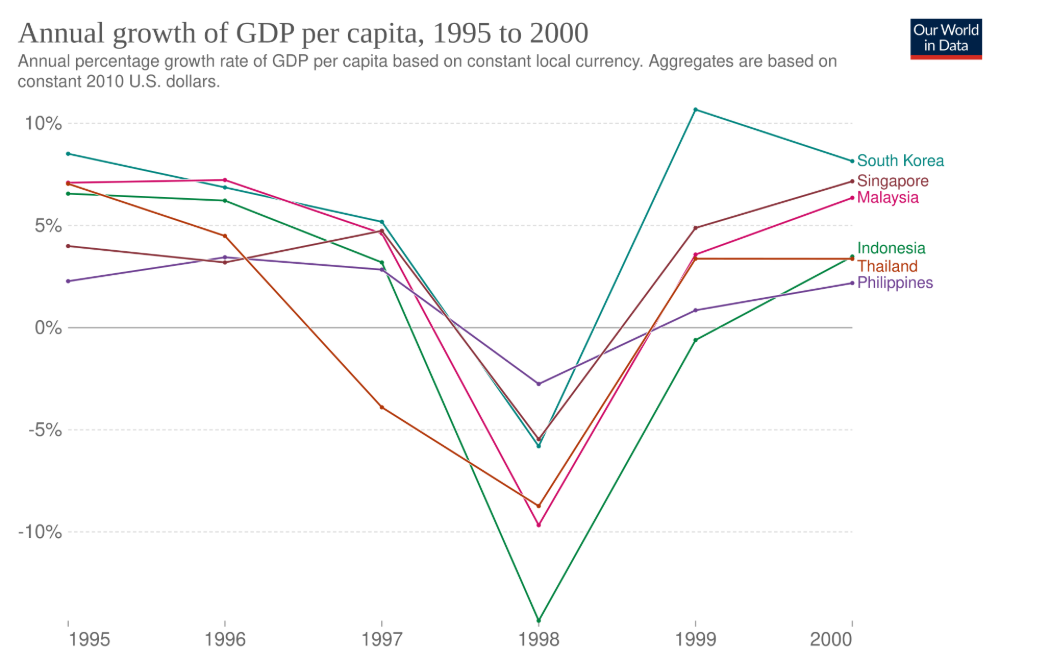
Indonesia was still one of the largest economies in the developing world and the largest economy in Southeast Asia. That combination helped make it relevant to a forum designed to include major emerging markets.
Indonesia Is Big, But Not Rich
IMF estimates put Indonesia's 2025 GDP at about US$1.44 trillion. Singapore follows at US$574.2 billion, Thailand at US$558.6 billion, the Philippines at US$494.2 billion, Vietnam at US$484.7 billion, and Malaysia at US$470.6 billion.
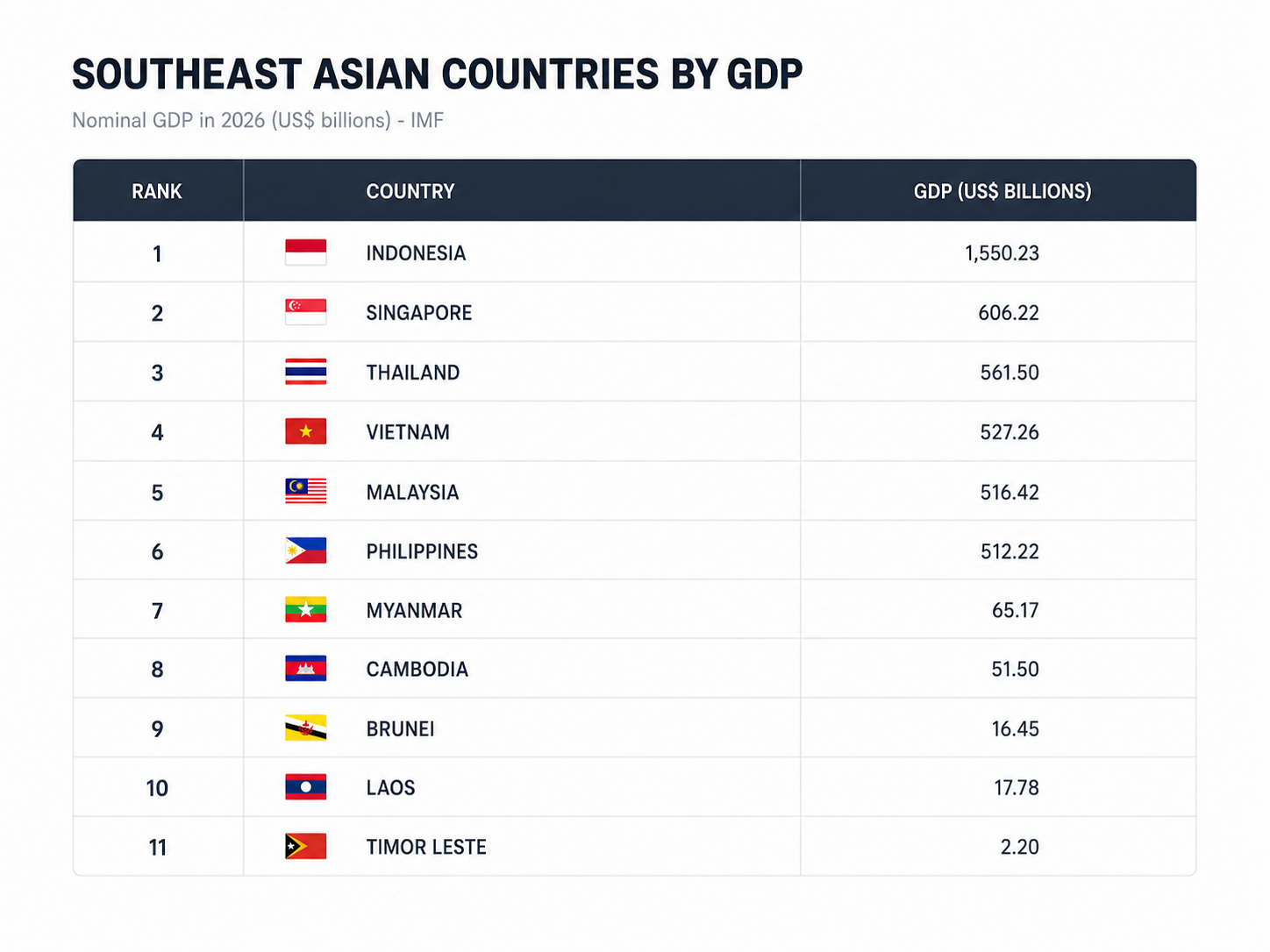
Indonesia's economy was therefore more than twice the size of Singapore's and Thailand's individually, and roughly three times the size of Malaysia's.
Population creates another major difference. Indonesia had about 285.7 million people in 2025, compared with roughly 116.8 million in the Philippines, 101.6 million in Vietnam, 71.6 million in Thailand and 36 million in Malaysia. Singapore had fewer than six million.
For a forum dealing with global economic issues, Indonesia therefore brings both a large economy and a very large domestic market.
But Indonesia's size should not be confused with wealth.
IMF estimates put Indonesia's 2025 GDP per capita at about US$5,082. That was far below Malaysia's US$13,949, Thailand's US$8,057, and Singapore's US$99,365. Vietnam was at US$4,829, while the Philippines was at US$4,270. Indonesia is therefore nowhere near the richest country in Southeast Asia on a per-person basis.
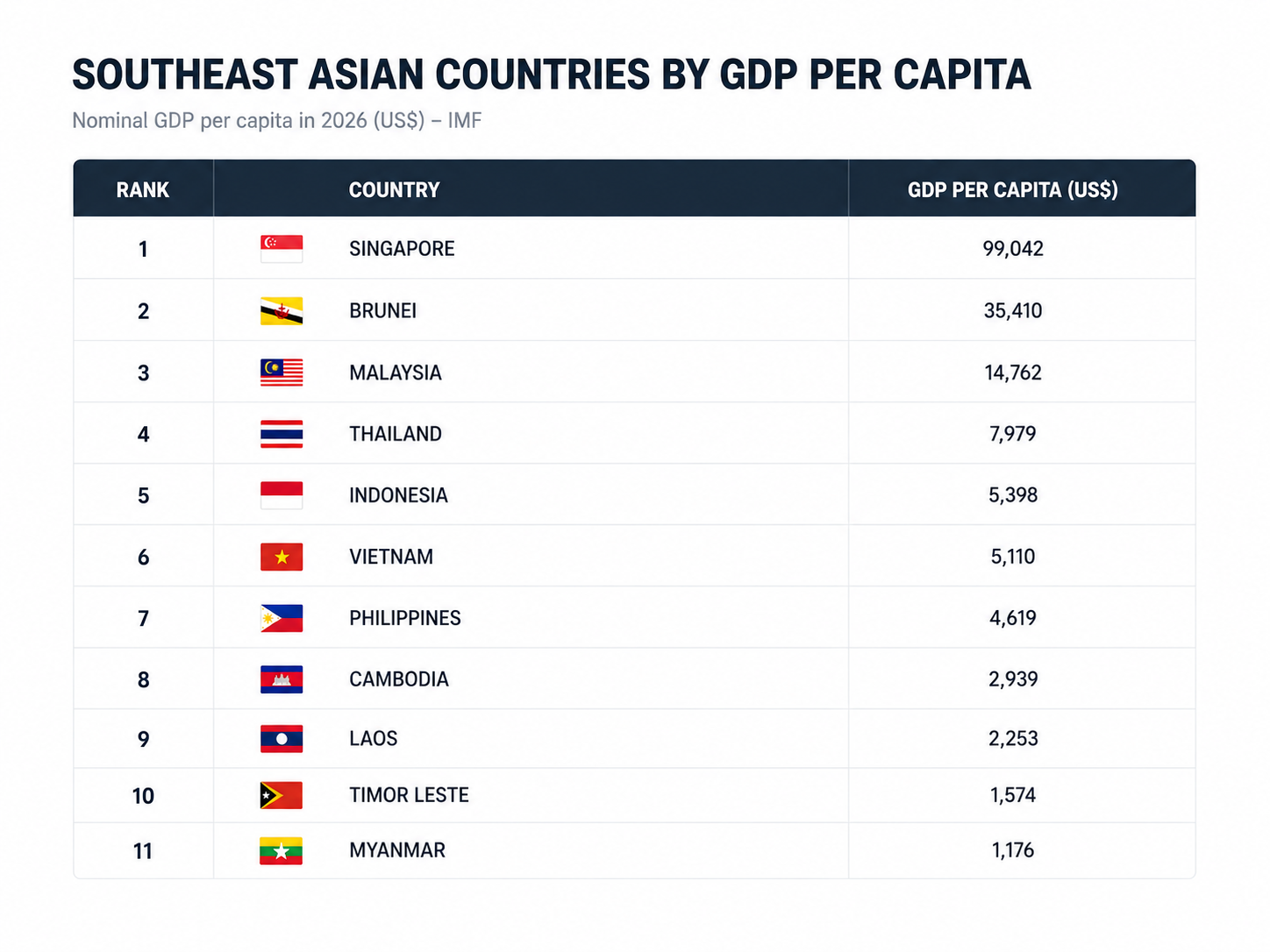
But the G20 is not a club for the world's richest countries. The IMF describes it as a group of key advanced and emerging market economies. Its membership includes countries such as India, Brazil, Indonesia and South Africa alongside the United States, Germany, Japan and other advanced economies.
That distinction explains why Indonesia can sit at the same table despite having a much lower income per person than Singapore or the United States.
There Is No G20 Entrance Exam
There is also no simple GDP cutoff that automatically qualifies a country for membership.
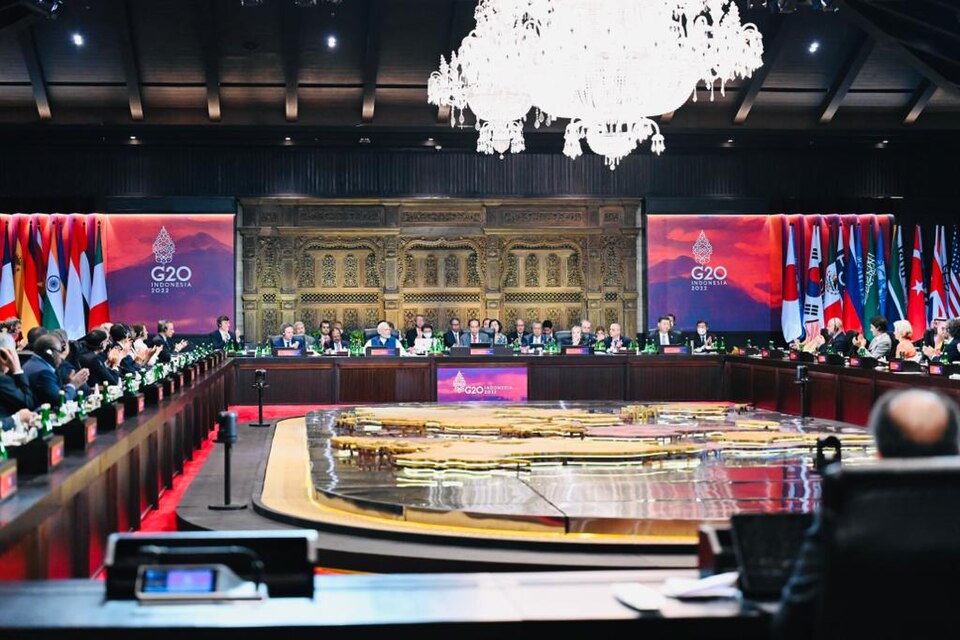
The G20 is an informal forum rather than an international organization with a formal application process. Its membership reflects the economic and systemic importance of its members and has remained largely stable since the group was established.
Today, the G20 consists of 19 countries, the European Union and the African Union. Together, its members account for around 85% of global GDP, 75% of international trade and two-thirds of the world's population. Indonesia's place in that group therefore says something different from its GDP-per-capita ranking.
It is the largest economy and most populous country in Southeast Asia, while also being a major emerging market with a large domestic economy and an established role in global economic diplomacy.