Singapore's largest integrated community hub sits on a former stadium site in Tampines.
Six rooftop swimming pools, a 20 court badminton hall, a five story regional library, a hawker center, and a 5,000 seat stadium with a FIFA standard football pitch. All under one roof, all inside Our Tampines Hub.
This is Singapore's co-location strategy at work. Stacking amenities like healthcare, childcare, sports facilities, shops and libraries into or around the same development, instead of scattering them across a town.
It's now official planning policy. Under Master Plan 2025, Singapore says amenities will be co-located near homes wherever feasible to save land, and to cut down the number of trips residents make across the city.
The Idea Has Been Around for Decades
This isn't a new idea. According to The Housing & Development Board (HDB), "Planning for Self-Sufficiency" has been one of its core town planning principles since it began building public housing towns in 1960.
Toa Payoh was the first town comprehensively planned and developed by HDB, and went on to serve as a model for residential towns across Singapore, according to Singapore's National Heritage Board.
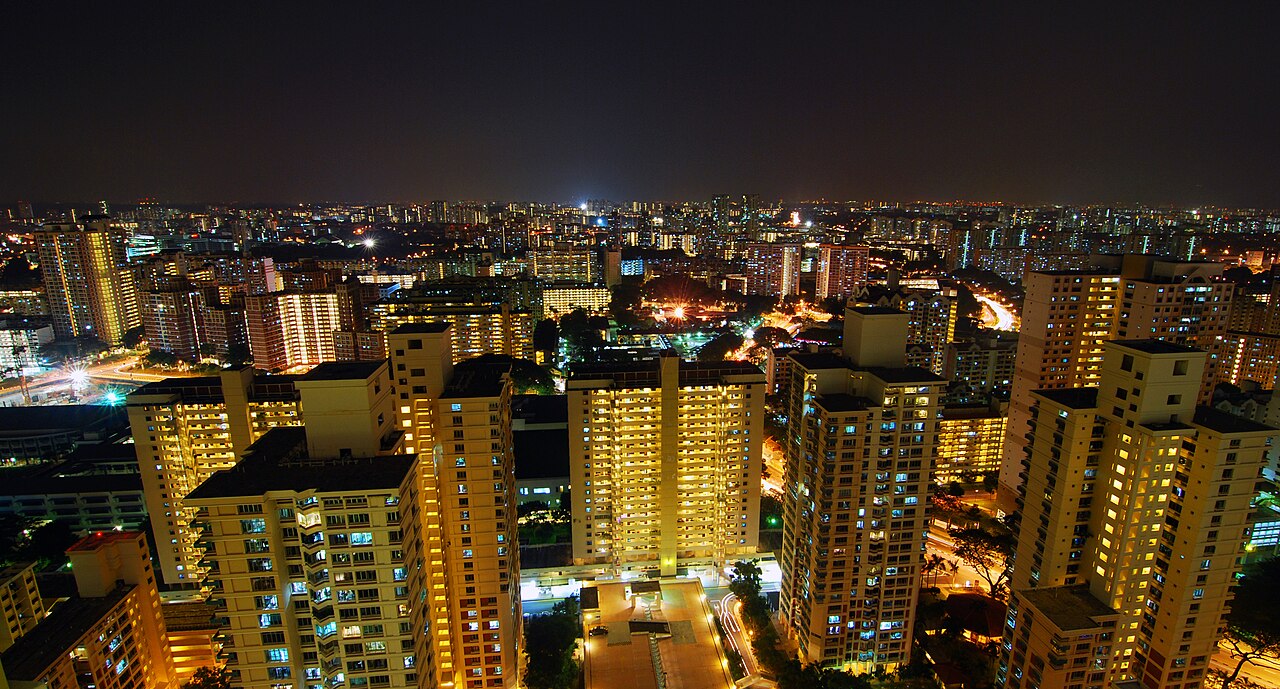
The approach was to make each new town as self-contained as possible, integrating housing with schools, shops, recreation, community facilities and employment areas.
HDB towns are planned with a hierarchy of facilities. Smaller facilities such as precinct and neighbourhood shops provide day to day needs, while larger facilities including libraries, shopping malls and Community Clubs are generally concentrated in town centers.
Why Put Everything Together?
Singapore has to fit housing, transport infrastructure, schools, parks, industry and public facilities into a small island. Co-location allows one site to perform several functions rather than assigning every service its own piece of land.
But land efficiency is only part of the equation.
Singapore's citizen population is ageing rapidly. According to Singapore's Population in Brief 2025, 20.7% of citizens were aged 65 or older in June 2025, up from 13.1% a decade earlier. The old age support ratio had also fallen to 3.3 working age residents for every person aged 65 and above.
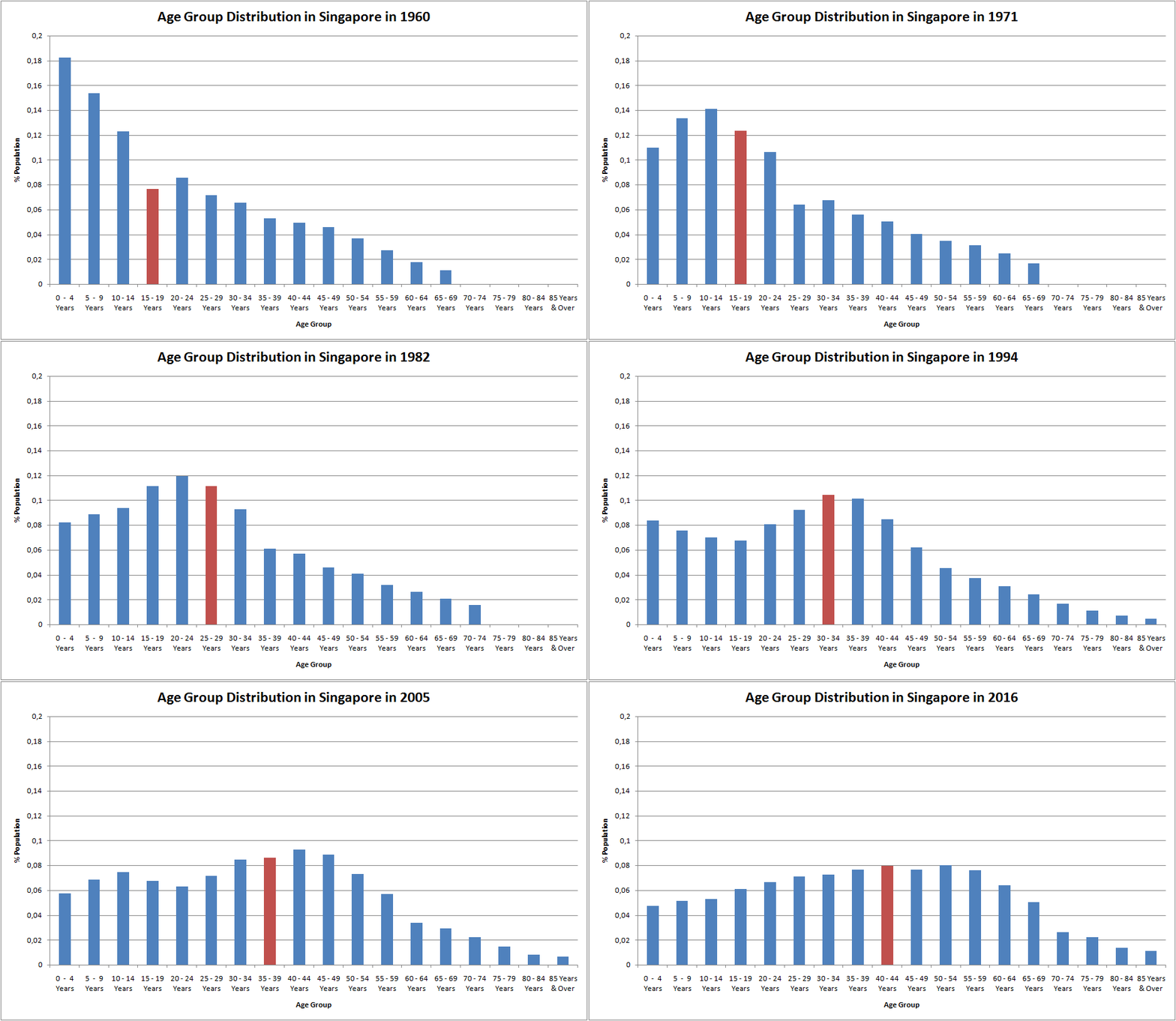
At the same time, households are getting smaller. According to Singapore's Department of Statistics, the average resident household size fell to 3.06 persons in 2025, down from 3.53 in 2012
Bringing healthcare, childcare, recreation and other services closer to homes can make neighborhoods easier to use for different generations, whether that's an elderly couple living alone or a smaller family with less support nearby.
One Building Can Replace Several Trips
Our Tampines Hub set the standard.
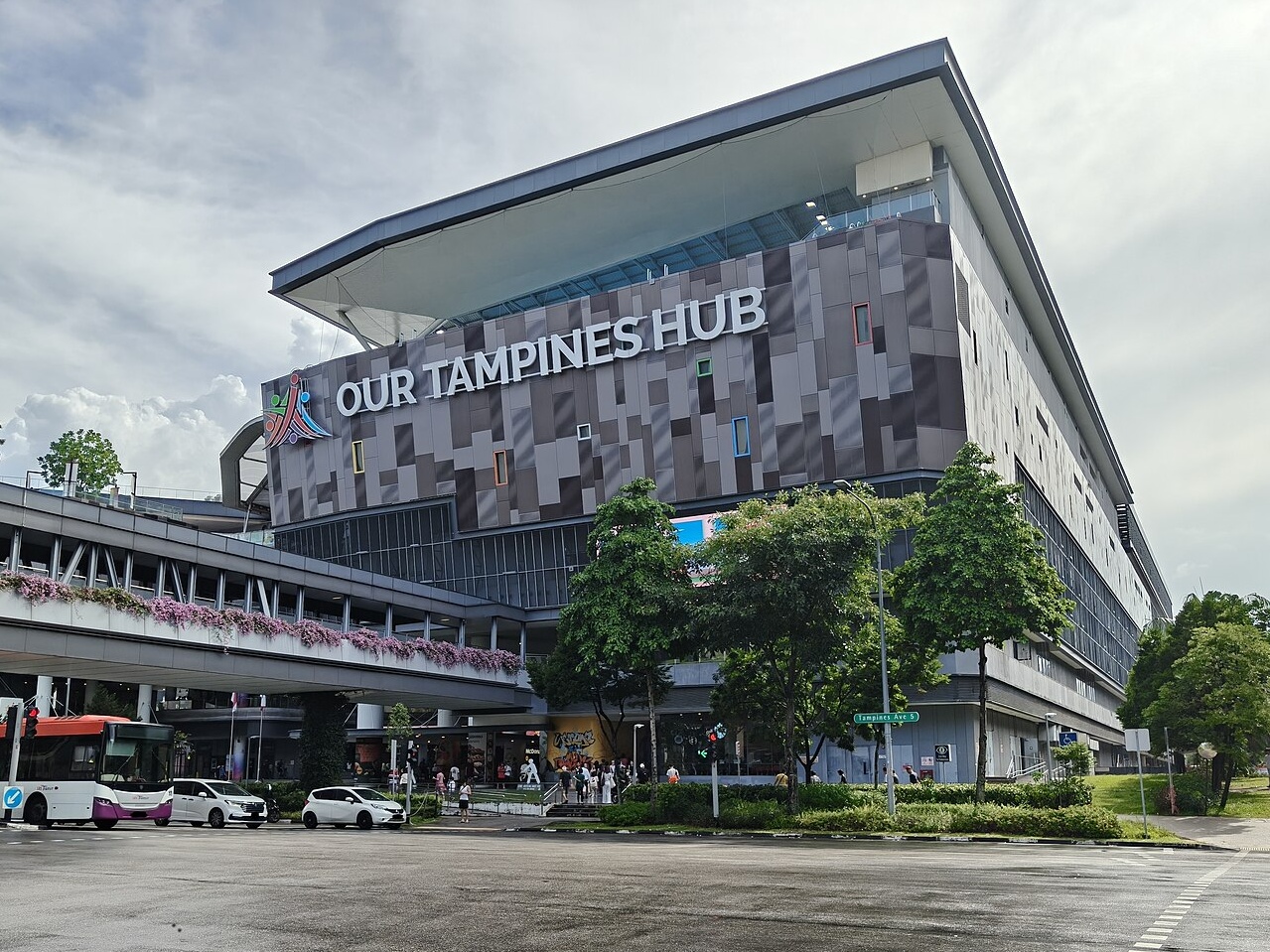
Built on the site of the former Tampines Stadium and Tampines Sports Hall, the complex opened in 2017 with six swimming pools, a 20 court badminton hall, a five story regional library and a 5,000 seat stadium with a FIFA approved football pitch, alongside a hawker center, community club and other public services.
Urban Redevelopment Authority (URA) describes Our Tampines Hub as a one stop service hub serving Tampines and surrounding neighbourhoods. The development brings more than 30 community, sports, cultural, civic and lifestyle facilities together on a single 5.7 hectare site.
Bukit Canberra, which opened in phases from 2022, followed the same model. Its hawker center gave Sembawang its first such facility in about 30 years. The 800 seat center has 44 stalls and sits alongside a polyclinic, senior care center, childcare center and Singapore's largest ActiveSG gym.
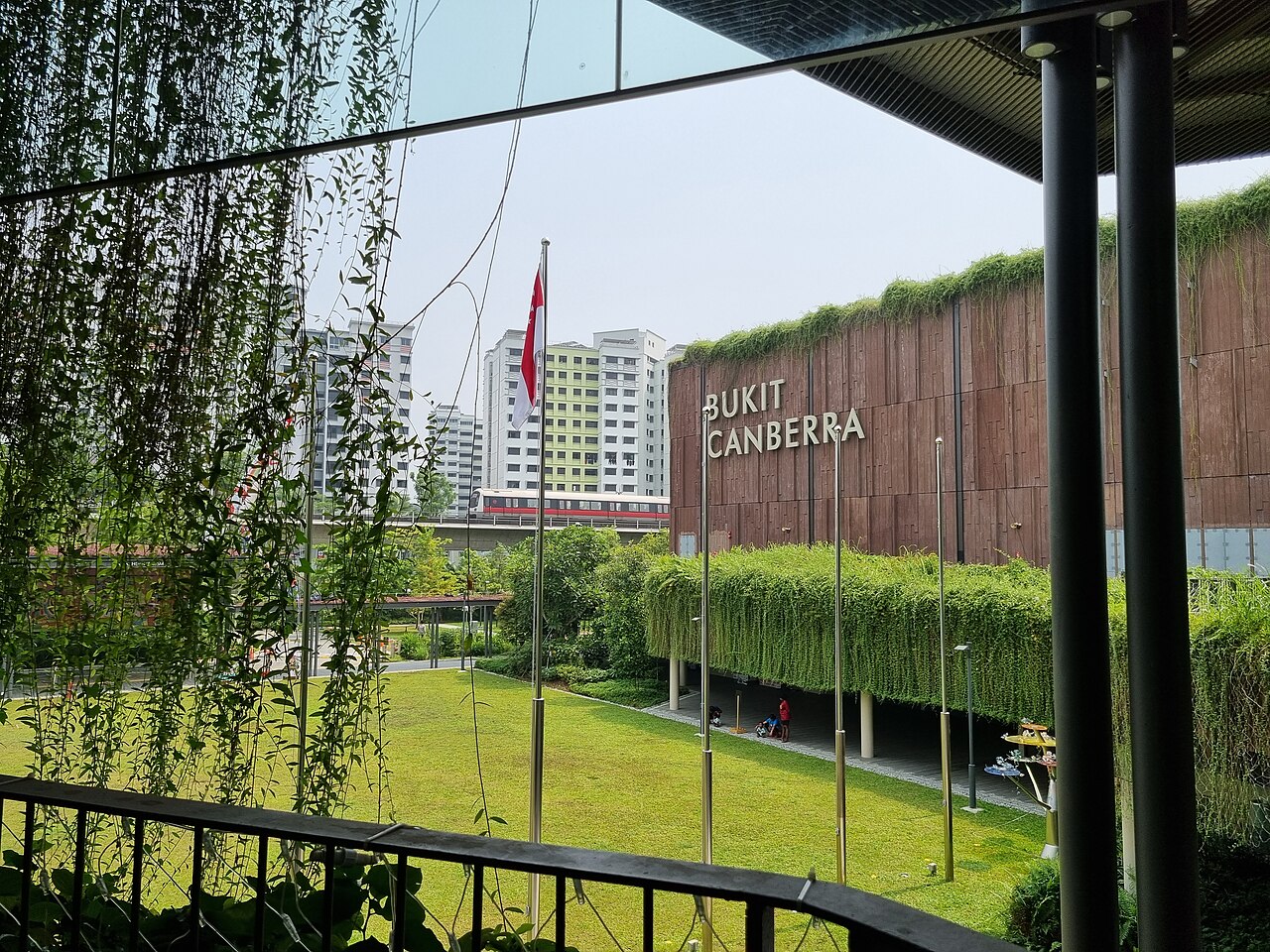
Its final phase will turn Canberra House, a National Monument also known as the Former Admiralty House, into a public library.
Singapore is Taking It Further
Singapore is planning more of these hubs.
URA has proposed integrated community hubs in Woodlands, Yio Chu Kang and Sengkang, located near transport nodes and bringing sports, recreation, healthcare and retail facilities under one roof.
Toa Payoh is also getting an integrated development combining a regional sports center, a polyclinic, a public library and a revitalised town park. The development is expected to be completed by 2030.
Near Woodlands North MRT, where the upcoming Johor Bahru-Singapore Rapid Transit System station will be located, agencies are studying an integrated community development combining sports, community, healthcare and F&B facilities.
Singapore is also adding preschool capacity closer to home. From 2025 to 2029, the government plans to add almost 40,000 new full day preschool places, including about 6,000 infant care places, Minister for Social and Family Development Masagos Zulkifli announced in November 2024.
Full breakdown of Master Plan 2025, visit URA's official page here: Master Plan 2025