


Singapore’s identity is revealed through contrasts: vertical gardens climbing glass towers, historic shophouses beside modern transit stations and family recipes served beneath high-rise apartments. In this compact island nation, innovation has not erased heritage—it has been used to protect and reinterpret it.
Designing a City Around Nature
With a land area of about 744 square kilometres and a population of 6.11 million, Singapore must make every part of its limited territory work harder. Its density has encouraged planners to integrate housing, transport, greenery and public amenities within carefully connected neighbourhoods.
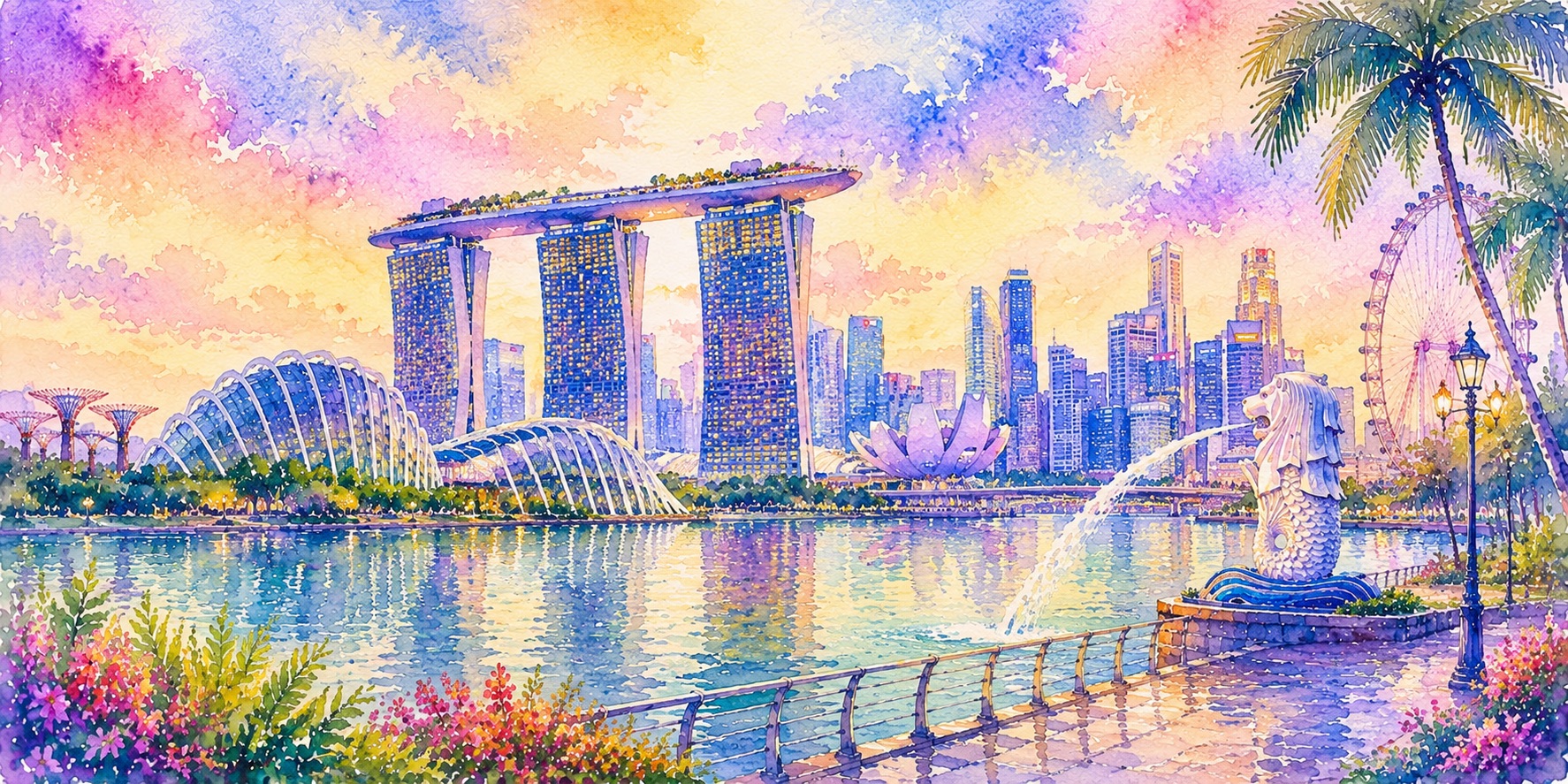
The result is visible at Gardens by the Bay, where Supertrees support vertical gardens and some collect solar energy. Nearby conservatories recreate environments ranging from Mediterranean landscapes to misty tropical highlands. Across the city, rooftop gardens, planted façades and shaded park connectors extend this approach beyond major landmarks.
Singapore’s greening journey formally began with the Garden City vision in 1963. More than six decades later, over 40 percent of the country remains covered by greenery, including nature reserves, parks, roadside vegetation and gardens built into urban structures. The national ambition has evolved from creating a “Garden City” to becoming a “City in Nature.”
Minister for National Development Desmond Lee has emphasized that “our corporate partners and the larger community play an important role in transforming Singapore into a City in Nature.” This shared responsibility reflects an understanding that greenery supports not only appearance, but also biodiversity, public well-being and climate resilience.
Heritage Neighbourhoods Keep Their Voice
Singapore’s futuristic skyline is only one layer of its story. In Katong, Peranakan shophouses display pastel façades and ceramic details, while Kampong Gelam preserves Malay-Arab heritage around the golden-domed Sultan Mosque. Little India fills its streets with flower garlands, textiles and spices, while Chinatown’s temples, medicine shops and teahouses recall generations of migration and trade.
These districts are not static museum pieces. Traditional businesses operate beside design studios, independent bookstores and contemporary cafés. Their continuing evolution shows how a global city can modernize without making every neighbourhood look or feel the same.
Efficiency Shapes Everyday Life
Daily life moves through a transport network designed for a population with limited space. Singapore’s six MRT lines cover approximately 240 kilometres and serve more than three million passenger journeys each day. Trains connect residential estates with workplaces, schools, parks and heritage districts, turning mobility into an essential part of social inclusion.
Yet Singapore’s efficiency also faces pressure from rising temperatures, heavy rainfall, land scarcity and an ageing population. Its urban challenge is therefore not simply to move faster, but to remain comfortable, inclusive and environmentally resilient as the city grows.
Hawker Centres Gather the Nation
The pace slows at hawker centres, where office workers, students, retirees and visitors share tables over chicken rice, laksa, nasi lemak, roti prata and kopi. Recognized by UNESCO in 2020, hawker culture reflects the Chinese, Malay, Indian, Peranakan and other traditions that shaped the country.
As Singaporean academic Professor Lily Kong observed, “Our hawker culture is a reflection of Singapore’s heritage and community. It has undoubtedly shaped our identity.” These communal dining rooms demonstrate that Singapore’s soul is found not only in its celebrated skyline, but in everyday spaces where different histories continue to meet.
Singapore’s achievement lies in treating progress and heritage as complementary forces. Beneath its orderly, high-tech exterior is a living Southeast Asian crossroads—green, multicultural and continually redesigning itself without losing sight of the communities that give it meaning.


