


At sunrise in Jayapura, Jakarta is still two hours behind and distant Aceh has yet to meet the morning. The time difference hints at Indonesia’s extraordinary scale: 17,380 islands extending more than 5,000 kilometres from east to west, with landscapes and cultures that can feel like separate countries.
Indonesia recorded 15.39 million international arrivals in 2025, including 6.95 million visits to Bali—about 45 percent of the national total. With the government targeting between 16 million and 17.6 million arrivals in 2026, the conversation is increasingly turning toward destinations outside Bali. Tourism Minister Widiyanti Putri Wardhana captured that direction clearly: “Indonesia is not only Bali. We have many prime destinations with strong tourism and investment potential waiting to be developed responsibly and sustainably.”
1. Entry Requirements and Immigration Procedures: Start with the Right Digital Paperwork
Indonesia’s visa requirements depend on nationality, travel purpose and intended length of stay. Eligible visitors can obtain a visa on arrival or electronic visa on arrival for IDR500,000. It permits a 30-day stay and can be extended. Travelers generally need a passport valid for at least six months from arrival, and immigration officers may request evidence of an onward or return journey.
Complete the All Indonesia arrival declaration within three days before reaching the country and save its QR code to your phone. The system brings immigration, customs, health and quarantine information into one digital process. Use only official government portals, because commercial visa websites may charge unnecessary service fees.
Travelers entering Bali must also pay the separate IDR150,000 foreign tourist levy unless they qualify for an exemption. This payment does not replace a visa or arrival declaration. Visa conditions can change, so check the rules for your passport shortly before departure and never assume that permission to visit allows you to work.
2. Best Time to Visit and Seasonal Conditions: Follow the Islands, Not One Calendar
April to October is usually the driest period across Java, Bali, Lombok and much of Nusa Tenggara. These months are popular for visiting Borobudur, hiking around Mount Bromo, exploring the Gili Islands and sailing through Komodo National Park. November to March generally brings higher humidity and heavier rainfall, although showers are often intense rather than continuous.
Indonesia does not follow one universal weather pattern. Maluku, northern Sulawesi, Papua and parts of Raja Ampat can experience different rainfall and sea conditions from Java and Bali. Travelers planning diving, hiking or inter-island boat journeys should check forecasts for the specific destination rather than relying on a national wet-season label.
Domestic travel becomes especially busy around Idul Fitri, Christmas, New Year and school holidays. Bali’s Nyepi observance brings the island to a standstill for approximately 24 hours, including the closure of its airport and most roads. These occasions can be culturally rewarding, but transportation and accommodation should be arranged well ahead.
3. Currency, Payments, and Typical Travel Costs: Carry Rupiah alongside Your Cards
Indonesia uses the rupiah, abbreviated IDR. Cards are commonly accepted in hotels, shopping centres and established restaurants, but cash remains important at traditional markets, family-run warungs, village homestays, ferry terminals and smaller islands. Bank-operated ATMs are generally the safest places to withdraw money, while authorized money changers should be used instead of street counters advertising unusually generous rates.
QRIS payments appear almost everywhere, from urban cafés to small food stalls. However, many foreign visitors cannot use them because Indonesian digital wallets often require a local account or identity verification. Cross-border QRIS works only with participating overseas banking and payment applications. A displayed QR code should therefore not be treated as a guarantee that a foreign wallet will work.
A meal at a local warung can cost approximately IDR20,000 to IDR50,000, while a short app-based ride may range from IDR15,000 to IDR50,000. A budget traveler might spend IDR500,000 to IDR900,000 a day, while a comfortable midrange journey can reach IDR1.2 million to IDR2.5 million before domestic flights, diving or private boats. Bali, Jakarta, Raja Ampat and remote island resorts can be considerably more expensive.
4. Transportation and Geographical Challenges: Build Breathing Room into Every Journey
Distances that look manageable on a map can involve flights, long road transfers and uncertain ferry connections. Domestic aviation is often essential, particularly when traveling between Sumatra, Java, Sulawesi, Nusa Tenggara, Maluku and Papua. Check luggage allowances carefully, because lower-cost fares may provide little or no checked baggage.
Java has the country’s most useful intercity railway network, connecting cities such as Jakarta, Bandung, Yogyakarta, Solo, Surabaya and Banyuwangi. Elsewhere, buses, shared cars, ferries and domestic flights become more important. Pelni passenger ships connect numerous islands, while fast boats serve popular routes around Bali, Lombok, the Gilis and Flores. Sea conditions can delay or cancel departures, so avoid scheduling a ferry arrival immediately before an international flight.
Traffic is another major consideration. A relatively short journey in Jakarta, Bandung, Denpasar or southern Bali can take much longer during rush hour. Gojek and Grab are convenient in many cities, although pickup restrictions sometimes apply at airports, ports and areas protected by local transport associations.
Scooters offer flexibility but also create serious risks. Travelers should hold the correct motorcycle licence, wear a proper helmet and confirm that their insurance covers riding in Indonesia. Hiring a local driver is often a safer and more relaxing way to navigate unfamiliar roads.
5. Internet Access, SIM Cards, and Essential Apps: Prepare Your Digital Travel Kit
Mobile coverage is strong across cities, Java and major tourism centres but becomes less reliable in mountains, national parks and remote eastern islands. Telkomsel generally provides broad geographical coverage, while Indosat, XL and other operators can offer competitive packages in populated areas.
Purchase a SIM card from an official shop and bring your passport for registration. Travelers using a foreign-purchased phone on an Indonesian cellular network should ask the provider about IMEI registration. Customs also requires visitors to declare certain foreign-purchased cellular devices when they will be used on a national network. An international eSIM may be simpler, but its coverage should be checked before visiting remote areas.
Gojek and Grab handle transport and food delivery, Traveloka is useful for flights and hotels, and Access by KAI manages railway bookings. WhatsApp is widely used by guides, guesthouses and drivers. InfoBMKG provides official weather, earthquake and tsunami information, while MAGMA Indonesia publishes volcanic activity updates. Downloading offline maps and Indonesian language files is wise before leaving major towns.
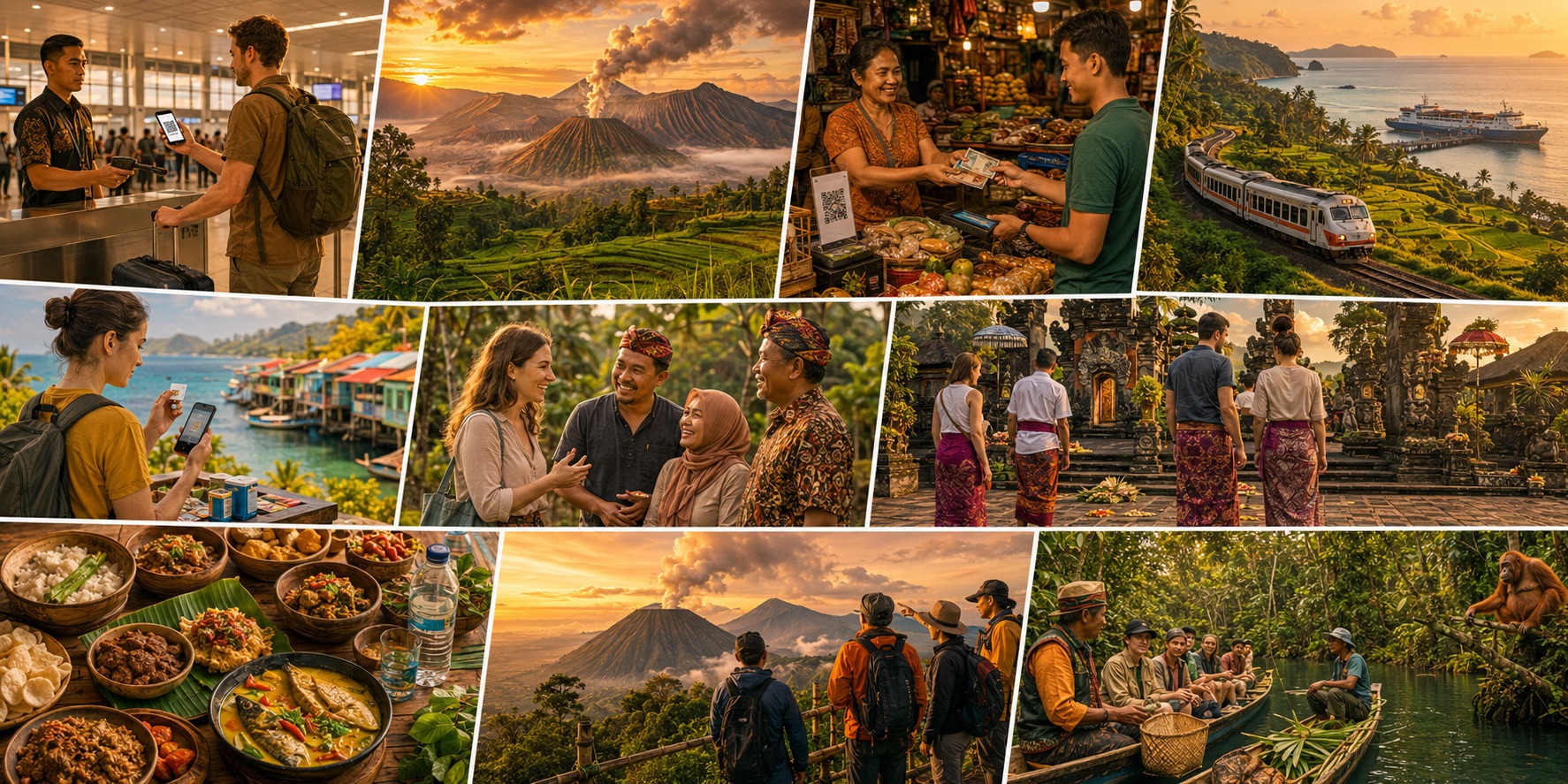
6. Languages and Useful Local Expressions: Let Bahasa Indonesia Open the Conversation
Bahasa Indonesia is the national language and is spoken throughout the archipelago, but hundreds of regional languages remain part of everyday life. Javanese may dominate a family conversation in Yogyakarta, Balinese is heard around village ceremonies, and communities in Sumatra, Sulawesi, Maluku and Papua maintain their own languages and identities.
English is common in major tourism areas but less dependable in small towns. A few Indonesian expressions immediately create goodwill. Selamat pagi means good morning, terima kasih means thank you, permisi is useful when asking permission or passing someone, and maaf means sorry or excuse me. Travelers can ask berapa harganya? for the price, request tidak pedas for less spicy food and say saya alergi before naming an allergy.
Bargaining is normal in some traditional markets, but it should remain friendly. It is generally inappropriate in supermarkets, restaurants with printed menus or small shops displaying fixed prices. A warm exchange is usually more memorable than winning a tense argument over a modest amount.
7. Religion, Customs, Dress Codes, and Etiquette: Respect Indonesia’s Local Rhythm
Indonesia has the world’s largest Muslim population, but religious life changes significantly between regions. Bali is predominantly Hindu, parts of eastern Indonesia and North Sulawesi have large Christian communities, and Buddhist, Confucian and Indigenous traditions also contribute to the country’s identity.
Modest clothing is appreciated outside beach areas and is expected at religious sites. Shoulders and knees should be covered when entering mosques and many temples. Shoes must normally be removed, and some Balinese temples provide or require a sarong and sash. Ask before photographing worshippers, ceremonies or people in traditional dress.
During Ramadan, many Muslims fast during daylight hours. Visitors are not generally expected to fast, but eating, drinking or smoking conspicuously near those observing the fast can appear insensitive. In Bali, avoid stepping on the small daily offerings placed outside homes and businesses.
Use the right hand when giving money, receiving food or passing an object. Avoid pointing the soles of your feet toward people or sacred objects, and do not touch someone’s head without permission. Local adat, or customary practice, can be as influential as national rules, so follow the guidance of residents and community leaders.
8. Local Food, Drinking Water, and Dietary Considerations: Taste the Country Region by Region
Indonesia cannot be understood through one national menu. Culinary expert William Wongso described its appeal this way: “It is safe to say that Indonesia has the most diverse variety of local food – and that’s really interesting for me.”
West Sumatra offers rich rendang and communal Padang dining, Yogyakarta is associated with sweet gudeg, Makassar is known for coto soup, and Manado’s cooking features aromatic herbs and generous chilli. Bali contributes dishes such as lawar and babi guling, while Maluku and Papua serve papeda made from sago. Markets and small family restaurants often provide the strongest connection to regional ingredients.
Halal food is widely available, but pork is common in Bali, North Sumatra, North Sulawesi and some eastern communities. Vegetarian travelers should remember that vegetable dishes may contain shrimp paste, fish sauce or meat stock. Allergy cards translated into Indonesian can help, particularly for peanuts, shellfish and soy.
Tap water should not be consumed. Use sealed or properly filtered water and refill reusable bottles at reputable stations. Ice in established restaurants is generally commercially produced, but caution is sensible in isolated areas. Avoid raw food that has been sitting in the heat, and be wary of unregulated homemade alcohol because unsafe production can cause methanol poisoning.
9. Safety, Health, Laws, and Common Tourist Mistakes: Stay Alert without Losing the Adventure
Indonesia has 127 active volcanoes and sits in a highly active earthquake zone. This geology created many of its celebrated landscapes, from Mount Bromo to Lake Toba, but it also requires preparation. Consult InfoBMKG and MAGMA Indonesia, follow official exclusion zones and never climb a closed volcano because an unofficial guide claims it is safe.
If a strong or prolonged earthquake is felt near the coast, move inland or to higher ground immediately and follow marked evacuation routes. Do not wait for a social-media update. Volcanic ash, rough seas and severe weather can also interrupt flights and boats, making insurance and flexible itineraries valuable.
Dengue occurs across the country, rabies is present in several regions, including Bali, and malaria precautions may be recommended for certain rural and eastern destinations. Travelers should consult a medical professional before departure, use insect repellent and seek immediate treatment after an animal bite or scratch.
Drug offences carry extremely severe penalties. Visa overstays can result in a fine of IDR1 million per day, with detention, deportation or future entry bans possible in serious cases. Other frequent mistakes include using unlicensed money changers, riding uninsured scooters, ignoring heat and dehydration, and assuming practices seen in Bali apply everywhere else.
10. Responsible Travel and Ways to Support Local Communities: Make the Journey Wider than Bali
Bali can be a wonderful introduction to Indonesia, but it is not a summary of the country. Yogyakarta and Solo reveal Java’s artistic traditions, West Sumatra offers Minangkabau architecture and cuisine, Lake Toba introduces Batak culture, and Sulawesi combines marine biodiversity with communities such as the Toraja. Flores, Maluku, Kalimantan and Papua provide equally distinctive journeys when visited with time, preparation and respect.
Choose locally owned accommodation, licensed community guides and small restaurants that purchase regional ingredients. Pay conservation and community fees through official channels. In marine areas, use operators that avoid anchoring on coral, dispose of waste responsibly and keep safe distances from wildlife. Never feed or touch orangutans, manta rays, turtles or other wild animals for a photograph.
Community-based tourism works best when residents retain control over how their culture is presented. Ask before entering villages, photographing ceremonies or flying drones. Buy crafts directly from their makers and learn what materials were used, especially when wildlife products or endangered hardwoods may be involved.
Indonesia rewards travelers who slow down. With documents prepared, several payment options, generous transfer times and a willingness to follow local customs, its logistical challenges become part of a richer journey. Bali may be the doorway, but the wider archipelago is where Indonesia’s scale, character and diversity truly unfold.


