


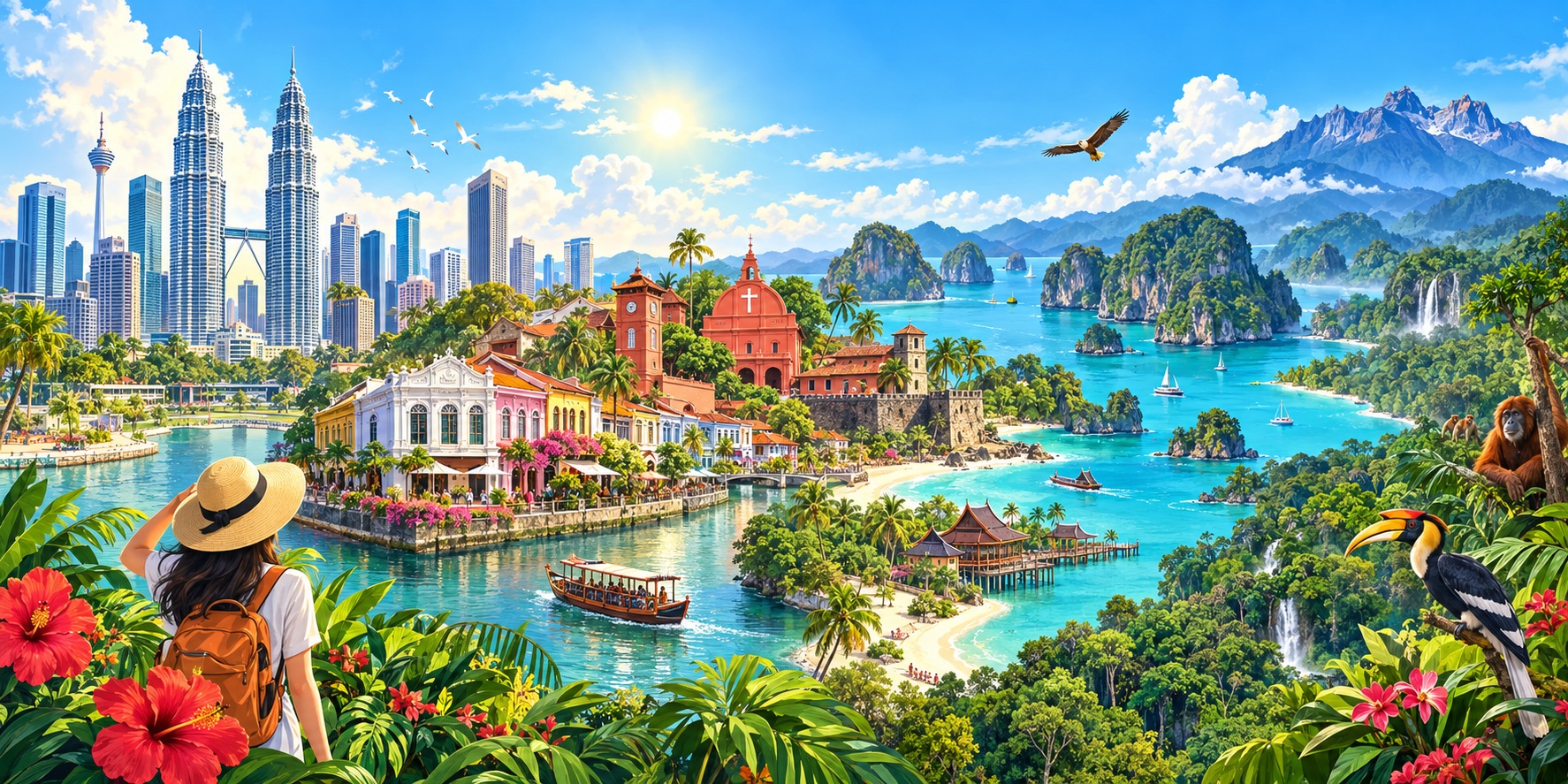
Morning in Malaysia can begin with teh tarik beneath Kuala Lumpur’s towers, continue through centuries-old streets in Melaka and end beside a rainforest river in Borneo. Few destinations bring modern cities, multicultural heritage, island escapes and ancient wilderness together so naturally.
A Warm Welcome with New Momentum
Visit Malaysia 2026 has turned the country’s familiar “Malaysia, Truly Asia” identity into a nationwide invitation. The campaign features more than 300 events and aims to welcome 43 million international visitors during the year.
“VM2026 is not merely a tourism campaign; it is a nationwide movement that reflects our unity, harmony, warmth, and cultural diversity,” said Tourism, Arts and Culture Minister Tiong King Sing.
Early results point to strong momentum. Malaysia recorded 21.12 million international visitor arrivals in the first half of 2026, up 2.5 per cent from the same period in 2025 and 17.7 per cent above the comparable pre-pandemic level in 2019. ASEAN contributed 72.8 per cent of those arrivals, reaffirming the importance of regional travel.
A Skyline Rooted in Story
Kuala Lumpur captures Malaysia’s talent for placing different eras within a single view. The Petronas Twin Towers and Merdeka 118 rise above neighbourhoods where mosques, temples, colonial buildings and kopitiams continue to shape daily life.
At street level, the city reveals itself through contrast. Travellers can explore the arches of the Sultan Abdul Samad Building, browse the markets around Petaling Street and finish the evening among the restaurants and bright lights of Bukit Bintang. A short journey north leads to Batu Caves, where a monumental golden statue and vividly coloured staircase frame one of the country’s most important Hindu sanctuaries.
Nearby Putrajaya offers a calmer expression of contemporary Malaysia. Its broad boulevards, landscaped public spaces and bridges curve around an artificial lake, while the rose-coloured Putra Mosque reflects the country’s Islamic identity through elegant modern design.
Heritage Best Experienced at the Table
Malaysia’s cultural diversity becomes especially vivid in George Town and Melaka. Both cities preserve the legacy of centuries of maritime trade, migration and cultural exchange, yet neither feels frozen in the past.
In George Town, travellers move between Chinese clan houses, mosques, Hindu temples, Peranakan mansions and celebrated street murals. The city’s history is also served at its hawker stalls. A plate of smoky char kway teow, a bowl of tangy Penang asam laksa or a late-night nasi kandar meal can reveal as much about local identity as a museum visit.
Melaka tells another chapter of the same regional story. Dutch Square, Christ Church and the remains of A Famosa recall successive periods of European influence, while Jonker Street reflects the continuing energy of Peranakan culture. Nyonya dishes, antique shops and family businesses turn the historic centre into a living neighbourhood rather than simply a collection of monuments.
For Indonesian travellers, Malaysia feels both familiar and distinctive. Shared words, flavours and traditions make the journey accessible, while each state offers its own cultural character. That connection is strengthened by expanding air links. Indonesia supplied 4.3 million visitor arrivals in 2025, and a daily Batam–Kuala Lumpur service began operating in March 2026.
“Improved accessibility remains a key component of our strategy to position Malaysia as a preferred destination for visitors from Southeast Asia,” said Tourism Malaysia Director General Mohd Amirul Rizal Abdul Rahim.
Islands for Every Travelling Rhythm
Malaysia’s islands offer experiences ranging from relaxed family holidays to demanding marine adventures. Langkawi combines comfortable resorts with limestone landscapes, beaches and mangrove forests. Visitors can cross the elevated Sky Bridge above Mount Machinchang or travel by boat through the waterways of Kilim Karst Geoforest Park.
On the east coast, the Perhentian and Redang islands invite travellers into clear water filled with coral, turtles and tropical fish. Farther east, Sipadan provides a more tightly managed diving experience. Its coral walls, sea turtles and spiralling schools of barracuda demonstrate why conservation must remain central to Malaysia’s tourism growth.
These destinations also present a challenge. Greater visibility can support boat operators, guides and small accommodation providers, but increased arrivals must be balanced with waste management, reef protection and limits suited to fragile ecosystems.
Borneo’s Living Wilderness
Sabah and Sarawak expand the Malaysian journey into one of the planet’s great tropical landscapes. In Sabah, travellers can climb Mount Kinabalu, visit rehabilitating orangutans at Sepilok and cruise the Kinabatangan River in search of proboscis monkeys, hornbills and Bornean pygmy elephants.
Sarawak offers another scale of adventure. Gunung Mulu National Park protects rainforest, limestone pinnacles and immense underground chambers, while community experiences introduce visitors to Indigenous traditions that remain closely connected to rivers and forests.
Peninsular Malaysia holds its own natural wonders. Taman Negara protects one of the world’s oldest tropical rainforest environments, while the Cameron Highlands provide cooler air, tea estates, vegetable farms and forest trails. Together, these landscapes show that Malaysian ecotourism is strongest when local livelihoods and environmental stewardship advance together.
Easy Adventures for Every Generation
Malaysia’s accessibility also makes it well suited to multigenerational travel. Sunway Lagoon combines water attractions and theme-park entertainment near Kuala Lumpur, while LEGOLAND Malaysia has strengthened Johor’s appeal to families travelling from across the region. ESCAPE Penang adds a nature-oriented alternative built around outdoor movement and adventure.
Efficient highways, extensive domestic flights and widely used English allow visitors to combine several experiences in one itinerary. A journey might begin with city attractions in Kuala Lumpur, continue by rail to Penang and conclude with a flight to Sabah—three very different encounters within one country.
Malaysia’s promise in 2026 is not simply the number of places it can offer, but the connections between them. Every skyline, recipe, island and rainforest adds another voice to a national story defined by diversity. The most rewarding journey is therefore one that travels beyond the landmarks, meets the people behind each destination and leaves Malaysia’s cultural and natural inheritance stronger for those who follow.


