


In the Philippines, the journey often begins with a crossing: a bangka gliding between Palawan’s limestone cliffs, a ferry approaching Cebu or a mountain road climbing toward the rice terraces of the Cordilleras. Across 7,641 islands, every passage introduces a different landscape, language, flavor and community.
From Visitor Numbers to Meaningful Journeys
Philippine tourism entered 2026 with renewed momentum. The country recorded 6.48 million international visitors and returning overseas Filipinos in 2025, generating an estimated PHP694 billion in visitor spending. Tourism also contributed 8.1 percent to the national economy and supported 7.7 million jobs, while domestic tourism expenditure reached PHP3.26 trillion.
These numbers reveal the scale of the industry, but the country’s current tourism direction reaches beyond counting arrivals. The national brand “Love the Philippines” presents the archipelago as a destination of culture, nature, gastronomy and human connection, while the complementary “Discover More to Love” campaign encourages Filipinos to explore emerging destinations closer to home.
Launched in June 2026, the domestic campaign brought together more than 3,000 travel offers from airlines, hotels, tour operators and other tourism businesses. “We have created a shared platform that we hope will give travelers more choices,” Tourism Secretary Dita Angara-Mathay said during its launch.
The campaign also recognizes domestic travelers as one of the industry’s strongest foundations. By directing visitors toward lesser-known provinces during quieter travel months, tourism spending can reach family-run accommodations, community guides, restaurants, transport providers and artisans beyond established resort centers.
Islands Reimagined Through Stewardship
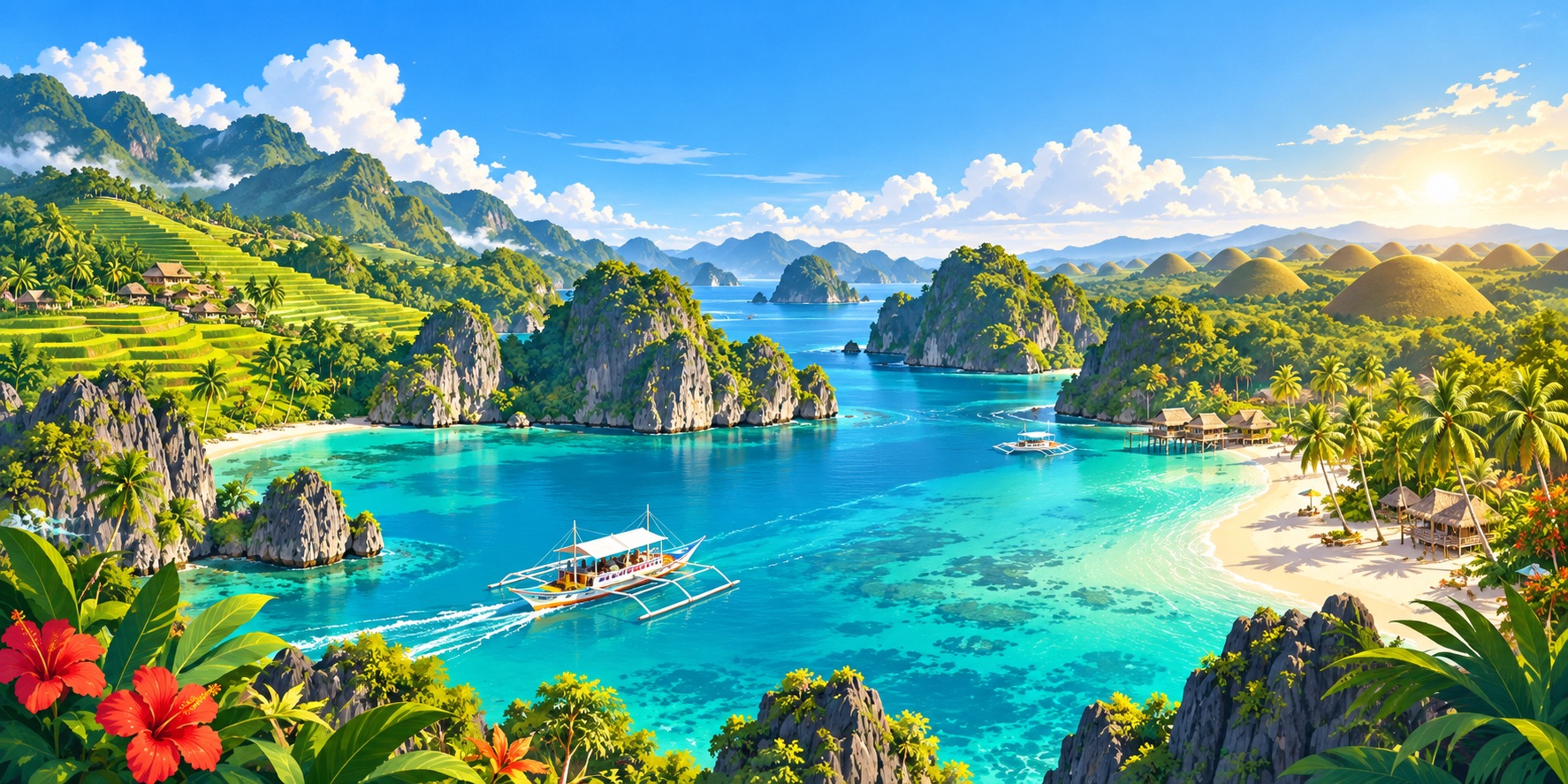
Few destinations represent the Philippine island dream as powerfully as Palawan. In El Nido, traditional boats navigate between towering karst formations before entering turquoise lagoons concealed by stone walls. Farther north, Coron combines clear lakes and coral reefs with Japanese shipwrecks from the Second World War, creating one of Asia’s most distinctive diving environments.
On the other side of the province, the Puerto Princesa Subterranean River carries visitors through an underground limestone landscape before flowing toward the sea. Its recognition as both a UNESCO World Heritage Site and one of the New Seven Wonders of Nature reflects Palawan’s ecological significance.
The province’s popularity, however, also brings pressure on reefs, coastlines and water resources. The future of tourism therefore depends on enforcing carrying capacities, managing waste and ensuring that local communities share in its economic benefits.
Boracay offers a particularly visible lesson. Following a six-month rehabilitation in 2018, the island returned with stronger environmental regulations and tighter control over beachfront activities. Its four-kilometer White Beach remains famous for powdery sand and glowing sunsets, but Boracay’s larger tourism story is now one of recovery and responsible management.
Former Tourism Secretary Christina Garcia Frasco summarized this direction at a sustainability forum in 2025: “It cannot be simply about quantity—it must be about quality.” The principle places environmental protection, visitor experience and community welfare at the center of tourism planning.
Siargao presents another side of island life. Cloud 9 attracts surfers from around the world, while Magpupungko’s natural pools, coconut-lined roads and community cafés appeal to travelers seeking a slower rhythm. Beyond surfing, its growing wellness and culinary scene shows how a destination can develop around local entrepreneurship rather than large resorts alone.
Highlands Shaped by Living Traditions
The Philippines changes dramatically as travelers move inland. In the Cordillera Mountains, generations of Ifugao farmers have cultivated rice terraces carved into steep slopes and supported by intricate irrigation systems. Often described as approximately 2,000 years old, the terraces are not simply historical monuments. They remain productive cultural landscapes sustained through indigenous knowledge and collective labor.
The amphitheater-like terraces of Batad reward visitors willing to travel slowly and walk through the mountains. Local guides explain farming traditions, changing water patterns and the pressures encouraging younger residents to leave agriculture. Tourism can provide supplementary income, but it must respect the communities for whom the terraces are home rather than scenery.
Nearby Sagada offers mist-covered viewpoints, caves and hanging coffins connected to local burial traditions. These sacred sites require culturally sensitive visits led by community guides. In Baguio, pine-scented streets, Cordilleran markets and contemporary art spaces create a cooler urban introduction to northern Luzon.
Bohol’s Chocolate Hills add another remarkable landscape. More than 1,200 conical formations stretch across the island, turning brown during the dry season and green after the rains. The province is also home to the Philippine tarsier, whose survival depends on protected habitats and responsible wildlife encounters that avoid touching, flash photography and unnecessary disturbance.
Cities Where Centuries Meet
Philippine cities reveal layers of indigenous, Asian, Spanish and American history alongside fast-moving modern life. In Vigan, kalesas still travel along the cobblestones of Calle Crisologo, passing ancestral houses that combine European design with Chinese and Filipino building traditions. The city remains a living community rather than an open-air museum, with homes, workshops and regional food businesses operating within its historic center.
Manila’s story becomes clearer inside Intramuros. Fort Santiago recalls the final days of national hero José Rizal, while San Agustin Church survived wars, earthquakes and the destruction of much of the capital during the Second World War. Beyond the walls, museums, galleries and restored buildings are helping residents reconsider Manila as a city of memory as well as commerce.
Cebu connects these historical layers with contemporary island travel. Visitors may begin at Magellan’s Cross and the Basilica Minore del Santo Niño, continue to the resorts of Mactan and then travel onward to waterfalls, dive sites and smaller islands. A plate of Cebu lechon or fresh kinilaw becomes another way of reading the destination through local taste.
Wildlife activities require greater care. Whale-shark encounters in Oslob, for example, have generated income and international attention but also debate over feeding practices and their effects on animal behavior. Choosing accredited operators and following strict no-touching rules allows visitors to make more responsible decisions.
Festivals Powered by Bayanihan
The character of Philippine tourism becomes most visible during its festivals. At Cebu’s Sinulog, drumbeats, religious devotion and street performances fill the city in honor of the Santo Niño. In Kalibo, Ati-Atihan brings painted faces, elaborate costumes and rhythmic dancing into the streets.
These celebrations are expressions of living faith and community identity before they are tourist attractions. Visitors who learn the meaning behind the rituals gain a richer experience than those who see festivals only as colorful spectacles.
At the heart of that experience is bayanihan, the Filipino tradition of communal cooperation. It appears in the boatman who watches the weather before entering a lagoon, the family that welcomes travelers into a homestay and the guide who explains why a forest, reef or burial site must be treated with care. Filipino hospitality is memorable because visitors are often received not merely as customers, but as guests.
Discovering More Through Slower Travel
Traveling across an archipelago requires patience. Flights, ferries and road transfers can turn a short distance on the map into a full day’s journey, particularly during the rainy season. Instead of rushing through several islands, travelers benefit from choosing one region and exploring it more deeply.
A longer stay in Palawan can connect beaches with community conservation. Several days in Cebu can combine history, gastronomy and marine landscapes. A Cordillera itinerary can link Baguio, Sagada and Ifugao communities while supporting local guides and accommodations.
The Philippines’ greatest tourism strength is not that every island offers the same paradise. It is that each destination tells a different story. From Palawan’s hidden lagoons and Banaue’s cultivated mountains to Vigan’s ancestral streets and Siargao’s surfing communities, the archipelago continually invites travelers to look beyond the familiar.
There will always be another coastline, festival, regional dish or local story to discover. That is where the promise of “more to love” becomes real—not simply in seeing more islands, but in understanding them more deeply.


