


Malaysia can change character in the space of a meal. Breakfast may be nasi lemak beneath Kuala Lumpur’s towers, lunch could be Chinese-Malaysian noodles in a Penang kopitiam, and dinner might feature an Indigenous recipe beside a Sarawak river. Cross the South China Sea to Malaysian Borneo and the distances, landscapes and travel rhythms change again.
Tourism Malaysia recorded 42.2 million international visitor arrivals in 2025, an 11.2 per cent increase from 2024. The figure includes both overnight tourists and same-day excursionists as the country works toward its Visit Malaysia 2026 goal of 47 million visitor arrivals. Tourism, Arts and Culture Minister Tiong King Sing described the campaign’s wider purpose: “VM2026 is not merely a tourism campaign; it is a nationwide movement that reflects our unity, harmony, warmth, and cultural diversity.”
1. Entry requirements and immigration procedures: Prepare for two sets of borders
Travelers generally need a passport valid for at least six months from the date of entry. Visa rules depend on nationality, so confirm your eligibility and permitted length of stay through the Malaysian Immigration Department rather than relying on an old travel post. Most foreign visitors must also submit the Malaysia Digital Arrival Card within the three days before arrival. Save a digital or printed copy and keep evidence of onward travel and accommodation available.
Malaysia’s geography creates an additional immigration detail. Sabah and Sarawak, the two Malaysian states on Borneo, exercise their own immigration controls. Even when flying domestically from Kuala Lumpur, Penang or Johor Bahru, foreign travelers should carry their passports and expect another entry check. Check the period granted by the officer because your permission to remain in Sabah or Sarawak may not automatically match your stay in Peninsular Malaysia.
2. Best time to visit and seasonal conditions: Follow the monsoons, not one national calendar
Malaysia is tropical throughout the year, bringing heat, humidity and sudden rain even during relatively dry months. The southwest monsoon generally runs from late May to September, while the northeast monsoon arrives from November to March. The latter can produce heavy rain, rough seas and flooding along the peninsula’s east coast, western Sarawak and eastern Sabah.
For the Perhentian Islands, Redang and Tioman, March to October usually offers better sea conditions; many east-coast resorts reduce operations during the northeast monsoon. Langkawi, Penang and the peninsula’s west coast are often more comfortable from December to March, although showers remain possible. Borneo has no perfectly dry season. Build flexibility into rainforest, river and mountain plans, particularly around Mount Kinabalu and Sarawak’s interior. Malaysia’s MyCuaca weather app is more useful than choosing dates from a generic regional forecast.
3. Currency, payments, and typical travel costs: Go cashless, but keep ringgit nearby
Malaysia uses the Malaysian ringgit, written as RM or MYR. Cards and mobile payments are widely accepted in cities, malls, hotels and established restaurants. DuitNow QR has expanded to more than 2.6 million merchant locations, but many codes are designed for Malaysian banking apps. Selected overseas wallets can connect through cross-border partnerships, although travelers should never assume their home wallet will work everywhere.
Carry smaller ringgit notes for kopitiams, hawker stalls, night markets, rural guesthouses, local boats and remote areas of Sabah and Sarawak. Withdraw money from bank-operated ATMs and decline dynamic currency conversion when your own bank offers a better rate.
A practical 2026 planning range is around RM120 to RM180 per person per day for dormitory accommodation, hawker meals and public transportation. Approximately RM250 to RM450 allows for a private room, restaurant meals and regular ride-hailing. Domestic flights, island transfers, diving, Mount Kinabalu climbs and wildlife tours can raise costs considerably, particularly in Borneo.
4. Transportation and geographical challenges: Treat Malaysia as two connected journeys
Peninsular Malaysia has one of Southeast Asia’s more accessible transportation networks. Kuala Lumpur is served by the MRT, LRT, monorail, commuter trains and airport rail services. Electric Train Service routes connect much of the peninsula’s north–south corridor, while comfortable buses reach places such as Melaka, the Cameron Highlands, Kuantan and Kota Bharu. Grab is useful in major towns, although public transit is often faster during Kuala Lumpur’s busiest hours.
Sabah and Sarawak require different planning. They are separated from the peninsula by the South China Sea, making flights the practical connection. Within Borneo, reaching a national park, longhouse or wildlife area can involve a domestic flight followed by several hours on the road, a riverboat journey or a four-wheel-drive transfer. Ride-hailing availability drops quickly outside cities such as Kota Kinabalu and Kuching.
Travelers who drive should remember that traffic moves on the left. Peninsula expressways are generally efficient but rely heavily on cashless toll systems. Roads in remote parts of Borneo can be slower than maps suggest, so leave generous buffers between regional flights, tours and boat departures.
5. Internet access, SIM cards, and essential apps: Stay connected without depending on coverage
Mobile internet is fast and affordable in Kuala Lumpur, George Town, Johor Bahru, Kota Kinabalu, Kuching and other population centers. Tourist SIM cards and eSIMs are available from providers such as CelcomDigi, Maxis or Hotlink, U Mobile and Unifi Mobile. Physical SIM registration normally requires a passport, making official airport counters and authorized stores the safest places to buy.
Coverage becomes less reliable in rainforest reserves, mountain valleys, offshore islands and the interiors of Sabah and Sarawak. Download maps, bookings and emergency information before leaving town. Grab covers urban transport and food delivery, while MyRapid PULSE and KTMB Mobile help with rail journeys. MyCuaca provides official weather information, WhatsApp is widely used by guides and guesthouses, and airline apps are valuable when tropical weather disrupts a domestic flight. Touch ’n Go eWallet can be convenient, but registration and overseas-card limitations mean it should not be your only payment method.
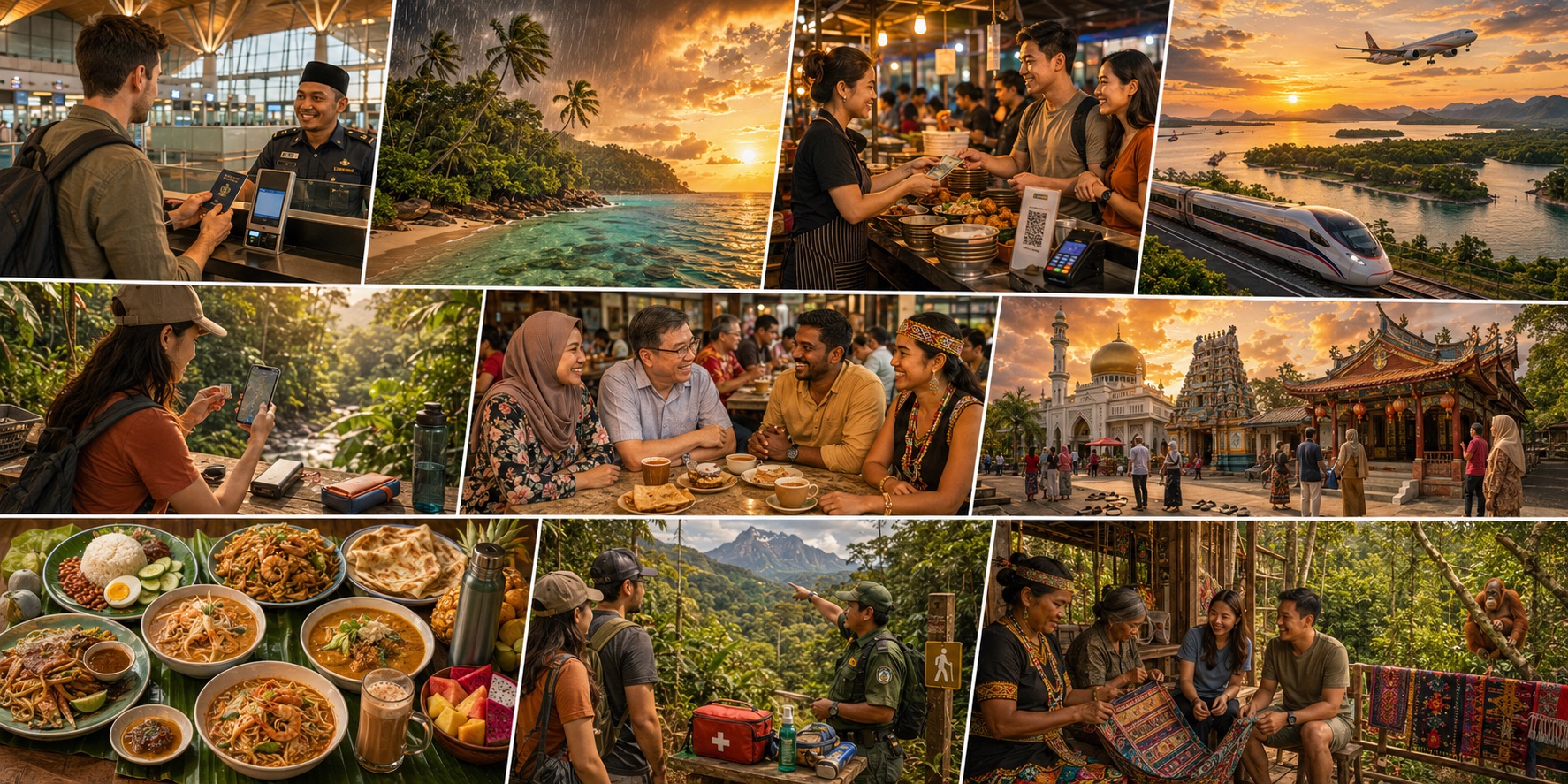
6. Languages and useful local expressions: Let Bahasa Melayu open the conversation
Bahasa Melayu is the national language, while English is widely understood in tourism, transportation and urban services. Visitors will also hear Mandarin, Cantonese, Hokkien, Tamil, Iban, Kadazan-Dusun, Bajau and many other community languages. Multilingual signs and menus make independent travel relatively easy.
A few Malay expressions still create immediate warmth. Selamat pagi means good morning, terima kasih means thank you, maaf means sorry or excuse me, and tumpang tanya politely introduces a question. Ask berapa harganya? for the price, boleh? when asking whether something is possible, and tandas di mana? when looking for a restroom. If you cannot handle much chilli, request kurang pedas. Malaysians frequently blend languages in casual conversation, creating the lively local speech known as Manglish. Listen before attempting to add the familiar ending lah yourself.
7. Religion, customs, dress codes, and etiquette: Read the setting with respect
Malaysia is Muslim-majority, but its identity also reflects Buddhist, Taoist, Hindu, Sikh, Christian and Indigenous traditions. Cultural expectations can shift between a Kuala Lumpur business district, a mosque in Kelantan, a Hindu temple in Selangor and an Iban longhouse in Sarawak.
Dress modestly when visiting religious sites. Mosques generally require covered shoulders and legs, and women may be asked to cover their hair; robes and scarves are often provided. Remove shoes where indicated and avoid walking in front of people who are praying. Modest clothing and shoe removal are also expected at many Hindu and Buddhist temples.
Use the right hand when giving or receiving food, money or an object. Ask before photographing worshippers, ceremonies or residents of an Indigenous community. Public affection is best kept discreet, especially in more conservative states such as Kelantan and Terengganu. During Ramadan, visitors may eat during daylight hours, but doing so discreetly near fasting communities shows consideration. Friday prayers, Hari Raya, Chinese New Year, Deepavali, Gawai Dayak and Kaamatan can affect opening hours while offering memorable opportunities to experience Malaysia’s living traditions.
8. Local food, drinking water, and dietary considerations: Taste the country one region at a time
Malaysian food tells the country’s history through Malay, Chinese, Indian, Peranakan and Indigenous kitchens. Tourism Malaysia’s former director-general Datuk Manoharan Periasamy captured that connection simply: “Food and culture are powerful ambassadors for our nation.”
Penang is known for asam laksa, char kway teow and nasi kandar. Melaka reveals its Peranakan heritage through dishes such as ayam pongteh, while Kelantan brings nasi kerabu and Johor serves its distinctive spaghetti-like laksa Johor. Cross to Borneo for Sarawak laksa, kolo mee and manok pansoh, or Sabah specialties such as hinava and tuaran mee. Eating only in international restaurants would miss one of Malaysia’s most rewarding forms of cultural exploration.
Halal food is widely available, and the official halal logo provides added assurance. Not every Chinese or Indian restaurant is halal, however, so ask when uncertain. Vegetarian travelers should remember that apparently meat-free dishes may contain belacan, anchovies, fish sauce or animal-based stock. Travelers with allergies should specifically mention peanuts, shellfish, soy and coconut.
Municipal water is treated in many urban areas, but plumbing and storage conditions vary. Filtered, boiled or sealed bottled water remains the safer choice for most visitors. Ice at reputable eateries is generally commercially produced. Carrying a refillable bottle and using verified refill stations reduces plastic waste.
9. Safety, health, laws, and common tourist mistakes: Travel confidently, but stay alert
Malaysia is generally straightforward to navigate, although snatch theft, phone theft and payment scams occur in crowded areas. Use registered ride-hailing services, protect valuables near roads and avoid unlicensed taxis. The national emergency number is 999.
Mosquito protection is important because dengue occurs in cities as well as rural areas. Travelers heading into forests or remote parts of Borneo should obtain destination-specific advice about malaria, rabies and recommended vaccinations. Good travel insurance should cover hiking, diving, evacuation and any planned wildlife activity.
Drug offences carry extremely severe penalties, potentially including a death sentence. Never carry a package or bag for another person. Same-sex sexual activity remains illegal, and LGBTQ+ travelers should review current local laws and exercise discretion. Travelers visiting Sabah should also check current government advisories for islands and dive sites off the eastern coast between Sandakan and Tawau, where kidnapping risks have prompted warnings from several countries.
A frequent mistake is treating Borneo distances like urban Malaysia. Another is scheduling an international departure immediately after an island boat, mountain descent or rural flight. Weather and transport delays are normal possibilities, so keep a buffer day before an important connection.
10. Responsible travel and ways to support local communities: Leave more value where you travel
Responsible travel in Malaysia begins with choosing locally owned accommodation, licensed guides and community-run experiences. Consider a registered homestay in a kampung, a locally guided food walk in George Town, or an Indigenous-led cultural visit in Sabah or Sarawak. Ask permission before entering homes, photographing ceremonies or sharing images of children. Purchasing batik, songket, Sarawak pua kumbu textiles or Sabahan beadwork directly from makers helps keep traditional knowledge economically viable.
Wildlife encounters require restraint. At Sepilok, visitors are asked not to touch orangutans because human illnesses can affect them. Never feed monkeys, proboscis monkeys, fish or other wildlife, and reject attractions offering animal handling or staged selfies. Mount Kinabalu climbers must use a registered mountain guide, while national parks and marine areas may require permits and conservation fees. Stay on marked trails, avoid stepping on coral and follow park staff even when doing so limits a photograph.
Malaysia is best experienced as a collection of connected places rather than a checklist. Give the peninsula time for its cities, food and rail journeys, then allow Sabah or Sarawak enough space for rivers, forests and local communities. The reward is a journey that feels welcoming, layered and unmistakably Malaysian.


