A former Dutch East Indies colonial railway station in Indonesia has transformed into a historical preservation site. The historical building complex is known as the Ambarawa Railway Museum.
Located in Semarang Regency, Central Java Province, the Ambarawa Railway Museum maintains its colonial-era architectural style on the main building. The museum currently serves as a historical tourism destination and a public education center.
The Ambarawa Railway Museum offers scenic tourist train rides from Ambarawa Station to Tuntang Station, traversing countryside rice fields and open natural landscapes.
The History of Railways in Ambarawa
The railway station in Ambarawa was first constructed in the 19th century by a private company named Nederlandsch-Indische Spoorweg Maatschappij (NIS), which operated commercial railway networks in the Dutch East Indies. In the early stages of its establishment, the station was originally named the Willem I Station.
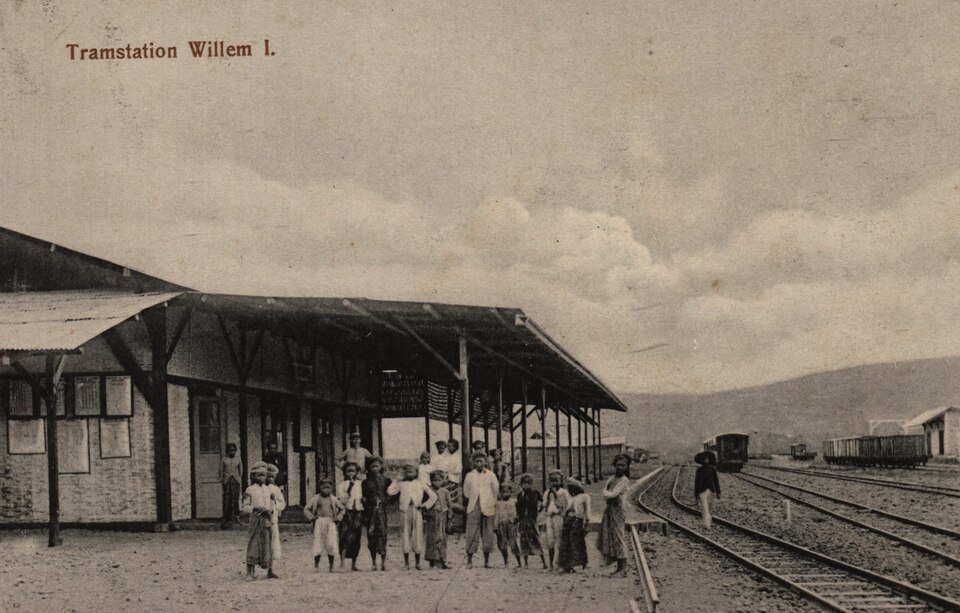
The colonial government, alongside NIS, designed the 37-kilometer network infrastructure connecting Kedungjati to Ambarawa, with construction starting in 1873. The primary objective of this line was to transport agricultural commodities to the Port of Semarang for export. Additionally, the Willem I Station served as a means of transport for Dutch East Indies troops in Central Java.
During its initial period, the Willem I Station was constructed using simple materials, namely wood and bamboo. To support freight and military logistics operations, NIS imported specialized steam locomotives manufactured by the German factory Maschinenfabrik Esslingen in the 19th century.
The expansion of the railway network from the Willem I Station continued. On February 1, 1905, NIS extended the railway line connecting Ambarawa to Secang and Magelang.
The route toward Secang traversed a mountainous terrain with steep inclines and declines. To negotiate the hilly terrain, a third rack rail was installed along the center of the track.
The cog railway system was specifically engineered to mesh with the cogwheels on the B25-series steam locomotives, providing sufficient traction for the train. In 1907, Ambarawa Station underwent a complete renovation, replacing the initial wood and bamboo structure with brickwork.
Temporary Closure of the Willem I Station
The steam locomotive in Ambarawa operations continued well past Indonesia's post-independence era. However, the Willem I Station was forced to cease operations in 1976.
The operational shutdown of the Willem I Station was a direct consequence of the Yogyakarta–Secang line closure. The shutdown was caused by cold lava flows from Mount Merapi's eruption that rendered the route to Magelang impassable.
In addition to the severed main line, operations faced further strain as the fleet of steam locomotives gradually diminished due to aging infrastructure.
Recognizing the neglected condition of the assets, the government took the initiative to secure and preserve the remaining historical heritage. The Willem I Station was repurposed into a railway museum in 1976, designated as a hub for preserving steam-era artifacts.
Two years later, on April 21, 1978, the Willem I Station was officially inaugurated as the Ambarawa Railway Museum. The museum initially offered heritage train trips along the Ambarawa–Tuntang and Ambarawa–Bedono routes.

In the modern era, the function of the Ambarawa Railway Museum centers on recreation and education. The museum preserves the historical legacy of Indonesian railways.
Given its high historical value, the Ambarawa Railway Museum was officially designated as a National Cultural Heritage site in 2010. The museum's management and operations fall under PT Kereta Api Indonesia (KAI).
As a railway museum, the facility houses a comprehensive collection of historical rolling stock and infrastructure. Its assets include 26 steam locomotives, 4 diesel locomotives, 5 passenger coaches, and 6 freight cars collected from various regions.
Apart from displaying the historic collections, the museum currently operates the Ambarawa–Tuntang Heritage Tourist Railway along its remaining active line.