


The sounds of four national anthems, the gentle resonance of bamboo instruments and two contrasting dance traditions opened Festival Timur Tengah 2026 at Universitas Indonesia. Running from September 8 to 10 at the Faculty of Humanities in Depok, the student-led festival brings Indonesia and the Middle East together through culture, education and direct human interaction.
From a Student Initiative to a National Platform
Festival Timur Tengah traces its development to 2009–2010, when students of UI’s Arabic Studies Programme began building a national platform for exploring Middle Eastern languages, arts and societies. Its early editions helped connect Arabic Studies students from universities across Indonesia, contributing to the establishment of the Association of Arabic Literature Students of Indonesia.
By 2023, the festival had reached its 12th edition, attracting 234 competitors across 10 categories, including Arabic debate, poetry recitation, storytelling, singing, calligraphy and news reading. Its return in 2026 demonstrates how a campus initiative can grow into a sustained meeting place for students, diplomats, academics, entrepreneurs and the wider public.
Four Anthems and an Angklung Welcome
The grand opening began with the national anthems of Indonesia, Kuwait, Bahrain and Egypt. Hearing the four anthems in succession established a diplomatic atmosphere while recognizing the countries represented by the foreign guests attending the ceremony.
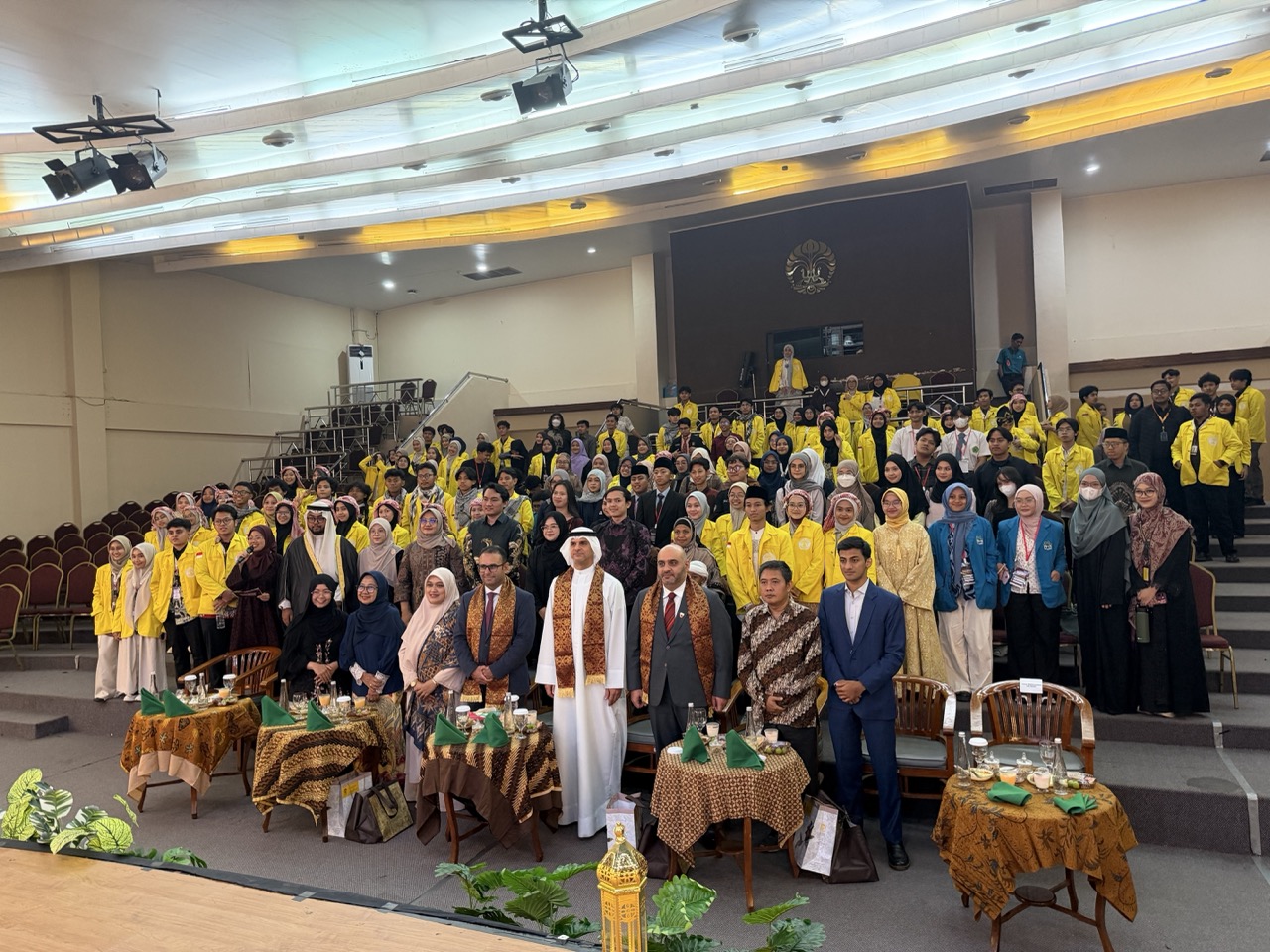
Minister of Religious Affairs Nasaruddin Umar then joined Kuwait’s Ambassador to Indonesia Khalid Jassim Al-Yassin, representatives of Bahrain and Egypt, UI leaders and other dignitaries in playing the angklung. The Indonesian bamboo instrument requires every player to contribute a different note, making harmony possible only through cooperation. Its collective sound offered an appropriate symbol for officially opening a festival founded on intercultural partnership.
Nasaruddin praised UI’s Arabic Studies Programme for presenting Middle Eastern culture within a public university and encouraged students to expand the relationships created through the event. “Cooperation like this must continue to keep culture and humanity alive,” he said. Kuwait’s ambassador also highlighted moderation and tolerance as values that cultural programmes can help strengthen across borders.
Three Days of Culture, Dialogue and Discovery
Under the theme “Light and Pride,” the 2026 festival combines public celebration with academic and youth engagement. Its programme includes the Indonesia–Middle East Youth Summit, competitions, a cooking demonstration, a kebab-eating contest, exhibitions, a fashion show, children’s activities, cultural performances and a public bazaar.
These activities allow visitors to experience the Middle East beyond conventional headlines about conflict, energy and geopolitics. Food, clothing, language, music and traditional arts instead become accessible entry points for understanding the region’s diversity and its longstanding connections with Indonesia.
Saman: Aceh’s Rhythm of Unity
Indonesian students welcomed the international guests with Saman, a traditional dance rooted in the Gayo communities of Aceh. Performed in a close seated formation, the dance combines synchronized clapping, body percussion, chanting and rapidly changing movements. Its demanding coordination reflects discipline, solidarity and dependence on the wider group. UNESCO placed Saman on its List of Intangible Cultural Heritage in Need of Urgent Safeguarding in 2011.
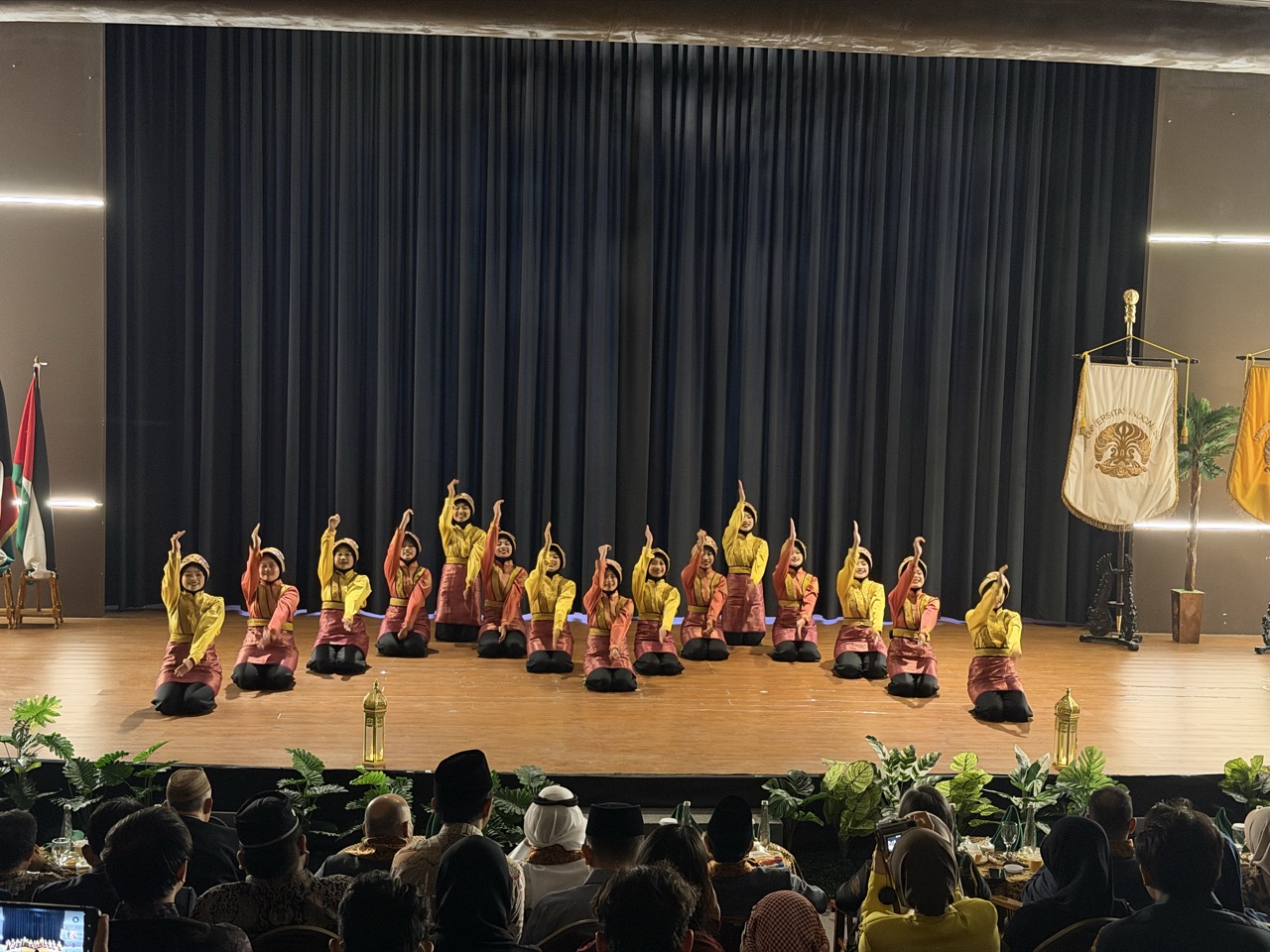
At FTT 2026, the students’ tightly coordinated performance gave Indonesia a strong cultural voice within a festival devoted to the Middle East. It was both a welcome to the visiting delegations and a reminder that meaningful cultural exchange begins when each side brings its own heritage into the conversation.
Tanoura: Egypt’s Whirling Tradition Meets the Audience
The atmosphere shifted as an Egyptian performer presented Tanoura, a colourful folk performance developed from Egypt’s interpretation of Sufi whirling traditions. Wearing a wide, layered costume, the dancer spun continuously while lifting and reshaping the fabric into bright circles and flowing patterns. The remarkable balance required to maintain the rotation turned the performance into a striking display of endurance, concentration and movement.
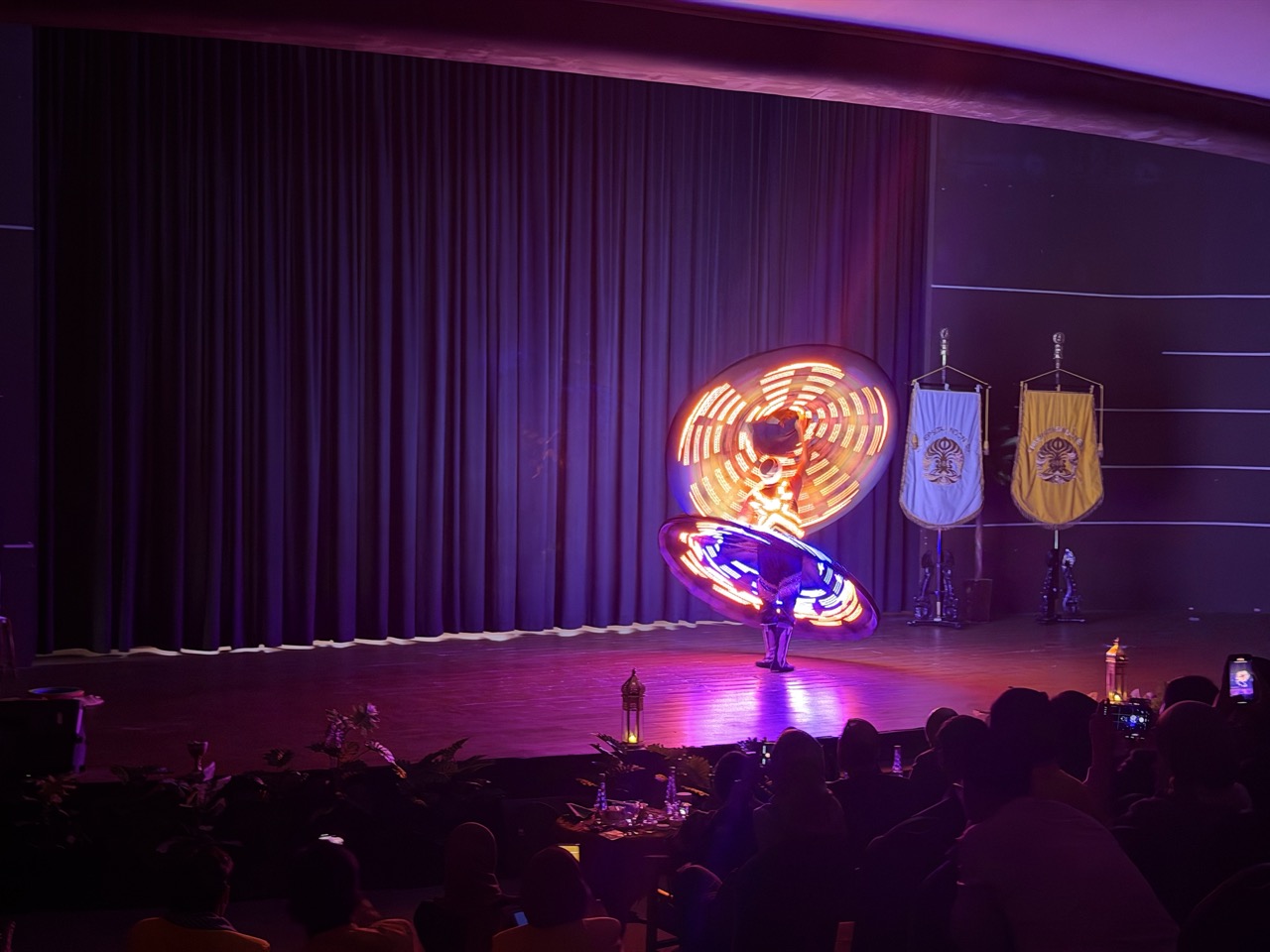
The dancer did not remain separated from the spectators. He approached the seating area, whirled around audience members and invited them into the energy of the performance. The interaction dissolved the usual boundary between stage and crowd, allowing visitors to encounter an Egyptian tradition at close range rather than simply watching it from their seats.
Cultural Diplomacy with a Human Voice
The Saman and Tanoura performances captured the festival’s wider purpose. Rather than placing Indonesian and Middle Eastern cultures in separate showcases, the opening presented them within the same story. Shared rhythm, hospitality and audience participation communicated ideas that formal speeches alone could not convey.
This approach continues a pattern established by previous editions. During the 2022 festival, then-United Arab Emirates Ambassador Abdulla Salem Al-Dhaheri emphasized the importance of cultural continuity, saying, “The Emirates still holds firmly to its ancient heritage and authentic history.” His message remains relevant as FTT encourages young people to value tradition while developing international outlooks.
From Celebration to Lasting Partnership
The festival also reflects expanding relations between Indonesia and Middle Eastern countries in education, trade, tourism and people-to-people exchange. Indonesian exports to the United Arab Emirates reached US$4.03 billion in 2025, while exports during the first four months of 2026 reached US$1.23 billion, an increase of 19 percent from the same period a year earlier. Cultural familiarity can provide a human foundation for these growing institutional and economic connections.
The next step is to transform the festival’s goodwill into sustained programmes, including student exchanges, joint research, scholarships, language training, creative-industry cooperation and regular engagement with Middle Eastern embassies. Its future strength will depend not only on the scale of its annual celebration but also on the partnerships maintained after the final performance.
Festival Timur Tengah 2026 shows that cultural diplomacy can begin with simple but memorable gestures: singing one another’s anthems, creating harmony through angklung and sharing a dance beyond the stage. In these moments, “Light and Pride” becomes more than a festival theme—it becomes a vision of Indonesia–Middle East relations built by a new generation.


