


A mysterious journey made by a young French poet 150 years ago is opening a new path for contemporary writers. Through the Rimbaud Residency, France and Indonesia are transforming Arthur Rimbaud’s brief passage across Central Java into their first bilateral and reciprocal literary residency programme.
The initiative was formally presented at the French Residence in Jakarta on September 10, bringing together French Ambassador Fabien Penone, Semarang Mayor Agustina Wilujeng Pramestuti, inaugural resident Louis-Philippe Dalembert, cultural partners and members of the media.
A Poet’s Mysterious Journey Across Java
Arthur Rimbaud had already written most of the poetry that would establish his international reputation when he abandoned literature in his early twenties. Searching for income and adventure, he enlisted in the Royal Netherlands East Indies Army and sailed to the Dutch East Indies in 1876.
After arriving in Batavia in July, Rimbaud continued to Semarang before travelling through Kedungjati and Tuntang to the military barracks in Salatiga. He deserted the colonial army shortly afterwards and disappeared from official military records. The limited documentation surrounding his movements has turned his journey through Java into one of the most intriguing episodes of his life.
Rimbaud’s travels also connect literary history with Central Java’s early railway network. The stations, towns and landscapes he encountered remain part of the region’s living geography, giving Indonesian communities a direct place within a story more commonly associated with European literature.
Semarang Transforms Memory into Creation
The residency emerged alongside the exhibition Arthur Rimbaud: A Journey through Java, presented at Lawang Sewu in Semarang from August 6 to 8. Ambassador Penone retraced part of Rimbaud’s route through Semarang, Kedungjati, Tuntang and Salatiga before opening the exhibition with Mayor Agustina.
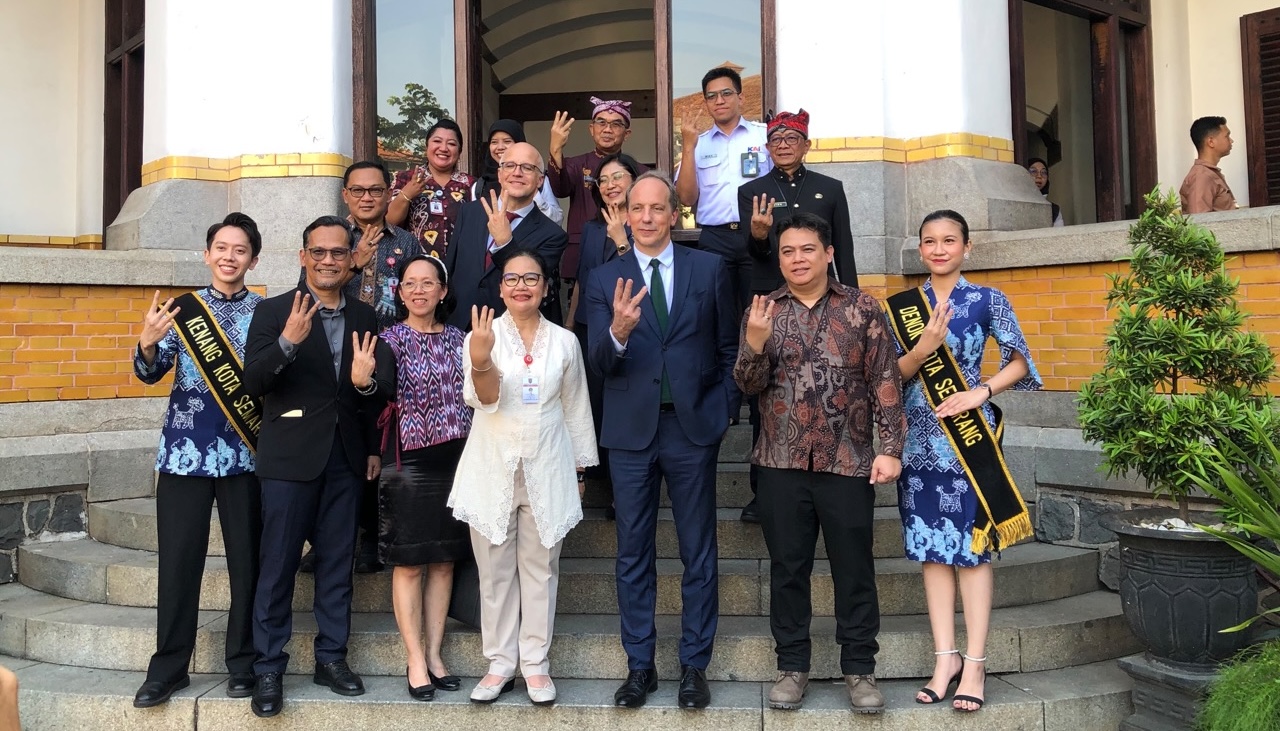
Speaking at the Jakarta launch, Penone said the programme formed part of an ambitious effort to strengthen cooperation between France and Indonesia in literature and publishing. He emphasized a shared conviction that “culture and the creative industries are an essential part of our bilateral relationship.”
For Semarang, the programme demonstrates how local heritage can be reinterpreted as a foundation for international cultural cooperation rather than remaining a static memory of the colonial period. The residency connects historical research with contemporary creation while allowing visiting writers to encounter the communities and landscapes behind Rimbaud’s story.
Dalembert Selected for the Inaugural Residency
Louis-Philippe Dalembert was selected as the first Rimbaud Residency participant following a rigorous selection process. The Haitian-born novelist, poet and essayist, who lives in Paris, writes in French and Haitian Creole. His work frequently explores memory, migration, exile, identity and encounters among cultures.
Dalembert’s books include Avant que les ombres s’effacent, winner of the 2017 Prix Orange du Livre; Mur Méditerranée, recipient of the 2019 Prix de la Langue française and several international Choix Goncourt awards; and Milwaukee Blues, a finalist for the 2021 Prix Goncourt.
Beyond Rimbaud, Dalembert also expressed his admiration for the work of Alexandre Dumas, one of France’s most internationally celebrated writers. That wide literary appreciation reflects his own position within the Francophone world: a writer whose imagination moves across countries, languages, historical experiences and cultural traditions.
His life has been similarly shaped by travel and encounters, with periods spent in Haiti, France, Italy, Germany, the United States and other countries. This experience makes him a fitting first participant in a programme born from the journey of another restless traveller.
Three Months of Writing and Exchange
From September to November 2026, Dalembert will spend three months in Semarang, pursuing his literary work at Lawang Sewu. His residency will extend beyond private writing time through public discussions, workshops and meetings with Indonesian writers, publishers, students, researchers and readers.
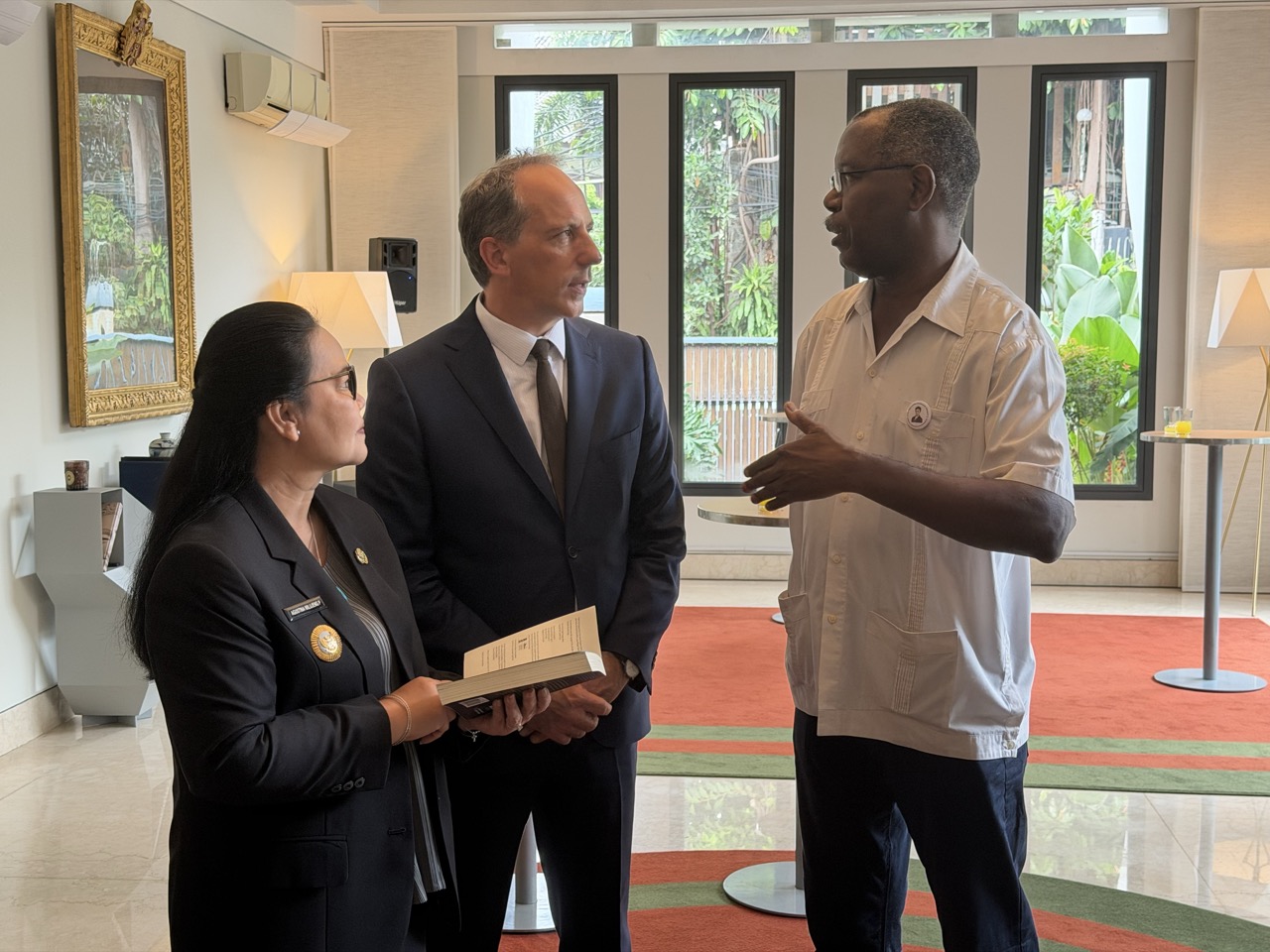
During the luncheon reception following the Jakarta press conference, Dalembert presented several of his books to Ambassador Penone. Mayor Agustina also outlined the packed programme awaiting him in Semarang, presenting a schedule of literary, academic and community engagements planned throughout his stay.
Implemented with the City of Semarang, Alliance Française Semarang and Universitas Negeri Semarang, the programme is designed to make Dalembert’s residency an exchange with the city rather than simply a foreign writer’s temporary stay. Semarang’s institutions and residents will become active participants in the creative process.
A Literary Journey in Both Directions
Reciprocity is at the heart of the Rimbaud Residency. After Dalembert’s placement, an Indonesian writer will travel to France in early 2027 for a three-month residency at the Cité internationale de la langue française in Villers-Cotterêts.
The Indonesian participant will also be chosen through a rigorous selection process. This is intended to ensure that the selected writer can make full use of the residency, contribute to cultural dialogue and engage meaningfully with French authors, publishers and literary institutions.
Located at the Château de Villers-Cotterêts, where King François I signed the 1539 ordinance establishing French as the kingdom’s official administrative language, the Cité was inaugurated by President Emmanuel Macron in 2023. It now welcomes writers, researchers and cultural practitioners from across the French-speaking world.
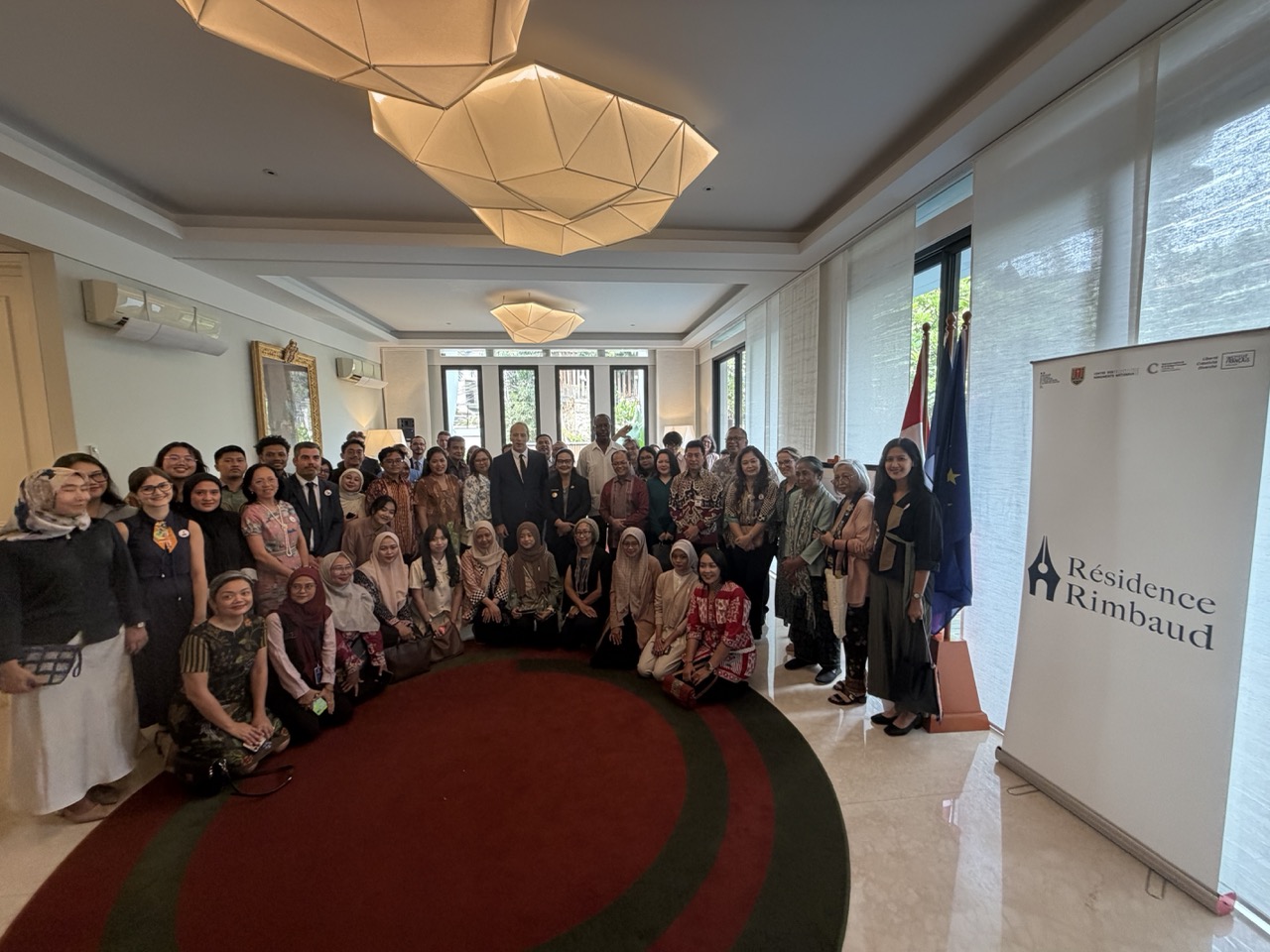
As Penone explained, reciprocity means more than bringing a Francophone writer to Indonesia. “It is about enabling authors, works, languages, and imaginations to circulate in both directions,” he said.
Literature Enters a Wider Partnership
The Rimbaud Residency builds on the momentum created during the 75th anniversary of France–Indonesia diplomatic relations in 2025. It also advances the Borobudur Declaration on a Joint Cultural Strategy, adopted by Presidents Emmanuel Macron and Prabowo Subianto during Macron’s state visit to Indonesia in May 2025.
That cultural roadmap has already produced several literary initiatives. Indonesia launched its first Choix Goncourt programme in 2026, involving Indonesian students of French literature in reading and evaluating contemporary French works. France was also guest of honour at the Makassar International Writers Festival, strengthening exchanges among authors, publishers, translators and readers.
The French Embassy and Institut français d’Indonésie are additionally supporting Indonesian publishers through programmes promoting the translation and publication of French works. New literary residencies are being prepared in Banda Neira for writing and Makassar for translation, extending cultural cooperation beyond Jakarta and Bali.
New Chapters Beyond Semarang
The Rimbaud Residency shows how a brief and mysterious historical episode can inspire a contemporary platform for creativity. It connects writers with cities, readers with unfamiliar languages and the past with possibilities that neither Rimbaud nor his contemporaries could have imagined.
Rimbaud reached Java in 1876 while searching for another life. One hundred and fifty years later, his unfinished journey is inspiring writers to travel for a different purpose: to listen, create and build connections across languages. Through Dalembert’s residency in Semarang and the future journey of an Indonesian writer to France, the poet’s enigmatic passage is becoming the opening chapter of a shared literary future.


