Some of Singapore’s most recognizable buildings and roads have a history that is easy to overlook.
Behind them were thousands of Indian convicts who were brought to Singapore during British colonial rule and put to work on public infrastructure.
Their work helped shape parts of the city that still exist today.
The First Convicts Arrived in 1825
The story began far from Singapore.
Under British colonial rule, convicted prisoners from India were often transported to other parts of the empire. Instead of keeping them in overcrowded prisons, the colonial government used their labour in places where workers were needed.
Singapore became one of those places.
According to Singapore’s National Library Board, the first group of around 80 Indian convicts arrived in Singapore in April 1825, sent from Bencoolen, now Bengkulu in Indonesia.
They were transferred as Singapore was developing rapidly as a British trading port and needed labour for public works. More convicts arrived in the following decades.
These weren’t people who had volunteered to work in Singapore.
They were prisoners transported under the British penal system, often thousands of kilometres away from their homes. Once in Singapore, many were assigned to work on construction and infrastructure projects.
For the colonial government, the arrangement solved two problems at once, prisoners could be punished through transportation while their labour was used to develop the colony.
By the 1830s, Singapore had more than 2,000 convicts. As the town expanded, so did the list of things they were asked to build.
They Built More Than Just Roads
Some of their earliest jobs involved clearing land, moving soil and building roads.
According to Roots.sg, Singapore’s heritage portal managed by the National Heritage Board, Indian convicts were sent to the colony in 1825 to construct roads, buildings and canals.
Their work included major projects such as North Bridge Road and South Bridge Road, as well as the Istana, St Andrew’s Cathedral and Cavenagh Bridge.
Their skills also went beyond basic manual labour.
Convicts were trained in brickmaking, and their work became good enough to win a silver medal at the Agra Exhibition in India in 1867.
In other words, calling all of them simply “labourers” misses an important part of the story. Many had useful technical and craft skills.
The Buildings Are Still There
One of the examples is St Andrew’s Cathedral.
When the present cathedral was being built, Lieutenant Colonel Ronald MacPherson simplified his original Neo Gothic design so that Indian convict labourers could execute the project more easily.
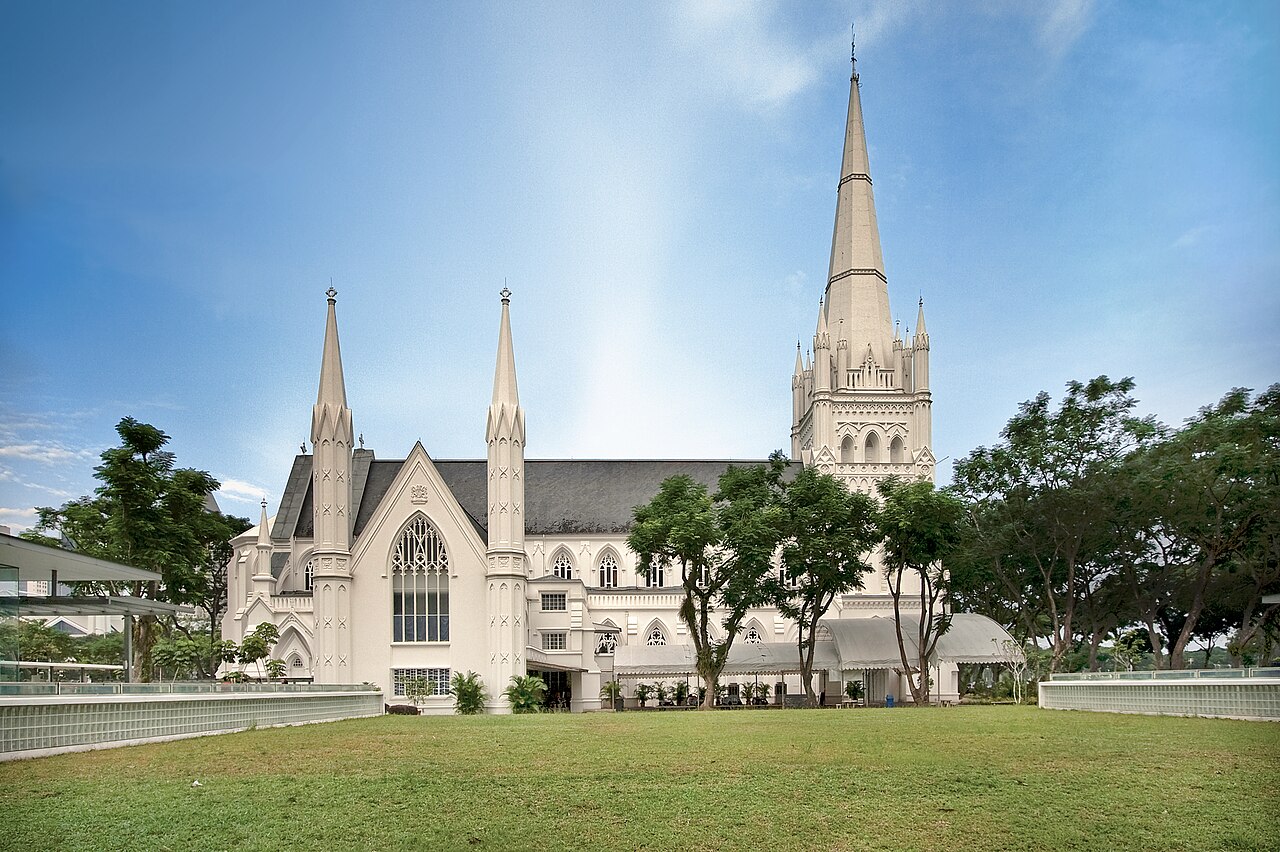
According to Roots.sg, St Andrew’s Cathedral opened for service in 1861 and was fully completed in 1865. Built largely by Indian convict labour, it remains one of the few surviving structures associated with their work in colonial Singapore.
They also worked on Government House, now the Istana, the official residence of Singapore’s president.
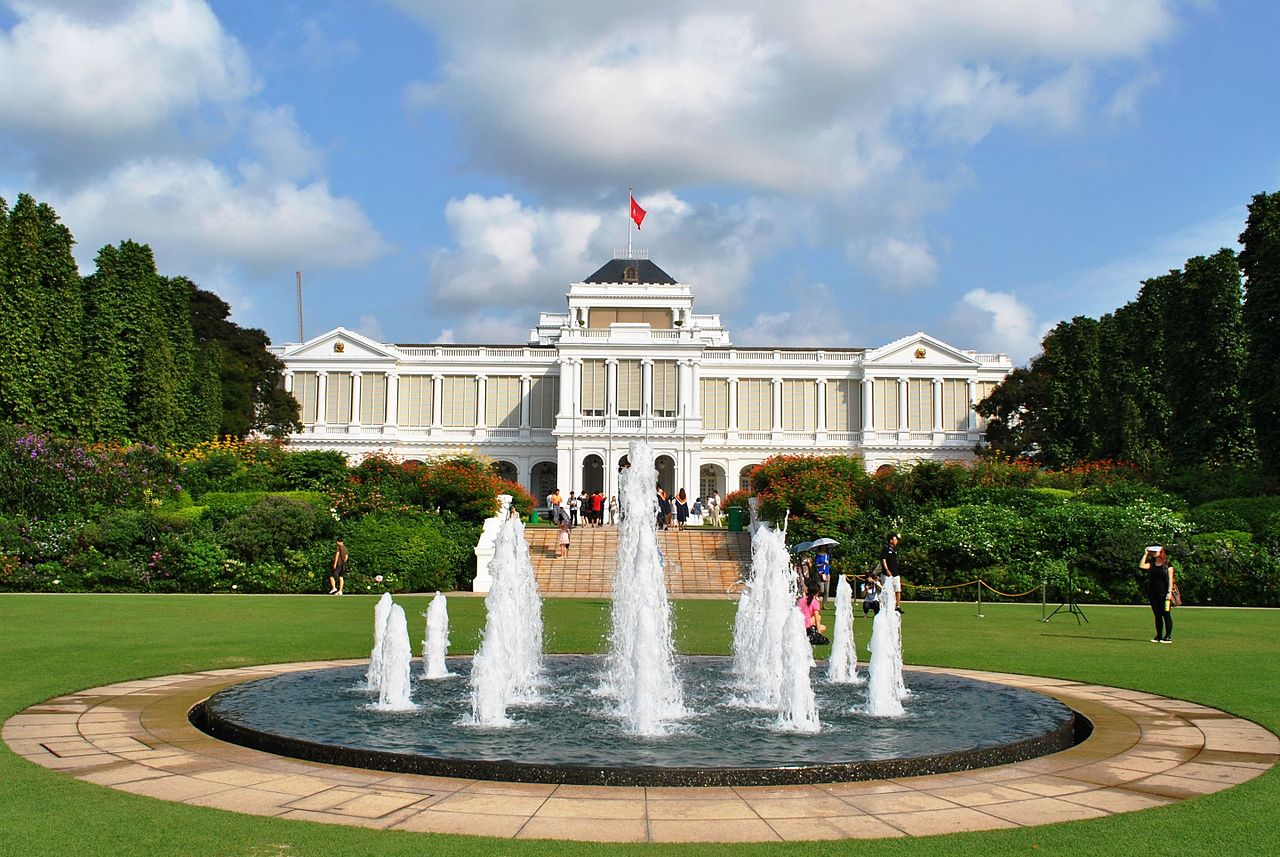
The convicts produced special bricks for the building’s architectural details, carried out plastering and flooring, and helped lay out the grounds and gardens.
Then there is Cavenagh Bridge.
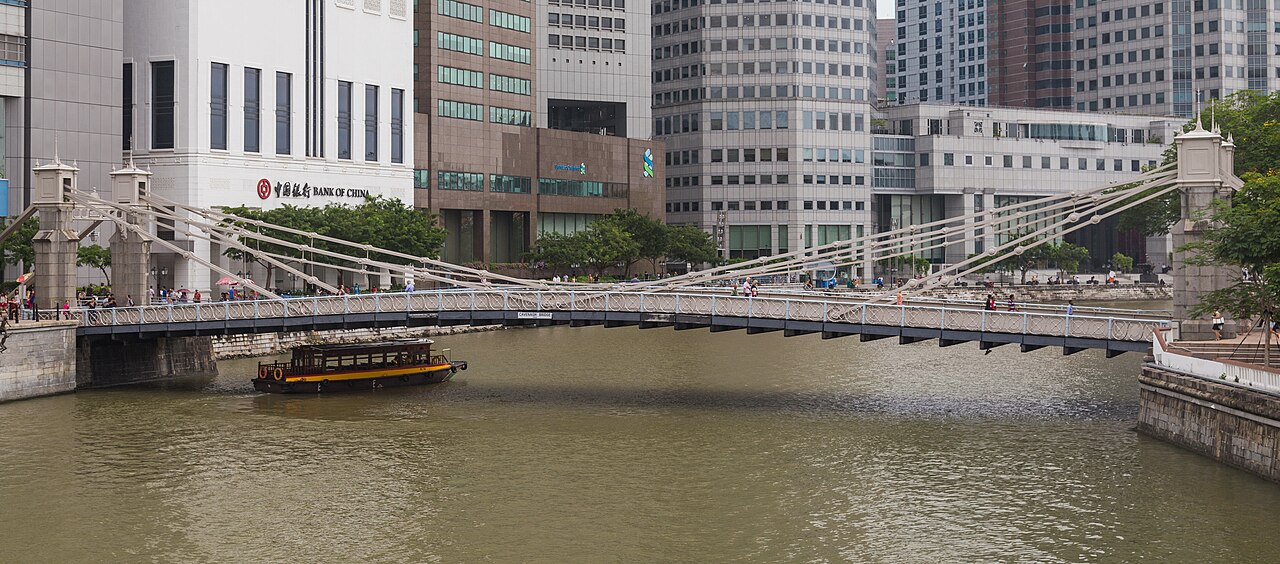
Completed in 1869, its components were manufactured in Scotland and shipped to Singapore, where they were assembled by Indian convict labourers. The National Heritage Board describes it as the last major work of Indian convicts in Singapore.
The bridge is still standing today.
Some Even Built Their Own Prison
Perhaps the strangest part of the story is that the convicts also helped construct the Bras Basah convict jail where they themselves would be imprisoned.
According to BiblioAsia, a publication of Singapore’s National Library Board, construction of the Bras Basah convict prison began in the 1840s and took about two decades to complete. In an ironic twist, the convicts ultimately built the very prison in which they were confined
It is one of those details that makes the history feel much less abstract.
Singapore’s infrastructure wasn’t just being built around them. In some cases, they were literally building the walls around themselves.
What Happened to Them?
The transportation of Indian convicts to Singapore was eventually discontinued, although convict labour continued to be used.
According to BiblioAsia, the system of convict labour in Singapore continued until 1873. On 8 May that year, the ship Paknam carried the last Indian convicts to the Andaman Islands and returned others to India.
Meanwhile, First Class convicts who had earned a “ticket of leave” were freed and allowed to remain in Singapore Some former convicts stayed and built new lives in the colony. Their individual stories, however, were often forgotten.
Singapore’s historic buildings survived. The names of many of the people who helped build them did not.
A Different Side of Singapore’s History
Singapore’s rapid transformation into a major port is often told through famous administrators, merchants and businessmen.
But there was another group working in the background.
Indian convicts cleared forests, laid roads, made bricks, constructed buildings and worked on the infrastructure that allowed the growing colony to function.
They were not the only people who built Singapore, and saying the city was simply “built by prisoners” would oversimplify its history. But their contribution was significant enough to leave a physical mark that can still be seen today.
Some of Singapore’s oldest landmarks are, quite literally, monuments to people whose names history almost forgot.