


A sudden shower swept across South Jakarta, but the music never stopped. Seated on colorful beanbags with food and drinks in hand, hundreds of guests stayed to enjoy Gig on the Green 2026, an outdoor celebration that transformed an alumni reunion into a lively expression of Australia–Indonesia friendship.
Music That Continued Through the Rain
Around 700 Australian alumni gathered at Rumah Sarwono in Pejaten Timur on September 19 for the annual festival organized by the Australian Embassy in Indonesia. The event welcomed Indonesians who had recently completed their studies in Australia while reconnecting them with the country’s wider alumni community.
The rain briefly changed the atmosphere but not the audience’s enthusiasm. Guests remained around the lawn, sheltered where they could and returned to their beanbags as the performances continued. The relaxed setting made the gathering feel less like an official diplomatic function and more like a community homecoming.
Music, food and informal conversations allowed returning graduates to reconnect with Australia while sharing their experiences with fellow alumni from different universities, generations and professional backgrounds.
A Soundtrack Across Two Cultures
The festival featured TJAKA, a First Nations Australian trio based in Meanjin, or Brisbane. The group combines Indigenous storytelling and traditional instruments with hip-hop, electronic music, funk, reggae and dance, creating an alternative Indigenous hip-hop style it describes as “dij-tronica.”
TJAKA brought a contemporary expression of Aboriginal culture to the Jakarta stage, demonstrating how traditional identity can remain vibrant within modern music. Its performance was complemented by Australian alumna Nathalie Ezmeralda and Indonesian pop group The Overtunes, creating a lineup that moved naturally between Australian and Indonesian voices.
The combination reflected the purpose of cultural diplomacy at its most accessible. Rather than being discussed through formal speeches alone, the bilateral relationship was experienced through rhythm, performance and interaction between artists and audiences.
Alumni at the Heart of the Partnership
“Gig on the Green is a wonderful opportunity to welcome Australian alumni who have recently returned to Indonesia and joined our extraordinary alumni community,” said Nicola Campion, Acting Deputy Head of Mission at the Australian Embassy in Indonesia.
Her remarks highlighted the role of education in building enduring personal connections between the two countries. Alumni return with academic qualifications, but also with friendships, professional networks and firsthand knowledge of Australian society.
“Australian alumni have strong ties with Australia and make important contributions to the enduring partnership between Australia and Indonesia,” Campion added.
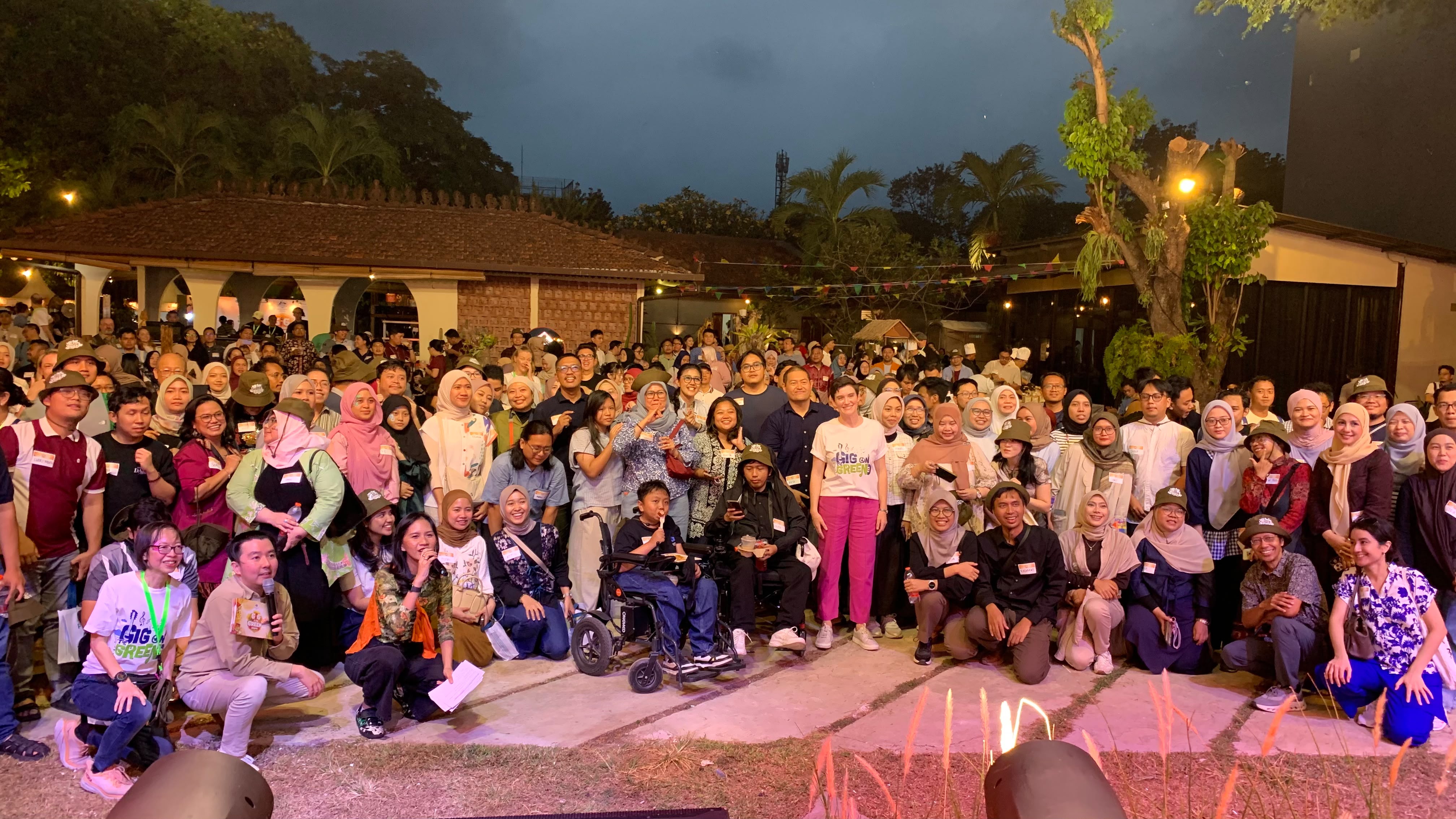
The gathering provided space for those connections to continue after graduation. New returnees could meet established alumni working across government, business, education, health, media and the creative industries, turning an evening concert into a platform for long-term professional and social engagement.
Diplomacy Served with Local Flavor
Food offered another bridge between the two cultures. Stalls managed by Australian alumni and partner businesses served coffee, gelato, burgers, pastries, pempek and other refreshments throughout the afternoon and evening.
The participation of brands and alumni-run businesses showed how international education can generate relationships that extend into entrepreneurship and community life. Companies and organizations from both countries also supported the event, including Qantas Airways, Primaya Tangerang Hospital, Panorama and Tugu Kunstkring Paleis.
These localized elements gave Gig on the Green a distinctly Jakarta character. Australian performers and alumni networks met Indonesian hospitality, popular music and familiar flavors in an open setting designed for conversation.
Connections That Outlast the Concert
Gig on the Green demonstrated that cultural diplomacy does not always require a conference hall or ceremonial stage. It can emerge on a rain-soaked lawn, through an Indigenous instrument, an Indonesian pop song or a conversation shared over coffee.
As the performances continued despite the weather, the evening offered a fitting image of the Australia–Indonesia relationship: resilient, energetic and sustained by people willing to remain connected. The final notes may have faded, but the networks strengthened at Rumah Sarwono will continue long after the beanbags have been packed away.


