


Across Southeast Asia, travel increasingly begins with a phone but succeeds through a human encounter. A visitor may use artificial intelligence to translate a menu in Hanoi, plan a railway journey through Laos or find a family-run homestay in Johor. Yet the memories that remain are still shaped by people, places and stories. That balance sits at the heart of World Tourism Day on September 27.
A Region Back on the Move
The 2026 theme, “Digital Agenda and Artificial Intelligence to Redesign Tourism,” arrives as Southeast Asia enters a new period of growth. ASEAN destinations welcomed 121 million international tourists in 2024 and generated US$132 billion in tourism receipts. Intra-regional travel accounted for 47.7 million arrivals, or 38 percent of the total, confirming that Southeast Asians themselves are central to the industry’s revival.
Those figures carry a clear opportunity and an equally clear conflict. ASEAN’s tourism outlook forecasts 201 million international arrivals by 2030. Without stronger management, growth could deepen congestion, waste, housing pressure and ecological damage. Managed well, it could finance conservation, strengthen small businesses and spread opportunity beyond established gateways such as Bangkok, Singapore and Bali.
Making Technology a Better Guide
AI is already moving tourism beyond search boxes and booking engines. Multilingual assistants can build accessible itineraries, translate local expressions and direct travellers towards lesser-known attractions. Predictive systems can help destinations anticipate crowding, manage transport and prepare for extreme weather. Digital reconstructions can also make complex heritage more understandable without altering the physical site.
The technology nevertheless raises questions about privacy, accuracy and employment. An algorithm trained on incomplete information may misrepresent a tradition or recommend only businesses with the strongest digital presence. Smaller operators can disappear from view even when they provide the most authentic local experiences.
Malaysian tourism specialist Noor Ahmad Hamid, chief executive of the Pacific Asia Travel Association, offers a useful standard: “Our goal is to ensure that AI serves to improve customer experiences while maintaining trust and integrity in the tourism sector.” In practice, that means transparent systems, stronger digital skills and tools designed to support guides, artisans and hospitality workers rather than replace them.
Turning Visits into Local Value
The most promising change is not technological alone. Travellers increasingly build flexible micro-itineraries around food, crafts, neighbourhoods and nature. A morning market in Yogyakarta, a weaving workshop in Luang Prabang or a cooking session in a Malaysian village can turn tourism spending into direct community income.
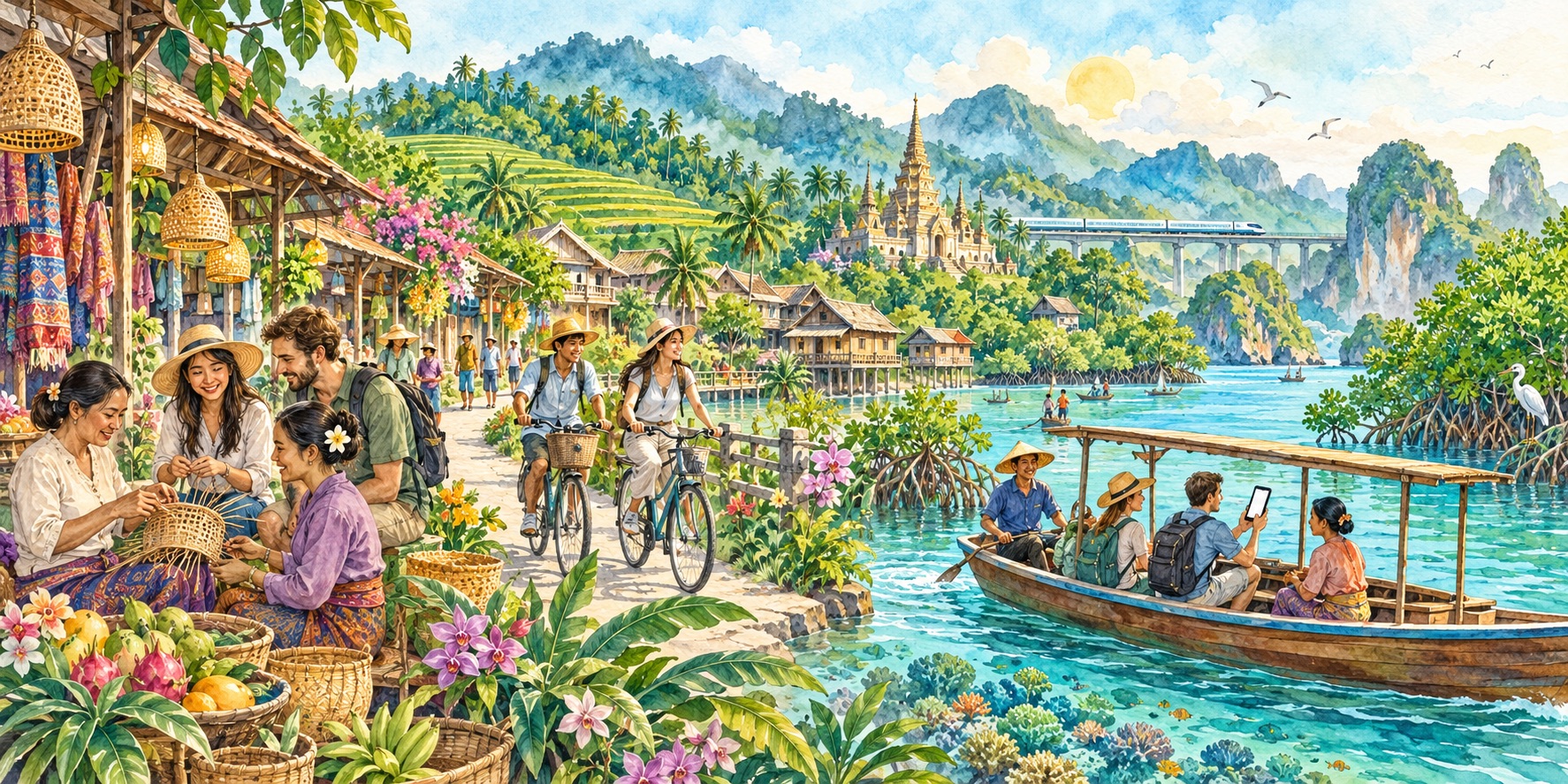
Indonesia provides a useful example. It recorded 13.9 million international visits and US$16.71 billion in foreign-exchange earnings in 2024, alongside more than one billion domestic trips. Its tourism-village network connects visitors with locally managed experiences, while plans for regenerative destinations in Bali, Jakarta and the Riau Islands aim to leave communities and ecosystems stronger.
Across the region, Malaysia’s homestay programme links guests with rural families and micro-enterprises. The Laos–China Railway has expanded access to Lao destinations and encouraged shorter regional journeys. These models show how digital discovery can lead to meaningful offline exchange when communities retain ownership of the story and a fair share of the income.
Protecting the Places People Come to See
Growth cannot be separated from climate responsibility. Tropical beaches, coral reefs, historic districts and mountain communities face rising seas, intense heat, water stress and seasonal disruption. At the same time, overcrowding and poorly managed waste can erode the very character that draws visitors.
Destinations therefore need to measure more than arrival totals. Water use, waste generation, resident satisfaction, local employment and ecosystem health should carry equal weight. Timed entry systems, electric public transport, visitor caps and conservation fees can protect vulnerable sites while improving the experience.
One Region, Many Connected Stories
ASEAN’s single-destination vision can help distribute visitors through rail, cruise, road and community-based routes instead of concentrating them in a few famous places. Lao tourism minister Suanesavanh Vignaket captured the ambition: “I am confident that, with coordinated marketing and strategic innovation, ASEAN can become a globally recognised, competitive destination that appeals to diverse international travelers.”
World Tourism Day 2026 offers Southeast Asia a timely choice. AI can make travel easier, but regional cooperation and community leadership will determine whether it also becomes fairer, greener and more memorable. The smartest journey is one that enriches the traveller without diminishing the destination.


