


A Vietnamese phin drips over condensed milk. Indonesian kopi tubruk settles in a glass. At a Malaysian kopitiam, breakfast arrives with a familiar dark brew. On International Coffee Day, October 1, these everyday rituals connect Southeast Asia’s coffee drinkers with a much larger story of farming, livelihoods and change.
Celebrating a Region of Many Cups
International Coffee Day now has recognition as a United Nations observance, building on the International Coffee Organization’s earlier decision to establish a shared celebration on October 1. Its purpose reaches beyond the beverage to the people whose work brings it to our tables.
Southeast Asia offers an unusually varied coffee landscape. Vietnam supplies robusta on a global scale, while Indonesia’s producing regions have built distinctive identities around origins such as Gayo, Toraja and Kintamani. Malaysia nurtures a smaller Liberica sector, and the Philippines commercially grows Arabica, Robusta, Liberica and Excelsa.
Northern Thailand, Laos and Myanmar add to the region’s range of coffee origins. Meanwhile, the kopitiam traditions shared across Malaysia, Singapore, Brunei and neighbouring countries demonstrate how coffee culture travels beyond plantation boundaries. Across the region’s 11 countries, the connection between producing and consuming communities is worth celebrating.
Turning Coffee’s Value into Better Livelihoods
The commercial scale is substantial. Vietnam exported approximately 1.6 million tonnes of coffee worth US$8.9 billion in 2025, according to customs figures reported by Reuters. Export earnings rose much faster than volume, illustrating how prices can reshape the industry’s fortunes.
But a valuable export crop does not automatically guarantee secure incomes. Farmers must cover labour, fertiliser, processing and transport costs while managing uncertain harvests.
In Indonesia, Universitas Gadjah Mada food technology professor Supriyadi highlighted uneven bean quality and damaged plantations in March 2026. “About 10 percent of coffee plantation land in Indonesia remains damaged,” he said. He advocated closer cooperation between farmers and coffee businesses, including sustained assistance with processing.
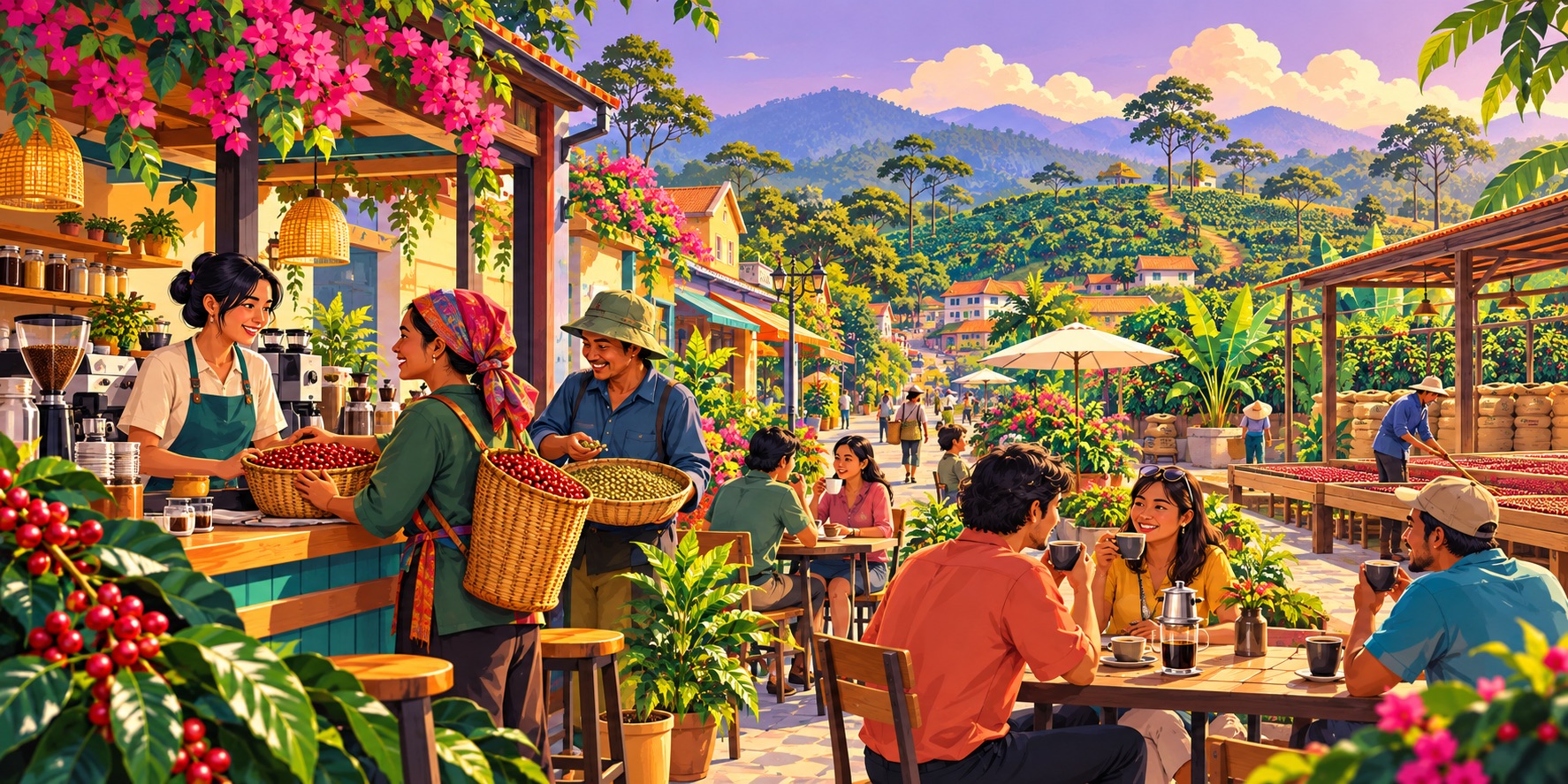
For cafés and roasters, that creates a practical opportunity: build purchasing relationships that reward quality consistently, explain where beans originate and support improvements beyond a single harvest. A celebrated origin name should carry benefits back to its producers.
Growing Resilience Alongside Quality
Climate pressures make that relationship increasingly important. Coffee production depends on the timing of rain, flowering and harvest; disruption at one stage can affect both yield and quality.
In August 2026, Thái Như Hiệp, vice chairman of the Vietnam Coffee-Cocoa Association, told Reuters: “For Vietnam, adapting to climate change is no longer a future concern. It has become an urgent necessity to safeguard coffee production.”
Timor-Leste offers a concrete example of investment in resilience. In June 2026, the Asian Development Bank approved US$4.95 million in additional financing for a coffee and agroforestry project, expanding its intended reach from 2,000 to 4,000 farming households across six municipalities. Support combines coffee production with sustainable land management and food security.
The approach recognises that coffee households need more than a good selling price. Productive trees, suitable farming practices and reliable food supplies all contribute to their ability to withstand difficult seasons.
Sharing More Than a Coffee Trend
Regional cooperation can connect these efforts. At the ASEAN-EU Coffee Summit in 2024, participants discussed living-income benchmarks, including their relevance within growing domestic markets. That brings responsibility closer to home: Southeast Asian consumers and businesses also help shape producers’ prospects.
Traditional coffee shops and contemporary specialty cafés can both contribute by making origins visible and valuing the work behind them. Innovation need not erase familiar brewing customs; it can give them new audiences while strengthening connections with farming communities.
This October 1, the most meaningful celebration begins with curiosity about the cup. Knowing who grew the beans—and whether they can keep growing them—makes Southeast Asia’s coffee culture richer than flavour alone.


