The Hoi An Lantern Festival is a monthly traditional celebration centered in the Hoi An Ancient Town area, Viet Nam. The festival is held every 14th night of the lunar calendar, which coincides with the full moon. The main activity of the celebration is marked by switching off street lights and restricting vehicle access in the old town area.
Hoi An Lantern Festival Event Series
The celebration begins around sunset at approximately 18:00 local time. All electric lighting along the main streets of Hoi An Ancient Town is turned off simultaneously. In its place, the lighting of the old town area comes entirely from various silk lanterns hung in front of historic buildings.
The Hoi An Lantern Festival’s signature lanterns are generally made from bamboo frames covered with colorful silk fabric. The frames are designed to be foldable that make them easy to store and transport. The lanterns are installed along narrow alleys leading down to the old port area.
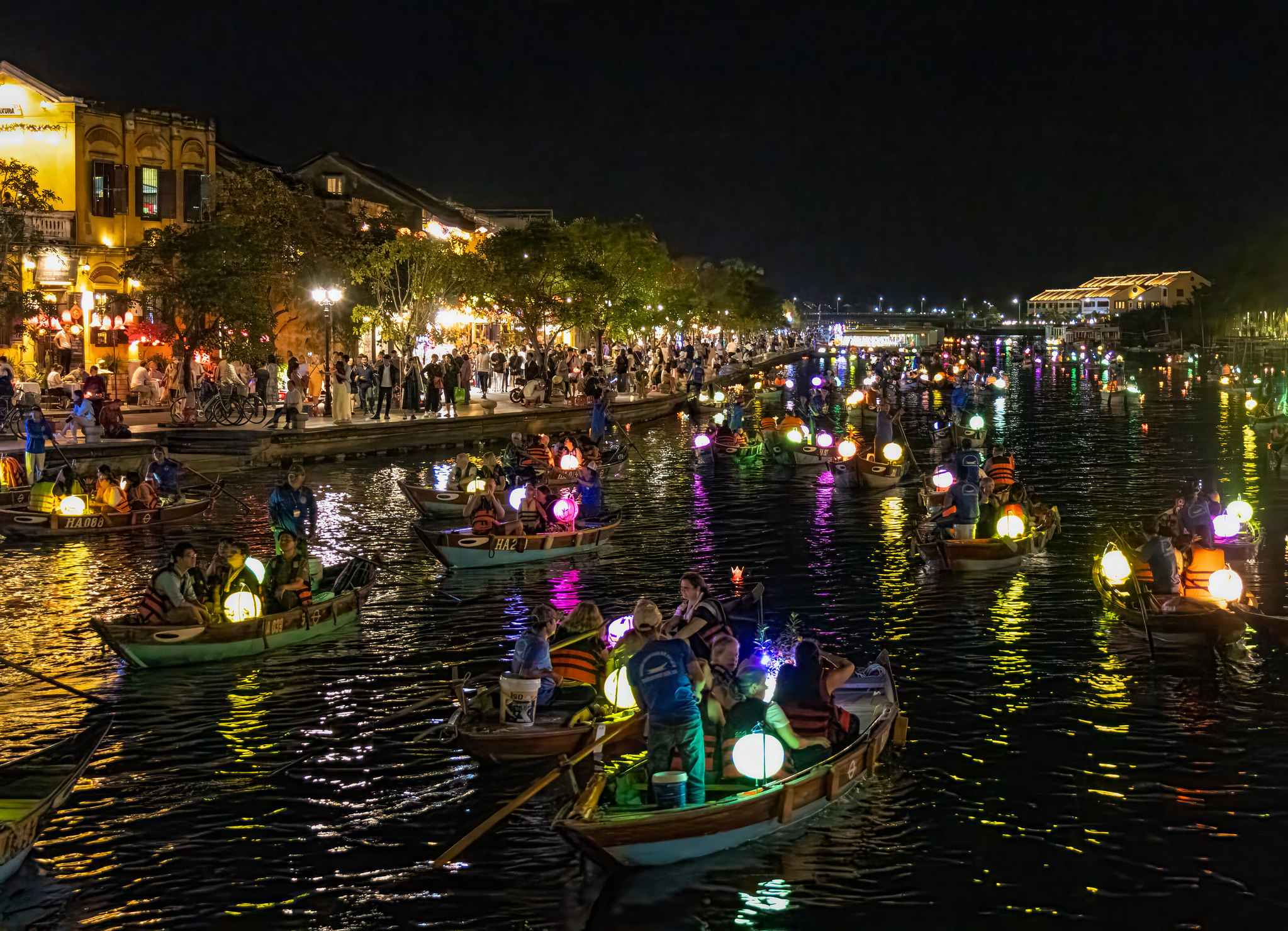
Along the banks of the Hoai River, small paper lanterns containing candles are sold to be released onto the water's surface. The paper floats drift with the river current as a symbol of hope and respect. The activity of releasing paper lanterns takes place continuously up to the area near the Japanese Covered Bridge.
In addition to releasing lanterns, the celebration features traditional Vietnamese music performances in open areas. The local community also host a traditional card game called Bai Choi at several street corners. The festive activities continue until 22:00 before the city lights are turned back on.
History of the Lantern Tradition in Hoi An

The custom of hanging lanterns in Hoi An dates back to the 16th and 17th centuries. During the period, Hoi An served as one of the major trading ports in Southeast Asia. Merchants from China and Japan arrived and established settlements in the coastal area.
Foreign merchant communities brought with them the tradition of hanging lanterns in front of their assembly halls and residences. The habit was subsequently adapted by the local communities of Hoi An in maintaining and decorating their traditional wooden houses. As trade grew, the use of lanterns spread throughout the residential areas surrounding the port.
The local government officially established the tradition as a regular monthly event in 1998. The step was taken to preserve the long-standing customs of the communities while managing the historic area of Hoi An Ancient Town.
Development of the Celebration Over Time
Following the official establishment of the festival in 1998, UNESCO designated the Hoi An Ancient Town area as a World Heritage Site in December 1999. The designation was based on Hoi An's architectural and urban layout, which reflects a traditional Southeast Asian trading port from the 15th to the 19th century. The step was followed by the formation of a heritage management board by the Quang Nam Provincial Government to regulate building preservation and activities in the core area.
The local government subsequently integrated the light-extinguishing tradition into the pedestrian zone management scheme. Electric lighting is turned off periodically on the 14th night of each lunar month, while motorized vehicles are prohibited from traveling along the old town's main streets. The scope of the managed area includes historic residential quarters, the Hoai River waterfront, and ancient pagoda complexes.
The staging of the festival was temporarily suspended from 2020 through late 2021 in accordance with public activity restriction policies from the local government. The monthly celebration series officially reopened in early 2022. The reopening of the festival implemented a pedestrian zoning system operating from 18:00 to 21:30 local time.