


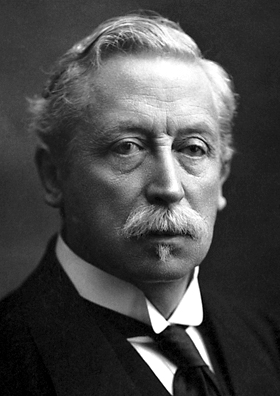
In 1929, Christiaan Eijkman received half of the Nobel Prize in Physiology or Medicine for his research on vitamins. The Dutch physician had uncovered an important clue to the cause of beriberi in Batavia, in the Dutch East Indies. Strangely enough, that clue came from chickens that suddenly became paralyzed after being fed rice.
In the Nobel lecture he wrote himself, Eijkman recorded that laboratory chickens were fed milled rice from June 17 to November 27. This rice had lost parts of its outer layers and germ during milling. On July 10, the chickens began showing symptoms resembling beriberi. Their condition improved only after their feed was changed.
For Eijkman, the incident opened a path toward understanding a disease that had long claimed lives across Southeast Asia.
Beriberi, a Disease Blamed on Germs
Beriberi affects the peripheral nervous system and can cause tingling, numbness, muscle weakness, and paralysis. In severe cases, it can also impair the heart and breathing.
By the late 19th century, beriberi had become a major health problem across the Malay Archipelago, particularly among soldiers, sailors, prisoners, and workers in mines and plantations.
The disease claimed many lives during the Aceh War. In one account cited by Eijkman, a military doctor reported that 18 soldiers had died of beriberi in a single hospital in one day.
The Dutch colonial government sent an investigative commission in 1886. Led by Pekelharing and Winkler of Utrecht University, the team included Eijkman as an assistant.
At a time when bacteriology was advancing rapidly through the work of Louis Pasteur and Robert Koch, the investigators began with the assumption that beriberi was caused by a microorganism.
The team found a type of round-shaped bacterium known as a coccus. However, the idea that this microorganism caused beriberi remained unproven. The commission returned to the Netherlands in 1887, but its temporary laboratory at the Batavia Military Hospital was retained as a permanent institution.
Eijkman became the laboratory's first director in 1888. It was there that he continued investigating beriberi.
When Laboratory Chickens Suddenly Became Paralyzed
At first, Eijkman's research made little progress. Then, one day, chickens in the laboratory began showing symptoms similar to those of human beriberi. They staggered as they walked, struggled to perch, and eventually developed paralysis that began in their legs.
Eijkman suspected an infection. But chickens kept separately as a control group also fell ill. Examinations found no microorganisms or parasites that could explain their symptoms.
The next clue came from the hospital kitchen. The laboratory caretaker had been feeding the chickens cooked rice normally served to patients and staff, a practice intended to save money on feed.
When the cook was replaced, the new cook refused to let the chickens eat rice intended for military personnel. The disease then disappeared.
The incident led Eijkman to suspect the chickens' diet. He conducted controlled experiments. Chickens fed milled rice developed polyneuritis, a condition involving damage or inflammation of multiple peripheral nerves, after three to four weeks. Those fed rice that had not been milled remained healthy.
Many sick chickens recovered after their feed was changed. Eijkman also found that the protective substance could be extracted using water or concentrated alcohol.
Yet he did not conclude that the disease resulted from a nutritional deficiency. Instead, he suspected that the high starch content of milled rice produced a poison, while the discarded outer layers contained a substance that neutralized it.
From Java's Prisons to the Discovery of Vitamin B1
The findings from the chickens were subsequently tested in humans. Adolphe Vorderman, a civil health inspector in Java, compared beriberi cases in prisons that served milled rice with those in prisons that provided rice that had not been milled.
The survey covered 101 prisons and nearly 300,000 inmates. The results were striking. Beriberi cases in prisons serving milled rice were about 300 times more common than in those serving rice that had not been milled.
The findings strengthened the suspicion that diet played a crucial role in the disease. Further research eventually clarified why.
Gerrit Grijns, who succeeded Eijkman in Batavia, concluded in 1901 that beriberi occurred when food lacked a particular substance the body needed. He called this condition partial hunger.
The idea came close to the modern understanding of vitamins. A deficiency of vitamin B1, or thiamine, can indeed cause beriberi. But the substance the body needs in small amounts was not successfully isolated in crystalline form until 1926, when B. C. P. Jansen and W. F. Donath, two Dutch scientists working in Java, achieved the breakthrough.
In their experiments, adding about 2 milligrams of the antineuritic substance per kilogram of milled rice was enough to protect birds against polyneuritis. The substance later became known as vitamin B1.
In 1929, the Nobel Prize in Physiology or Medicine was shared by Eijkman, for his research on antineuritic vitamins, and Frederick Gowland Hopkins, for his discovery of growth-promoting vitamins. Eijkman was ill and could not attend the ceremony in Stockholm.
He died in Utrecht on November 5, 1930. His original explanation involving a poison in rice was not entirely correct.
Nevertheless, his observations of paralyzed chickens in Batavia helped pave the way toward a crucial realization: disease can arise not only from something that enters the body, but also from an essential substance missing from the food we eat.


