


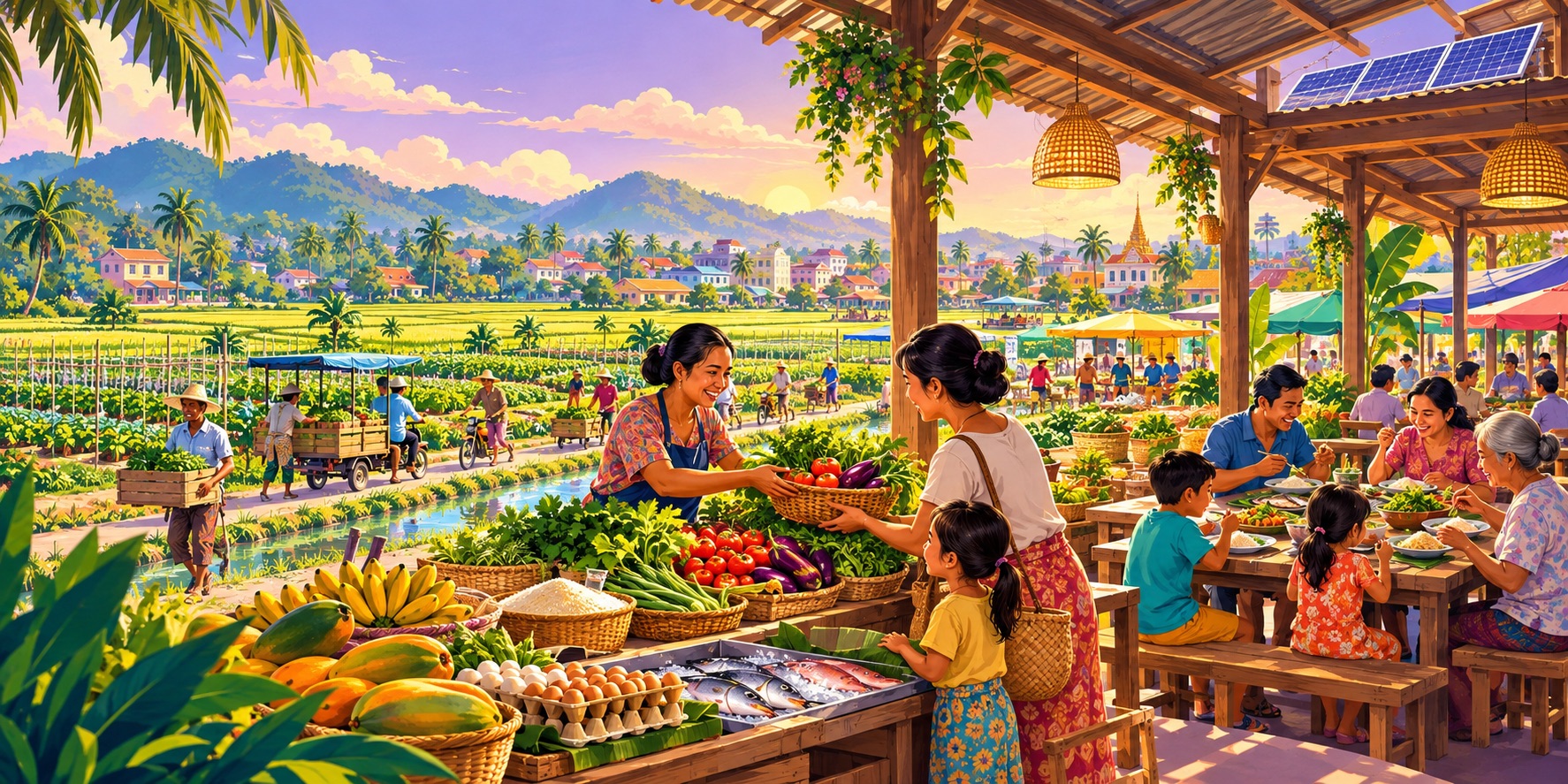
A full market does not guarantee a nutritious meal at home. As Southeast Asia approaches World Food Day on October 16, its challenge is to turn agricultural abundance into affordable, healthy diets while protecting the farmers, fisheries and ecosystems that sustain them.
This year’s FAO theme, “Innovate today. Nourish tomorrow,” encourages solutions that combine technology, traditional knowledge and inclusive approaches—a relevant message for a region where modern food industries coexist with small family farms.
Bringing Nutrition to the Table
Food security extends beyond the volume of rice harvested or exported. Families need sufficient income and dependable access to diverse foods, alongside clean water, sanitation and health services.
Indonesia illustrates both progress and unfinished work. Its 2024 national nutrition survey recorded childhood stunting at 19.8%, down from 21.5% in 2023. That improvement still leaves approximately one in five children under five affected, underscoring why agricultural policy and nutrition programmes must work together.
For households, the practical questions are immediate: can they regularly afford vegetables, fruit, eggs, fish and other nutritious foods? Increasing staple production is valuable, but success must also be measured through the quality of meals and children’s development.
Growing Rice With a Lighter Footprint
Vietnam offers an example of how environmental improvements can support livelihoods. According to the World Bank, its Sustainable Agriculture Transformation Project, implemented from 2015–2023, enabled low-emission rice farming across 182,000 hectares, increased participating farmers’ profits by 30% and reduced annual emissions by 1.5 million tonnes of carbon dioxide equivalent.
The country is building on that experience through its programme for one million hectares of high-quality, low-carbon rice in the Mekong Delta by 2030. This is a development target, rather than a completed transformation. Technical assistance, farmer training, cooperative capacity and access to finance remain central to implementation.
The broader lesson is that innovation must work economically for growers. A new practice is more likely to endure when it reduces costs, protects yields or improves income.
Making Local Production More Resilient
Singapore’s experience shows why food strategies must adapt. The country has replaced its earlier “30 by 30” vision with more targeted ambitions: by 2035, local farms should be capable of supplying 20% of consumption in specified fibre categories and 30% in protein categories covering eggs and seafood.
“These experiences underscored the importance of building farms that are productive, resilient, and viable over the long term,” Sustainability and Environment Minister Grace Fu told Parliament in September 2026.
Fu reported that nearly S$60 million had been awarded to more than 160 projects through the Agri-food Cluster Transformation Fund. Support includes practical improvements to irrigation, crop protection and aquaculture, alongside more advanced technologies.
For neighbouring countries, the useful lesson is not to copy every indoor farm. It is to match investment with local conditions, operating costs and dependable demand.
Keeping Food Within Reach During Crises
Myanmar presents the region’s starkest reminder that agricultural potential cannot overcome conflict and displacement on its own. The World Food Programme estimates that 12.4 million people face acute hunger in 2026, including one million at emergency levels. Conflict, economic hardship, high prices and repeated disasters are undermining families’ access to food.
Here, innovation must include ways to sustain humanitarian access, restore livelihoods and reach vulnerable communities. Technology cannot replace safe delivery routes or adequate assistance.
Across Southeast Asia, stronger storage, transport and local purchasing systems can help connect producers with consumers. Those improvements are particularly important when storms interrupt harvests or isolate communities.
Sharing Responsibility From Farm to Market
Regional cooperation also has a practical role. ASEAN’s food-security commitments include diversifying production, improving supply-chain logistics and strengthening emergency rice-reserve arrangements.
“Our agri-food system is facing multiple and competing challenges,” ASEAN Secretary-General Kao Kim Hourn said at the ASEAN agriculture and forestry ministers’ meeting in 2023, linking productivity with environmental protection and farming communities’ welfare.
World Food Day 2026 offers a clear test for Southeast Asia: whether innovation reaches the people growing food and the families struggling to buy it. Progress will be visible in viable farms, dependable markets and healthier meals across the region.


