Greenland and Iceland are often described as having reversed names. Greenland is largely covered by ice, and Iceland is known for its green landscapes.
Both islands lie in the North Atlantic and were settled by Norse explorers during the Viking Age. Medieval Icelandic sources record how each name came about.
Greenland’s Political Status and Ice Sheet
Greenland is a self-governing territory within the Kingdom of Denmark, which also includes Denmark and the Faroe Islands.
According to Denmark’s official government website, Greenland was a Danish colony until 1953, when a constitutional amendment ended its colonial status and made it an integral part of the Danish realm.
Under the Act on Greenland Self-Government, in force since 2009, Greenland has its own parliament and government. The act recognizes Greenlanders as a people with the right to self-determination under international law and sets out a process for possible independence. Defense and security remain under Danish authority.
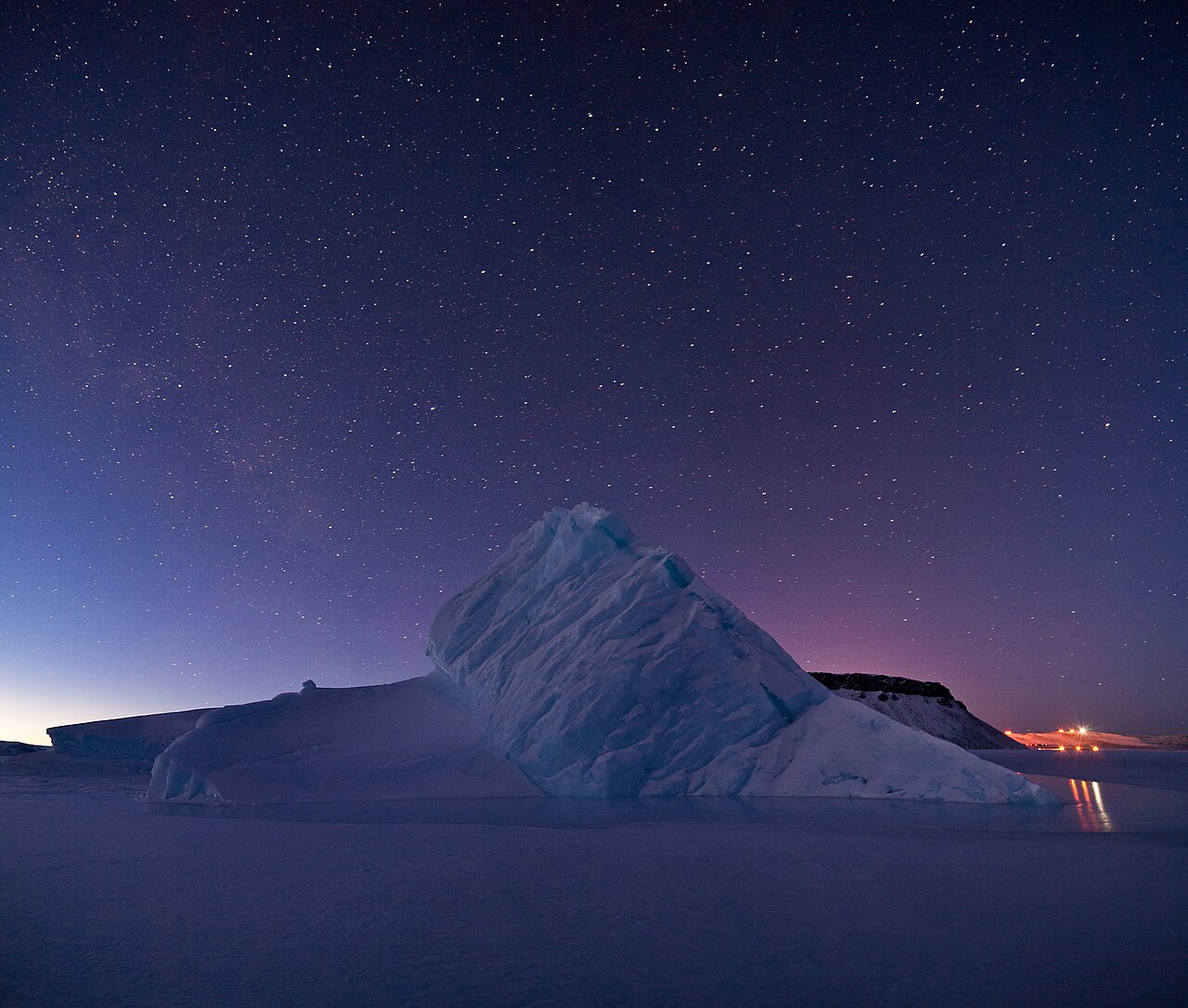
The Greenland Ice Sheet is the source of the island’s association with ice. According to the National Snow and Ice Data Center (NSIDC), it covers approximately 80% of Greenland, extending across roughly 1.7 million square kilometers and containing about 2.9 million cubic kilometers of ice.
The rest of the island is ice-free land, found mainly along the coast. Settlements, fjords and vegetation adapted to the Arctic climate are located in these coastal areas, particularly in the south and southwest, and tundra plants grow there during the short summer.
The interior of the island is dominated by the ice sheet.
Why Did Erik the Red Call It Greenland?
The origin of the name Greenland is recorded in The Saga of Erik the Red, a medieval Icelandic narrative about Norse exploration and settlement.
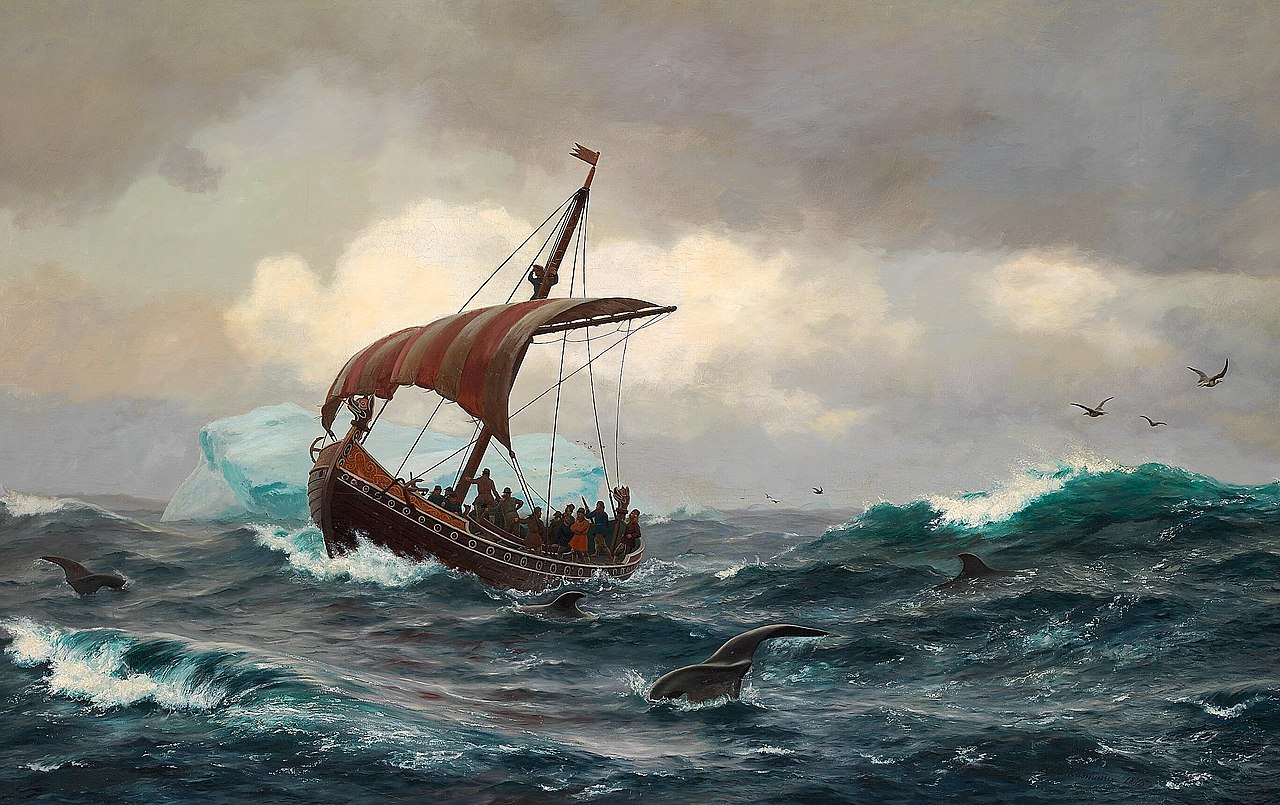
According to the record, Erik the Red explored Greenland in the late 10th century during his exile from Iceland, then returned to Iceland to recruit settlers. The saga explains that he named the land Greenland because, as the text puts it, “men will desire much the more to go there if the land has a good name”.
Around 985, Erik returned with settlers from Iceland, and Norse communities developed in southern and southwestern Greenland. The settlers established farming settlements and took part in wider North Atlantic trade networks. Walrus ivory was a major export to European markets over the following centuries.
A 2018 study titled “Ancient DNA Reveals the Chronology of Walrus Ivory Trade from Norse Greenland” published in Proceedings of the Royal Society B, analyzed DNA from archaeological walrus remains. It found that Greenland was likely the source of nearly all the sampled walrus ivory reaching western Europe between the 12th and 14th centuries.
The saga is a medieval account of these events and was written down after the period it describes. Erik’s reasons for the name are known from this account.
Iceland’s Political Status and Glaciers
Iceland is an independent republic. It became a sovereign kingdom in a personal union with Denmark in 1918 and declared itself a republic in 1944.
The country’s official tourism website, Visit Iceland, describes it as “the land of fire and ice,” with active volcanoes, extensive lava fields and glaciers. Its landscapes also include waterfalls and green valleys.
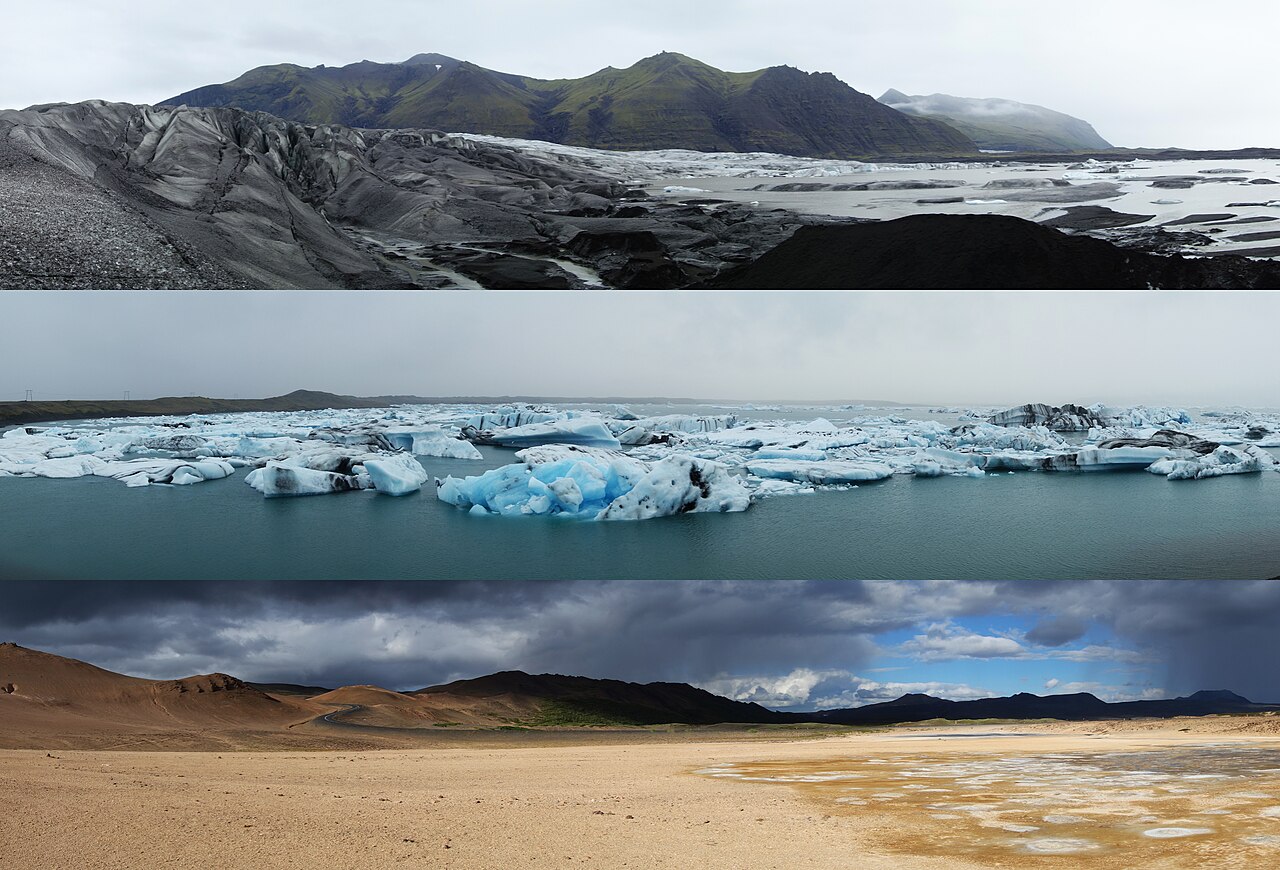
A 2020 study titled “A National Glacier Inventory and Variations in Glacier Extent in Iceland from the Little Ice Age Maximum to 2019” published in the journal Jökull found that Iceland’s glaciers covered approximately 10,400 square kilometers in 2019. Against a national area of 103,592 square kilometers, this represented roughly 10% of the country.
The study also found that Iceland’s glaciers had lost more than 2,200 square kilometers in area, or approximately 18%, since the end of the 19th century.
Lowland areas of Iceland have more continuous plant cover. Much of the highlands consists of sparsely vegetated or bare terrain, including volcanic rock, mountains, sand plains and glacial landscapes.
How Did Iceland Get Its Name?
Landnámabók, or the Book of Settlements, is a medieval Icelandic history of the Norse settlement of Iceland. An early version is thought to have been written in the 12th century, and the surviving versions date from later periods. It recounts how three Norse seafarers encountered the island during the ninth century, each giving it a different name.
According to Landnámabók, Naddoddr, a Norse seafarer traveling from Norway toward the Faroe Islands, was blown off course and reached Iceland. When snow fell on the island’s mountains in autumn, he named it Snæland, meaning Snowland.
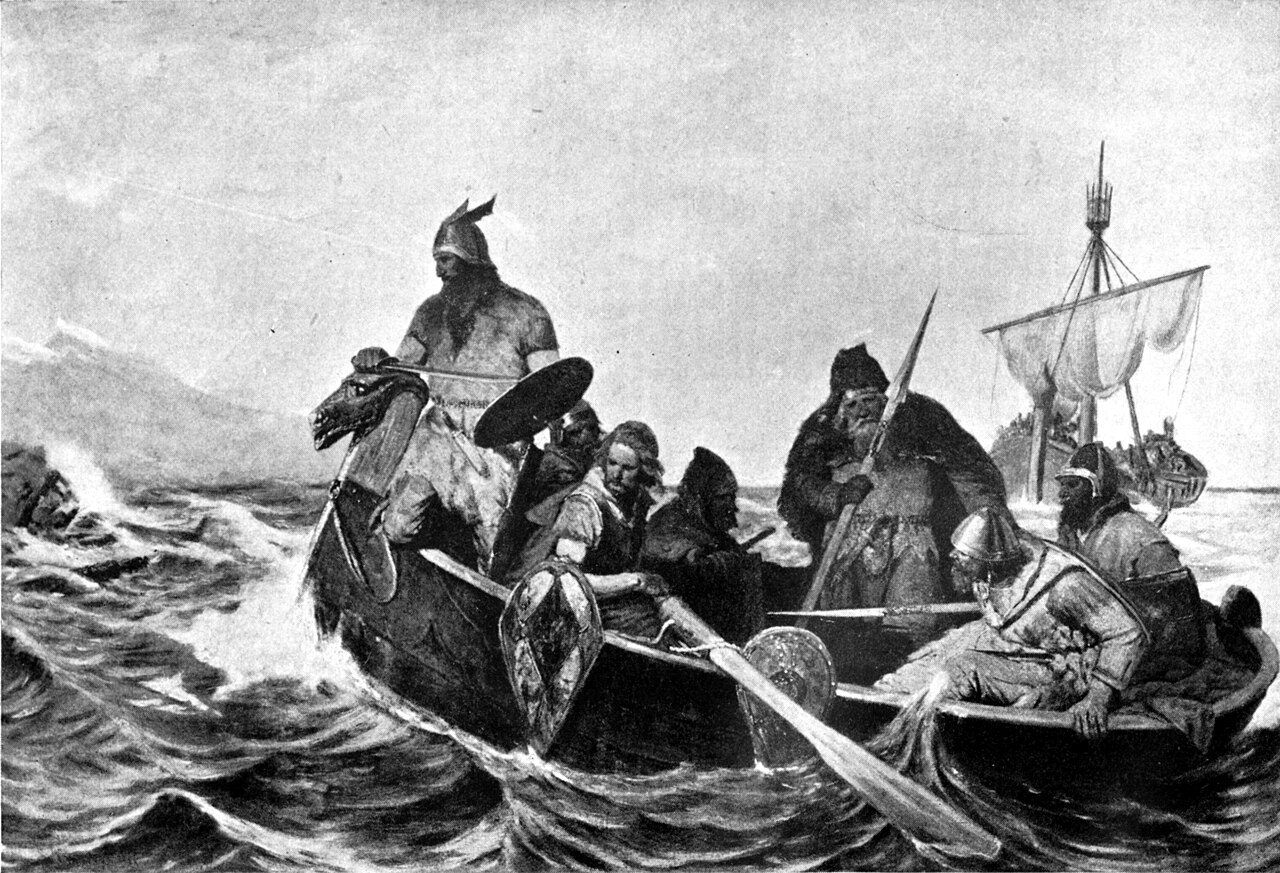
Garðarr Svavarsson, a Swedish-born seafarer, later sailed around the island and established that it was surrounded by water. He spent the winter in the north and named the island Garðarshólmi, meaning Garðarr’s Island.
The third seafarer was Hrafna-Flóki Vilgerðarson, whose nickname means Raven-Flóki. He released three ravens to help him find land. After reaching Iceland and spending a winter there, he climbed a mountain and saw a fjord filled with drift ice, and he called the island Ísland, meaning Iceland.
These naming accounts come from a medieval text written down centuries after the events it describes. The island’s name is Ísland in Icelandic and Iceland in English.
Summary
The names of Greenland and Iceland come from different accounts of the Viking Age.
According to The Saga of Erik the Red, Erik the Red named Greenland to attract settlers, and Landnámabók attributes the name Iceland to Hrafna-Flóki Vilgerðarson, who saw a fjord filled with drift ice.
Today, the Greenland Ice Sheet covers approximately 80% of Greenland, and glaciers cover roughly 10% of Iceland.
References
Hannesdóttir, H., Sigurðsson, O., Þrastarson, R. H., Guðmundsson, S., Belart, J. M. C., Pálsson, F., Magnússon, E., Víkingsson, S., Kaldal, I., & Jóhannesson, T. (2021). A national glacier inventory and variations in glacier extent in Iceland from the Little Ice Age maximum to 2019. Jökull, 2020(70), 1-34. https://doi.org/10.33799/jokull2020.70.001
Star, B., Barrett, J. H., Gondek, A. T., & Boessenkool, S. (2018). Ancient DNA reveals the chronology of walrus ivory trade from Norse Greenland. Proceedings of the Royal Society B: Biological Sciences, 285(1884), Article 20180978. https://doi.org/10.1098/rspb.2018.0978