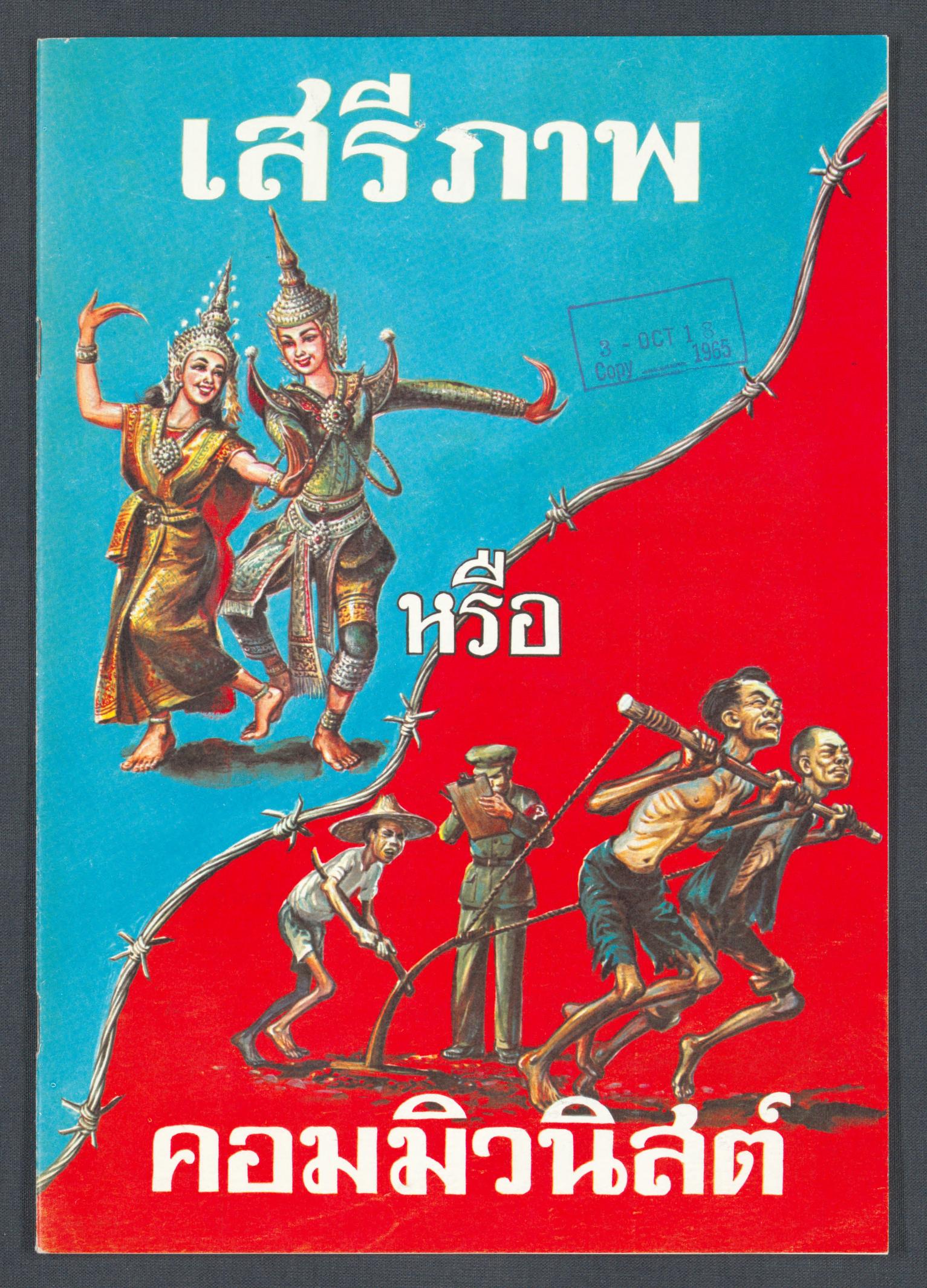
During the Cold War, the United States Information Agency (USIA) produced posters and comic books for distribution in Thailand, presenting depictions of life under communism and of what the materials described as “freedom”.
These materials formed part of American anti-communist public diplomacy in Southeast Asia during the 1960s. The USIA was the U.S. government agency responsible for public diplomacy, including cultural exchange and overseas information programs.
Original materials from this campaign are preserved in the Library of Congress’s Southeast Asian Rare Book Collection. According to The Library of Congress, the Communism or Freedom poster series dates to 1966, while the broader USIA Cold War era Thai collection containing posters and comic books spans 1965 to 1968.
Thailand and U.S. Strategy in Southeast Asia
Thailand was part of the United States’ Cold War strategy in Southeast Asia. As communist movements gained ground across the region, the U.S. government viewed their expansion as a security concern.
During the Vietnam War, the United States supported efforts to contain communist expansion in Indochina.
Thailand allowed U.S. forces to operate from its air and naval bases. A July 1969 U.S. Department of State briefing paper put the number of American military personnel in Thailand at about 48,000, including approximately 35,000 Air Force personnel. Most of the U.S. military presence was tied to air operations in Vietnam and Laos.
Around 80 percent of U.S. Air Force airstrikes against North Vietnam originated from bases in Thailand. Historian Richard A. Ruth records that Thailand sent 37,644 military personnel to South Vietnam between 1965 and 1972 to fight alongside U.S. and South Vietnamese forces.
The U.S. also used public diplomacy to win support for its position in the region and challenge communist influence. The USIA, established in 1953, played a central role in these efforts by producing and distributing materials abroad that presented American policies and values favorably.
The “Freedom or Communism” Campaign
Freedom or Communism was a USIA poster series produced for distribution in Thailand. The posters are dated 1966. According to the Library of Congress, its Southeast Asian Rare Book Collection holds 13 posters from the series and two comic books reproducing them.
The posters compared depictions of life under communism with life in Thailand, which the series presented as a model of “freedom”. The comparisons covered everyday activities and social life. One poster showed forced labor under communism next to family based agricultural work in Thailand.
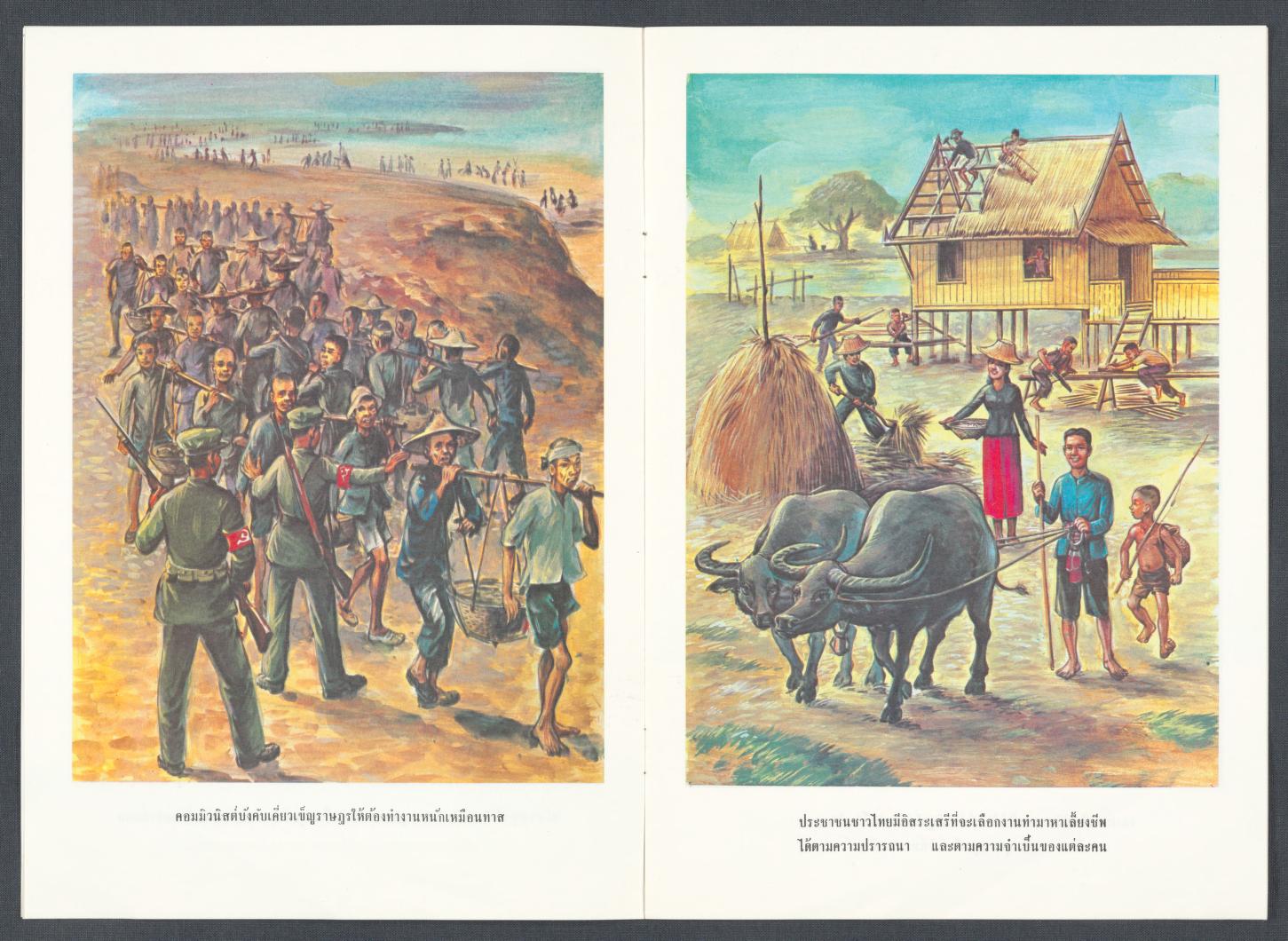
Another depicted communist authorities separating families, while the Thai side showed family members living together in a peaceful setting.
The series also addressed religion, with one poster depicting communist authorities destroying a religious facility and taking monks away, paired with people worshipping at a Thai temple. Other posters portrayed restrictions on movement under communist governments, set against the freedom to travel within Thailand.
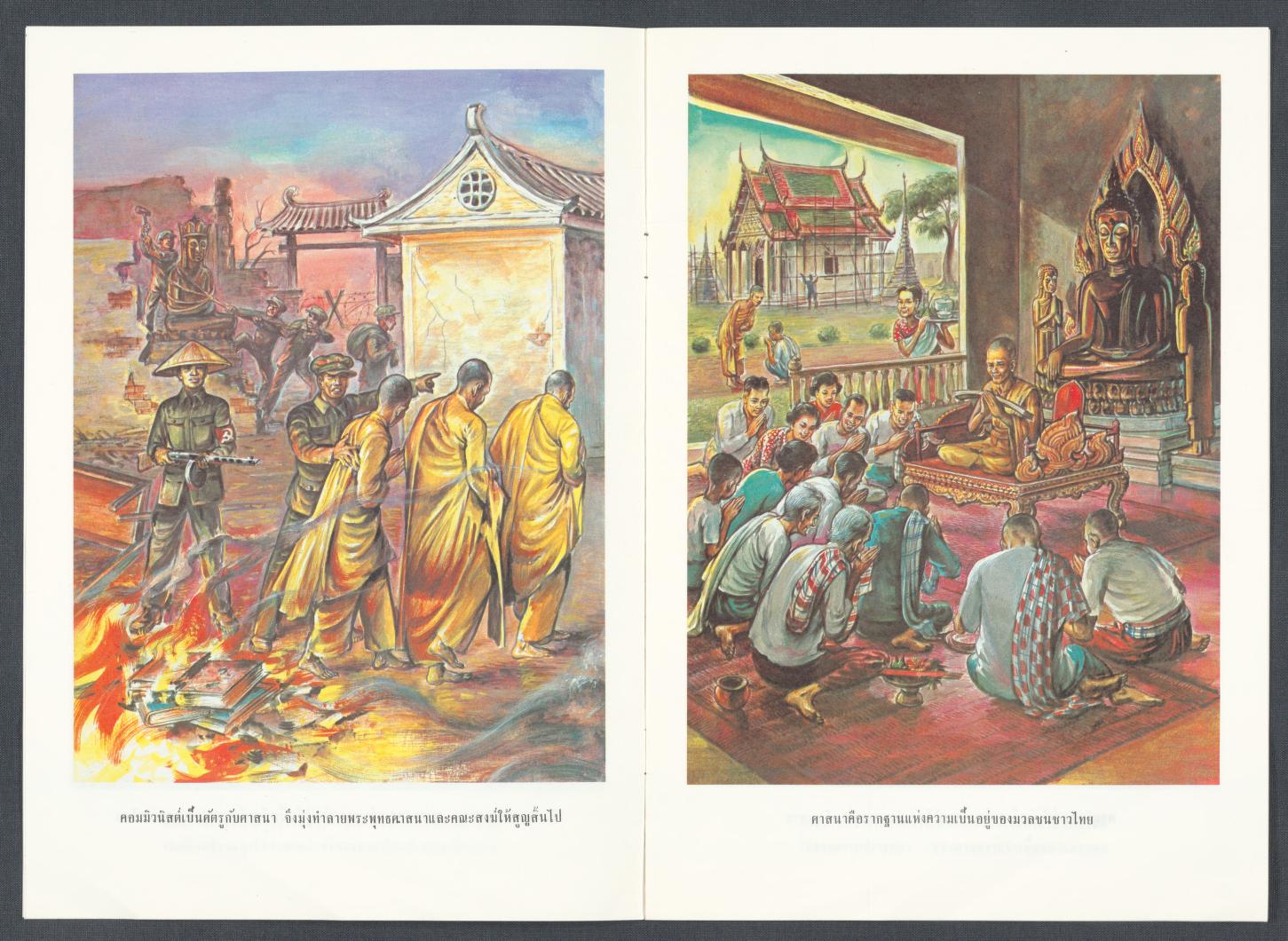
Together, the posters presented Thailand as a place of security, family unity, religious freedom and personal choice, while portraying communism as a threat to these aspects of everyday life.
Production and Distribution
The Library of Congress also holds two comic books reproducing the poster series, showing that the images appeared in more than one printed format.
The collection includes information sheets documenting how its materials were produced and distributed. According to the Library of Congress, the sheets record printing locations, dates, print runs and intended destinations. The records show that the materials were printed in Manila and sent to U.S. embassies in the countries where they were to be distributed.
Some materials intended for Thailand had print runs of hundreds of thousands of copies. These figures varied by item and do not represent the circulation of the two comic books alone.
What the Collection Shows
The Freedom or Communism series shows one way the United States presented its position to audiences in Thailand during the Cold War, through illustrated comparisons of family life, religion, work, travel and freedom.
The surviving materials document the messages the USIA produced for distribution in Thailand. They contain no record of how Thai audiences responded or whether the series affected their political beliefs.