Russia and China today describe their relationship as a strategic partnership, with cooperation on economic, diplomatic and security matters. In 1969, the Soviet Union and China came close to war.
In 1969, Soviet and Chinese forces engaged in deadly clashes along their disputed border, an episode in what is widely known as the Sino-Soviet split. The crisis became grave enough that American officials assessed whether Moscow might strike China’s nuclear facilities.
It should be noted that the state involved at the time was the Soviet Union, of which Russia was the largest republic, and not the Russian Federation established in 1991.
The Break Between Moscow and Beijing
After the People’s Republic of China was founded in 1949, the Soviet Union became its most important communist partner.
Mao Zedong, the leader of the Chinese Communist Party who established the new government, relied on Soviet aid and expertise to help build Chinese industry. In the Soviet Union, Nikita Khrushchev succeeded Joseph Stalin as the country’s leader in 1953.
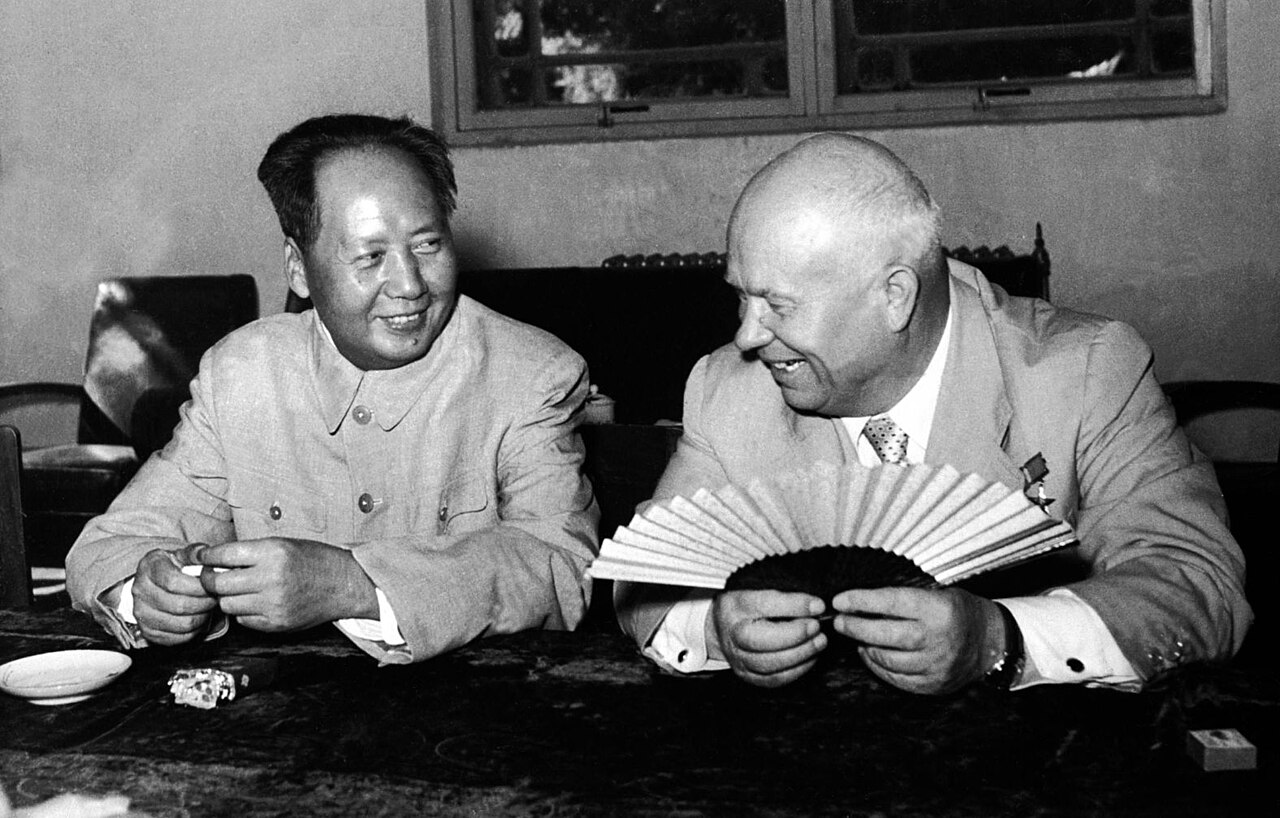
Although both Mao and Khrushchev led communist states, their relationship began to deteriorate as they disagreed over the direction of communism and relations with the West.
One major turning point came in 1956, when Khrushchev denounced Stalin’s personality cult and abuses of power in a landmark speech. Mao objected to aspects of this reassessment, which challenged the legacy of a leader who had shaped the Soviet model of communism.
The two also clashed over Khrushchev’s policy of “peaceful coexistence” with capitalist countries. Mao viewed Moscow’s approach toward the U.S. as too conciliatory and inconsistent with revolutionary principles. Rivalry over leadership of the international communist movement, alongside disagreements over military cooperation and national security, widened the divide.
A 2012 study titled “Between Aid and Restriction: The Soviet Union’s Changing Policies on China’s Nuclear Weapons Program, 1954-1960” published in Asian Perspective, found that Moscow’s nuclear assistance to China became increasingly limited as relations between the two countries deteriorated. The following year, Soviet recalled its technical advisers and ended its broader economic assistance.
By the early 1960s, the dispute had escalated into open ideological attacks. Khrushchev’s removal from power in 1964 did little to improve relations under his successors, Leonid Brezhnev and Alexei Kosygin.
The breakdown in relations also deepened longstanding territorial disputes along the Sino-Soviet border.
Fighting on Zhenbao Island
Soviet and Chinese forces clashed on Zhenbao Island in the Ussuri River on March 2, 1969. The Soviet Union called it Damansky Island, and both countries claimed it. Fighting resumed on March 15.
A 2018 study titled “Organizational Limits in Strategic Implementation: Revisiting the Cause of the Chinese Gunfire on Soviet Borderguards in Zhenbao Island” published in Military History, examines evidence that Chinese troops initiated the March 2 clash by ambushing Soviet border guards, while questioning whether the attack was directly ordered by China’s central leadership.
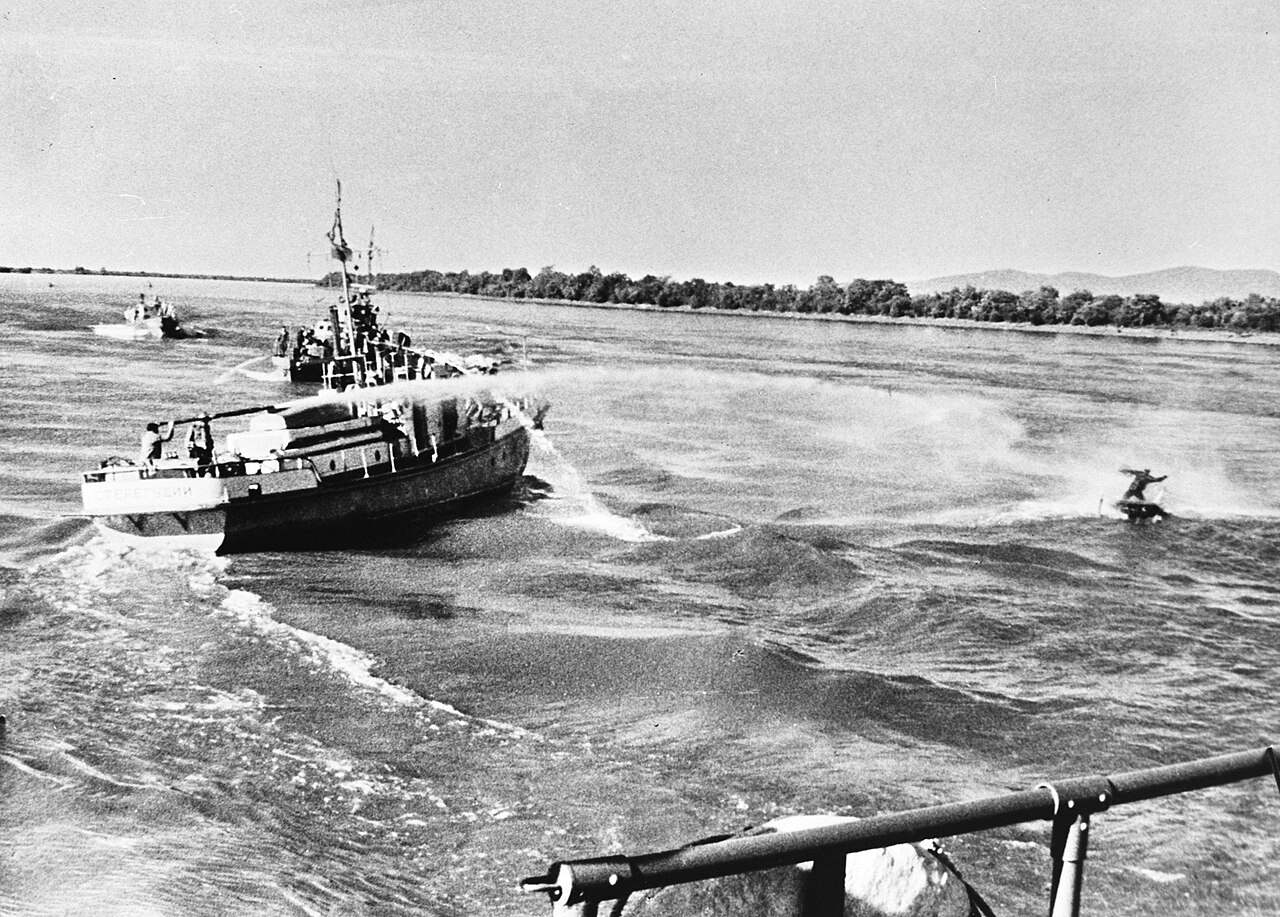
The clashes followed years of worsening relations, rival territorial claims and a military buildup along the border. On August 13, another clash broke out in the Tielieketi area of Xinjiang, on the western section of the frontier. It caused casualties, though reported figures vary across accounts.
With the fighting no longer confined to the Ussuri River, there was growing worry that further incidents could escalate into a wider war.
Washington had already taken that risk seriously. A U.S. National Intelligence Estimate dated August 12, 1969, concluded that “for the first time, it is reasonable to ask whether a major Sino-Soviet war could break out in the near future”.
The assessment reflected concern that the deterioration in relations and continued border clashes could trigger a much larger conflict.
Washington Weighs a Soviet Strike on China
Both countries had nuclear weapons, raising the stakes well beyond conventional fighting. China conducted its first nuclear test in 1964, while the Soviet Union possessed a far larger and more established nuclear arsenal.
American officials considered whether Moscow might attempt to destroy China’s emerging nuclear capabilities before they became a greater threat.
On August 18, 1969, Soviet Embassy Second Secretary Boris Davydov asked a U.S. State Department official how Washington would react if the Soviet Union attacked and destroyed China’s nuclear installations, according to an official memorandum of their conversation.
On September 10, 1969, Secretary of State William Rogers sent President Richard Nixon a memorandum titled “The Possibility of a Soviet Strike Against Chinese Nuclear Facilities” Rogers outlined the risks, including the possibility of an all out war, the failure to destroy China’s entire nuclear arsenal, and Beijing’s determination to rebuild its capabilities.
American assessments did not conclude that a Soviet strike was inevitable. Rogers wrote that his advisers considered such an attack unlikely, partly because of the risk of a wider war and uncertainty over whether the strike could eliminate China’s nuclear capabilities.
The Kosygin-Zhou Meeting at Beijing Airport
Diplomacy helped prevent the confrontation from escalating into a full-scale war.
On September 11, 1969, Soviet Premier Alexei Kosygin met Chinese Premier Zhou Enlai at Beijing airport while returning from Ho Chi Minh’s funeral in Hanoi. The meeting took place at Moscow’s request, and the two leaders discussed the border crisis and ways to prevent further armed clashes.
The meeting did not resolve the territorial dispute, but it helped ease immediate tensions and paved the way for renewed negotiations. According to China’s Ministry of Foreign Affairs, border talks resumed in Beijing on October 20, 1969. The immediate crisis subsided, but the underlying rivalry and unresolved border claims persisted for decades.
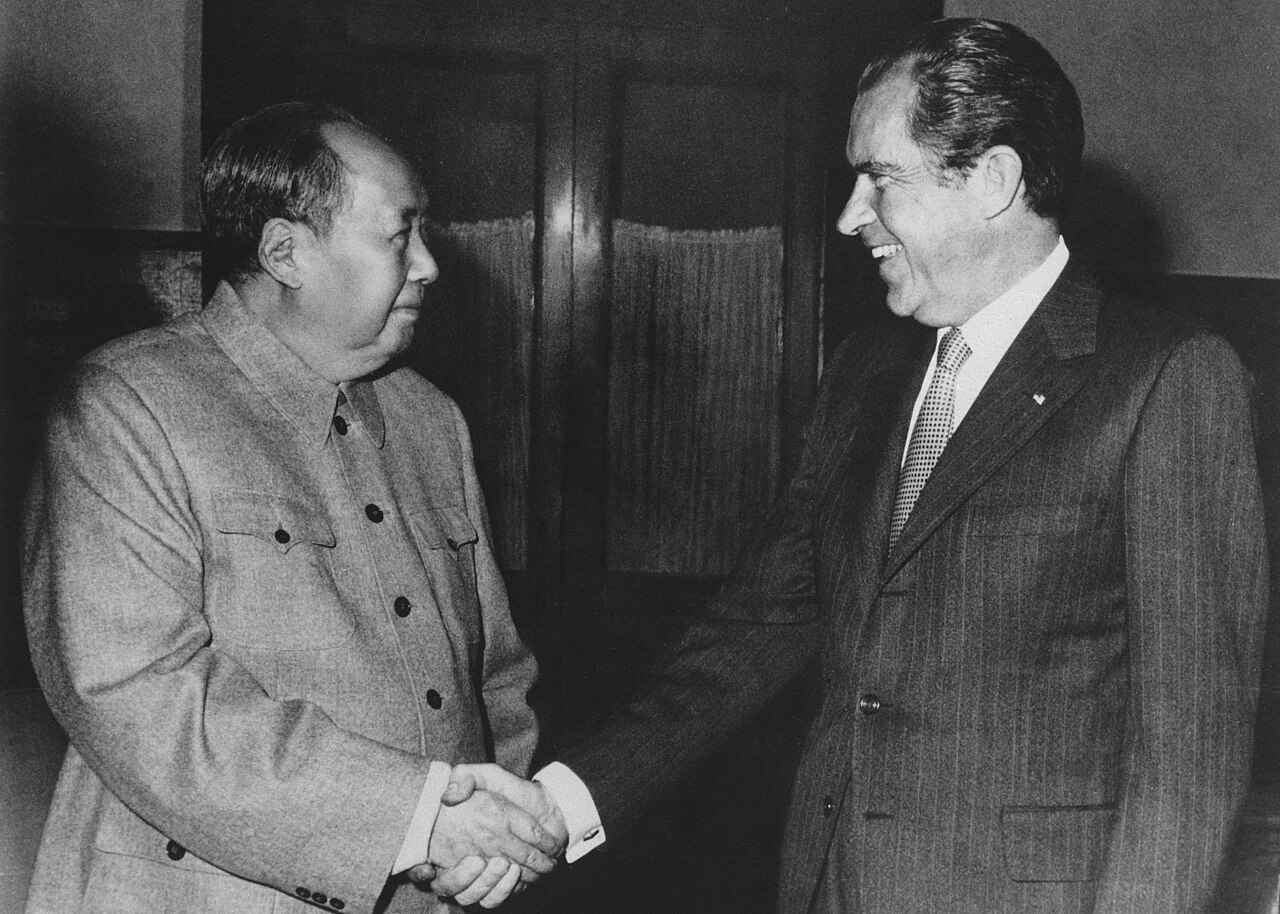
The confrontation also unfolded amid a broader geopolitical shift. The growing split between Beijing and Moscow helped create an opening for closer U.S.-China relations, culminating in President Richard Nixon’s visit to China in February 1972.
Normalization and the Border Settlement
China and the Soviet Union normalized relations in May 1989, when Mikhail Gorbachev visited Beijing. The visit ended decades of open hostility between the two governments, and the border dispute was still unresolved at that point.
In May 1991, the two sides signed an agreement on the eastern section of the border. The Soviet Union dissolved later that year, and Russia continued the border negotiations with China. A supplementary agreement signed in 2004 covered the remaining disputed sections and established the legal course of the entire border.
Marking the border on the ground took several more years. In July 2008, China and Russia signed additional documents finalizing the demarcation of the eastern section, which completed the settlement of a territorial dispute that had lasted for decades.
Relations between the two countries then developed into a strategic partnership covering economic, diplomatic and security cooperation.
References
Shen, Z., & Xia, Y. (2012). Between aid and restriction: The Soviet Union’s changing policies on China’s nuclear weapons program, 1954-1960. Asian Perspective, 36(1), 95-122. https://doi.org/10.1353/apr.2012.0003
Park, S. (2018). Organizational limits in strategic implementation: Revisiting the cause of the Chinese gunfire on Soviet borderguards in Zhenbao Island. Military History, (107), 147-192. https://doi.org/10.29212/mh.2018..107.147