Have you watched Sully, the 2016 film starring Tom Hanks? It tells the true story of Captain Chesley “Sully” Sullenberger, who landed a passenger plane on New York’s Hudson River after both engines lost power following a bird strike in January 2009. The emergency landing saved all 155 people on board.
Seven years before the Hudson River landing, a Garuda Indonesia Boeing 737 made an emergency landing on the Bengawan Solo River in Central Java. Both of the aircraft’s engines had stopped working, and the landing took place on January 16, 2002.
Of the 60 people on board, 59 survived and one cabin crew member died.
Flight GA421 and the Loss of Both Engines
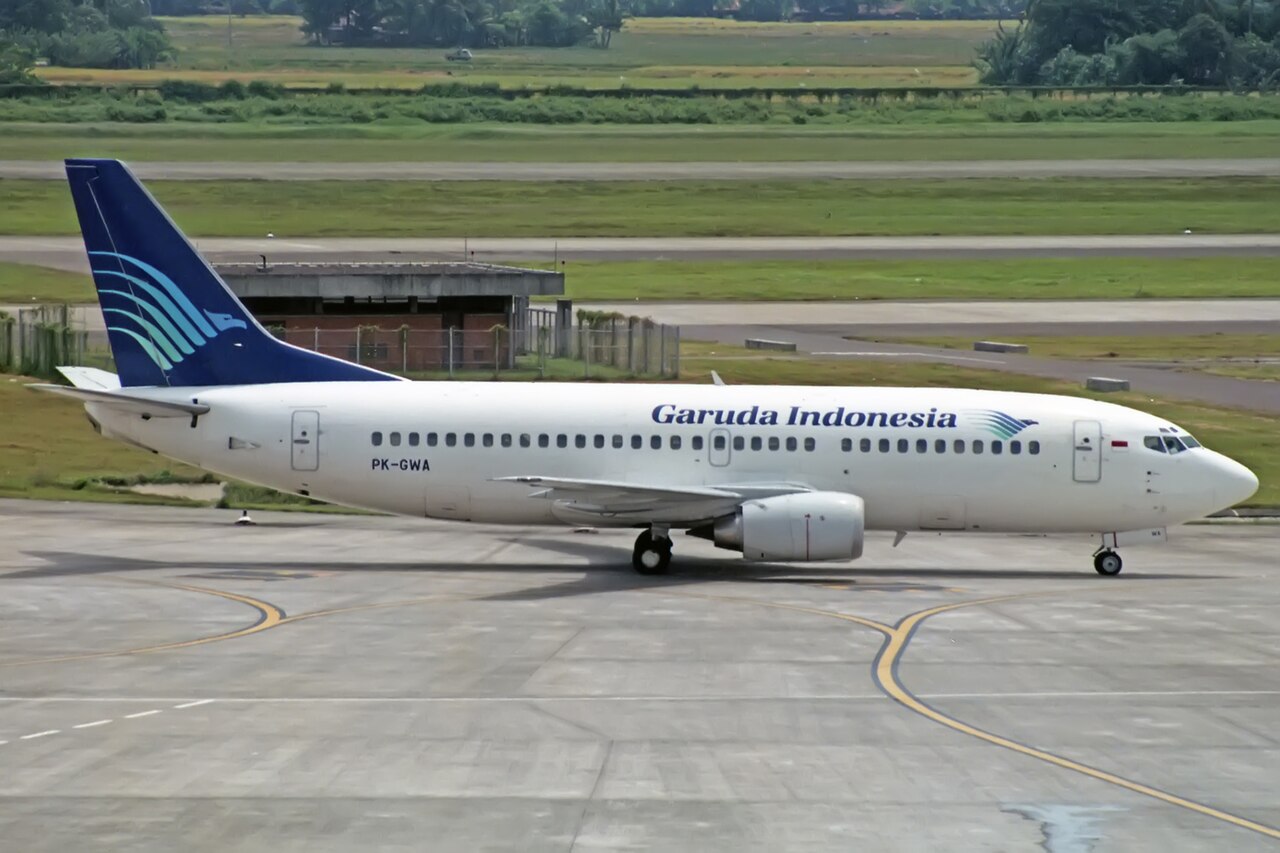
The aircraft involved was Garuda Indonesia Flight GA421, a Boeing 737-300 registered as PK-GWA. It was flying from Ampenan, Lombok, to Yogyakarta, carrying 54 passengers and six crew members.
The flight was commanded by Captain Abdul Rozaq, with First Officer Haryadi Gunawan serving as co-pilot.
During the flight, the aircraft encountered severe weather, including heavy rain, hail and severe turbulence associated with cumulonimbus clouds. As it passed through the storm, both engines suffered a flameout, meaning their combustion processes stopped and they could no longer produce thrust.
The pilots attempted to restart the engines at least twice, but their efforts were unsuccessful. They also attempted to start the auxiliary power unit, or APU. During this attempt, the crew experienced a complete loss of electrical power. The subsequent investigation found that the aircraft's battery could not maintain sufficient power, a problem associated with inadequate battery maintenance procedures.
With both engines no longer producing thrust, the aircraft continued to lose altitude. The pilots had to find a suitable place to land while dealing with multiple emergency situations, including the loss of electrical power.
According to Indonesia's National Transportation Safety Committee (KNKT), the aircraft descended through the clouds into visual meteorological conditions at approximately 2,400 meters. The captain then spotted the Bengawan Solo River and decided to attempt an emergency landing on the river.
The Ditching on the Bengawan Solo River
The pilots decided to attempt a ditching, the aviation term for making an emergency landing on water.
They kept the landing gear retracted and the flaps up as they prepared to land. Without flaps, the aircraft had to approach the water at a higher speed than it would have with flaps extended.
The aircraft touched down on the Bengawan Solo River between two iron bridges and came to a stop with part of its fuselage submerged. Its underside suffered substantial damage when it struck the shallow riverbed, particularly toward the rear of the fuselage.
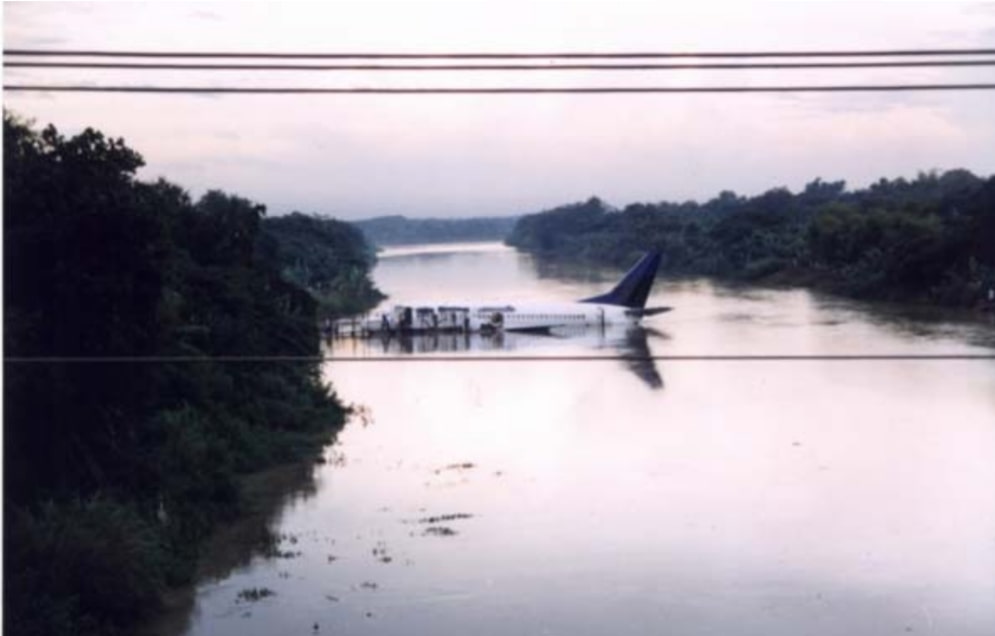
Although the ditching was successful in bringing the aircraft to a stop, the impact caused significant structural damage. Part of the rear lower fuselage separated, including structures associated with the rear lavatories and the area where two flight attendants were seated.
Casualties and Investigation Findings
There were 60 people aboard GA421, made up of 54 passengers and six crew members. According to the KNKT’s final investigation report, 59 survived, while one cabin crew member died as a result of the impact.
The NTSB’s 2005 safety recommendation letter recorded 12 passengers with serious injuries and 10 with minor injuries. Although the aircraft successfully ditched in the Bengawan Solo River, the accident resulted in a fatality, multiple injuries and substantial damage to the aircraft.
The investigation examined the weather conditions, the dual-engine flameout, the aircraft’s systems and the crew’s actions. The NTSB raised concerns about the crew’s reported compliance with Boeing’s operating procedures. In particular, Boeing’s procedures stated that the auxiliary power unit (APU) should be started without waiting for successful engine restarts.
The NTSB also noted that the crew waited only about one minute between restart attempts, even though the engines could take up to three minutes to accelerate to idle in moderate to heavy rain.