Indonesia once had 12 submarines. Today it has four.
The 12 arrived between 1959 and 1962, bought from Moscow at a time when no other navy in Southeast Asia operated a single submarine. Thailand had retired its last boats in 1951, leaving the region without any underwater force for years. Indonesia filled that gap in a single buying spree.
Then the Soviet connection broke. Within three decades, every one of them was gone.
Twelve Boats in Three Years
Indonesia’s submarine story began in Surabaya on September 12, 1959, when two Soviet-built Whiskey-class boats arrived and entered service as RI Tjakra and RI Nanggala. Their arrival also marked the founding of the Navy’s Submarine Corps, Korps Hiu Kencana.
Moscow supplied the rest. Four more submarines came in 1961 and six in 1962, bringing the fleet to 12 Whiskey-class boats in barely three years.
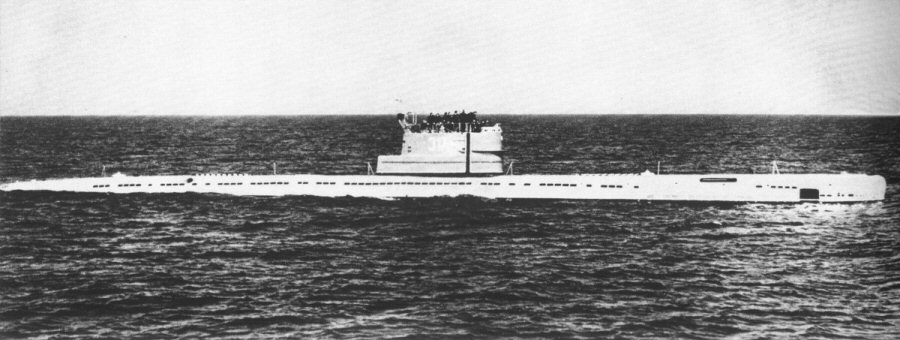
The speed reflected Sukarno’s priorities. Jakarta was modernizing its armed forces while preparing to confront the Netherlands over West New Guinea, which was still under Dutch administration, and the submarines were a central part of that buildup.
Despite their Soviet origins, the boats carried distinctly Indonesian names drawn from wayang, including Nagabanda, Trisula, Nagarangsang, Tjandrasa, Widjajadanu, Hendradjala, Bramasta, Pasopati, Tjundamani, and Alugoro.
Beneath the Dutch Patrols
The submarines arrived just as Indonesia launched Operation Trikora in December 1961, a campaign to take West New Guinea from the Dutch. Most of their work happened out of sight, in patrols, reconnaissance, and covert missions.
The most notable came in August 1962, when three submarines tried to reach the northern coast of West New Guinea. Dutch naval patrols intercepted two of them. RI Tjandrasa slipped through and, on August 21, put 15 Special Forces members ashore near Tanah Merah, north of Sentani Airport.
Those involved were later awarded the Bintang Sakti, an Indonesian military decoration recognising exceptional courage and heroism in carrying out military operations.
The fleet was still in service when Konfrontasi with Malaysia began, and it remained part of Indonesia’s naval strength through that confrontation.
A Fleet That Ran Out of Parts
The fleet’s decline began with the political upheaval of 1965. Relations between Jakarta and Moscow soured, military cooperation broke down, and the supply of Soviet spare parts dried up. Without them, keeping the Whiskey-class boats running became harder each year.
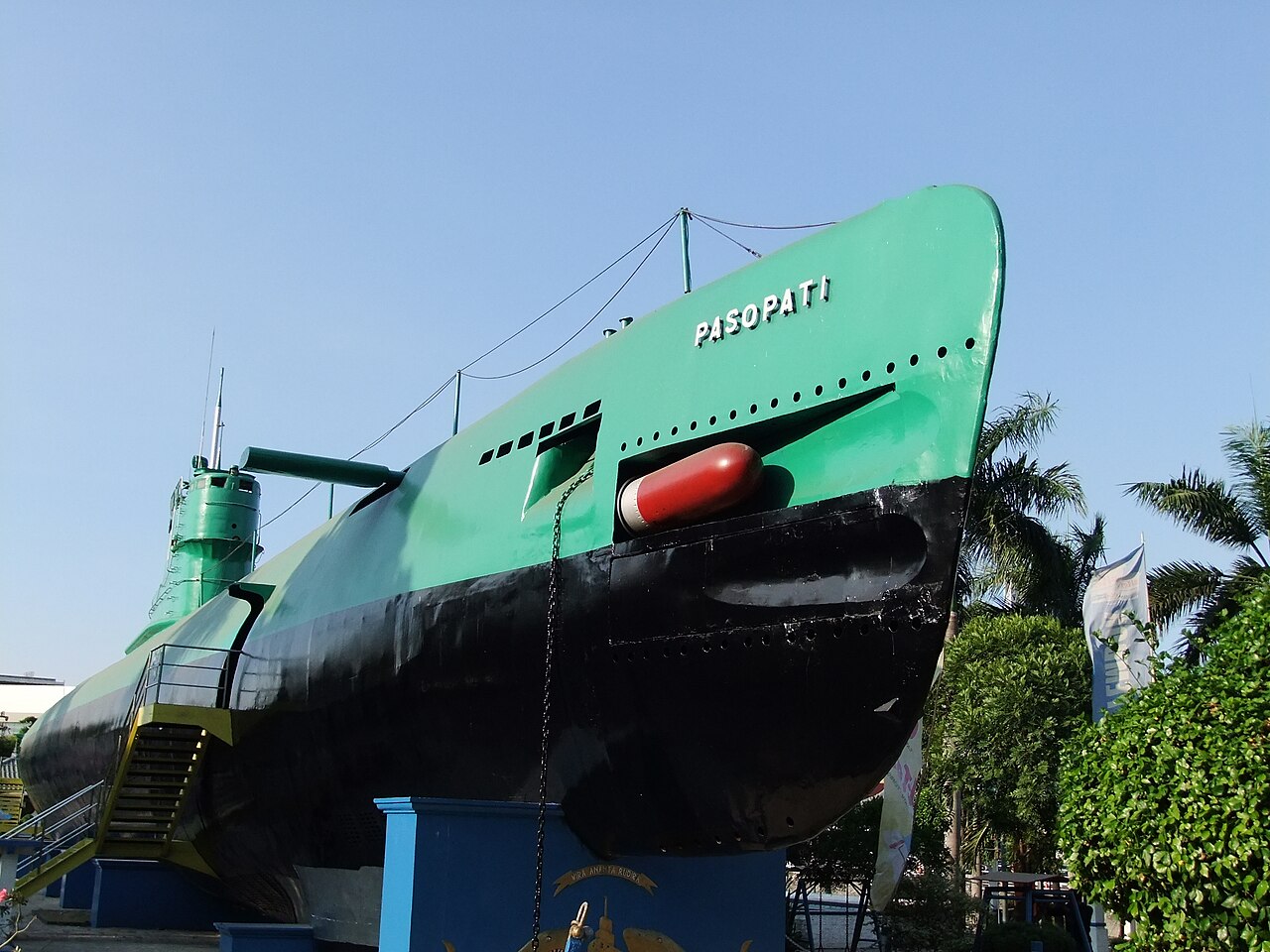
The submarines left service gradually. The last of them, KRI Pasopati, was decommissioned on January 25, 1990, and now sits in Surabaya as a submarine monument.
Indonesia had already turned to Germany by then. In 1981, nearly a decade before Pasopati’s retirement, the Navy took delivery of KRI Cakra and KRI Nanggala, two Type 209/1300 boats built in West Germany.
Indonesia's Submarine Fleet Today
Indonesia now operates four submarines, a third of what it fielded in the early 1960s.
The oldest is the KRI Cakra. The other three are South Korean-built Nagapasa-class boats, KRI Nagapasa, KRI Ardadedali, and KRI Alugoro, all based on the Improved Chang Bogo design.
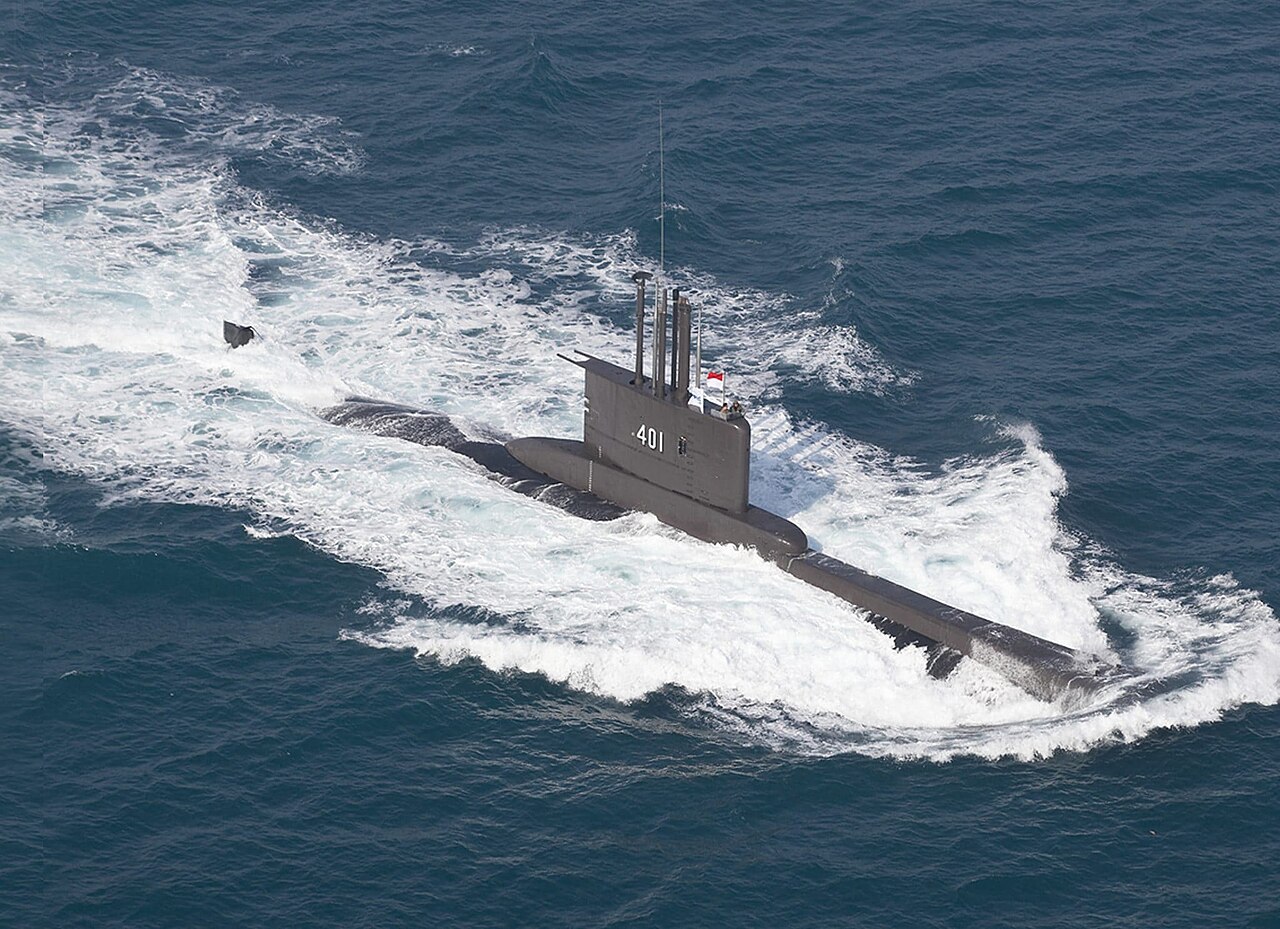
Their Improved Chang Bogo design is itself a derivative of the German Type 209, which means all four boats trace back to the same family. Alugoro was assembled at PT PAL’s shipyard in Surabaya, and it carries the name of one of the original 12 Whiskey-class boats.
The loss of KRI Nanggala killed all 53 people aboard during a training exercise. Its name had first belonged to one of the two Whiskey-class boats that founded the Submarine Corps in 1959.
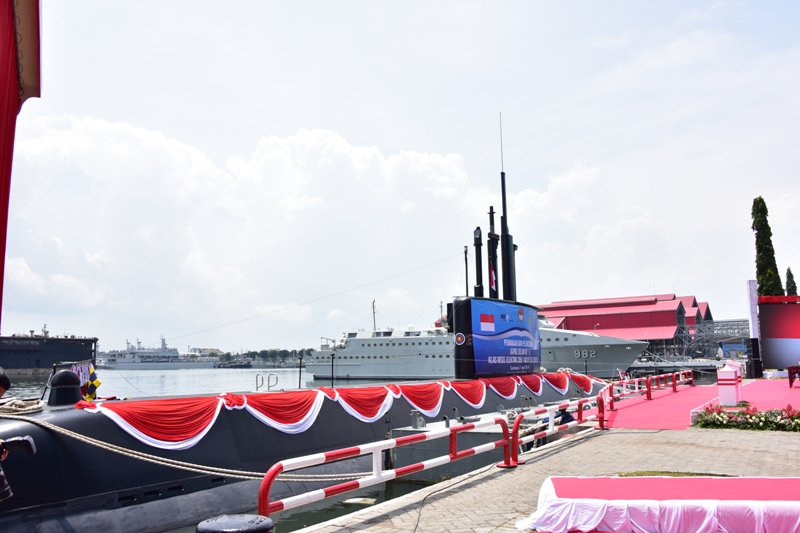
Replacements are on the way, but not soon. A contract for two Scorpene Evolved submarines from France’s Naval Group entered into force in July 2025, and both will be built at PT PAL under a technology-transfer program.
Construction of the first began in August 2026. As of that month, the Navy’s inventory remained at four. The first Scorpene is expected in 2032 and the second in 2033.