

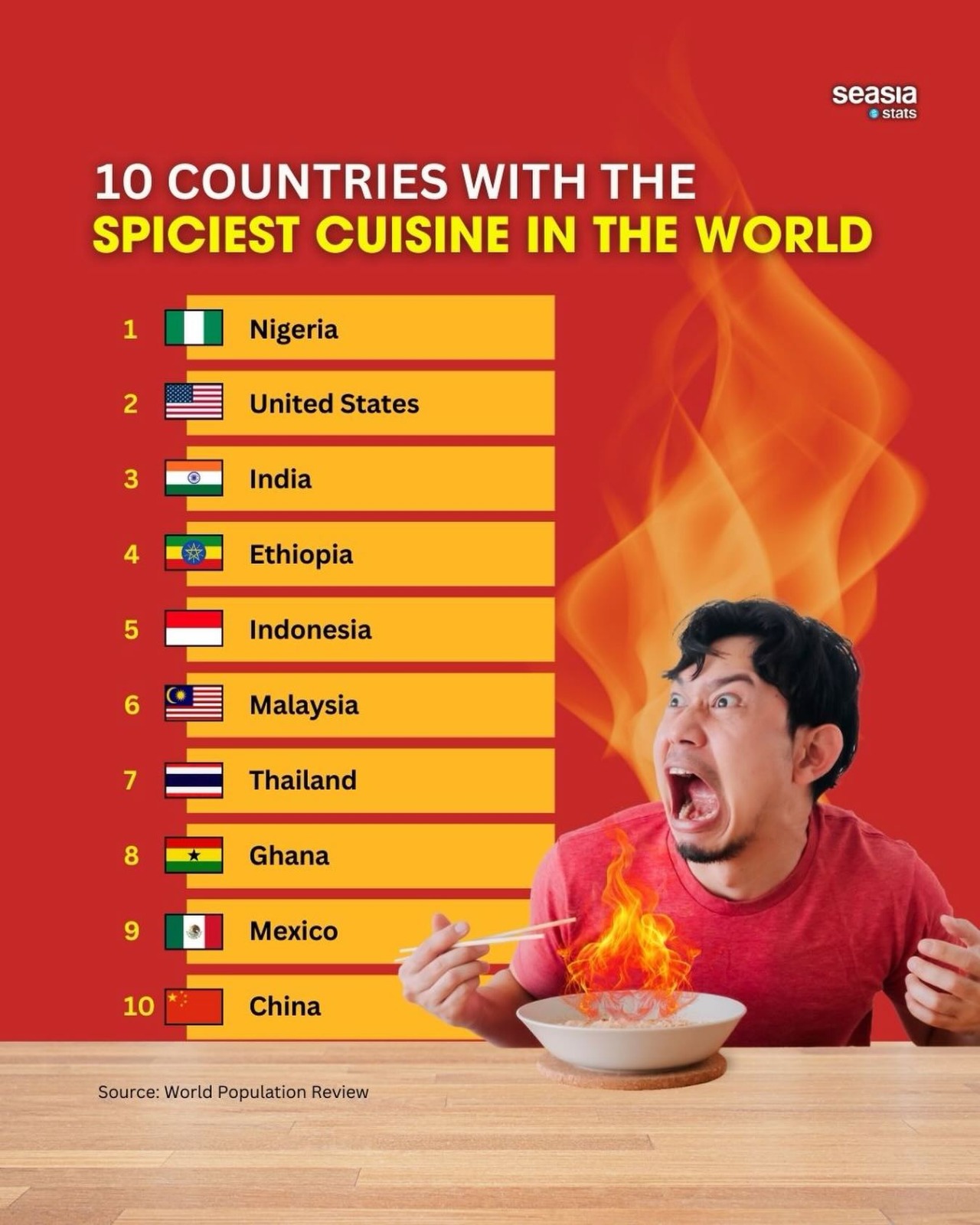
From fiery street food to slow-cooked chili stews, spice has become one of the world’s most beloved culinary signatures. In 2026, new data from World Population Review and Seasia Stats highlights the countries where heat truly reigns supreme—and the results reveal a fascinating global map of flavor. At the center of this story is a strong Southeast Asian presence, where spice is not just an ingredient but a cultural identity.
Nigeria Leads the Heat Index
Taking the top spot is Nigeria, widely recognized for its unapologetically bold and chili-forward cuisine. Nigerian dishes such as suya—spiced, flame-grilled skewers—and pepper soup are built around the intense heat of Scotch bonnet peppers. These ingredients are used generously, creating dishes that are as fiery as they are flavorful, making Nigeria the world’s undisputed champion of spice.
The United States and India: A Tale of Two Spice Traditions
In second place, the United States may come as a surprise. But its thriving hot-sauce culture, regional cuisines like Cajun and Tex-Mex, and its role in cultivating ultra-hot peppers like the Carolina Reaper and Pepper X have cemented its place on the list. American diners have embraced spice not just as a flavor, but as an experience—often pushing heat levels to extreme limits.
India, ranking third, represents a more traditional approach to spice. Its cuisine is rooted in centuries-old spice blending techniques, with dishes like Vindaloo and Phaal curry delivering deep, layered heat through complex masalas. Here, spice is both art and science, combining intensity with balance.
Ethiopia and the African Heat Belt
Ethiopia’s fourth-place ranking showcases another distinct spice tradition. The country’s signature berbere spice mix—blending chili, garlic, ginger, and aromatic herbs—defines the rich, slow-simmered stews known as wats. Across Africa, spice is deeply tied to history, agriculture, and communal cooking traditions.
Southeast Asia: The Global Heart of Spicy Cuisine
At the center of the global spice conversation is Southeast Asia, where Indonesia, Malaysia, and Thailand rank fifth, sixth, and seventh respectively. These countries are globally celebrated for harmonizing heat with fragrance, sweetness, and acidity.
Indonesia’s culinary identity is inseparable from sambal, a chili-based condiment with hundreds of regional variations. From sambal terasi to sambal matah, each version reflects local ingredients and traditions. Malaysia’s cuisine blends Malay, Chinese, and Indian influences, resulting in dishes like sambal belacan and spicy laksa that combine heat with complex aromatics. Thailand, meanwhile, is famous for its balance of sweet, sour, salty, and spicy flavors. Dishes from the Isan region, such as som tam (papaya salad), and green curries packed with bird’s-eye chilies deliver some of the most intense heat experiences in the world.
Beyond these three, other Southeast Asian nations also embrace spice in unique ways. The Philippines incorporates chilies into dishes like Bicol Express, while Vietnam uses fresh chilies and chili sauces to elevate soups like bun bo Hue. Even in Singapore and Brunei, chili-based sauces remain a central part of everyday meals.
The Final Fiery Contenders
The final spots in the top ten go to Ghana, Mexico, and China. Ghana’s pepper sauces and spicy stews bring bold West African heat, while Mexico—home to many of the world’s original chili varieties—continues to influence global cuisine through its salsas and habanero-based dishes. China rounds out the list with Sichuan’s famous “mala” flavor, combining chili heat with the numbing sensation of Sichuan peppercorns.
A World United by Spice
From Africa to Asia to the Americas, spice connects cultures across continents. Yet it is Southeast Asia that stands out as a vibrant center of this global passion. In the region, spice is not simply about heat—it is about balance, heritage, and identity. And as global tastes continue to evolve, the world’s appetite for bold, spicy flavors shows no signs of cooling down.


