


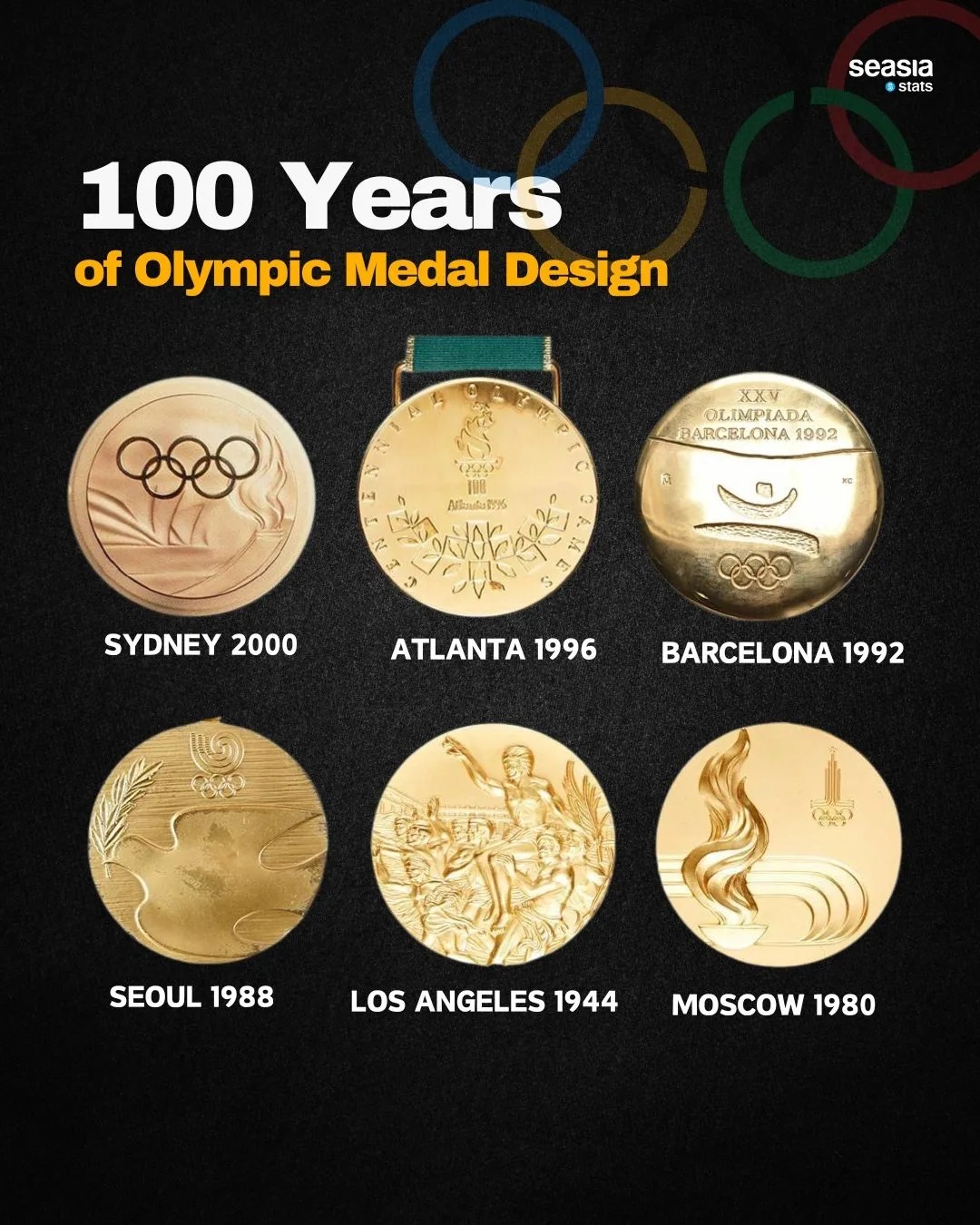
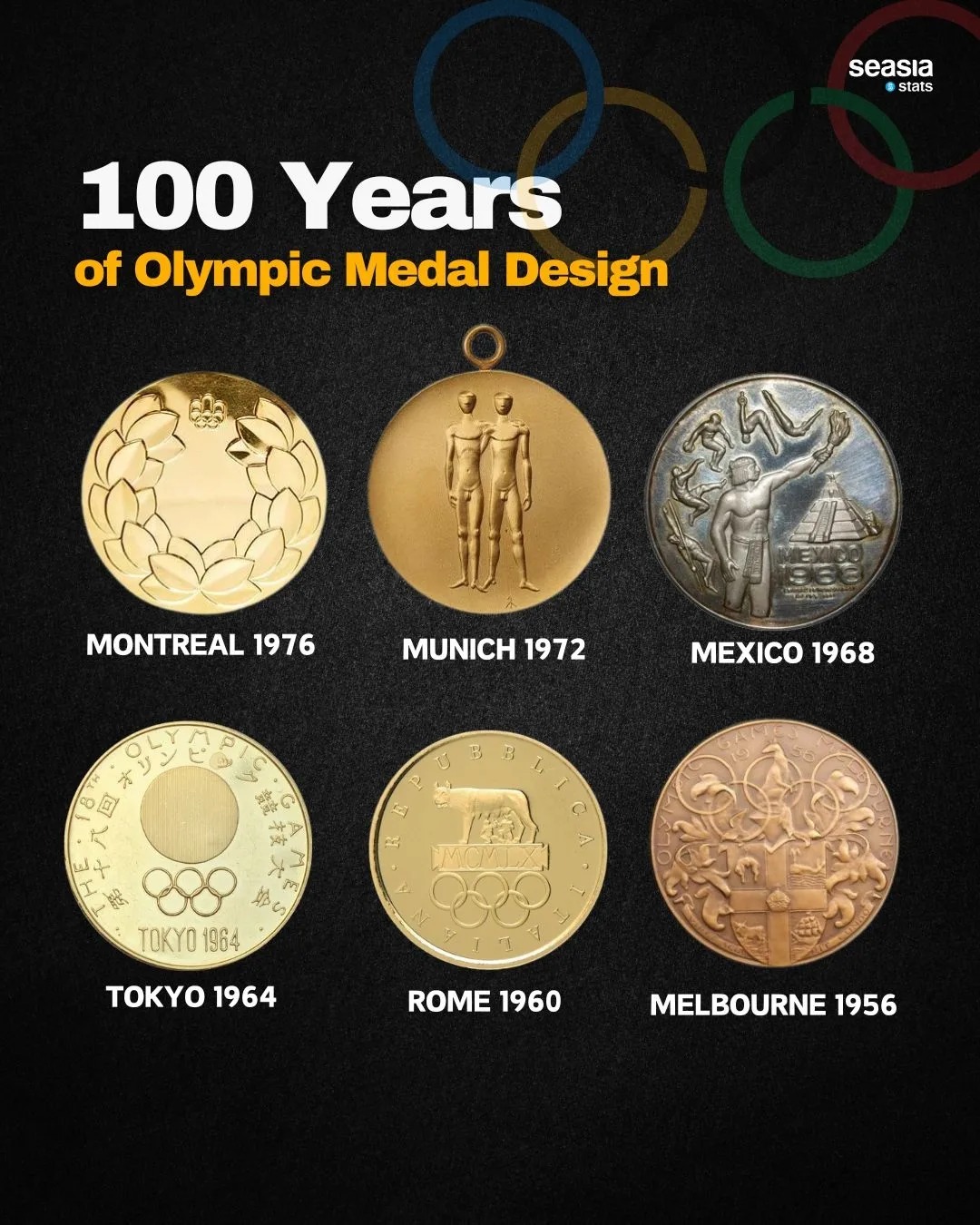
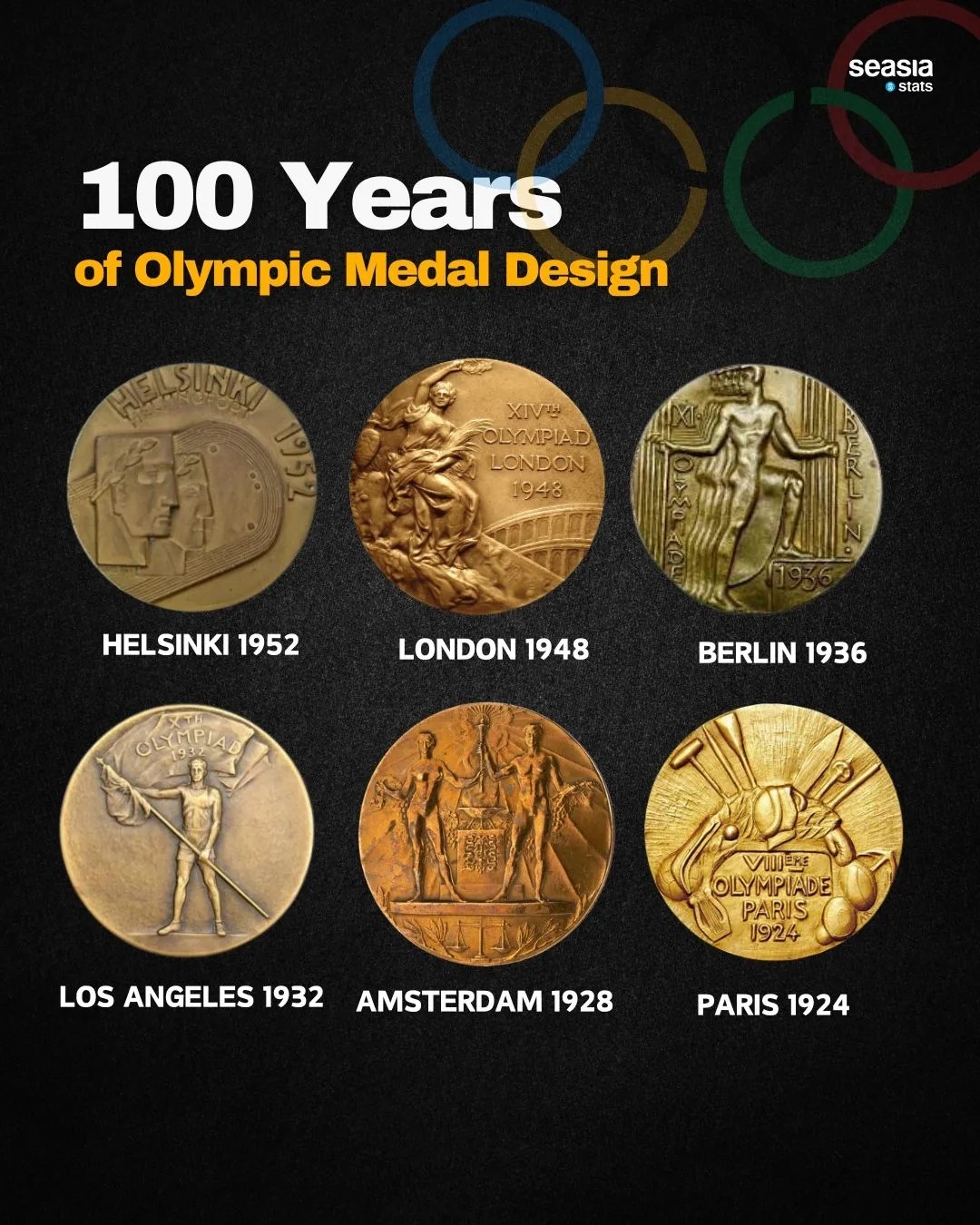
The design of Olympic medals has evolved dramatically over the past century, reflecting the artistic, cultural, and technological advancements of each era. Since the tradition of awarding gold, silver, and bronze medals began at the 1904 St. Louis Games, each edition of the Summer Olympics has introduced unique designs that capture the spirit of the host city and the essence of the Games.
Early 20th Century Designs
1904 - St. Louis The St. Louis 1904 Olympics marked the inception of the gold, silver, and bronze medal tradition. The design featured a classical depiction of victory and athleticism, setting a precedent for future medals.
1924 - Paris The Paris 1924 medals showcased a design by Italian artist Giuseppe Cassioli, featuring the goddess Nike holding a crown and palm. The medals were crafted by the Royal Canadian Mint and displayed a simple laurel crown on the reverse side.
Mid-20th Century Innovations
1960 - Rome The Rome 1960 medals continued with Cassioli's Nike design but introduced more modern elements. The reverse side displayed a plain laurel crown and the Olympic rings, symbolizing the elegance of the Games.
1980 - Moscow The Moscow 1980 medals incorporated the traditional Nike design alongside new symbols like an Olympic bowl and an eternal flame, reflecting the grandeur of the Soviet era and the political climate of the time.
Late 20th Century Modernization
1992 - Barcelona Barcelona 1992 saw a shift towards modern aesthetics with a larger 70mm medal featuring a contemporary depiction of Nike and the city’s emblem, designed by sculptor Xavier Corberó.
2000 - Sydney Sydney’s 2000 medals featured an innovative design blending the city’s opera house with the eternal flame. The medals had a smoothed-out appearance, emphasizing the city’s cultural heritage.
2008 - Beijing The Beijing 2008 medals were the first to incorporate jade, symbolizing Chinese virtues and honoring traditional aesthetics. The jade centerpiece reflected China’s rich cultural history.
21st Century Sustainability and Creativity
2012 - London London 2012 introduced a distinctive design with a grid pattern and a ribbon symbolizing the Thames. The 85mm diameter provided ample space for a more abstract representation of the Games’ emblem.
2016 - Rio de Janeiro Rio’s 2016 medals emphasized sustainability, using 30% recycled material for the silver and bronze medals. The design featured two laurel wreaths, a simple yet powerful symbol of victory.
2020 - Tokyo Tokyo 2020 continued the trend of sustainability with medals made from recycled consumer electronics. The design included elevated rings reflecting the energy of the Olympic athletes, crafted by Junichi Kawanishi.
2024 - Paris The upcoming Paris 2024 medals are set to be a blend of tradition and innovation. Designed by luxury jeweler Chaumet and made by Monnaie de Paris, each medal will contain 18 grams of iron from the Eiffel Tower, symbolizing Parisian iconography and adding a unique touch to the medals.
Conclusion
The evolution of Olympic medal designs over the past 100 years showcases a blend of artistic creativity, cultural representation, and technological advancements. From the early, simple designs to the intricate and symbolic creations of today, each medal reflects the host city’s heritage and the spirit of the Games. As the Paris 2024 Olympics approaches, the new medals will continue this rich tradition, combining history with contemporary values to celebrate the pinnacle of athletic achievement.


