

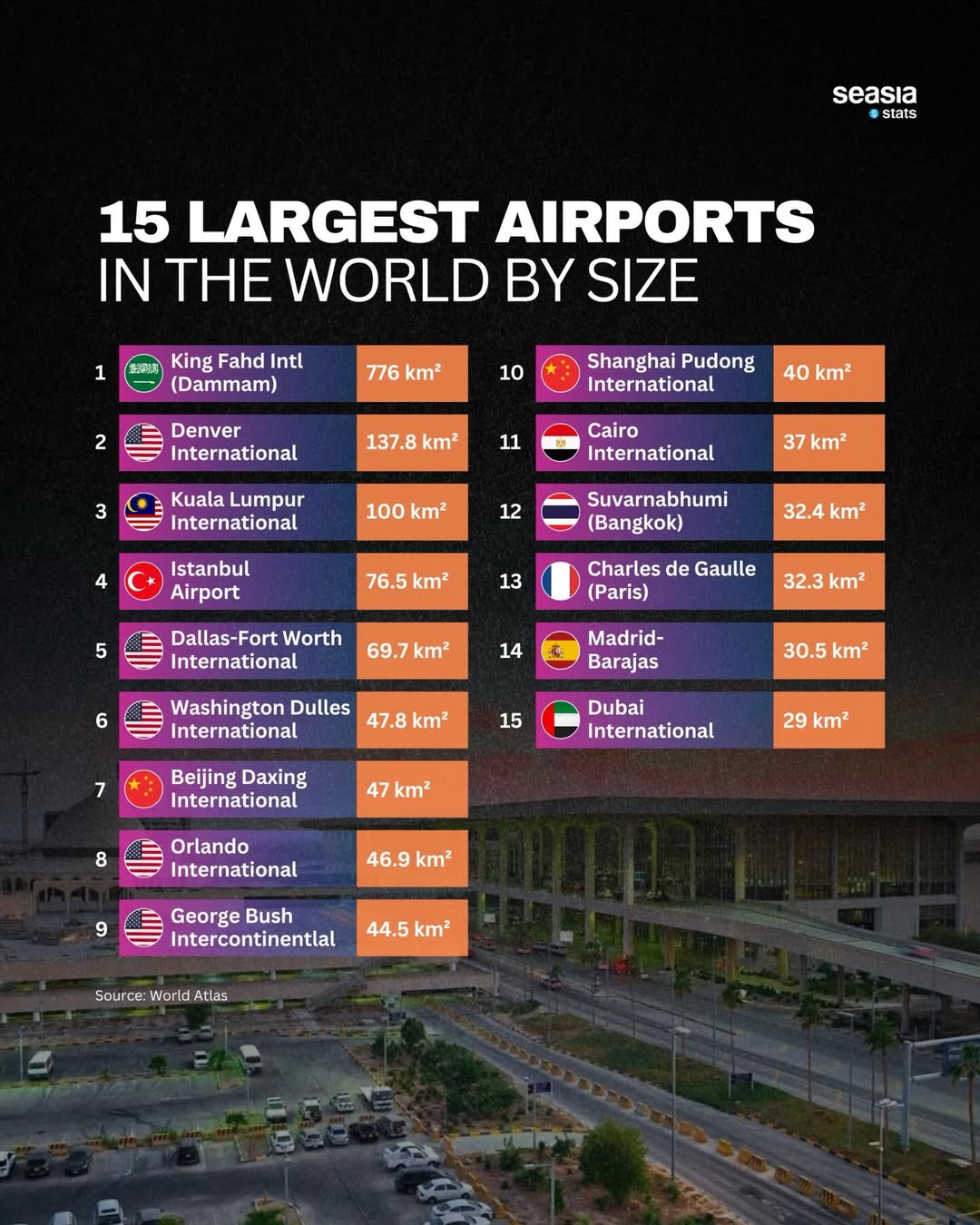
In the modern era of aviation, the sheer scale of an airport often reflects a nation’s economic ambition and its role as a global transit hub. According to recent data, the world’s largest airports are no longer just transportation centers but “aerotropolises” that span hundreds of square kilometers.
These massive infrastructures are designed to accommodate increasing passenger traffic, extensive cargo operations, and future expansions, with the top entries significantly outsizing the cities they serve.
The ranking is led by a massive margin by King Fahd International (Dammam) in Saudi Arabia, which covers a staggering 776 km², making it the largest airport in the world by land area. In second place is Denver International in the United States, spanning 137.8 km².
Rounding out the top three is Istanbul Airport in Turkey, which occupies 100 km². These three airports represent the pinnacle of aviation infrastructure, offering vast spaces that dwarf their international competitors. (Note: While the image shows a typo in the rank for Kuala Lumpur, Istanbul Airport holds the third-largest land area at 100 km²).
Beyond the top three, the list highlights a strong presence of North American airports, including Dallas-Fort Worth, Washington Dulles, and Orlando, which all feature expansive land footprints. Global hubs such as Shanghai Pudong and Dubai International also make the top 15, reflecting the rapid growth of aviation in Asia and the Middle East.
As air travel continues to evolve, these massive land reserves ensure that these airports can grow to meet the demands of the next generation of travelers.


