

The world’s population is aging, but the pace and dynamics differ significantly across countries. While some nations grapple with the challenges of an older population, others enjoy the benefits of a youthful demographic. These disparities reflect varying levels of economic development, healthcare systems, and cultural factors.
Japan’s Aging Population: A Story of Longevity
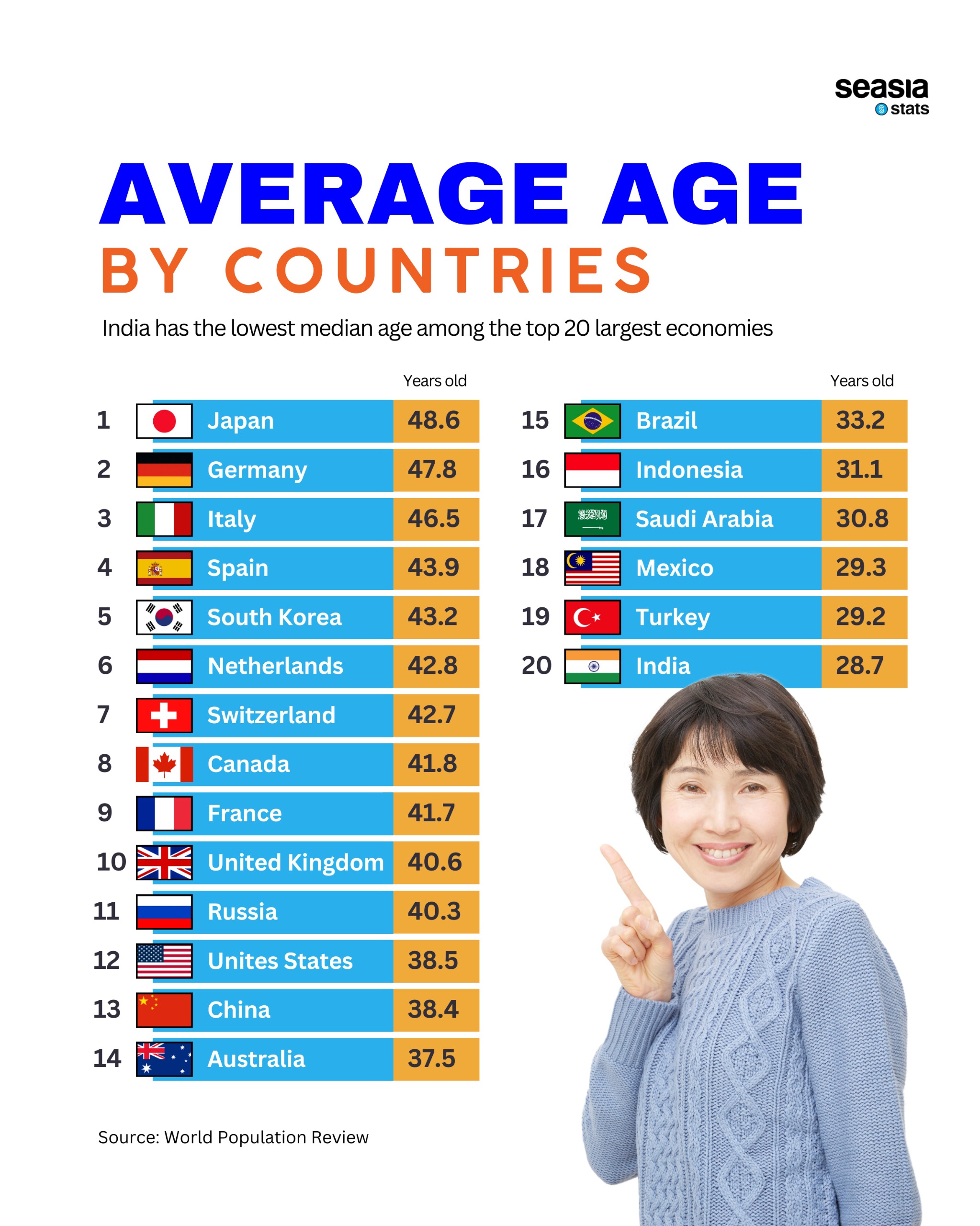
Japan, with a median age of 48.6 years, leads the world’s major economies in aging. Its advanced healthcare system and high life expectancy have contributed to this status. However, an aging population presents challenges, such as increased demand for healthcare and pensions and a shrinking workforce. For Japan, addressing these issues is a matter of urgency to maintain its economic stability and social systems.
India’s Youthful Energy: A Promise of Growth
On the other end of the spectrum, India boasts a median age of just 28.7 years, making it one of the youngest major economies. This youthful population holds tremendous potential for economic growth, but it also comes with responsibilities. To harness this demographic advantage, India must invest heavily in education, skills training, and job creation. Otherwise, the risk of unemployment and underemployment looms large.
Southeast Asia’s Youthful Workforce: Indonesia in Focus
Southeast Asia enjoys a demographic advantage, with countries like Indonesia exemplifying this trend. With a median age of 31.1 years, Indonesia’s workforce is vibrant and dynamic, offering opportunities for robust economic growth. However, realizing this potential requires strategic planning. Investment in education, vocational training, and job creation is essential to ensure young Indonesians can contribute meaningfully to the economy. Failure to do so could result in social challenges, including unemployment and inequality.
Comparisons with Other Nations
Globally, the median age varies widely:
- Brazil: 33.2 years
- China: 38.4 years
- United States: 38.5 years
- Japan: 48.6 years
These figures highlight the contrasting stages of demographic transition among nations. Countries with higher median ages face challenges related to aging populations, while those with younger populations must focus on harnessing their demographic dividend effectively.
The Role of Policy in Shaping the Future
A country’s median age influences numerous aspects of society, from healthcare systems to labor markets. Policymakers must understand these dynamics to design strategies that support long-term prosperity. For aging nations like Japan, this might mean encouraging immigration or raising the retirement age. For younger nations like Indonesia and India, the focus should be on education, health, and job creation to unlock the potential of their youthful populations.
Global Reflections
The median age is more than just a statistic—it tells a story of a nation’s past, present, and future. Understanding these figures provides insights into the challenges and opportunities that lie ahead. Whether addressing aging societies or nurturing youthful populations, each country has its unique path to ensuring a sustainable and prosperous future for its citizens.


